Fintechs must design for failure as digital finance expands, Parthian CTO says
Nigeria’s fintech companies need to design their systems to withstand and recover from failures as digital financial services continue to read more Fintechs must design for failure as digital finance expands, Parthian CTO says
Nigeria’s fintech companies need to design their systems to withstand and recover from failures as digital financial services continue to expand, Arthur Augustus, Group Chief Technology Officer of Parthian Financial Services, has said.
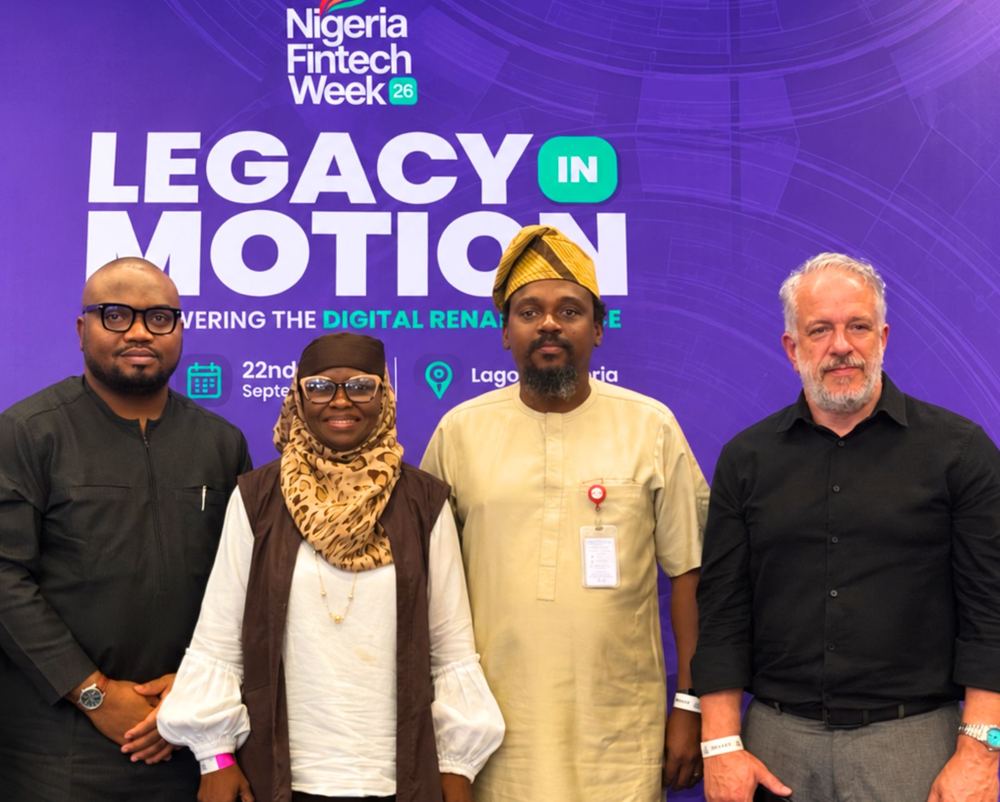
Augustus said this at Nigeria Fintech Week 2026 in Lagos, where he moderated a panel session titled “When Systems Fail: Connectivity and Service Continuity.”
He said the growing reliance on digital financial platforms meant fintech companies could no longer focus only on building systems that remain operational under normal conditions, but must also anticipate periods of exceptional demand and potential disruptions.
“Every system fails eventually. What separates a mature ecosystem from a fragile one is how quickly and honestly it recovers,” Augustus said.
His comments came against the backdrop of recent service disruptions experienced by some digital investment platforms following the opening of the Dangote Petroleum Refinery & Petrochemicals FZE Initial Public Offering on September 14, 2026.
The IPO generated significant retail investor interest, with Reuters reporting that the resulting surge in traffic overwhelmed several Nigerian digital investment platforms and exposed capacity and resilience challenges across parts of the fintech infrastructure ecosystem.
The incident has renewed attention on the ability of digital financial platforms and their underlying infrastructure to absorb sudden increases in demand while maintaining service availability and protecting customer experience.
Augustus, however, said resilience should not be measured solely by whether a system experiences an outage, but by how well the organisation and wider ecosystem respond when a failure occurs.
“System resilience is not simply about building a system that never goes down. It is about designing for failure, anticipating stress, knowing where dependencies exist and having the ability to restore services quickly when something does go wrong,” he said.
According to him, the increasing integration of digital financial services into the daily lives of Nigerians makes reliability and service continuity increasingly important.
He said technology disruptions could have consequences beyond temporary inconvenience as consumers and businesses become more dependent on digital channels for financial transactions and investment activities.
The CTO also stressed that the responsibility for resilience extends beyond individual fintech companies because digital financial services depend on interconnected telecommunications, technology and infrastructure providers.
The panel examined the interdependence between fintech companies, telecommunications operators, technology infrastructure providers and policymakers as transaction volumes and consumer expectations continue to increase.
Hauwa B. Wakili, deputy director and head, Digital Skills and Services, Digital Economy at the Nigerian Communications Commission, also called for an ecosystem-wide approach to technology failures.
“It’s not just about looking for who to blame for failures. Think ecosystem-wide. Collaboration and partnerships are needed between the telecommunications players and the tech community, supported by the system,” Wakili said.
Her comments reinforced Augustus’ argument that service continuity cannot be addressed by individual organisations in isolation when digital financial platforms rely on multiple layers of interconnected infrastructure.
The panel also featured Oluwaseun Oluboyo, Chief Technology Architect, IPNX; Yinka Daramola, CEO, Qucoon; and Fernando Fernandes, CEO, Telcables.
The participants examined the technical and institutional factors that influence service continuity, including connectivity, infrastructure dependencies, system resilience and coordinated responses when disruptions occur.
Augustus said fintech companies should therefore shift their focus from trying to prevent every possible failure to developing the capacity to detect, contain and recover from disruptions.
“Resilience is not demonstrated when everything is working. It is demonstrated when something breaks and the ecosystem knows what to do next,” he added.
Nigeria Fintech Week 2026, organised by the Fintech Association of Nigeria from September 22-23 under the theme “Legacy in Motion: Powering the Digital Renaissance,” brought together players across fintech, financial services, technology and telecommunications to examine the country’s digital future.
For Parthian Financial Services, operator of i-invest, the discussion highlighted the importance of technology-driven, resilient and dependable financial services as digital channels become increasingly central to investing and other financial activities.
Hope Moses-Ashike is an Associate Editor, Banking and Finance, with more than a decade of experience reporting on Nigeria’s financial system and broader economy. She closely tracks market movements, monetary policy decisions, company disclosures, regulatory actions, economic indicators, and global developments, and interprets what they mean for businesses, investors, policymakers, and households. Her reporting helps readers understand complex issues such as inflation trends, foreign exchange market dynamics, interest rate decisions, bank performance, and investment risks. She also covers major international events and periodically travels to Washington, D.C., to report on the World Bank/IMF Spring and Annual Meetings. Her dedication to financial journalism has earned her multiple recognitions and invitations to high-level professional development programmes. She is an alumna of the International Visitors Leadership Programme (IVLP) in the United States and holds an Advanced Financial Journalism Certificate from the Press Association Training in London, UK. Her other notable achievements include completing the Lagos Business School CMC Programme, the Bloomberg Media Africa Initiative Programme, and a Master Class in Journalism at Rhodes University in South Africa.