Who Dominates Argentina, Elites and Regions Explained
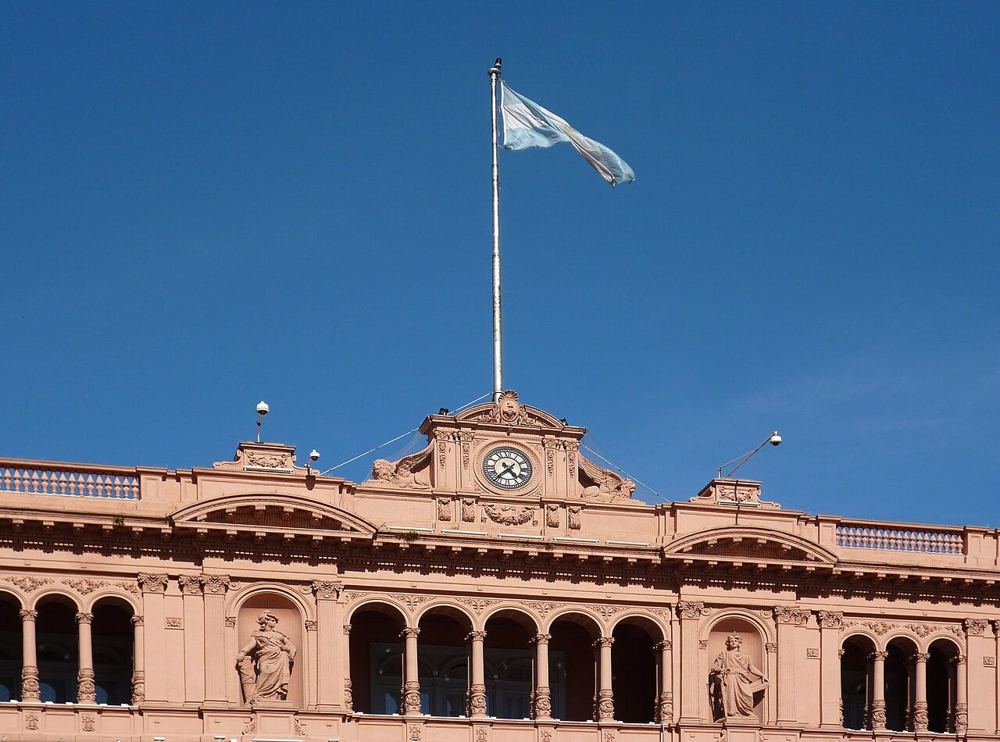
Who holds Argentina power in 2026: Milei's government, Buenos Aires versus the provinces, business families, unions, churches and the poor. The post Who Dominates Argentina, Elites and Regions Explained appeared first on The Rio Times .
Power in Argentina matters to Washington, which backed President Javier Milei with a swap line of up to US$20 billion in 2025.
Yet Milei must bargain with Peronist governors and unions, family-owned industrial groups and churches, while a third of urban Argentines are poor.
Javier Milei, a libertarian economist, has been Argentina’s president since December 2023. His party, La Libertad Avanza (Freedom Advances), stands for spending cuts, deregulation and a smaller state.
His sister Karina Milei is Secretary General of the Presidency and one of the most visible figures in Argentina power politics. In October 2026 she helped open the second plant of POSCO’s Sal de Oro lithium project in northwest Argentina, the Casa Rosada reported.
Diego Santilli, the Chief of Cabinet, joined her there with two provincial governors, Gustavo Sáenz of Salta and Raúl Jalil of Catamarca. Such events show the government courting governors as well as investors.
Congress is where presidential power meets its limits. As of October 2026, La Libertad Avanza holds 95 of the 257 seats in the Chamber of Deputies.
The Peronist bloc Unión por la Patria holds 92 seats, so small centrist and provincial blocs decide close votes. Peronism is the movement founded by Juan Perón in the 1940s, built on trade unions, welfare and a strong state.
In the 72-seat Senate, La Libertad Avanza and the Peronist Justicialista bloc have 21 senators each, as of October 2026. The centrist Radical Civic Union (UCR) has 10.
For a full map of ministers and parties, see Argentina Politics Explained, Who Holds Power in 2026 .
Argentina’s map of power is lopsided. The 2022 census counted 45.9 million people, and 20.6 million of them lived in Buenos Aires province or the city of Buenos Aires.
The capital and the 24 districts around it, known as Greater Buenos Aires, held almost 14 million people. That is three in ten Argentines in one metropolitan area, which makes it the main prize in national campaigns.
Buenos Aires province is governed by Axel Kicillof, a Peronist whom betting markets rank as Milei’s main rival for 2027. In October 2026 he was still opening a training centre and announcing an aqueduct as governor, according to the provincial government .
Money is the governors’ main lever and their main weakness. Under the 1988 revenue-sharing law, Law 23,548, the national government keeps 42.34% of shared taxes and the provinces receive 54.66%.
Under that law Buenos Aires province gets 19.93% of the provinces’ pool, although it is home to 38% of all Argentines. Smaller provinces receive far more per resident, and each one elects three senators whose votes the president must win.
Neuquén, a Patagonian province of about 711,000 people in 2022, has become an energy power. Argentina pumped a record 926,925 barrels of oil a day in August 2026, according to Diario Río Negro .
Neuquén alone produced 685,316 barrels a day that month, almost all from Vaca Muerta, a vast shale rock formation. Poverty in the Neuquén-Plottier urban area stood at 19.6% in the first half of 2026, well below the national rate.
A handful of family-controlled groups sit close to political power, whoever governs. They bargain over tariffs, concessions and state contracts rather than votes.
The Techint group, headed by industrialist Paolo Rocca, makes steel pipes for the oil and gas industry through Tenaris. Tenaris began in 1948 as Siderca, then Argentina’s sole maker of weld-free pipes, according to Tenaris’s 2025 annual report.
That report, filed with US regulators, shows that San Faustin, Tenaris’s controlling shareholder, owned 66.13% of the shares at the end of 2025. Rocca handed the Tenaris chief executive job to Gabriel Podskubka in May 2026 but stayed on as chairman, La Nación reported.
Relations with Milei have soured. After a pipe tender, Milei mocked Rocca as ‘Don Chatarrín de los Tubitos Caros’, roughly ‘Mr Scrap Metal of Pricey Pipes’, iProfesional reported.
Techint was also absent from the government’s Argentina Week in Paris, held from 30 September to 2 October 2026. The quarrel shows that even the country’s main industrial group cannot take presidential favour for granted.
Eduardo Eurnekian’s Corporación América runs 35 of the country’s main airports through Aeropuertos Argentina. Administrative Decision 27/2026, published on 28 September 2026, extended that concession to 2049.
A further extension to 2056 depends on conditions, including proof of financing for US$600 million of works at Ezeiza, the main international airport.
Milei worked for years as chief economist of Eurnekian’s holding before entering politics, elDiarioAR noted. In Decree 1074/2026, published the same day, Milei stepped aside from matters involving the group, citing a past ‘professional link’.
The newer money is digital. Marcos Galperin founded Mercado Libre, an online marketplace and payments company, in 1999, starting from a garage in Buenos Aires.
Its e-commerce platform operates in 18 countries, according to its 2025 annual report to US regulators.
Galperin handed the chief executive job to Ariel Szarfsztejn on 1 January 2026 and became executive chairman, according to Infobae .
The CGT, the General Confederation of Labour, is Argentina’s main union federation and the historic backbone of Peronism. As of October 2026 it is led by three co-leaders rather than a single chief.
They are Jorge Sola of the insurance workers, Cristian Jerónimo of the glass workers and Octavio Argüello of the truck drivers’ union, Camioneros. Each speaks for a different wing of the labour movement.
On 8 October 2026 the CGT marched to the national Industry Secretariat in Buenos Aires to demand protection for local factories. Jerónimo warned the government to change its economic model or face a deeper fight, Infobae reported.
Peronism’s other base is Greater Buenos Aires, the ring of working-class districts around the capital. INDEC measured poverty there at 36.9% in the first half of 2026, against 11.1% inside the city itself.
That gap, between a rich capital and its poorer suburbs, runs through Argentina power politics.
Argentina’s armed forces ran the country during the 1976-1983 military dictatorship. After democracy returned in 1983, civilian politicians led the Defence Ministry for more than four decades.
That changed on 12 December 2025, when Lieutenant General Carlos Presti, the former army chief, was sworn in as Minister of Defence. La Nación described him as the first military officer to run the ministry since the return of democracy.
Presti was still in post in October 2026, when he attended the 85th anniversary of Fabricaciones Militares, the state-owned defence manufacturer.
Argentina is still a Catholic-majority country, but less so than before. A 2019 national survey by CONICET, the state science council, found 62.9% Catholics, 15.3% evangelicals and 18.9% with no religion.
Most evangelicals are Pentecostal, about 13% of the population in that survey. Argentina also gave the world Pope Francis, born Jorge Mario Bergoglio in Buenos Aires.
Francis led the Catholic Church from 2013 until his death in April 2025.
Evangelical political weight is rising. Dante Gebel, a well-known evangelical pastor, is weighing a 2027 presidential bid.
His team put the odds of a run at 75% in September 2026, according to Letra P .