27th August and General Ibrahim Babangida (Continuation Of Part 2)
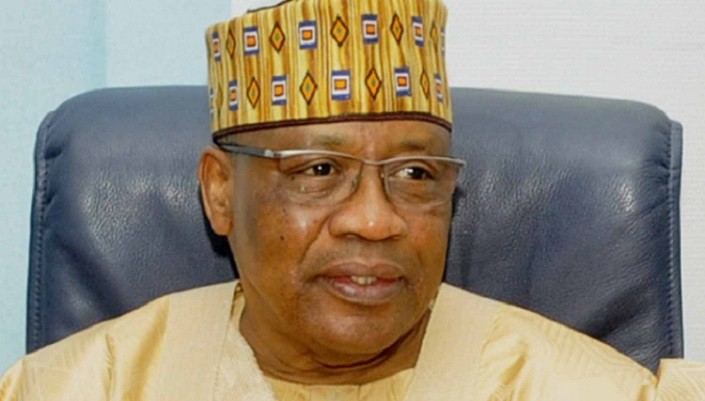
The consequences were immediate. Imported goods became expensive, food and school fees shot up, and inflation bit hard. There were read more 27th August and General Ibrahim Babangida (Continuation Of Part 2)
The consequences were immediate. Imported goods became expensive, food and school fees shot up, and inflation bit hard. There were nationwide protests, the most notable being the 1989 anti-SAP riots. On the other side, deregulation opened the door for private banks, airlines, and media to grow. But it also began a long cycle of heavy debt servicing that drained the budget for years.
Socially, the country became noisier. Private radio, TV, and newspapers flourished. MAMSER was launched to preach “value re-orientation.” Compared to Buhari, there was less detention without trial, but new decrees like Decree 25 were used to keep the courts out. The hardship of SAP also energised civil society, the NLC, student unions, and pro-democracy groups became far more vocal and confrontational.
Within the military and institutions, politics entered the barracks. Promotions and postings became more political. The military, under IBB, moved deeper into business and governance. Eight years of oil money came in, but so did allegations of mismanagement, the Pius Okigbo panel would later question the $12.4 billion Gulf War windfall. The intelligence services were strengthened, but the period also saw dark moments, including the 1986 bombing of Dele Giwa.
“Buhari gave Nigeria discipline and control but little freedom. IBB gave Nigeria consultation, liberalisation, and political engineering, but also devaluation, inflation, and a transition that collapsed.”
Buhari gave Nigeria discipline and control but little freedom. IBB gave Nigeria consultation, liberalisation, and political engineering, but also devaluation, inflation, and a transition that collapsed. The 1985 coup did not just change the government. It changed the template, for the economy, for political parties, and for the struggle over democracy that culminated in June 12.
At the end of the lecture which I delivered in Minna, at the Chief of Army Staff Conference, I spoke on the contribution of the military to Nigeria’s economic and social development.
The country was in a deep economic crisis. Oil revenues had collapsed, foreign exchange was scarce, inflation was rising, and there was almost no structured dialogue between the government, the military, and the business community.
My argument was simple. Nation-building could not be left to the government alone. The Army, as one of the country’s most disciplined institutions, had a role beyond security. It had to be part of the conversation on productivity, stability, and how Nigeria could transition from a command economy to one that rewarded enterprise and private initiative.
It was the same theme I had pushed with the Eko Hotels Gold Medal Lectures: bring the best minds together, diagnose the problem honestly, and agree on a path forward.
That lecture in Minna was therefore not just an academic exercise. It was an attempt to get the institution that held power to think like nation-builders, not just as custodians of order.
The master of ceremonies was Late Colonel Anthony Ukpo. The only civilians (apart from me) at the conference were Late Chief M.K.O. Abiola and Professor Elaigw, who was the Director-General of the Institute for Governance and Social Research, Jos.
When Major-General Babangida took over power on 27th August 1985, the first broadcast by Brigadier Joshua Dongoyaro was as follows: “I, Brigadier Joshua Nimyel Dogonyaro, of the Nigerian Army, on behalf of the Armed Forces Ruling Council, hereby announce that the government headed by Major-General Muhammadu Buhari has been overthrown…”
The same faces that were in Minna were now gathered in Bonny Camp, Victoria Island, Lagos, to proclaim the new Head of State.
Recently, the front page of “ThisDay” newspaper carried the following headline: “NO COUP CAN SUCCEED WITHOUT THE SUPPORT OF CIVILIANS.”
Recall Gen. Vatsa’s denial before the inquiry linked him to the 1985 coup plot.
As investigations into an alleged plot to overthrow President Bola Ahmed Tinubu in 2025 continue, former military president General Ibrahim Badamasi Babangida has said that military coups have always taken place with the support of civilians.
Babangida, who will turn 85 years old on Monday, also declared that late General Mamman Jiya Vatsa, then Minister of the Federal Capital Territory, denied involvement in the 1985 coup plot to unseat him as head of state.
General Babangida made the remarks while speaking on Badeggi 90.1 FM Radio, monitored in Minna, Niger State, yesterday, as part of activities to mark his 85th birthday. Babangida declared, “No successful coup in Nigeria’s history had occurred without civilian involvement,” explaining further that wealthy civilians had often played significant roles in sponsoring military takeovers.
According to him, General Vatsa, a schoolmate of his, denied involvement in the plot to overthrow his government, but reports from the Commission of Inquiry, which investigated the matter, indicted him.
“Initially I found it difficult to believe reports linking Vatsa to a planned coup because of our long-standing friendship and shared history
“When a senior military officer informed me of the allegations, I immediately summoned both General Mamman Vatsa and General Mohammed Gado Nasko to my office for clarification.