Nigeria suspends 85% exam fee hike amid S&P growth forecast cut
Nigeria’s abrupt suspension of steep secondary school exam fee hikes highlights deepening consumer distress and a flawed policy apparatus that threatens the country’s long-term human capital and economic growth.
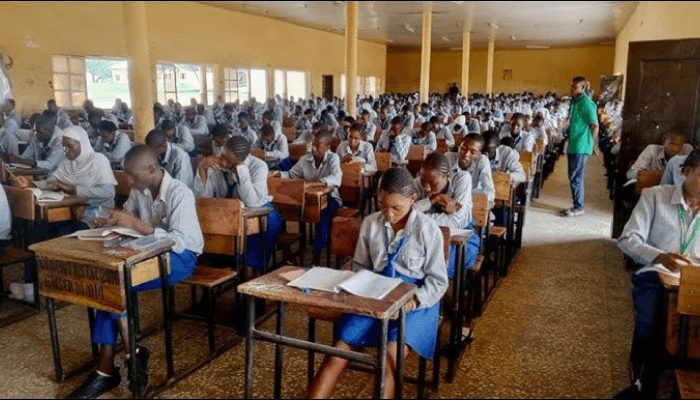
The Nigerian government has abruptly suspended planned fee increases for mandatory secondary school leaving exams after severe public backlash. The proposed framework would have raised West African Examinations Council fees by 85% from N27,000 to N50,000, and National Examinations Council fees by 67% from N30,000 to N50,000.
The swift reversal underscores a pattern of erratic policy formulation that raises execution risks for investors. Nubi Achebi, director of academic planning at the Nigerian University of Technology and Management, noted the administration is "jumping steps in policy formulation, consultation." Jessica Ousere, chief executive officer at RubiesHub Educational Services, said the episode proves the government "never thinks anything through."
For markets, the proposed levies expose the severe squeeze on Nigerian household budgets. Imposing a N50,000 exam charge when the newly negotiated minimum wage is just N70,000 highlights how surging inflation is decimating purchasing power. Families are being forced to prioritise basic survival over long-term investments.
This consumer stress is already weighing on the broader economy. S&P Global recently lowered Nigeria’s GDP growth forecasts for 2026 and 2027 by 30 basis points each to 3.7% and 3.5%. The agency warned that persistent inflationary pressures will weaken household spending and dampen overall economic growth.
The controversy also threatens Nigeria's already fragile human capital development, a critical variable for long-term foreign direct investment. A 2024 UNICEF report showed Nigeria has the highest global tally of out-of-school children, with 10.2 million missing at the primary level and 8.1 million at the junior secondary level. The World Bank estimates a child born in Nigeria in 2020 will achieve only 36% of their potential productivity.
While regional peers like Ghana, Egypt and Algeria subsidise education up to the tertiary level, Nigeria is struggling to keep secondary exams affordable. Stanley Alaubi, a senior lecturer at the University of Port Harcourt, said: "Whoever is advising this administration to take this line of action is an enemy to education." Achebi warned that the policy pullback "should be permanent," reflecting broader market anxieties that the government may attempt to pass rising costs back to impoverished households once public attention fades.