NestAI launches military drone models to cut Europe's US tech reliance
NestAI has released its first military-grade AI models for drone autonomy and battlefield orchestration, offering European armed forces a sovereign alternative to US providers amid tightening export controls.
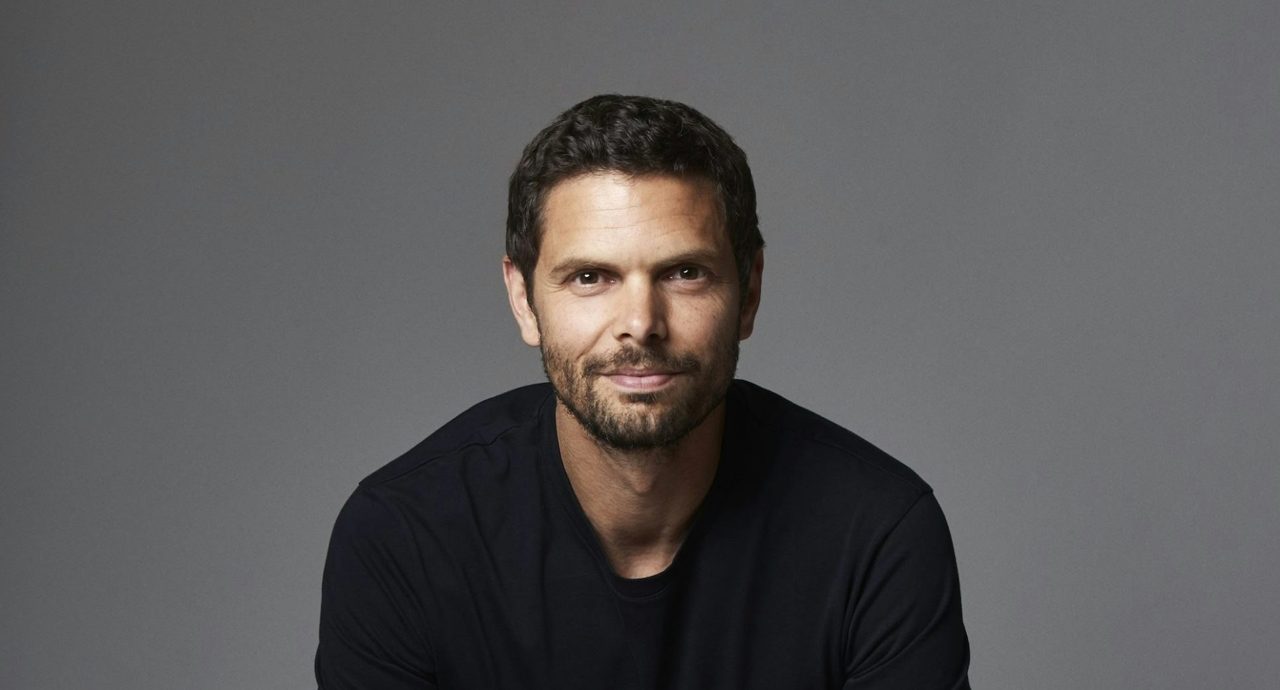
NestAI, a Finnish artificial intelligence lab founded last year by Peter Sarlin, has launched its first generation of models built specifically for military applications. The release provides foundational AI for autonomous drones and a battlefield orchestration system called NestOS.
The launch arrives just weeks after Washington ordered a suspension on exports of Anthropic’s most advanced models. This regulatory action exposed a critical vulnerability for European defence ministries dependent on foreign AI infrastructure.
“There’s been significant concern about owning and controlling the model layer in defence,” Sarlin says, “and this is basically a solution to that." He explicitly positions NestAI as a niche player, noting, “Our intent is not to compete with general purpose frontier models like Anthropic and OpenAI, but be domain specific with our approach, and that’s how we believe we can be competitive.”
The company has quickly scaled to 200 employees, drawing talent from Tesla, Nokia, Intel, and Silo. Sarlin founded Silo before selling it to AMD in 2024 in what was then Europe's highest-value AI acquisition. NestAI secured €100 million in November from Nokia and Tesi, the Finnish state-owned investment firm.
NestAI's models are trained on combined synthetic and real-world data to power end-to-end unmanned drone missions. Pilots are already running with the Estonian and Finnish armed forces, allowing troops to plan and execute full drone operations.
Edge deployment and hardware compression
A core challenge for military AI is running complex models on affordable, portable hardware in degraded environments. To solve this, NestAI is partnering with AMD for compute and utilizing Finland's LUMI supercomputer for training.
The company is also working with Qutwo, a quantum startup Sarlin co-founded, to simulate quantum computing on GPU clusters. This process compresses large AI models without performance loss. “It allows you to run them on the edge,” Sarlin says, “which is ultimately the key challenge in pushing capable AI models to affordable hardware.”
The commercial case for rapid defence AI adaptation is underscored by the shifting nature of modern warfare. According to Ukrainian Air Force data, Russian air attacks on civilian targets quadrupled from roughly 13,300 in 2024 to around 56,700 in 2025, driven primarily by drone proliferation.
Sarlin argues this pace of conflict demands new industrial agility. “We’re optimising for the Ukraine model, how they operate and the speed at which they need to be able to adapt,” he says. NestAI plans to expand its pilot programmes to other allied nations, using live operational data to continuously refine the models. “Model development is something that starts and it never ends,” Sarlin adds.