UiPath vs. ServiceNow: 1 Stock Is the Better Buy in the Enterprise AI Automation Battle
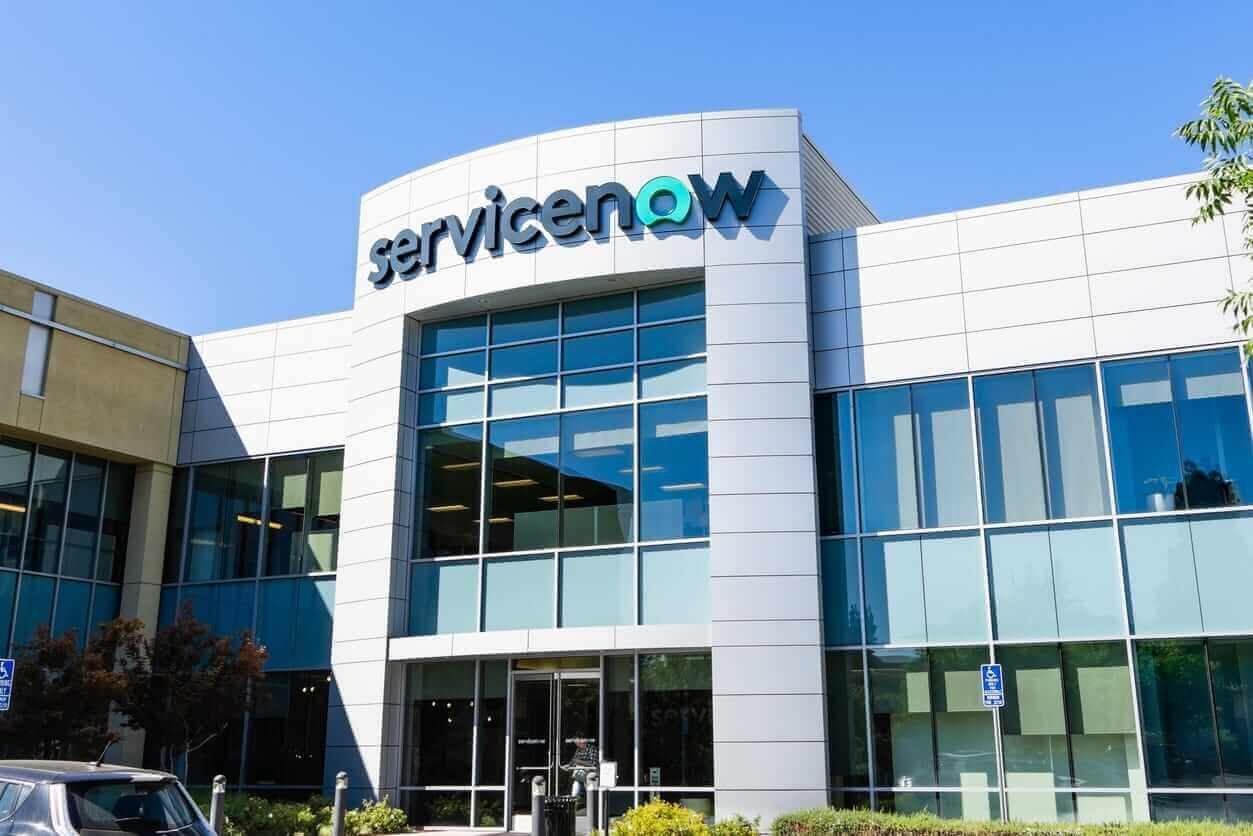
Enterprise AI is now moving to the more complicated part. Now the real test isn't about which company builds the smartest agent. But it is about who can make AI useful, reliable, and scalable across enterprises. That puts UiPath (PATH) and ServiceNow (NOW) in an interesting head-to-head battle. Both are pushing deeper into AI-powered automation, but only one is the better play for the long term.
Valued at $9.4 billion, UiPath is an enterprise automation software company that helps businesses automate repetitive and difficult tasks with software robots, AI agents, and workflow orchestration.
Dear Palantir Stock Fans, Here's What Maven's Billion-Dollar ARR Means for PLTR
Wu-Tang Clan Member Raekwon Is a Palantir 'OG,' Visiting Headquarters 16 Years After Receiving His Custom PLTR Jacket
A big plus point for UiPath is that it already has a large installed base of enterprise automation. The company entered fiscal 2027 with Q1 ARR (annual recurring revenue) of $1.9 billion, up 12% year-over-year (YoY), while total revenue reached $418 million, a 17% increase. Management highlighted that its AI products are increasingly moving beyond experimentation and into actual production deployments. Plus, AI appeared in 16 of UiPath's 20 largest deals in Q1, and expansion deals including AI were six times larger than those without it.
Net retention stood at 109%, while customers generating at least $1 million in ARR climbed by 18% to 374. UiPath's financial position also gives it room to keep investing. Gross margin stood at 83% in Q1, while software gross margin reached 90%. The company generated $130 million in adjusted free cash flow and ended the quarter with $1.4 billion in cash, cash equivalents, and marketable securities, plus no debt. The company will report its second quarter earnings on Sept. 3. Management expects revenue of around $395 million to $400 million, with ARR between $1.92 billion and $1.93 billion. What investors need to watch going forward is whether UiPath can turn its automation-installed base into a much larger AI-driven platform business.
Overall, Wall Street rates the stock a "Hold." Of the 19 analysts that cover PATH stock, one rates it a "Strong Buy," one says it is a "Moderate Buy," 16 suggest a "Hold," and one rates it a "Moderate Sell." PATH stock has surpassed both its average target price and high price estimate.
Valued at $149.6 billion, ServiceNow is an enterprise software company that helps large businesses manage and automate their workflows. ServiceNow has an advantage over UiPath, as its platform is already deeply embedded in clients' systems. That demand is reflected in its second-quarter numbers.
The highlight of the quarter was its AI ACV (annual contract value), which surpassed $1 billion, while net new AI ACV growth accelerated more than 40% sequentially. ACV is what the company is generating from its AI-related products and offerings. Furthermore, agreements combining five or more ServiceNow AI products surged 5.5 times YoY, while the number of customers using agentic AI in production increased ninefold in nine months. Management also highlighted that 18 out of its 20 largest deals included eight or more products, showing that customers are integrating more of their corporate workflows onto ServiceNow as they extend their AI deployments.
Wall Street is strongly bullish about NOW stock with a consensus "Strong Buy" rating. Out of the 45 analysts covering the stock, 37 have a "Strong Buy," three suggest a "Moderate Buy," three recommend a "Hold" rating, one analyst has a "Moderate Sell," and one has a "Strong Sell" rating. NOW is trading close to its mean target price. But the high price estimate of $248 implies a potential upside of 71.4% over the next 12 months.
For long-term investors, ServiceNow is the better play. Its larger scale, deeper enterprise footprint, expanding AI ACV, high profitability, and ability to govern AI across workflows, data, security, and third-party agents make it better positioned in the enterprise AI automation battle.