Stock market today: Dow, S&P 500, Nasdaq futures fall as inflation, Fed rate-hike fears persist
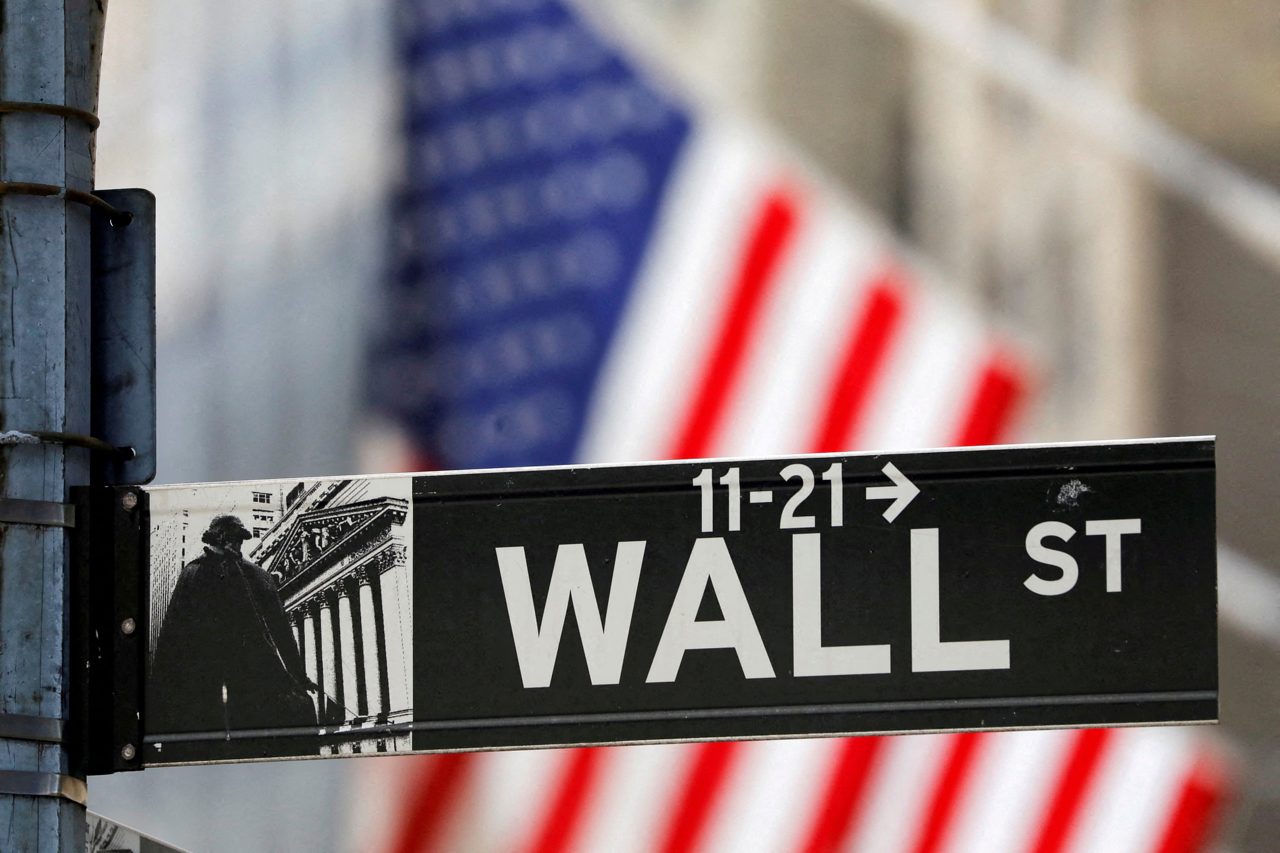
US stocks lost steam on Tuesday as a fresh round of US airstrikes on Iran sent oil prices higher, while a bond market sell-off and speculation about the Fed's next interest rate move kept buyers on the sidelines.
The Dow Jones Industrial Average ( ^DJI ) slid nearly 0.8%, while the S&P 500 ( ^GSPC ) also lost roughly 0.7%. The tech-heavy Nasdaq Composite ( ^IXIC ) was down more than 1% after stocks closed August with solid gains.
Stocks entered September with double-digit year-to-date returns and earnings expectations that continue to rise . However, volatile oil prices and the potential return of Fed rate hikes have given investors reason to worry heading into the historically weakest month for stocks.
Crude oil prices ( CL=F ) accelerated gains in afternoon trading after the US Central Command said it launched new attacks against Iranian targets , signaling a reescalation in the hot war in the Middle East. The barrage came after two oil tankers were struck while attempting to exit the Strait of Hormuz, sending Brent futures ( BZ=F ), the global benchmark, trading above $95 per barrel.
US bond yields continued their march higher on Tuesday, with the 10-year yield ( ^TNX ) rising to 4.79%, its highest intraday level since January 2025. The 30-year ( ^TYX ) climbed to 5.27%, hovering near multi-decade highs.
The Job Openings and Labor Turnover Survey (JOLTS) showed job openings ticked up slightly in July, a somewhat stable read on hiring ahead of Friday's monthly jobs report. Data from the Institute for Supply Management showed that US manufacturing activity expanded for the eighth month in a row, though the sector's rate of expansion slowed just slightly.
The gush of second quarter earnings reports may have slowed to a trickle, but releases from Dell ( DELL ) and Palo Alto Networks ( PANW ) will give insight into how big corporations are spending money on tech and cloud services.
Stocks kicked off the new month in the red as oil prices jumped and bonds sold off, pushing yields higher and the dollar higher.
The 10-year Treasury yield ( ^TNX ) touched its highest level since January 2025 while gold ( GC=F ) and bitcoin ( BTC-USD ) declined.
The Dow Jones Industrial Average ( ^DJI ) fell by 0.8%. The S&P 500 ( ^GSPC ) also dropped by about 0.7%. The tech-heavy Nasdaq Composite ( ^IXIC ) fell more than 1%.
Brent crude ( BZ=F ) prices topped $95 per barrel as fighting between the US and Iran escalated.
Bank of America ( BAC ), Goldman Sachs ( GS ), Citigroup ( C ), and 18 other global financial institutions are moving ahead with plans to jointly issue a stablecoin.
It's a sign of the times: Big banks and other major financial services players are ready to compete in the world of crypto payments. A number of crypto firms have also pursued bank charters.
Meanwhile, US banks and the crypto industry are currently at loggerheads over whether stablecoin issuers should be permitted to issue yield to customers.
Stablecoins are cryptocurrencies whose prices are pegged to other assets. Last year, President Trump signed legislation setting a regulatory framework in the US and paving the way for Wall Street to dabble more with this kind of crypto asset.
This group of 21 firms said Tuesday that they will jointly establish a new, yet-to-be-named company before the end of this year that will launch a US dollar-backed stablecoin sometime in the first half of 2027.
The group, which had 10 members when it was established in October of last year, said it expects the product to have usage across wholesale, institutional, and retail markets.
Six of the institutions in this group are also pursuing tokenized deposits by launching a blockchain network to clear and settle deposits between banks. That initiative, which shared its plans in June, is being run by The Clearing House, a company jointly owned by 25 of the nation's largest banks.
The stablecoin market holds $303 billion of circulating value, according to DeFi llama. Its two biggest players are Tether and Circle ( CRCL ).
Bitcoin ( BTC-USD ) dropped more than 3% on Tuesday, trading near $76,500 per token as stocks fell and bond yields rose.
Worries over sticky inflation, fueled in part by rising oil prices, have pushed long-term bond yields higher. Investors are increasingly betting the Federal Reserve may have to keep interest rates higher for longer, or even raise them to fight inflation.
Bitcoin, which temporarily rallied above $80,000 last week, has given up much of its recent gains over concerns of tighter monetary policy and a strengthening dollar.
A new round of US airstrikes on Iran sent oil prices jumping once more in mid-afternoon trading on Tuesday, as investors evaluated a potential return to a more conflict-heavy situation in the Persian Gulf.
Futures on Brent crude ( BZ=F ), the international benchmark, traded up by more than 4% to cross above $94 per barrel, while those on US benchmark WTI crude ( CL=F ) rose 4.5% to brush up against $90.
The US military on Tuesday launched a renewed round of airstrikes on Iran, striking several sites within the country tied to Iran's Revolutionary Guard Corps, US Central Command said Tuesday afternoon . Strikes were heard in the regions around the cities of Bandar Abbas and Chabahar, per regional media and other local reports.
President Trump said the US strikes were taken in retaliation for attempts by the IRGC to place mines in the Strait of Hormuz, which the US has spent weeks attempting to de-mine to allow for the safe passage of vessels through the waterway, and for attempted Iranian strikes on sites inside Jordan.
"If the failed Nation of Iran retaliates for this very justified attack, they will be hit again at a much harder and higher level, but it will not be the biggest attack of them all, that is waiting in the wings and, when it is over, there will be very little left of the Islamic Republic of Iran!" Trump said on Tuesday .
The state-affiliated Tasnim News Agency said Iran's response would be "more severe" than the US strikes, and that such a response would target US military bases and economic interests in the region, per
The resumption of kinetic action between the US and Iran comes as investors turn toward the Federal Reserve's September meeting after Fed chair Kevin Warsh cited inflation as the Fed's primary target. Any flare-up in conflict would threaten to put more upward pressure on inflation through rising energy prices.
Fed Chairman Kevin Warsh's speech at Jackson Hole and a hawkish shift in Fedspeak over the past week have been enough to convince Deutsche Bank economists that a rate hike is the "most likely policy outcome" of the Fed's September meeting, the economists wrote on Tuesday.
In a note to clients, economists led by Amy Yang cited several tells from the past week indicating a hike is coming in September, the first of which was Kevin Warsh's "surprisingly forceful, hawkish speech that went beyond correcting a few misconceptions from the July post-FOMC press conference."
Also this week, Boston Fed president Susan Collins sounded "more hawkish" in public commentary and articulating a lower bar for hikes than she previously had, "a notable shift from the June FOMC meeting, when she penciled in keeping rates unchanged through the end of the year," the Deutsche economists wrote.
At the same time, Kansas City Fed president Jeff Schmid and Cleveland Fed president Beth Hammack both doubled down on their respective hawkish stances, as Schmid said he likely would have supported a hike in July and Hammack reiterated her calls for immediate tightening.
"As Warsh indicated, while 'a good majority' of officials in July preferred to await new information during the intermeeting period, they stood ready to act should circumstances require," the Deutsche Bank economists wrote.
"Ultimately, we believe the specificity of Warsh's comments, combined with the hawkish shift from a centrist like Collins, has changed the setup for September. As long as incoming data do not surprise significantly to the downside, in our view Fed communications over the past week have established a rate hike as the most likely policy outcome next month."
A worldwide government bond sell-off intensified today with a ferocity that should alarm every investor, big and small. The yield on the 10-year US Treasury note ( ^TNX ), the single most important interest rate in the world, the rate that sets the price of everything from a mortgage to a car loan to a credit card, just hit its highest level since January 2025.
The 30-year yield ( ^TYX ) is hovering around a two-decade high, which does nothing to help those planning for their long-term financial security.
And here is what makes this moment especially concerning: Bond yield creep is happening globally.
Japan's 10-year bond yield just climbed above 3% for the first time since 1996. British 10-year yields just hit their highest level since mid-2007. German 10-year bonds are at levels last seen in 2011 during the peak of the European debt crisis.
The major US stock averages all fell in response in early trading.