You Have $1 Million in an IRA. At 73 the IRS Makes You Withdraw $37,736 Whether You Want It or Not. These 4 ETFs Make It Pay
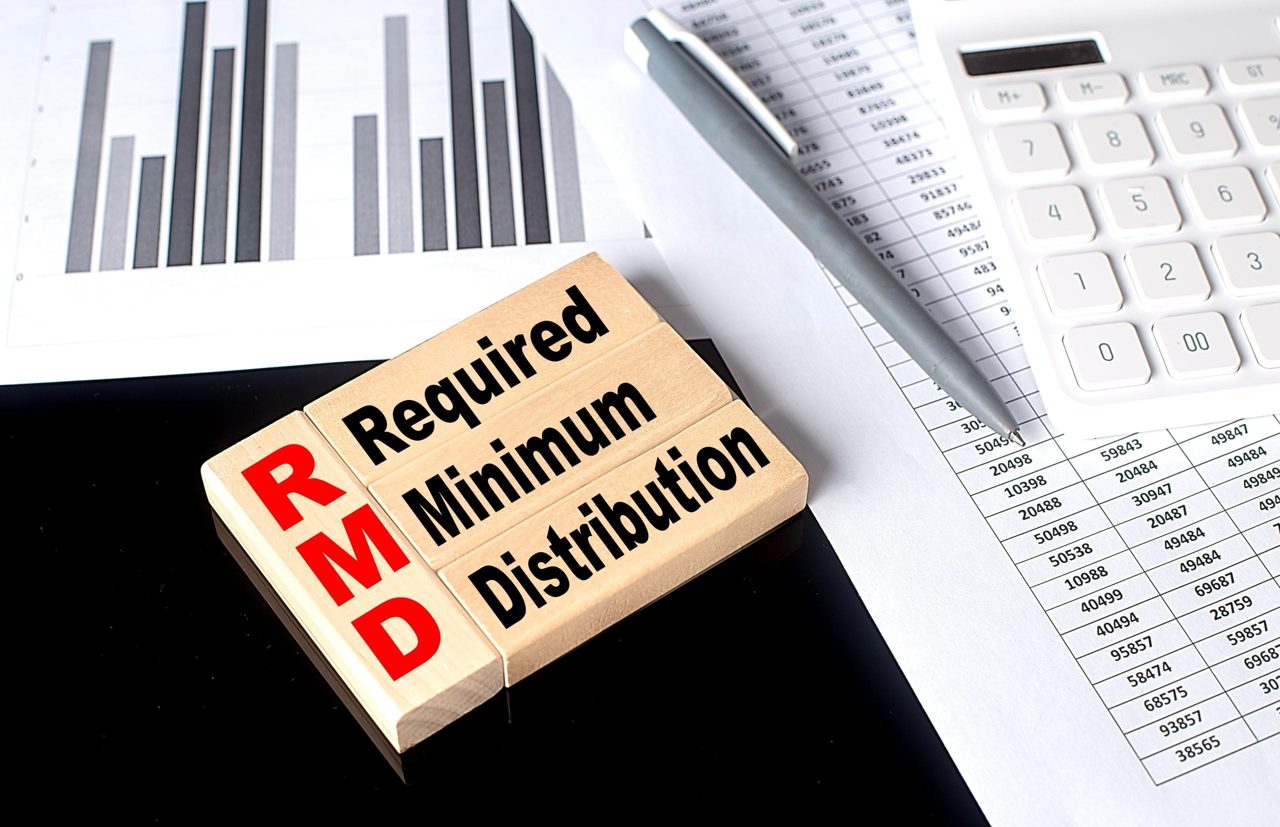
A $1 million traditional IRA produces an initial RMD of roughly $37,736 at age 73 under the Uniform Lifetime Table. Building cash flow inside the portfolio can reduce the risk of having to sell stocks during a market downturn to satisfy that withdrawal.
VOO, JEPI, DIVO, and USFR each serve a different role in funding RMDs. VOO provides long-term growth, JEPI and DIVO generate monthly income, and USFR creates a relatively stable reserve for near-term withdrawals.
The strategy does not eliminate the RMD tax bill, but it can reduce forced-selling risk. Keeping the next RMD in USFR while allowing the equity funds to generate income and compound gives retirees more control over where the required cash comes from.
Two retirees, same $1 million, same 4% rule, buy one finished with $1.4 million, the other hit $0 in 12 years. Our free reader guide explains the flaw that separated them, and the income-first method built to avoid it.
Turning 73 changes the math on your IRA. The IRS stops asking politely and starts requiring you to take money out. On a $1 million traditional IRA balance at age 73, the Uniform Lifetime Table distribution period of 26.5 produces a required minimum distribution of roughly $37,736. You owe ordinary income tax on it, and you cannot skip it. The real question is how to build a portfolio that hands you that cash without forcing you to sell quality assets during a drawdown. Four ETFs do the heavy lifting: Vanguard S&P 500 ETF ( NYSEARCA:VOO ), JPMorgan Equity Premium Income ETF ( NYSEARCA:JEPI ), WisdomTree Floating Rate Treasury Fund ( NYSEARCA:USFR ), and Amplify CWP Enhanced Dividend Income ETF ( NYSEARCA:DIVO ).
Every retiree knows about the 4% rule, but it frames retirement as a slow liquidation and still causes retirees with seven-figure accounts to agonize over a dinner out.
There's a different way to run the math that makes more sense today. Build an income floor, dividends, interest, and Social Security that cover your essential bills every month, and you never have to sell shares into a down market just to pay them.
Our free reader guide, The 4% Rule Is Broken , walks through it in about 15 minutes. Access the report here.
Your challenge is sequence risk in reverse. The IRS picks the withdrawal date. Markets pick the price. If your $37,736 comes out during a drawdown, you are locking in losses to satisfy a rule. The fix is to build a portfolio that already generates enough cash from dividends, covered-call premiums, and Treasury coupons to fund the RMD, so principal keeps compounding. These four funds map to the four jobs that the portfolio needs: growth, high income, cash preservation, and dividend growth with a hedge.
VOO tracks the S&P 500 and charges an expense ratio of 0.03%. That means you keep $9,997 of every $10,000 working. Over the past year, VOO returned 20.6%, and over ten years it has gained 316.32% on a price basis. Its distributions are quarterly, with a trailing 12-month total of $7.3456 per share. VOO serves as the growth engine, giving your IRA the runway to survive twenty more years of forced withdrawals.
JEPI overlays covered calls on a portfolio of lower-volatility large caps. Top positions include Broadcom at 1.8%, Ross Stores at 1.7%, Amazon at 1.7%, and Apple at 1.7%. The fund charges 0.35% and pays monthly. Distributions are variable. Recent payments ranged from $0.34443 to $0.44761, and the trailing 12-month total is $4.58022 per share. Twelve checks a year, staggered to arrive when quarterly funds go quiet, make it easier to hit the RMD without touching principal.
USFR holds floating-rate Treasury notes, so its coupon resets as short-term rates move. With the federal funds target upper bound at 3.75%, that yield still shows up in the payout. USFR distributes monthly and posted a trailing 12-month total of $1.72851 per share. The expense ratio is 0.15%. And price barely moves: it returned 2.2% year to date and 3.67% over one year. Park next year's RMD here. If stocks drop in January, you draw from USFR instead of selling VOO.
DIVO is actively managed by Capital Wealth Planning, blending roughly 25 to 30 blue-chip dividend growers with tactical covered calls written only when premiums justify the trade. It runs $5.24 billion in net assets at an expense ratio of 0.56%. Monthly distributions have climbed from $0.1694 in January 2025 to $0.1882 by July 2026, plus a special distribution of $0.95339676 on December 30, 2025. DIVO returned 18.84% over the past year. It gives you rising income and some equity participation, rather than JEPI's higher but capped payout.
JEPI's covered-call overlay caps upside when the S&P advances higher. Additionally, JEPI trails during a drawdown. USFR's income falls when the Fed cuts, and rates are already down 0.75% year-over-year. DIVO's 0.56% fee is real money on a seven-figure balance. And every dollar you pull from a traditional IRA is taxed as ordinary income, no matter which of these four funds it came from (the tax bill that hits the year RMDs begin is exactly the problem we walked through defusing years earlier in a free guide here).
The goal here is to meet the IRS on your terms. Growth from VOO, monthly income from JEPI and DIVO, and a stable cash sleeve in USFR let you fund $37,736 a year without ever being a forced seller. That is what makes the withdrawal pay.
Take your essential monthly expenses and subtract your guaranteed income, Social Security, plus any pension. What's left is your income gap , and how you close it determines whether retirement runs on share sales or on a paycheck your portfolio writes you every month. Our free reader guide, The 4% Rule Is Broken , shows exactly how to close that gap with portfolio income: a worked example (one retiree needed about $480,000 in income-producing assets to cover his essentials for good), an eight-point conversion checklist, and the 20-year numbers comparing dividends to withdrawals. It's free and takes about 15 minutes to read. Get the guide here before you take your next withdrawal.
Contact editorial@247wallst.com for any questions or corrections.