Argentine deputies pass bill to bar Central Bank from financing Treasury
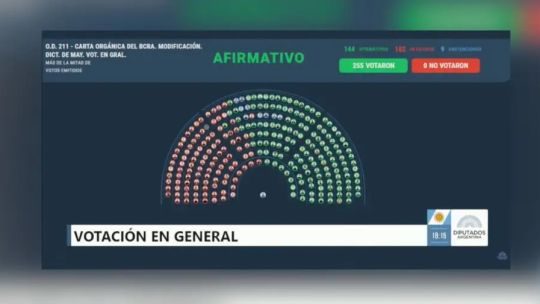
Argentina's lower house approved legislation stripping the Central Bank of its power to print money for the government, a pillar of President Milei's anti-inflation strategy that now faces a decisive Senate vote.
Argentina's Chamber of Deputies voted 144 to 102, with nine abstentions, to approve a bill overhauling the Central Bank's charter. The legislation now moves to the Senate, where the ruling La Libertad Avanza coalition lacks a majority and must win over opposition lawmakers to complete one of President Javier Milei's central economic pledges.
The bill would prohibit the Central Bank from extending transitory advances to the Treasury, lending to provincial governments and using non-transferable bonds, the mechanisms through which Buenos Aires has historically financed fiscal deficits by creating new pesos. It would also restrict profit transfers to the government, limiting distributions to earnings the institution has actually realised.
For holders of Argentine sovereign debt and investors weighing the country's macroeconomic trajectory, enactment would mark a structural change in monetary governance. The reform declares the preservation of the currency's value to be the Central Bank's "primary and fundamental mission" and removes mandates to promote employment and equitable development that were introduced under former president Cristina Fernández de Kirchner. The bank would also lose its authority to direct credit toward specific sectors.
Autonomy on paper, scepticism on the floor
A provision shielding the Central Bank governor and board members from dismissal, requiring proof of "serious cause" and a two-thirds majority in both chambers, has become the opposition's sharpest line of attack. Critics argue it protects not the institution but the individuals currently running it.
Deputy Julia Strada of the Peronist Unión por la Patria caucus called the bill a "scam," pointing to Governor Santiago Bausili's professional history alongside Economy Minister Luis Caputo. "What they're doing is locking in an employee, Minister Caputo's business partner," she said during floor debate.
Miguel Ángel Pichetto of the moderate Encuentro Federal caucus challenged the reform's underlying logic, arguing that the Central Bank should remain "subordinate to the general interest of the country" and aligned with the Executive's broader economic direction.
Ruling party deputy Silvana Giudici fired back, calling the overhaul "one of the most important reforms of recent years" and blaming the Peronist opposition for the economic damage inherited by Milei from former president Alberto Fernández.
Milei took office in December 2023 with annual inflation running at a triple-digit rate. Aggressive cuts to public spending have since brought year-on-year inflation down to 33.8 per cent as of July. The president hailed the lower house vote on X as "a fundamental step to eradicating inflation from the lives of decent Argentines."
The Senate will determine whether that step becomes law or stalls as an unfinished promise.
I prefer this response