The walking billboard goes to Bangkok: Why the World Bank meetings are my cup of tea
Some people have a cup of tea. I have a cup of “zobo”, a kaftan with attitude, and a ticket
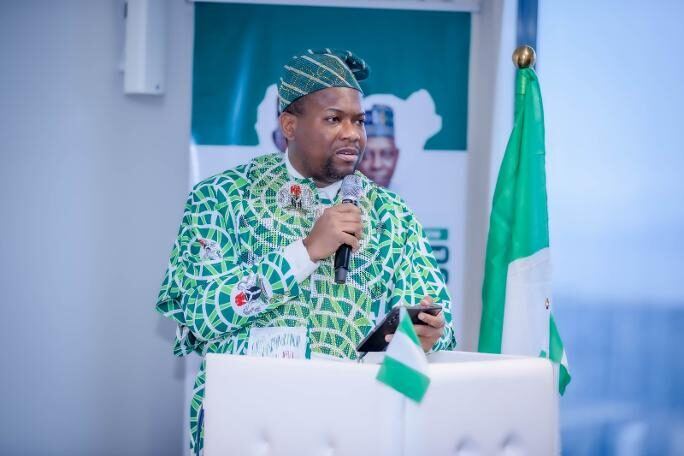
Some people have a cup of tea. I have a cup of “zobo”, a kaftan with attitude, and a ticket to the IMF and World Bank Meetings. Strange hobby? Perhaps. But when I walk into a hall filled with finance ministers, central bankers, tech founders and development experts, I feel the way some people feel on a quiet Saturday morning with a good book: calm, curious and completely awake. The World Bank Annual Meetings are my cup of tea. Or, more accurately, my cup of zobo. And this is the story of how a Nigerian in loud fabric became a walking billboard for finance, technology, Africa and, hopefully, a little good storytelling. The walking billboard In a room full of navy suits, my Nigerian fabric looks like a rainbow that took a wrong turn and decided to stay. That is intentional. Policy conversations can sometimes feel cold, technical and buried under acronyms. Fashion, I have discovered, is a remarkably efficient way to warm them up. My fabric says Nigeria is in the room. Africa is in the room. And we did not come quietly. It is my business card, conversation starter and icebreaker rolled into one. Someone asks, “What are you wearing?” I tell them. Then comes the inevitable second question: “So, what do you do?” And just like that, a fashion statement becomes a finance statement. The question I asked in Washington In October 2025, at the Civil Society Policy Forum Town Hall during the Annual Meetings in Washington, D.C., World Bank Group President Ajay Banga sat down with civil society leaders, both in person and online. It was his third town hall with civil society, with jobs framed as the World Bank Group’s North Star. These town halls remain some of my favourite moments of meeting week. Where else can a community voice get close enough to ask a question directly to the person leading one of the world’s most influential development institutions? My question was: “If AI can help markets predict risk, can it help civil society predict failure, and prevent it before it happens?” The response, as I remember it, came down to two words: Access. Alignment. I have been chewing on those words ever since. Access is about who gets the tools. Civil society organisations around the world are already experimenting with AI, building datasets and developing tools of their own. But having the technology is not the same as having the resources, infrastructure, skills and capacity to use it responsibly. Alignment is about whether those tools actually serve people and protect their rights, rather than simply serving whoever owns the servers. Because a brilliant algorithm that nobody on the ground can access, understand or trust is just an expensive screensaver. Why “predicting failure” is not an abstract idea Let me make this personal. And Nigerian. Nigeria is seeking $1.5 billion in additional World Bank financing for climate resilience, early childhood development and social protection, structured as three $500 million IDA credits. At the time of writing, these facilities are still at the preparation stage and require final approval. That matters. Because development finance is not just about how much money comes in. It is about what happens after the announcement. When a project fails, failure rarely arrives with a press conference. It looks like a borehole that never produces water. A cash transfer that never reaches the intended beneficiary. A classroom that never opens. A road project that stalls halfway through. And very often, the community discovers the failure last, after the money has already moved. So imagine something different. An early-warning system built with community-level data, strong privacy safeguards and local participation that could flag stalled disbursements, missing beneficiaries, delayed construction or other warning signs while there is still time to intervene. Markets have had risk dashboards for decades. Why shouldn’t communities? That is what I meant by predicting failure. Not predicting failure so we can point fingers. Predicting failure early enough to prevent it. Next stop: the Olympics of Finance Fast-forward to Bangkok. From 12 to 18 October, thousands of delegates from around the world will gather for the IMF and World Bank Annual Meetings. Thailand is hosting the meetings for the first time since 1991. That means one very busy coffee machine. And, I hope, some very good Thai iced tea. I am still Team Zobo. Somewhere in those corridors, a handshake could influence whether a trader in Lagos gets paid from Chiang Mai in seconds or weeks. That is the fascinating thing about global finance. The most consequential conversations do not always happen on the main stage. Sometimes they happen over coffee. Sometimes in a hallway. Sometimes because someone notices your fabric and asks a simple question. And hanging over these meetings is another question: Does Africa arrive as a partner, or as a case study? Hold that thought. I will come back to it. Thailand’s host theme is “Empowering People, Building Resilience.” The country plans to showcase PromptPay and cross-border QR payments, while the Bank of Thailand is expected to launch the “Bangkok Blueprint,” focused on safe and inclusive digital finance, including fraud prevention, cyber resilience, financial inclusion and financial literacy. For someone who loves the idea of money moving as easily as a message, this is my kind of conversation. The Nigerian cast: who is in the room? Taiwo Oyedele: the new minister Nigeria’s Minister of Finance and Coordinating Minister of the Economy, Taiwo Oyedele, is heading to the Annual Meetings in a new role. President Bola Tinubu appointed him in April 2026 following a cabinet reshuffle. At the previous meetings in Washington, Oyedele was still serving as chairman of the Presidential Committee on Fiscal Policy and Tax Reforms. This time, he arrives as the person holding the pen on Nigeria’s finance portfolio. He is also billed to participate in the 9th Foreign Investment Network Banking on Emerging Markets Forum in Bangkok, alongside African Development Bank President Sidi Tah. Why does his presence matter? Because the conversations around financing, investment, taxation and economic reform are no longer theoretical. They affect what governments can borrow, what businesses can invest, what citizens pay and what future generations inherit. My respectful ask is simple: Bring that clarity to borrowing. Publish what each loan is intended to deliver. Explain it in language ordinary citizens can understand. Set milestones people can track. And invite civil society to help monitor the results. Trust is cheaper than any loan. Zainab Ahmed: the insider on the inside Then there is Zainab Ahmed. Nigeria’s former Minister of Finance, Budget and National Planning served from 2019 to 2023. Since November 2024, she has served as an Executive Director on the World Bank Group’s Board, representing the Africa Group 3 constituency, which includes Angola, Nigeria and South Africa. In plain English, she sits at the table where major World Bank decisions on financing, policy and strategy are considered. She has also sat on the other side of the table as a Nigerian finance minister responsible for managing and negotiating public finance. That perspective makes the civil society roundtable with World Bank Group Executive Directors particularly interesting to me. Three questions are already in my notebook: 1. What does the jobs agenda actually deliver, and who gets those jobs? 2. What can World Bank projects in Asia Pacific teach Africa, including the mistakes? 3. Can the MSME Finance flagship actually reach market traders, tailors and food vendors who have never had a formal credit history? Because data only helps the small business owner if the small business owner is actually in the dataset. Africa’s report card, with footnotes Africa is not arriving in Bangkok empty-handed. Nigeria’s financial sector has been undergoing major reforms, including bank recapitalisation and efforts to strengthen the naira and build reserves. Then there is the Dangote IPO. Aliko Dangote launched what has been described as Africa’s largest share sale, offering a stake in his refinery and seeking to raise billions of dollars. The offer is scheduled to close on 13 October, meaning the order book will still be part of the conversation as the Bangkok meetings begin. For investors watching Africa, the story is bigger than one transaction. It is about whether African markets can support large-scale capital mobilisation and whether ordinary Africans can participate in the wealth being created around them. Then there is Nigeria’s critical minerals conversation with the United States. This one requires a careful reading of the fine print. Nigeria and the United States signed a Critical Minerals Framework Agreement intended to deepen investment, strengthen supply chains and promote value addition within Nigeria. But a framework is not the same thing as a cheque. Reported estimates of Nigeria’s mineral wealth should not be confused with committed foreign investment. My storyteller’s summary? Dig less. Process more. Read the fine print. The odd couple: civil society and fintech Here is where things get interesting. Civil society brings accountability, community knowledge and the voices of people who are often absent from formal financial conversations. Fintech founders bring infrastructure, speed and new ways of moving money. They need each other. Rails without rules can create opportunities for fraud. Rules without functioning rails can remain beautifully written documents sitting on a shelf. The Civil Society Policy Forum runs alongside the Annual Meetings in Bangkok, creating another opportunity to bring these worlds together. And the media has a role too. CNN’s first Global Perspectives: In Bangkok is scheduled for 14 October, while Devex is hosting a pre-meetings discussion around shrinking aid and debt pressure. My plea to the press is simple: Amplify African voices. Don’t just cover Africa. Tech as the bridge, with a seatbelt AI could give civil society organisations new tools to translate information, identify patterns, communicate with citizens and respond faster. Platforms such as Meta’s AI ecosystem are increasingly reaching people through the apps they already use, including WhatsApp, Instagram, Facebook and Messenger. That creates enormous potential. It also creates an enormous responsibility. The question is not simply: Can AI do this? The question is: Who controls the data, who benefits from it, and what happens when the system gets it wrong? That is “alignment” in practice. And it is precisely why conversations about fraud prevention, cybersecurity, digital inclusion and data protection matter. The AI revolution needs a seatbelt. Pack these in your carry-on If I could put five things in every delegate’s carry-on, they would be: Show up with numbers, not just speeches. Tie loans to plain-language milestones citizens can track. Push for local processing and clear, binding terms in minerals deals. Pair fintech rails with strong civil society safeguards. Use AI, but protect people’s data. Your seat at the table To civil society organisations, parliamentarians, fintech founders, journalists and delegates: Show up. Propose the side event. Ask the uncomfortable question. Bring your policy demands to the Civil Society Policy Forum. Join the Bangkok Blueprint conversation. Tell your stories while they are happening. The more voices in the room, the harder it becomes for the room to pretend it did not hear them. So, partner or case study? The answer will depend on what Africa brings to the table. And this year, Nigeria arrives with a new finance minister making his debut, a former finance minister sitting on the World Bank Board, entrepreneurs building financial rails, civil society asking difficult questions and communities waiting to see whether promises become results. Africa does not need to wait for someone to give it a seat at the table. Bring your own chair. And bring a pen. As for me, I will bring the fabric, the questions and a cup of zobo. Because yes, the World Bank Annual Meetings are my cup of tea. See you in Bangkok. . Inegbedion is a technology entrepreneur, journalist, and professional asker of “but why though?” By day, he’s Head of Happiness at ConcordeApp, an AI platform that helps people build professional relationships that don’t feel like LinkedIn cosplay. By other day (he has several), he’s Head of Failure & Social Experiments at Semaform Foundation, a title that sounds made up but simply means he’s the guy testing what breaks so the nonprofit’s tech-for-social-impact work doesn’t, advancing health equity one honest mistake at a time. Related News YIAGA Africa: Will over 84% of Nigerians vote? The missing middle of capital access, Why long-term capital still struggles to reach infrastructure Why health should be seen as economic problem as well as medical one, Atima Share
I have a cup of “zobo”, a kaftan with attitude, and a ticket to the IMF and World Bank Meetings. Strange hobby? Perhaps. But when I walk into a hall filled with finance ministers, central bankers, tech founders and development experts, I feel the way some people feel on a quiet Saturday morning with a good book: calm, curious and completely awake. The World Bank Annual Meetings are my cup of tea. Or, more accurately, my cup of zobo. And this is the story of how a Nigerian in loud fabric became a walking billboard for finance, technology, Africa and, hopefully, a little good storytelling. The walking billboard In a room full of navy suits, my Nigerian fabric looks like a rainbow that took a wrong turn and decided to stay. That is intentional. Policy conversations can sometimes feel cold, technical and buried under acronyms. Fashion, I have discovered, is a remarkably efficient way to warm them up. My fabric says Nigeria is in the room. Africa is in the room. And we did not come quietly. It is my business card, conversation starter and icebreaker rolled into one. Someone asks, “What are you wearing?” I tell them. Then comes the inevitable second question: “So, what do you do?” And just like that, a fashion statement becomes a finance statement. The question I asked in Washington In October 2025, at the Civil Society Policy Forum Town Hall during the Annual Meetings in Washington, D.C., World Bank Group President Ajay Banga sat down with civil society leaders, both in person and online. It was his third town hall with civil society, with jobs framed as the World Bank Group’s North Star. These town halls remain some of my favourite moments of meeting week. Where else can a community voice get close enough to ask a question directly to the person leading one of the world’s most influential development institutions? My question was: “If AI can help markets predict risk, can it help civil society predict failure, and prevent it before it happens?” The response, as I remember it, came down to two words: Access. Alignment. I have been chewing on those words ever since. Access is about who gets the tools. Civil society organisations around the world are already experimenting with AI, building datasets and developing tools of their own. But having the technology is not the same as having the resources, infrastructure, skills and capacity to use it responsibly. Alignment is about whether those tools actually serve people and protect their rights, rather than simply serving whoever owns the servers. Because a brilliant algorithm that nobody on the ground can access, understand or trust is just an expensive screensaver. Why “predicting failure” is not an abstract idea Let me make this personal. And Nigerian. Nigeria is seeking $1.5 billion in additional World Bank financing for climate resilience, early childhood development and social protection, structured as three $500 million IDA credits. At the time of writing, these facilities are still at the preparation stage and require final approval. That matters. Because development finance is not just about how much money comes in. It is about what happens after the announcement. When a project fails, failure rarely arrives with a press conference. It looks like a borehole that never produces water. A cash transfer that never reaches the intended beneficiary. A classroom that never opens. A road project that stalls halfway through. And very often, the community discovers the failure last, after the money has already moved. So imagine something different. An early-warning system built with community-level data, strong privacy safeguards and local participation that could flag stalled disbursements, missing beneficiaries, delayed construction or other warning signs while there is still time to intervene. Markets have had risk dashboards for decades. Why shouldn’t communities? That is what I meant by predicting failure. Not predicting failure so we can point fingers. Predicting failure early enough to prevent it. Next stop: the Olympics of Finance Fast-forward to Bangkok. From 12 to 18 October, thousands of delegates from around the world will gather for the IMF and World Bank Annual Meetings. Thailand is hosting the meetings for the first time since 1991. That means one very busy coffee machine. And, I hope, some very good Thai iced tea. I am still Team Zobo. Somewhere in those corridors, a handshake could influence whether a trader in Lagos gets paid from Chiang Mai in seconds or weeks. That is the fascinating thing about global finance. The most consequential conversations do not always happen on the main stage. Sometimes they happen over coffee. Sometimes in a hallway. Sometimes because someone notices your fabric and asks a simple question. And hanging over these meetings is another question: Does Africa arrive as a partner, or as a case study? Hold that thought. I will come back to it. Thailand’s host theme is “Empowering People, Building Resilience.” The country plans to showcase PromptPay and cross-border QR payments, while the Bank of Thailand is expected to launch the “Bangkok Blueprint,” focused on safe and inclusive digital finance, including fraud prevention, cyber resilience, financial inclusion and financial literacy. For someone who loves the idea of money moving as easily as a message, this is my kind of conversation. The Nigerian cast: who is in the room? Taiwo Oyedele: the new minister Nigeria’s Minister of Finance and Coordinating Minister of the Economy, Taiwo Oyedele, is heading to the Annual Meetings in a new role. President Bola Tinubu appointed him in April 2026 following a cabinet reshuffle. At the previous meetings in Washington, Oyedele was still serving as chairman of the Presidential Committee on Fiscal Policy and Tax Reforms. This time, he arrives as the person holding the pen on Nigeria’s finance portfolio. He is also billed to participate in the 9th Foreign Investment Network Banking on Emerging Markets Forum in Bangkok, alongside African Development Bank President Sidi Tah. Why does his presence matter? Because the conversations around financing, investment, taxation and economic reform are no longer theoretical. They affect what governments can borrow, what businesses can invest, what citizens pay and what future generations inherit. My respectful ask is simple: Bring that clarity to borrowing. Publish what each loan is intended to deliver. Explain it in language ordinary citizens can understand. Set milestones people can track. And invite civil society to help monitor the results. Trust is cheaper than any loan. Zainab Ahmed: the insider on the inside Then there is Zainab Ahmed. Nigeria’s former Minister of Finance, Budget and National Planning served from 2019 to 2023. Since November 2024, she has served as an Executive Director on the World Bank Group’s Board, representing the Africa Group 3 constituency, which includes Angola, Nigeria and South Africa. In plain English, she sits at the table where major World Bank decisions on financing, policy and strategy are considered. She has also sat on the other side of the table as a Nigerian finance minister responsible for managing and negotiating public finance. That perspective makes the civil society roundtable with World Bank Group Executive Directors particularly interesting to me. Three questions are already in my notebook: 1. What does the jobs agenda actually deliver, and who gets those jobs? 2. What can World Bank projects in Asia Pacific teach Africa, including the mistakes? 3. Can the MSME Finance flagship actually reach market traders, tailors and food vendors who have never had a formal credit history? Because data only helps the small business owner if the small business owner is actually in the dataset. Africa’s report card, with footnotes Africa is not arriving in Bangkok empty-handed. Nigeria’s financial sector has been undergoing major reforms, including bank recapitalisation and efforts to strengthen the naira and build reserves. Then there is the Dangote IPO. Aliko Dangote launched what has been described as Africa’s largest share sale, offering a stake in his refinery and seeking to raise billions of dollars. The offer is scheduled to close on 13 October, meaning the order book will still be part of the conversation as the Bangkok meetings begin. For investors watching Africa, the story is bigger than one transaction. It is about whether African markets can support large-scale capital mobilisation and whether ordinary Africans can participate in the wealth being created around them. Then there is Nigeria’s critical minerals conversation with the United States. This one requires a careful reading of the fine print. Nigeria and the United States signed a Critical Minerals Framework Agreement intended to deepen investment, strengthen supply chains and promote value addition within Nigeria. But a framework is not the same thing as a cheque. Reported estimates of Nigeria’s mineral wealth should not be confused with committed foreign investment. My storyteller’s summary? Dig less. Process more. Read the fine print. The odd couple: civil society and fintech Here is where things get interesting. Civil society brings accountability, community knowledge and the voices of people who are often absent from formal financial conversations. Fintech founders bring infrastructure, speed and new ways of moving money. They need each other. Rails without rules can create opportunities for fraud. Rules without functioning rails can remain beautifully written documents sitting on a shelf. The Civil Society Policy Forum runs alongside the Annual Meetings in Bangkok, creating another opportunity to bring these worlds together. And the media has a role too. CNN’s first Global Perspectives: In Bangkok is scheduled for 14 October, while Devex is hosting a pre-meetings discussion around shrinking aid and debt pressure. My plea to the press is simple: Amplify African voices. Don’t just cover Africa. Tech as the bridge, with a seatbelt AI could give civil society organisations new tools to translate information, identify patterns, communicate with citizens and respond faster. Platforms such as Meta’s AI ecosystem are increasingly reaching people through the apps they already use, including WhatsApp, Instagram, Facebook and Messenger. That creates enormous potential. It also creates an enormous responsibility. The question is not simply: Can AI do this? The question is: Who controls the data, who benefits from it, and what happens when the system gets it wrong? That is “alignment” in practice. And it is precisely why conversations about fraud prevention, cybersecurity, digital inclusion and data protection matter. The AI revolution needs a seatbelt. Pack these in your carry-on If I could put five things in every delegate’s carry-on, they would be: Show up with numbers, not just speeches. Tie loans to plain-language milestones citizens can track. Push for local processing and clear, binding terms in minerals deals. Pair fintech rails with strong civil society safeguards. Use AI, but protect people’s data. Your seat at the table To civil society organisations, parliamentarians, fintech founders, journalists and delegates: Show up. Propose the side event. Ask the uncomfortable question. Bring your policy demands to the Civil Society Policy Forum. Join the Bangkok Blueprint conversation. Tell your stories while they are happening. The more voices in the room, the harder it becomes for the room to pretend it did not hear them. So, partner or case study? The answer will depend on what Africa brings to the table. And this year, Nigeria arrives with a new finance minister making his debut, a former finance minister sitting on the World Bank Board, entrepreneurs building financial rails, civil society asking difficult questions and communities waiting to see whether promises become results. Africa does not need to wait for someone to give it a seat at the table. Bring your own chair. And bring a pen. As for me, I will bring the fabric, the questions and a cup of zobo. Because yes, the World Bank Annual Meetings are my cup of tea. See you in Bangkok. . Inegbedion is a technology entrepreneur, journalist, and professional asker of “but why though?” By day, he’s Head of Happiness at ConcordeApp, an AI platform that helps people build professional relationships that don’t feel like LinkedIn cosplay. By other day (he has several), he’s Head of Failure & Social Experiments at Semaform Foundation, a title that sounds made up but simply means he’s the guy testing what breaks so the nonprofit’s tech-for-social-impact work doesn’t, advancing health equity one honest mistake at a time. Related News YIAGA Africa: Will over 84% of Nigerians vote? The missing middle of capital access, Why long-term capital still struggles to reach infrastructure Why health should be seen as economic problem as well as medical one, Atima Share
Strange hobby? Perhaps. But when I walk into a hall filled with finance ministers, central bankers, tech founders and development experts, I feel the way some people feel on a quiet Saturday morning with a good book: calm, curious and completely awake. The World Bank Annual Meetings are my cup of tea. Or, more accurately, my cup of zobo. And this is the story of how a Nigerian in loud fabric became a walking billboard for finance, technology, Africa and, hopefully, a little good storytelling. The walking billboard In a room full of navy suits, my Nigerian fabric looks like a rainbow that took a wrong turn and decided to stay. That is intentional. Policy conversations can sometimes feel cold, technical and buried under acronyms. Fashion, I have discovered, is a remarkably efficient way to warm them up. My fabric says Nigeria is in the room. Africa is in the room. And we did not come quietly. It is my business card, conversation starter and icebreaker rolled into one. Someone asks, “What are you wearing?” I tell them. Then comes the inevitable second question: “So, what do you do?” And just like that, a fashion statement becomes a finance statement. The question I asked in Washington In October 2025, at the Civil Society Policy Forum Town Hall during the Annual Meetings in Washington, D.C., World Bank Group President Ajay Banga sat down with civil society leaders, both in person and online. It was his third town hall with civil society, with jobs framed as the World Bank Group’s North Star. These town halls remain some of my favourite moments of meeting week. Where else can a community voice get close enough to ask a question directly to the person leading one of the world’s most influential development institutions? My question was: “If AI can help markets predict risk, can it help civil society predict failure, and prevent it before it happens?” The response, as I remember it, came down to two words: Access. Alignment. I have been chewing on those words ever since. Access is about who gets the tools. Civil society organisations around the world are already experimenting with AI, building datasets and developing tools of their own. But having the technology is not the same as having the resources, infrastructure, skills and capacity to use it responsibly. Alignment is about whether those tools actually serve people and protect their rights, rather than simply serving whoever owns the servers. Because a brilliant algorithm that nobody on the ground can access, understand or trust is just an expensive screensaver. Why “predicting failure” is not an abstract idea Let me make this personal. And Nigerian. Nigeria is seeking $1.5 billion in additional World Bank financing for climate resilience, early childhood development and social protection, structured as three $500 million IDA credits. At the time of writing, these facilities are still at the preparation stage and require final approval. That matters. Because development finance is not just about how much money comes in. It is about what happens after the announcement. When a project fails, failure rarely arrives with a press conference. It looks like a borehole that never produces water. A cash transfer that never reaches the intended beneficiary. A classroom that never opens. A road project that stalls halfway through. And very often, the community discovers the failure last, after the money has already moved. So imagine something different. An early-warning system built with community-level data, strong privacy safeguards and local participation that could flag stalled disbursements, missing beneficiaries, delayed construction or other warning signs while there is still time to intervene. Markets have had risk dashboards for decades. Why shouldn’t communities? That is what I meant by predicting failure. Not predicting failure so we can point fingers. Predicting failure early enough to prevent it. Next stop: the Olympics of Finance Fast-forward to Bangkok. From 12 to 18 October, thousands of delegates from around the world will gather for the IMF and World Bank Annual Meetings. Thailand is hosting the meetings for the first time since 1991. That means one very busy coffee machine. And, I hope, some very good Thai iced tea. I am still Team Zobo. Somewhere in those corridors, a handshake could influence whether a trader in Lagos gets paid from Chiang Mai in seconds or weeks. That is the fascinating thing about global finance. The most consequential conversations do not always happen on the main stage. Sometimes they happen over coffee. Sometimes in a hallway. Sometimes because someone notices your fabric and asks a simple question. And hanging over these meetings is another question: Does Africa arrive as a partner, or as a case study? Hold that thought. I will come back to it. Thailand’s host theme is “Empowering People, Building Resilience.” The country plans to showcase PromptPay and cross-border QR payments, while the Bank of Thailand is expected to launch the “Bangkok Blueprint,” focused on safe and inclusive digital finance, including fraud prevention, cyber resilience, financial inclusion and financial literacy. For someone who loves the idea of money moving as easily as a message, this is my kind of conversation. The Nigerian cast: who is in the room? Taiwo Oyedele: the new minister Nigeria’s Minister of Finance and Coordinating Minister of the Economy, Taiwo Oyedele, is heading to the Annual Meetings in a new role. President Bola Tinubu appointed him in April 2026 following a cabinet reshuffle. At the previous meetings in Washington, Oyedele was still serving as chairman of the Presidential Committee on Fiscal Policy and Tax Reforms. This time, he arrives as the person holding the pen on Nigeria’s finance portfolio. He is also billed to participate in the 9th Foreign Investment Network Banking on Emerging Markets Forum in Bangkok, alongside African Development Bank President Sidi Tah. Why does his presence matter? Because the conversations around financing, investment, taxation and economic reform are no longer theoretical. They affect what governments can borrow, what businesses can invest, what citizens pay and what future generations inherit. My respectful ask is simple: Bring that clarity to borrowing. Publish what each loan is intended to deliver. Explain it in language ordinary citizens can understand. Set milestones people can track. And invite civil society to help monitor the results. Trust is cheaper than any loan. Zainab Ahmed: the insider on the inside Then there is Zainab Ahmed. Nigeria’s former Minister of Finance, Budget and National Planning served from 2019 to 2023. Since November 2024, she has served as an Executive Director on the World Bank Group’s Board, representing the Africa Group 3 constituency, which includes Angola, Nigeria and South Africa. In plain English, she sits at the table where major World Bank decisions on financing, policy and strategy are considered. She has also sat on the other side of the table as a Nigerian finance minister responsible for managing and negotiating public finance. That perspective makes the civil society roundtable with World Bank Group Executive Directors particularly interesting to me. Three questions are already in my notebook: 1. What does the jobs agenda actually deliver, and who gets those jobs? 2. What can World Bank projects in Asia Pacific teach Africa, including the mistakes? 3. Can the MSME Finance flagship actually reach market traders, tailors and food vendors who have never had a formal credit history? Because data only helps the small business owner if the small business owner is actually in the dataset. Africa’s report card, with footnotes Africa is not arriving in Bangkok empty-handed. Nigeria’s financial sector has been undergoing major reforms, including bank recapitalisation and efforts to strengthen the naira and build reserves. Then there is the Dangote IPO. Aliko Dangote launched what has been described as Africa’s largest share sale, offering a stake in his refinery and seeking to raise billions of dollars. The offer is scheduled to close on 13 October, meaning the order book will still be part of the conversation as the Bangkok meetings begin. For investors watching Africa, the story is bigger than one transaction. It is about whether African markets can support large-scale capital mobilisation and whether ordinary Africans can participate in the wealth being created around them. Then there is Nigeria’s critical minerals conversation with the United States. This one requires a careful reading of the fine print. Nigeria and the United States signed a Critical Minerals Framework Agreement intended to deepen investment, strengthen supply chains and promote value addition within Nigeria. But a framework is not the same thing as a cheque. Reported estimates of Nigeria’s mineral wealth should not be confused with committed foreign investment. My storyteller’s summary? Dig less. Process more. Read the fine print. The odd couple: civil society and fintech Here is where things get interesting. Civil society brings accountability, community knowledge and the voices of people who are often absent from formal financial conversations. Fintech founders bring infrastructure, speed and new ways of moving money. They need each other. Rails without rules can create opportunities for fraud. Rules without functioning rails can remain beautifully written documents sitting on a shelf. The Civil Society Policy Forum runs alongside the Annual Meetings in Bangkok, creating another opportunity to bring these worlds together. And the media has a role too. CNN’s first Global Perspectives: In Bangkok is scheduled for 14 October, while Devex is hosting a pre-meetings discussion around shrinking aid and debt pressure. My plea to the press is simple: Amplify African voices. Don’t just cover Africa. Tech as the bridge, with a seatbelt AI could give civil society organisations new tools to translate information, identify patterns, communicate with citizens and respond faster. Platforms such as Meta’s AI ecosystem are increasingly reaching people through the apps they already use, including WhatsApp, Instagram, Facebook and Messenger. That creates enormous potential. It also creates an enormous responsibility. The question is not simply: Can AI do this? The question is: Who controls the data, who benefits from it, and what happens when the system gets it wrong? That is “alignment” in practice. And it is precisely why conversations about fraud prevention, cybersecurity, digital inclusion and data protection matter. The AI revolution needs a seatbelt. Pack these in your carry-on If I could put five things in every delegate’s carry-on, they would be: Show up with numbers, not just speeches. Tie loans to plain-language milestones citizens can track. Push for local processing and clear, binding terms in minerals deals. Pair fintech rails with strong civil society safeguards. Use AI, but protect people’s data. Your seat at the table To civil society organisations, parliamentarians, fintech founders, journalists and delegates: Show up. Propose the side event. Ask the uncomfortable question. Bring your policy demands to the Civil Society Policy Forum. Join the Bangkok Blueprint conversation. Tell your stories while they are happening. The more voices in the room, the harder it becomes for the room to pretend it did not hear them. So, partner or case study? The answer will depend on what Africa brings to the table. And this year, Nigeria arrives with a new finance minister making his debut, a former finance minister sitting on the World Bank Board, entrepreneurs building financial rails, civil society asking difficult questions and communities waiting to see whether promises become results. Africa does not need to wait for someone to give it a seat at the table. Bring your own chair. And bring a pen. As for me, I will bring the fabric, the questions and a cup of zobo. Because yes, the World Bank Annual Meetings are my cup of tea. See you in Bangkok. . Inegbedion is a technology entrepreneur, journalist, and professional asker of “but why though?” By day, he’s Head of Happiness at ConcordeApp, an AI platform that helps people build professional relationships that don’t feel like LinkedIn cosplay. By other day (he has several), he’s Head of Failure & Social Experiments at Semaform Foundation, a title that sounds made up but simply means he’s the guy testing what breaks so the nonprofit’s tech-for-social-impact work doesn’t, advancing health equity one honest mistake at a time. Related News YIAGA Africa: Will over 84% of Nigerians vote? The missing middle of capital access, Why long-term capital still struggles to reach infrastructure Why health should be seen as economic problem as well as medical one, Atima Share
But when I walk into a hall filled with finance ministers, central bankers, tech founders and development experts, I feel the way some people feel on a quiet Saturday morning with a good book: calm, curious and completely awake. The World Bank Annual Meetings are my cup of tea. Or, more accurately, my cup of zobo. And this is the story of how a Nigerian in loud fabric became a walking billboard for finance, technology, Africa and, hopefully, a little good storytelling. The walking billboard In a room full of navy suits, my Nigerian fabric looks like a rainbow that took a wrong turn and decided to stay. That is intentional. Policy conversations can sometimes feel cold, technical and buried under acronyms. Fashion, I have discovered, is a remarkably efficient way to warm them up. My fabric says Nigeria is in the room. Africa is in the room. And we did not come quietly. It is my business card, conversation starter and icebreaker rolled into one. Someone asks, “What are you wearing?” I tell them. Then comes the inevitable second question: “So, what do you do?” And just like that, a fashion statement becomes a finance statement. The question I asked in Washington In October 2025, at the Civil Society Policy Forum Town Hall during the Annual Meetings in Washington, D.C., World Bank Group President Ajay Banga sat down with civil society leaders, both in person and online. It was his third town hall with civil society, with jobs framed as the World Bank Group’s North Star. These town halls remain some of my favourite moments of meeting week. Where else can a community voice get close enough to ask a question directly to the person leading one of the world’s most influential development institutions? My question was: “If AI can help markets predict risk, can it help civil society predict failure, and prevent it before it happens?” The response, as I remember it, came down to two words: Access. Alignment. I have been chewing on those words ever since. Access is about who gets the tools. Civil society organisations around the world are already experimenting with AI, building datasets and developing tools of their own. But having the technology is not the same as having the resources, infrastructure, skills and capacity to use it responsibly. Alignment is about whether those tools actually serve people and protect their rights, rather than simply serving whoever owns the servers. Because a brilliant algorithm that nobody on the ground can access, understand or trust is just an expensive screensaver. Why “predicting failure” is not an abstract idea Let me make this personal. And Nigerian. Nigeria is seeking $1.5 billion in additional World Bank financing for climate resilience, early childhood development and social protection, structured as three $500 million IDA credits. At the time of writing, these facilities are still at the preparation stage and require final approval. That matters. Because development finance is not just about how much money comes in. It is about what happens after the announcement. When a project fails, failure rarely arrives with a press conference. It looks like a borehole that never produces water. A cash transfer that never reaches the intended beneficiary. A classroom that never opens. A road project that stalls halfway through. And very often, the community discovers the failure last, after the money has already moved. So imagine something different. An early-warning system built with community-level data, strong privacy safeguards and local participation that could flag stalled disbursements, missing beneficiaries, delayed construction or other warning signs while there is still time to intervene. Markets have had risk dashboards for decades. Why shouldn’t communities? That is what I meant by predicting failure. Not predicting failure so we can point fingers. Predicting failure early enough to prevent it. Next stop: the Olympics of Finance Fast-forward to Bangkok. From 12 to 18 October, thousands of delegates from around the world will gather for the IMF and World Bank Annual Meetings. Thailand is hosting the meetings for the first time since 1991. That means one very busy coffee machine. And, I hope, some very good Thai iced tea. I am still Team Zobo. Somewhere in those corridors, a handshake could influence whether a trader in Lagos gets paid from Chiang Mai in seconds or weeks. That is the fascinating thing about global finance. The most consequential conversations do not always happen on the main stage. Sometimes they happen over coffee. Sometimes in a hallway. Sometimes because someone notices your fabric and asks a simple question. And hanging over these meetings is another question: Does Africa arrive as a partner, or as a case study? Hold that thought. I will come back to it. Thailand’s host theme is “Empowering People, Building Resilience.” The country plans to showcase PromptPay and cross-border QR payments, while the Bank of Thailand is expected to launch the “Bangkok Blueprint,” focused on safe and inclusive digital finance, including fraud prevention, cyber resilience, financial inclusion and financial literacy. For someone who loves the idea of money moving as easily as a message, this is my kind of conversation. The Nigerian cast: who is in the room? Taiwo Oyedele: the new minister Nigeria’s Minister of Finance and Coordinating Minister of the Economy, Taiwo Oyedele, is heading to the Annual Meetings in a new role. President Bola Tinubu appointed him in April 2026 following a cabinet reshuffle. At the previous meetings in Washington, Oyedele was still serving as chairman of the Presidential Committee on Fiscal Policy and Tax Reforms. This time, he arrives as the person holding the pen on Nigeria’s finance portfolio. He is also billed to participate in the 9th Foreign Investment Network Banking on Emerging Markets Forum in Bangkok, alongside African Development Bank President Sidi Tah. Why does his presence matter? Because the conversations around financing, investment, taxation and economic reform are no longer theoretical. They affect what governments can borrow, what businesses can invest, what citizens pay and what future generations inherit. My respectful ask is simple: Bring that clarity to borrowing. Publish what each loan is intended to deliver. Explain it in language ordinary citizens can understand. Set milestones people can track. And invite civil society to help monitor the results. Trust is cheaper than any loan. Zainab Ahmed: the insider on the inside Then there is Zainab Ahmed. Nigeria’s former Minister of Finance, Budget and National Planning served from 2019 to 2023. Since November 2024, she has served as an Executive Director on the World Bank Group’s Board, representing the Africa Group 3 constituency, which includes Angola, Nigeria and South Africa. In plain English, she sits at the table where major World Bank decisions on financing, policy and strategy are considered. She has also sat on the other side of the table as a Nigerian finance minister responsible for managing and negotiating public finance. That perspective makes the civil society roundtable with World Bank Group Executive Directors particularly interesting to me. Three questions are already in my notebook: 1. What does the jobs agenda actually deliver, and who gets those jobs? 2. What can World Bank projects in Asia Pacific teach Africa, including the mistakes? 3. Can the MSME Finance flagship actually reach market traders, tailors and food vendors who have never had a formal credit history? Because data only helps the small business owner if the small business owner is actually in the dataset. Africa’s report card, with footnotes Africa is not arriving in Bangkok empty-handed. Nigeria’s financial sector has been undergoing major reforms, including bank recapitalisation and efforts to strengthen the naira and build reserves. Then there is the Dangote IPO. Aliko Dangote launched what has been described as Africa’s largest share sale, offering a stake in his refinery and seeking to raise billions of dollars. The offer is scheduled to close on 13 October, meaning the order book will still be part of the conversation as the Bangkok meetings begin. For investors watching Africa, the story is bigger than one transaction. It is about whether African markets can support large-scale capital mobilisation and whether ordinary Africans can participate in the wealth being created around them. Then there is Nigeria’s critical minerals conversation with the United States. This one requires a careful reading of the fine print. Nigeria and the United States signed a Critical Minerals Framework Agreement intended to deepen investment, strengthen supply chains and promote value addition within Nigeria. But a framework is not the same thing as a cheque. Reported estimates of Nigeria’s mineral wealth should not be confused with committed foreign investment. My storyteller’s summary? Dig less. Process more. Read the fine print. The odd couple: civil society and fintech Here is where things get interesting. Civil society brings accountability, community knowledge and the voices of people who are often absent from formal financial conversations. Fintech founders bring infrastructure, speed and new ways of moving money. They need each other. Rails without rules can create opportunities for fraud. Rules without functioning rails can remain beautifully written documents sitting on a shelf. The Civil Society Policy Forum runs alongside the Annual Meetings in Bangkok, creating another opportunity to bring these worlds together. And the media has a role too. CNN’s first Global Perspectives: In Bangkok is scheduled for 14 October, while Devex is hosting a pre-meetings discussion around shrinking aid and debt pressure. My plea to the press is simple: Amplify African voices. Don’t just cover Africa. Tech as the bridge, with a seatbelt AI could give civil society organisations new tools to translate information, identify patterns, communicate with citizens and respond faster. Platforms such as Meta’s AI ecosystem are increasingly reaching people through the apps they already use, including WhatsApp, Instagram, Facebook and Messenger. That creates enormous potential. It also creates an enormous responsibility. The question is not simply: Can AI do this? The question is: Who controls the data, who benefits from it, and what happens when the system gets it wrong? That is “alignment” in practice. And it is precisely why conversations about fraud prevention, cybersecurity, digital inclusion and data protection matter. The AI revolution needs a seatbelt. Pack these in your carry-on If I could put five things in every delegate’s carry-on, they would be: Show up with numbers, not just speeches. Tie loans to plain-language milestones citizens can track. Push for local processing and clear, binding terms in minerals deals. Pair fintech rails with strong civil society safeguards. Use AI, but protect people’s data. Your seat at the table To civil society organisations, parliamentarians, fintech founders, journalists and delegates: Show up. Propose the side event. Ask the uncomfortable question. Bring your policy demands to the Civil Society Policy Forum. Join the Bangkok Blueprint conversation. Tell your stories while they are happening. The more voices in the room, the harder it becomes for the room to pretend it did not hear them. So, partner or case study? The answer will depend on what Africa brings to the table. And this year, Nigeria arrives with a new finance minister making his debut, a former finance minister sitting on the World Bank Board, entrepreneurs building financial rails, civil society asking difficult questions and communities waiting to see whether promises become results. Africa does not need to wait for someone to give it a seat at the table. Bring your own chair. And bring a pen. As for me, I will bring the fabric, the questions and a cup of zobo. Because yes, the World Bank Annual Meetings are my cup of tea. See you in Bangkok. . Inegbedion is a technology entrepreneur, journalist, and professional asker of “but why though?” By day, he’s Head of Happiness at ConcordeApp, an AI platform that helps people build professional relationships that don’t feel like LinkedIn cosplay. By other day (he has several), he’s Head of Failure & Social Experiments at Semaform Foundation, a title that sounds made up but simply means he’s the guy testing what breaks so the nonprofit’s tech-for-social-impact work doesn’t, advancing health equity one honest mistake at a time. Related News YIAGA Africa: Will over 84% of Nigerians vote? The missing middle of capital access, Why long-term capital still struggles to reach infrastructure Why health should be seen as economic problem as well as medical one, Atima Share
The World Bank Annual Meetings are my cup of tea. Or, more accurately, my cup of zobo. And this is the story of how a Nigerian in loud fabric became a walking billboard for finance, technology, Africa and, hopefully, a little good storytelling. The walking billboard In a room full of navy suits, my Nigerian fabric looks like a rainbow that took a wrong turn and decided to stay. That is intentional. Policy conversations can sometimes feel cold, technical and buried under acronyms. Fashion, I have discovered, is a remarkably efficient way to warm them up. My fabric says Nigeria is in the room. Africa is in the room. And we did not come quietly. It is my business card, conversation starter and icebreaker rolled into one. Someone asks, “What are you wearing?” I tell them. Then comes the inevitable second question: “So, what do you do?” And just like that, a fashion statement becomes a finance statement. The question I asked in Washington In October 2025, at the Civil Society Policy Forum Town Hall during the Annual Meetings in Washington, D.C., World Bank Group President Ajay Banga sat down with civil society leaders, both in person and online. It was his third town hall with civil society, with jobs framed as the World Bank Group’s North Star. These town halls remain some of my favourite moments of meeting week. Where else can a community voice get close enough to ask a question directly to the person leading one of the world’s most influential development institutions? My question was: “If AI can help markets predict risk, can it help civil society predict failure, and prevent it before it happens?” The response, as I remember it, came down to two words: Access. Alignment. I have been chewing on those words ever since. Access is about who gets the tools. Civil society organisations around the world are already experimenting with AI, building datasets and developing tools of their own. But having the technology is not the same as having the resources, infrastructure, skills and capacity to use it responsibly. Alignment is about whether those tools actually serve people and protect their rights, rather than simply serving whoever owns the servers. Because a brilliant algorithm that nobody on the ground can access, understand or trust is just an expensive screensaver. Why “predicting failure” is not an abstract idea Let me make this personal. And Nigerian. Nigeria is seeking $1.5 billion in additional World Bank financing for climate resilience, early childhood development and social protection, structured as three $500 million IDA credits. At the time of writing, these facilities are still at the preparation stage and require final approval. That matters. Because development finance is not just about how much money comes in. It is about what happens after the announcement. When a project fails, failure rarely arrives with a press conference. It looks like a borehole that never produces water. A cash transfer that never reaches the intended beneficiary. A classroom that never opens. A road project that stalls halfway through. And very often, the community discovers the failure last, after the money has already moved. So imagine something different. An early-warning system built with community-level data, strong privacy safeguards and local participation that could flag stalled disbursements, missing beneficiaries, delayed construction or other warning signs while there is still time to intervene. Markets have had risk dashboards for decades. Why shouldn’t communities? That is what I meant by predicting failure. Not predicting failure so we can point fingers. Predicting failure early enough to prevent it. Next stop: the Olympics of Finance Fast-forward to Bangkok. From 12 to 18 October, thousands of delegates from around the world will gather for the IMF and World Bank Annual Meetings. Thailand is hosting the meetings for the first time since 1991. That means one very busy coffee machine. And, I hope, some very good Thai iced tea. I am still Team Zobo. Somewhere in those corridors, a handshake could influence whether a trader in Lagos gets paid from Chiang Mai in seconds or weeks. That is the fascinating thing about global finance. The most consequential conversations do not always happen on the main stage. Sometimes they happen over coffee. Sometimes in a hallway. Sometimes because someone notices your fabric and asks a simple question. And hanging over these meetings is another question: Does Africa arrive as a partner, or as a case study? Hold that thought. I will come back to it. Thailand’s host theme is “Empowering People, Building Resilience.” The country plans to showcase PromptPay and cross-border QR payments, while the Bank of Thailand is expected to launch the “Bangkok Blueprint,” focused on safe and inclusive digital finance, including fraud prevention, cyber resilience, financial inclusion and financial literacy. For someone who loves the idea of money moving as easily as a message, this is my kind of conversation. The Nigerian cast: who is in the room? Taiwo Oyedele: the new minister Nigeria’s Minister of Finance and Coordinating Minister of the Economy, Taiwo Oyedele, is heading to the Annual Meetings in a new role. President Bola Tinubu appointed him in April 2026 following a cabinet reshuffle. At the previous meetings in Washington, Oyedele was still serving as chairman of the Presidential Committee on Fiscal Policy and Tax Reforms. This time, he arrives as the person holding the pen on Nigeria’s finance portfolio. He is also billed to participate in the 9th Foreign Investment Network Banking on Emerging Markets Forum in Bangkok, alongside African Development Bank President Sidi Tah. Why does his presence matter? Because the conversations around financing, investment, taxation and economic reform are no longer theoretical. They affect what governments can borrow, what businesses can invest, what citizens pay and what future generations inherit. My respectful ask is simple: Bring that clarity to borrowing. Publish what each loan is intended to deliver. Explain it in language ordinary citizens can understand. Set milestones people can track. And invite civil society to help monitor the results. Trust is cheaper than any loan. Zainab Ahmed: the insider on the inside Then there is Zainab Ahmed. Nigeria’s former Minister of Finance, Budget and National Planning served from 2019 to 2023. Since November 2024, she has served as an Executive Director on the World Bank Group’s Board, representing the Africa Group 3 constituency, which includes Angola, Nigeria and South Africa. In plain English, she sits at the table where major World Bank decisions on financing, policy and strategy are considered. She has also sat on the other side of the table as a Nigerian finance minister responsible for managing and negotiating public finance. That perspective makes the civil society roundtable with World Bank Group Executive Directors particularly interesting to me. Three questions are already in my notebook: 1. What does the jobs agenda actually deliver, and who gets those jobs? 2. What can World Bank projects in Asia Pacific teach Africa, including the mistakes? 3. Can the MSME Finance flagship actually reach market traders, tailors and food vendors who have never had a formal credit history? Because data only helps the small business owner if the small business owner is actually in the dataset. Africa’s report card, with footnotes Africa is not arriving in Bangkok empty-handed. Nigeria’s financial sector has been undergoing major reforms, including bank recapitalisation and efforts to strengthen the naira and build reserves. Then there is the Dangote IPO. Aliko Dangote launched what has been described as Africa’s largest share sale, offering a stake in his refinery and seeking to raise billions of dollars. The offer is scheduled to close on 13 October, meaning the order book will still be part of the conversation as the Bangkok meetings begin. For investors watching Africa, the story is bigger than one transaction. It is about whether African markets can support large-scale capital mobilisation and whether ordinary Africans can participate in the wealth being created around them. Then there is Nigeria’s critical minerals conversation with the United States. This one requires a careful reading of the fine print. Nigeria and the United States signed a Critical Minerals Framework Agreement intended to deepen investment, strengthen supply chains and promote value addition within Nigeria. But a framework is not the same thing as a cheque. Reported estimates of Nigeria’s mineral wealth should not be confused with committed foreign investment. My storyteller’s summary? Dig less. Process more. Read the fine print. The odd couple: civil society and fintech Here is where things get interesting. Civil society brings accountability, community knowledge and the voices of people who are often absent from formal financial conversations. Fintech founders bring infrastructure, speed and new ways of moving money. They need each other. Rails without rules can create opportunities for fraud. Rules without functioning rails can remain beautifully written documents sitting on a shelf. The Civil Society Policy Forum runs alongside the Annual Meetings in Bangkok, creating another opportunity to bring these worlds together. And the media has a role too. CNN’s first Global Perspectives: In Bangkok is scheduled for 14 October, while Devex is hosting a pre-meetings discussion around shrinking aid and debt pressure. My plea to the press is simple: Amplify African voices. Don’t just cover Africa. Tech as the bridge, with a seatbelt AI could give civil society organisations new tools to translate information, identify patterns, communicate with citizens and respond faster. Platforms such as Meta’s AI ecosystem are increasingly reaching people through the apps they already use, including WhatsApp, Instagram, Facebook and Messenger. That creates enormous potential. It also creates an enormous responsibility. The question is not simply: Can AI do this? The question is: Who controls the data, who benefits from it, and what happens when the system gets it wrong? That is “alignment” in practice. And it is precisely why conversations about fraud prevention, cybersecurity, digital inclusion and data protection matter. The AI revolution needs a seatbelt. Pack these in your carry-on If I could put five things in every delegate’s carry-on, they would be: Show up with numbers, not just speeches. Tie loans to plain-language milestones citizens can track. Push for local processing and clear, binding terms in minerals deals. Pair fintech rails with strong civil society safeguards. Use AI, but protect people’s data. Your seat at the table To civil society organisations, parliamentarians, fintech founders, journalists and delegates: Show up. Propose the side event. Ask the uncomfortable question. Bring your policy demands to the Civil Society Policy Forum. Join the Bangkok Blueprint conversation. Tell your stories while they are happening. The more voices in the room, the harder it becomes for the room to pretend it did not hear them. So, partner or case study? The answer will depend on what Africa brings to the table. And this year, Nigeria arrives with a new finance minister making his debut, a former finance minister sitting on the World Bank Board, entrepreneurs building financial rails, civil society asking difficult questions and communities waiting to see whether promises become results. Africa does not need to wait for someone to give it a seat at the table. Bring your own chair. And bring a pen. As for me, I will bring the fabric, the questions and a cup of zobo. Because yes, the World Bank Annual Meetings are my cup of tea. See you in Bangkok. . Inegbedion is a technology entrepreneur, journalist, and professional asker of “but why though?” By day, he’s Head of Happiness at ConcordeApp, an AI platform that helps people build professional relationships that don’t feel like LinkedIn cosplay. By other day (he has several), he’s Head of Failure & Social Experiments at Semaform Foundation, a title that sounds made up but simply means he’s the guy testing what breaks so the nonprofit’s tech-for-social-impact work doesn’t, advancing health equity one honest mistake at a time. Related News YIAGA Africa: Will over 84% of Nigerians vote? The missing middle of capital access, Why long-term capital still struggles to reach infrastructure Why health should be seen as economic problem as well as medical one, Atima Share
Or, more accurately, my cup of zobo. And this is the story of how a Nigerian in loud fabric became a walking billboard for finance, technology, Africa and, hopefully, a little good storytelling. The walking billboard In a room full of navy suits, my Nigerian fabric looks like a rainbow that took a wrong turn and decided to stay. That is intentional. Policy conversations can sometimes feel cold, technical and buried under acronyms. Fashion, I have discovered, is a remarkably efficient way to warm them up. My fabric says Nigeria is in the room. Africa is in the room. And we did not come quietly. It is my business card, conversation starter and icebreaker rolled into one. Someone asks, “What are you wearing?” I tell them. Then comes the inevitable second question: “So, what do you do?” And just like that, a fashion statement becomes a finance statement. The question I asked in Washington In October 2025, at the Civil Society Policy Forum Town Hall during the Annual Meetings in Washington, D.C., World Bank Group President Ajay Banga sat down with civil society leaders, both in person and online. It was his third town hall with civil society, with jobs framed as the World Bank Group’s North Star. These town halls remain some of my favourite moments of meeting week. Where else can a community voice get close enough to ask a question directly to the person leading one of the world’s most influential development institutions? My question was: “If AI can help markets predict risk, can it help civil society predict failure, and prevent it before it happens?” The response, as I remember it, came down to two words: Access. Alignment. I have been chewing on those words ever since. Access is about who gets the tools. Civil society organisations around the world are already experimenting with AI, building datasets and developing tools of their own. But having the technology is not the same as having the resources, infrastructure, skills and capacity to use it responsibly. Alignment is about whether those tools actually serve people and protect their rights, rather than simply serving whoever owns the servers. Because a brilliant algorithm that nobody on the ground can access, understand or trust is just an expensive screensaver. Why “predicting failure” is not an abstract idea Let me make this personal. And Nigerian. Nigeria is seeking $1.5 billion in additional World Bank financing for climate resilience, early childhood development and social protection, structured as three $500 million IDA credits. At the time of writing, these facilities are still at the preparation stage and require final approval. That matters. Because development finance is not just about how much money comes in. It is about what happens after the announcement. When a project fails, failure rarely arrives with a press conference. It looks like a borehole that never produces water. A cash transfer that never reaches the intended beneficiary. A classroom that never opens. A road project that stalls halfway through. And very often, the community discovers the failure last, after the money has already moved. So imagine something different. An early-warning system built with community-level data, strong privacy safeguards and local participation that could flag stalled disbursements, missing beneficiaries, delayed construction or other warning signs while there is still time to intervene. Markets have had risk dashboards for decades. Why shouldn’t communities? That is what I meant by predicting failure. Not predicting failure so we can point fingers. Predicting failure early enough to prevent it. Next stop: the Olympics of Finance Fast-forward to Bangkok. From 12 to 18 October, thousands of delegates from around the world will gather for the IMF and World Bank Annual Meetings. Thailand is hosting the meetings for the first time since 1991. That means one very busy coffee machine. And, I hope, some very good Thai iced tea. I am still Team Zobo. Somewhere in those corridors, a handshake could influence whether a trader in Lagos gets paid from Chiang Mai in seconds or weeks. That is the fascinating thing about global finance. The most consequential conversations do not always happen on the main stage. Sometimes they happen over coffee. Sometimes in a hallway. Sometimes because someone notices your fabric and asks a simple question. And hanging over these meetings is another question: Does Africa arrive as a partner, or as a case study? Hold that thought. I will come back to it. Thailand’s host theme is “Empowering People, Building Resilience.” The country plans to showcase PromptPay and cross-border QR payments, while the Bank of Thailand is expected to launch the “Bangkok Blueprint,” focused on safe and inclusive digital finance, including fraud prevention, cyber resilience, financial inclusion and financial literacy. For someone who loves the idea of money moving as easily as a message, this is my kind of conversation. The Nigerian cast: who is in the room? Taiwo Oyedele: the new minister Nigeria’s Minister of Finance and Coordinating Minister of the Economy, Taiwo Oyedele, is heading to the Annual Meetings in a new role. President Bola Tinubu appointed him in April 2026 following a cabinet reshuffle. At the previous meetings in Washington, Oyedele was still serving as chairman of the Presidential Committee on Fiscal Policy and Tax Reforms. This time, he arrives as the person holding the pen on Nigeria’s finance portfolio. He is also billed to participate in the 9th Foreign Investment Network Banking on Emerging Markets Forum in Bangkok, alongside African Development Bank President Sidi Tah. Why does his presence matter? Because the conversations around financing, investment, taxation and economic reform are no longer theoretical. They affect what governments can borrow, what businesses can invest, what citizens pay and what future generations inherit. My respectful ask is simple: Bring that clarity to borrowing. Publish what each loan is intended to deliver. Explain it in language ordinary citizens can understand. Set milestones people can track. And invite civil society to help monitor the results. Trust is cheaper than any loan. Zainab Ahmed: the insider on the inside Then there is Zainab Ahmed. Nigeria’s former Minister of Finance, Budget and National Planning served from 2019 to 2023. Since November 2024, she has served as an Executive Director on the World Bank Group’s Board, representing the Africa Group 3 constituency, which includes Angola, Nigeria and South Africa. In plain English, she sits at the table where major World Bank decisions on financing, policy and strategy are considered. She has also sat on the other side of the table as a Nigerian finance minister responsible for managing and negotiating public finance. That perspective makes the civil society roundtable with World Bank Group Executive Directors particularly interesting to me. Three questions are already in my notebook: 1. What does the jobs agenda actually deliver, and who gets those jobs? 2. What can World Bank projects in Asia Pacific teach Africa, including the mistakes? 3. Can the MSME Finance flagship actually reach market traders, tailors and food vendors who have never had a formal credit history? Because data only helps the small business owner if the small business owner is actually in the dataset. Africa’s report card, with footnotes Africa is not arriving in Bangkok empty-handed. Nigeria’s financial sector has been undergoing major reforms, including bank recapitalisation and efforts to strengthen the naira and build reserves. Then there is the Dangote IPO. Aliko Dangote launched what has been described as Africa’s largest share sale, offering a stake in his refinery and seeking to raise billions of dollars. The offer is scheduled to close on 13 October, meaning the order book will still be part of the conversation as the Bangkok meetings begin. For investors watching Africa, the story is bigger than one transaction. It is about whether African markets can support large-scale capital mobilisation and whether ordinary Africans can participate in the wealth being created around them. Then there is Nigeria’s critical minerals conversation with the United States. This one requires a careful reading of the fine print. Nigeria and the United States signed a Critical Minerals Framework Agreement intended to deepen investment, strengthen supply chains and promote value addition within Nigeria. But a framework is not the same thing as a cheque. Reported estimates of Nigeria’s mineral wealth should not be confused with committed foreign investment. My storyteller’s summary? Dig less. Process more. Read the fine print. The odd couple: civil society and fintech Here is where things get interesting. Civil society brings accountability, community knowledge and the voices of people who are often absent from formal financial conversations. Fintech founders bring infrastructure, speed and new ways of moving money. They need each other. Rails without rules can create opportunities for fraud. Rules without functioning rails can remain beautifully written documents sitting on a shelf. The Civil Society Policy Forum runs alongside the Annual Meetings in Bangkok, creating another opportunity to bring these worlds together. And the media has a role too. CNN’s first Global Perspectives: In Bangkok is scheduled for 14 October, while Devex is hosting a pre-meetings discussion around shrinking aid and debt pressure. My plea to the press is simple: Amplify African voices. Don’t just cover Africa. Tech as the bridge, with a seatbelt AI could give civil society organisations new tools to translate information, identify patterns, communicate with citizens and respond faster. Platforms such as Meta’s AI ecosystem are increasingly reaching people through the apps they already use, including WhatsApp, Instagram, Facebook and Messenger. That creates enormous potential. It also creates an enormous responsibility. The question is not simply: Can AI do this? The question is: Who controls the data, who benefits from it, and what happens when the system gets it wrong? That is “alignment” in practice. And it is precisely why conversations about fraud prevention, cybersecurity, digital inclusion and data protection matter. The AI revolution needs a seatbelt. Pack these in your carry-on If I could put five things in every delegate’s carry-on, they would be: Show up with numbers, not just speeches. Tie loans to plain-language milestones citizens can track. Push for local processing and clear, binding terms in minerals deals. Pair fintech rails with strong civil society safeguards. Use AI, but protect people’s data. Your seat at the table To civil society organisations, parliamentarians, fintech founders, journalists and delegates: Show up. Propose the side event. Ask the uncomfortable question. Bring your policy demands to the Civil Society Policy Forum. Join the Bangkok Blueprint conversation. Tell your stories while they are happening. The more voices in the room, the harder it becomes for the room to pretend it did not hear them. So, partner or case study? The answer will depend on what Africa brings to the table. And this year, Nigeria arrives with a new finance minister making his debut, a former finance minister sitting on the World Bank Board, entrepreneurs building financial rails, civil society asking difficult questions and communities waiting to see whether promises become results. Africa does not need to wait for someone to give it a seat at the table. Bring your own chair. And bring a pen. As for me, I will bring the fabric, the questions and a cup of zobo. Because yes, the World Bank Annual Meetings are my cup of tea. See you in Bangkok. . Inegbedion is a technology entrepreneur, journalist, and professional asker of “but why though?” By day, he’s Head of Happiness at ConcordeApp, an AI platform that helps people build professional relationships that don’t feel like LinkedIn cosplay. By other day (he has several), he’s Head of Failure & Social Experiments at Semaform Foundation, a title that sounds made up but simply means he’s the guy testing what breaks so the nonprofit’s tech-for-social-impact work doesn’t, advancing health equity one honest mistake at a time. Related News YIAGA Africa: Will over 84% of Nigerians vote? The missing middle of capital access, Why long-term capital still struggles to reach infrastructure Why health should be seen as economic problem as well as medical one, Atima Share
And this is the story of how a Nigerian in loud fabric became a walking billboard for finance, technology, Africa and, hopefully, a little good storytelling. The walking billboard In a room full of navy suits, my Nigerian fabric looks like a rainbow that took a wrong turn and decided to stay. That is intentional. Policy conversations can sometimes feel cold, technical and buried under acronyms. Fashion, I have discovered, is a remarkably efficient way to warm them up. My fabric says Nigeria is in the room. Africa is in the room. And we did not come quietly. It is my business card, conversation starter and icebreaker rolled into one. Someone asks, “What are you wearing?” I tell them. Then comes the inevitable second question: “So, what do you do?” And just like that, a fashion statement becomes a finance statement. The question I asked in Washington In October 2025, at the Civil Society Policy Forum Town Hall during the Annual Meetings in Washington, D.C., World Bank Group President Ajay Banga sat down with civil society leaders, both in person and online. It was his third town hall with civil society, with jobs framed as the World Bank Group’s North Star. These town halls remain some of my favourite moments of meeting week. Where else can a community voice get close enough to ask a question directly to the person leading one of the world’s most influential development institutions? My question was: “If AI can help markets predict risk, can it help civil society predict failure, and prevent it before it happens?” The response, as I remember it, came down to two words: Access. Alignment. I have been chewing on those words ever since. Access is about who gets the tools. Civil society organisations around the world are already experimenting with AI, building datasets and developing tools of their own. But having the technology is not the same as having the resources, infrastructure, skills and capacity to use it responsibly. Alignment is about whether those tools actually serve people and protect their rights, rather than simply serving whoever owns the servers. Because a brilliant algorithm that nobody on the ground can access, understand or trust is just an expensive screensaver. Why “predicting failure” is not an abstract idea Let me make this personal. And Nigerian. Nigeria is seeking $1.5 billion in additional World Bank financing for climate resilience, early childhood development and social protection, structured as three $500 million IDA credits. At the time of writing, these facilities are still at the preparation stage and require final approval. That matters. Because development finance is not just about how much money comes in. It is about what happens after the announcement. When a project fails, failure rarely arrives with a press conference. It looks like a borehole that never produces water. A cash transfer that never reaches the intended beneficiary. A classroom that never opens. A road project that stalls halfway through. And very often, the community discovers the failure last, after the money has already moved. So imagine something different. An early-warning system built with community-level data, strong privacy safeguards and local participation that could flag stalled disbursements, missing beneficiaries, delayed construction or other warning signs while there is still time to intervene. Markets have had risk dashboards for decades. Why shouldn’t communities? That is what I meant by predicting failure. Not predicting failure so we can point fingers. Predicting failure early enough to prevent it. Next stop: the Olympics of Finance Fast-forward to Bangkok. From 12 to 18 October, thousands of delegates from around the world will gather for the IMF and World Bank Annual Meetings. Thailand is hosting the meetings for the first time since 1991. That means one very busy coffee machine. And, I hope, some very good Thai iced tea. I am still Team Zobo. Somewhere in those corridors, a handshake could influence whether a trader in Lagos gets paid from Chiang Mai in seconds or weeks. That is the fascinating thing about global finance. The most consequential conversations do not always happen on the main stage. Sometimes they happen over coffee. Sometimes in a hallway. Sometimes because someone notices your fabric and asks a simple question. And hanging over these meetings is another question: Does Africa arrive as a partner, or as a case study? Hold that thought. I will come back to it. Thailand’s host theme is “Empowering People, Building Resilience.” The country plans to showcase PromptPay and cross-border QR payments, while the Bank of Thailand is expected to launch the “Bangkok Blueprint,” focused on safe and inclusive digital finance, including fraud prevention, cyber resilience, financial inclusion and financial literacy. For someone who loves the idea of money moving as easily as a message, this is my kind of conversation. The Nigerian cast: who is in the room? Taiwo Oyedele: the new minister Nigeria’s Minister of Finance and Coordinating Minister of the Economy, Taiwo Oyedele, is heading to the Annual Meetings in a new role. President Bola Tinubu appointed him in April 2026 following a cabinet reshuffle. At the previous meetings in Washington, Oyedele was still serving as chairman of the Presidential Committee on Fiscal Policy and Tax Reforms. This time, he arrives as the person holding the pen on Nigeria’s finance portfolio. He is also billed to participate in the 9th Foreign Investment Network Banking on Emerging Markets Forum in Bangkok, alongside African Development Bank President Sidi Tah. Why does his presence matter? Because the conversations around financing, investment, taxation and economic reform are no longer theoretical. They affect what governments can borrow, what businesses can invest, what citizens pay and what future generations inherit. My respectful ask is simple: Bring that clarity to borrowing. Publish what each loan is intended to deliver. Explain it in language ordinary citizens can understand. Set milestones people can track. And invite civil society to help monitor the results. Trust is cheaper than any loan. Zainab Ahmed: the insider on the inside Then there is Zainab Ahmed. Nigeria’s former Minister of Finance, Budget and National Planning served from 2019 to 2023. Since November 2024, she has served as an Executive Director on the World Bank Group’s Board, representing the Africa Group 3 constituency, which includes Angola, Nigeria and South Africa. In plain English, she sits at the table where major World Bank decisions on financing, policy and strategy are considered. She has also sat on the other side of the table as a Nigerian finance minister responsible for managing and negotiating public finance. That perspective makes the civil society roundtable with World Bank Group Executive Directors particularly interesting to me. Three questions are already in my notebook: 1. What does the jobs agenda actually deliver, and who gets those jobs? 2. What can World Bank projects in Asia Pacific teach Africa, including the mistakes? 3. Can the MSME Finance flagship actually reach market traders, tailors and food vendors who have never had a formal credit history? Because data only helps the small business owner if the small business owner is actually in the dataset. Africa’s report card, with footnotes Africa is not arriving in Bangkok empty-handed. Nigeria’s financial sector has been undergoing major reforms, including bank recapitalisation and efforts to strengthen the naira and build reserves. Then there is the Dangote IPO. Aliko Dangote launched what has been described as Africa’s largest share sale, offering a stake in his refinery and seeking to raise billions of dollars. The offer is scheduled to close on 13 October, meaning the order book will still be part of the conversation as the Bangkok meetings begin. For investors watching Africa, the story is bigger than one transaction. It is about whether African markets can support large-scale capital mobilisation and whether ordinary Africans can participate in the wealth being created around them. Then there is Nigeria’s critical minerals conversation with the United States. This one requires a careful reading of the fine print. Nigeria and the United States signed a Critical Minerals Framework Agreement intended to deepen investment, strengthen supply chains and promote value addition within Nigeria. But a framework is not the same thing as a cheque. Reported estimates of Nigeria’s mineral wealth should not be confused with committed foreign investment. My storyteller’s summary? Dig less. Process more. Read the fine print. The odd couple: civil society and fintech Here is where things get interesting. Civil society brings accountability, community knowledge and the voices of people who are often absent from formal financial conversations. Fintech founders bring infrastructure, speed and new ways of moving money. They need each other. Rails without rules can create opportunities for fraud. Rules without functioning rails can remain beautifully written documents sitting on a shelf. The Civil Society Policy Forum runs alongside the Annual Meetings in Bangkok, creating another opportunity to bring these worlds together. And the media has a role too. CNN’s first Global Perspectives: In Bangkok is scheduled for 14 October, while Devex is hosting a pre-meetings discussion around shrinking aid and debt pressure. My plea to the press is simple: Amplify African voices. Don’t just cover Africa. Tech as the bridge, with a seatbelt AI could give civil society organisations new tools to translate information, identify patterns, communicate with citizens and respond faster. Platforms such as Meta’s AI ecosystem are increasingly reaching people through the apps they already use, including WhatsApp, Instagram, Facebook and Messenger. That creates enormous potential. It also creates an enormous responsibility. The question is not simply: Can AI do this? The question is: Who controls the data, who benefits from it, and what happens when the system gets it wrong? That is “alignment” in practice. And it is precisely why conversations about fraud prevention, cybersecurity, digital inclusion and data protection matter. The AI revolution needs a seatbelt. Pack these in your carry-on If I could put five things in every delegate’s carry-on, they would be: Show up with numbers, not just speeches. Tie loans to plain-language milestones citizens can track. Push for local processing and clear, binding terms in minerals deals. Pair fintech rails with strong civil society safeguards. Use AI, but protect people’s data. Your seat at the table To civil society organisations, parliamentarians, fintech founders, journalists and delegates: Show up. Propose the side event. Ask the uncomfortable question. Bring your policy demands to the Civil Society Policy Forum. Join the Bangkok Blueprint conversation. Tell your stories while they are happening. The more voices in the room, the harder it becomes for the room to pretend it did not hear them. So, partner or case study? The answer will depend on what Africa brings to the table. And this year, Nigeria arrives with a new finance minister making his debut, a former finance minister sitting on the World Bank Board, entrepreneurs building financial rails, civil society asking difficult questions and communities waiting to see whether promises become results. Africa does not need to wait for someone to give it a seat at the table. Bring your own chair. And bring a pen. As for me, I will bring the fabric, the questions and a cup of zobo. Because yes, the World Bank Annual Meetings are my cup of tea. See you in Bangkok. . Inegbedion is a technology entrepreneur, journalist, and professional asker of “but why though?” By day, he’s Head of Happiness at ConcordeApp, an AI platform that helps people build professional relationships that don’t feel like LinkedIn cosplay. By other day (he has several), he’s Head of Failure & Social Experiments at Semaform Foundation, a title that sounds made up but simply means he’s the guy testing what breaks so the nonprofit’s tech-for-social-impact work doesn’t, advancing health equity one honest mistake at a time. Related News YIAGA Africa: Will over 84% of Nigerians vote? The missing middle of capital access, Why long-term capital still struggles to reach infrastructure Why health should be seen as economic problem as well as medical one, Atima Share
The walking billboard In a room full of navy suits, my Nigerian fabric looks like a rainbow that took a wrong turn and decided to stay. That is intentional. Policy conversations can sometimes feel cold, technical and buried under acronyms. Fashion, I have discovered, is a remarkably efficient way to warm them up. My fabric says Nigeria is in the room. Africa is in the room. And we did not come quietly. It is my business card, conversation starter and icebreaker rolled into one. Someone asks, “What are you wearing?” I tell them. Then comes the inevitable second question: “So, what do you do?” And just like that, a fashion statement becomes a finance statement. The question I asked in Washington In October 2025, at the Civil Society Policy Forum Town Hall during the Annual Meetings in Washington, D.C., World Bank Group President Ajay Banga sat down with civil society leaders, both in person and online. It was his third town hall with civil society, with jobs framed as the World Bank Group’s North Star. These town halls remain some of my favourite moments of meeting week. Where else can a community voice get close enough to ask a question directly to the person leading one of the world’s most influential development institutions? My question was: “If AI can help markets predict risk, can it help civil society predict failure, and prevent it before it happens?” The response, as I remember it, came down to two words: Access. Alignment. I have been chewing on those words ever since. Access is about who gets the tools. Civil society organisations around the world are already experimenting with AI, building datasets and developing tools of their own. But having the technology is not the same as having the resources, infrastructure, skills and capacity to use it responsibly. Alignment is about whether those tools actually serve people and protect their rights, rather than simply serving whoever owns the servers. Because a brilliant algorithm that nobody on the ground can access, understand or trust is just an expensive screensaver. Why “predicting failure” is not an abstract idea Let me make this personal. And Nigerian. Nigeria is seeking $1.5 billion in additional World Bank financing for climate resilience, early childhood development and social protection, structured as three $500 million IDA credits. At the time of writing, these facilities are still at the preparation stage and require final approval. That matters. Because development finance is not just about how much money comes in. It is about what happens after the announcement. When a project fails, failure rarely arrives with a press conference. It looks like a borehole that never produces water. A cash transfer that never reaches the intended beneficiary. A classroom that never opens. A road project that stalls halfway through. And very often, the community discovers the failure last, after the money has already moved. So imagine something different. An early-warning system built with community-level data, strong privacy safeguards and local participation that could flag stalled disbursements, missing beneficiaries, delayed construction or other warning signs while there is still time to intervene. Markets have had risk dashboards for decades. Why shouldn’t communities? That is what I meant by predicting failure. Not predicting failure so we can point fingers. Predicting failure early enough to prevent it. Next stop: the Olympics of Finance Fast-forward to Bangkok. From 12 to 18 October, thousands of delegates from around the world will gather for the IMF and World Bank Annual Meetings. Thailand is hosting the meetings for the first time since 1991. That means one very busy coffee machine. And, I hope, some very good Thai iced tea. I am still Team Zobo. Somewhere in those corridors, a handshake could influence whether a trader in Lagos gets paid from Chiang Mai in seconds or weeks. That is the fascinating thing about global finance. The most consequential conversations do not always happen on the main stage. Sometimes they happen over coffee. Sometimes in a hallway. Sometimes because someone notices your fabric and asks a simple question. And hanging over these meetings is another question: Does Africa arrive as a partner, or as a case study? Hold that thought. I will come back to it. Thailand’s host theme is “Empowering People, Building Resilience.” The country plans to showcase PromptPay and cross-border QR payments, while the Bank of Thailand is expected to launch the “Bangkok Blueprint,” focused on safe and inclusive digital finance, including fraud prevention, cyber resilience, financial inclusion and financial literacy. For someone who loves the idea of money moving as easily as a message, this is my kind of conversation. The Nigerian cast: who is in the room? Taiwo Oyedele: the new minister Nigeria’s Minister of Finance and Coordinating Minister of the Economy, Taiwo Oyedele, is heading to the Annual Meetings in a new role. President Bola Tinubu appointed him in April 2026 following a cabinet reshuffle. At the previous meetings in Washington, Oyedele was still serving as chairman of the Presidential Committee on Fiscal Policy and Tax Reforms. This time, he arrives as the person holding the pen on Nigeria’s finance portfolio. He is also billed to participate in the 9th Foreign Investment Network Banking on Emerging Markets Forum in Bangkok, alongside African Development Bank President Sidi Tah. Why does his presence matter? Because the conversations around financing, investment, taxation and economic reform are no longer theoretical. They affect what governments can borrow, what businesses can invest, what citizens pay and what future generations inherit. My respectful ask is simple: Bring that clarity to borrowing. Publish what each loan is intended to deliver. Explain it in language ordinary citizens can understand. Set milestones people can track. And invite civil society to help monitor the results. Trust is cheaper than any loan. Zainab Ahmed: the insider on the inside Then there is Zainab Ahmed. Nigeria’s former Minister of Finance, Budget and National Planning served from 2019 to 2023. Since November 2024, she has served as an Executive Director on the World Bank Group’s Board, representing the Africa Group 3 constituency, which includes Angola, Nigeria and South Africa. In plain English, she sits at the table where major World Bank decisions on financing, policy and strategy are considered. She has also sat on the other side of the table as a Nigerian finance minister responsible for managing and negotiating public finance. That perspective makes the civil society roundtable with World Bank Group Executive Directors particularly interesting to me. Three questions are already in my notebook: 1. What does the jobs agenda actually deliver, and who gets those jobs? 2. What can World Bank projects in Asia Pacific teach Africa, including the mistakes? 3. Can the MSME Finance flagship actually reach market traders, tailors and food vendors who have never had a formal credit history? Because data only helps the small business owner if the small business owner is actually in the dataset. Africa’s report card, with footnotes Africa is not arriving in Bangkok empty-handed. Nigeria’s financial sector has been undergoing major reforms, including bank recapitalisation and efforts to strengthen the naira and build reserves. Then there is the Dangote IPO. Aliko Dangote launched what has been described as Africa’s largest share sale, offering a stake in his refinery and seeking to raise billions of dollars. The offer is scheduled to close on 13 October, meaning the order book will still be part of the conversation as the Bangkok meetings begin. For investors watching Africa, the story is bigger than one transaction. It is about whether African markets can support large-scale capital mobilisation and whether ordinary Africans can participate in the wealth being created around them. Then there is Nigeria’s critical minerals conversation with the United States. This one requires a careful reading of the fine print. Nigeria and the United States signed a Critical Minerals Framework Agreement intended to deepen investment, strengthen supply chains and promote value addition within Nigeria. But a framework is not the same thing as a cheque. Reported estimates of Nigeria’s mineral wealth should not be confused with committed foreign investment. My storyteller’s summary? Dig less. Process more. Read the fine print. The odd couple: civil society and fintech Here is where things get interesting. Civil society brings accountability, community knowledge and the voices of people who are often absent from formal financial conversations. Fintech founders bring infrastructure, speed and new ways of moving money. They need each other. Rails without rules can create opportunities for fraud. Rules without functioning rails can remain beautifully written documents sitting on a shelf. The Civil Society Policy Forum runs alongside the Annual Meetings in Bangkok, creating another opportunity to bring these worlds together. And the media has a role too. CNN’s first Global Perspectives: In Bangkok is scheduled for 14 October, while Devex is hosting a pre-meetings discussion around shrinking aid and debt pressure. My plea to the press is simple: Amplify African voices. Don’t just cover Africa. Tech as the bridge, with a seatbelt AI could give civil society organisations new tools to translate information, identify patterns, communicate with citizens and respond faster. Platforms such as Meta’s AI ecosystem are increasingly reaching people through the apps they already use, including WhatsApp, Instagram, Facebook and Messenger. That creates enormous potential. It also creates an enormous responsibility. The question is not simply: Can AI do this? The question is: Who controls the data, who benefits from it, and what happens when the system gets it wrong? That is “alignment” in practice. And it is precisely why conversations about fraud prevention, cybersecurity, digital inclusion and data protection matter. The AI revolution needs a seatbelt. Pack these in your carry-on If I could put five things in every delegate’s carry-on, they would be: Show up with numbers, not just speeches. Tie loans to plain-language milestones citizens can track. Push for local processing and clear, binding terms in minerals deals. Pair fintech rails with strong civil society safeguards. Use AI, but protect people’s data. Your seat at the table To civil society organisations, parliamentarians, fintech founders, journalists and delegates: Show up. Propose the side event. Ask the uncomfortable question. Bring your policy demands to the Civil Society Policy Forum. Join the Bangkok Blueprint conversation. Tell your stories while they are happening. The more voices in the room, the harder it becomes for the room to pretend it did not hear them. So, partner or case study? The answer will depend on what Africa brings to the table. And this year, Nigeria arrives with a new finance minister making his debut, a former finance minister sitting on the World Bank Board, entrepreneurs building financial rails, civil society asking difficult questions and communities waiting to see whether promises become results. Africa does not need to wait for someone to give it a seat at the table. Bring your own chair. And bring a pen. As for me, I will bring the fabric, the questions and a cup of zobo. Because yes, the World Bank Annual Meetings are my cup of tea. See you in Bangkok. . Inegbedion is a technology entrepreneur, journalist, and professional asker of “but why though?” By day, he’s Head of Happiness at ConcordeApp, an AI platform that helps people build professional relationships that don’t feel like LinkedIn cosplay. By other day (he has several), he’s Head of Failure & Social Experiments at Semaform Foundation, a title that sounds made up but simply means he’s the guy testing what breaks so the nonprofit’s tech-for-social-impact work doesn’t, advancing health equity one honest mistake at a time. Related News YIAGA Africa: Will over 84% of Nigerians vote? The missing middle of capital access, Why long-term capital still struggles to reach infrastructure Why health should be seen as economic problem as well as medical one, Atima Share
In a room full of navy suits, my Nigerian fabric looks like a rainbow that took a wrong turn and decided to stay. That is intentional. Policy conversations can sometimes feel cold, technical and buried under acronyms. Fashion, I have discovered, is a remarkably efficient way to warm them up. My fabric says Nigeria is in the room. Africa is in the room. And we did not come quietly. It is my business card, conversation starter and icebreaker rolled into one. Someone asks, “What are you wearing?” I tell them. Then comes the inevitable second question: “So, what do you do?” And just like that, a fashion statement becomes a finance statement. The question I asked in Washington In October 2025, at the Civil Society Policy Forum Town Hall during the Annual Meetings in Washington, D.C., World Bank Group President Ajay Banga sat down with civil society leaders, both in person and online. It was his third town hall with civil society, with jobs framed as the World Bank Group’s North Star. These town halls remain some of my favourite moments of meeting week. Where else can a community voice get close enough to ask a question directly to the person leading one of the world’s most influential development institutions? My question was: “If AI can help markets predict risk, can it help civil society predict failure, and prevent it before it happens?” The response, as I remember it, came down to two words: Access. Alignment. I have been chewing on those words ever since. Access is about who gets the tools. Civil society organisations around the world are already experimenting with AI, building datasets and developing tools of their own. But having the technology is not the same as having the resources, infrastructure, skills and capacity to use it responsibly. Alignment is about whether those tools actually serve people and protect their rights, rather than simply serving whoever owns the servers. Because a brilliant algorithm that nobody on the ground can access, understand or trust is just an expensive screensaver. Why “predicting failure” is not an abstract idea Let me make this personal. And Nigerian. Nigeria is seeking $1.5 billion in additional World Bank financing for climate resilience, early childhood development and social protection, structured as three $500 million IDA credits. At the time of writing, these facilities are still at the preparation stage and require final approval. That matters. Because development finance is not just about how much money comes in. It is about what happens after the announcement. When a project fails, failure rarely arrives with a press conference. It looks like a borehole that never produces water. A cash transfer that never reaches the intended beneficiary. A classroom that never opens. A road project that stalls halfway through. And very often, the community discovers the failure last, after the money has already moved. So imagine something different. An early-warning system built with community-level data, strong privacy safeguards and local participation that could flag stalled disbursements, missing beneficiaries, delayed construction or other warning signs while there is still time to intervene. Markets have had risk dashboards for decades. Why shouldn’t communities? That is what I meant by predicting failure. Not predicting failure so we can point fingers. Predicting failure early enough to prevent it. Next stop: the Olympics of Finance Fast-forward to Bangkok. From 12 to 18 October, thousands of delegates from around the world will gather for the IMF and World Bank Annual Meetings. Thailand is hosting the meetings for the first time since 1991. That means one very busy coffee machine. And, I hope, some very good Thai iced tea. I am still Team Zobo. Somewhere in those corridors, a handshake could influence whether a trader in Lagos gets paid from Chiang Mai in seconds or weeks. That is the fascinating thing about global finance. The most consequential conversations do not always happen on the main stage. Sometimes they happen over coffee. Sometimes in a hallway. Sometimes because someone notices your fabric and asks a simple question. And hanging over these meetings is another question: Does Africa arrive as a partner, or as a case study? Hold that thought. I will come back to it. Thailand’s host theme is “Empowering People, Building Resilience.” The country plans to showcase PromptPay and cross-border QR payments, while the Bank of Thailand is expected to launch the “Bangkok Blueprint,” focused on safe and inclusive digital finance, including fraud prevention, cyber resilience, financial inclusion and financial literacy. For someone who loves the idea of money moving as easily as a message, this is my kind of conversation. The Nigerian cast: who is in the room? Taiwo Oyedele: the new minister Nigeria’s Minister of Finance and Coordinating Minister of the Economy, Taiwo Oyedele, is heading to the Annual Meetings in a new role. President Bola Tinubu appointed him in April 2026 following a cabinet reshuffle. At the previous meetings in Washington, Oyedele was still serving as chairman of the Presidential Committee on Fiscal Policy and Tax Reforms. This time, he arrives as the person holding the pen on Nigeria’s finance portfolio. He is also billed to participate in the 9th Foreign Investment Network Banking on Emerging Markets Forum in Bangkok, alongside African Development Bank President Sidi Tah. Why does his presence matter? Because the conversations around financing, investment, taxation and economic reform are no longer theoretical. They affect what governments can borrow, what businesses can invest, what citizens pay and what future generations inherit. My respectful ask is simple: Bring that clarity to borrowing. Publish what each loan is intended to deliver. Explain it in language ordinary citizens can understand. Set milestones people can track. And invite civil society to help monitor the results. Trust is cheaper than any loan. Zainab Ahmed: the insider on the inside Then there is Zainab Ahmed. Nigeria’s former Minister of Finance, Budget and National Planning served from 2019 to 2023. Since November 2024, she has served as an Executive Director on the World Bank Group’s Board, representing the Africa Group 3 constituency, which includes Angola, Nigeria and South Africa. In plain English, she sits at the table where major World Bank decisions on financing, policy and strategy are considered. She has also sat on the other side of the table as a Nigerian finance minister responsible for managing and negotiating public finance. That perspective makes the civil society roundtable with World Bank Group Executive Directors particularly interesting to me. Three questions are already in my notebook: 1. What does the jobs agenda actually deliver, and who gets those jobs? 2. What can World Bank projects in Asia Pacific teach Africa, including the mistakes? 3. Can the MSME Finance flagship actually reach market traders, tailors and food vendors who have never had a formal credit history? Because data only helps the small business owner if the small business owner is actually in the dataset. Africa’s report card, with footnotes Africa is not arriving in Bangkok empty-handed. Nigeria’s financial sector has been undergoing major reforms, including bank recapitalisation and efforts to strengthen the naira and build reserves. Then there is the Dangote IPO. Aliko Dangote launched what has been described as Africa’s largest share sale, offering a stake in his refinery and seeking to raise billions of dollars. The offer is scheduled to close on 13 October, meaning the order book will still be part of the conversation as the Bangkok meetings begin. For investors watching Africa, the story is bigger than one transaction. It is about whether African markets can support large-scale capital mobilisation and whether ordinary Africans can participate in the wealth being created around them. Then there is Nigeria’s critical minerals conversation with the United States. This one requires a careful reading of the fine print. Nigeria and the United States signed a Critical Minerals Framework Agreement intended to deepen investment, strengthen supply chains and promote value addition within Nigeria. But a framework is not the same thing as a cheque. Reported estimates of Nigeria’s mineral wealth should not be confused with committed foreign investment. My storyteller’s summary? Dig less. Process more. Read the fine print. The odd couple: civil society and fintech Here is where things get interesting. Civil society brings accountability, community knowledge and the voices of people who are often absent from formal financial conversations. Fintech founders bring infrastructure, speed and new ways of moving money. They need each other. Rails without rules can create opportunities for fraud. Rules without functioning rails can remain beautifully written documents sitting on a shelf. The Civil Society Policy Forum runs alongside the Annual Meetings in Bangkok, creating another opportunity to bring these worlds together. And the media has a role too. CNN’s first Global Perspectives: In Bangkok is scheduled for 14 October, while Devex is hosting a pre-meetings discussion around shrinking aid and debt pressure. My plea to the press is simple: Amplify African voices. Don’t just cover Africa. Tech as the bridge, with a seatbelt AI could give civil society organisations new tools to translate information, identify patterns, communicate with citizens and respond faster. Platforms such as Meta’s AI ecosystem are increasingly reaching people through the apps they already use, including WhatsApp, Instagram, Facebook and Messenger. That creates enormous potential. It also creates an enormous responsibility. The question is not simply: Can AI do this? The question is: Who controls the data, who benefits from it, and what happens when the system gets it wrong? That is “alignment” in practice. And it is precisely why conversations about fraud prevention, cybersecurity, digital inclusion and data protection matter. The AI revolution needs a seatbelt. Pack these in your carry-on If I could put five things in every delegate’s carry-on, they would be: Show up with numbers, not just speeches. Tie loans to plain-language milestones citizens can track. Push for local processing and clear, binding terms in minerals deals. Pair fintech rails with strong civil society safeguards. Use AI, but protect people’s data. Your seat at the table To civil society organisations, parliamentarians, fintech founders, journalists and delegates: Show up. Propose the side event. Ask the uncomfortable question. Bring your policy demands to the Civil Society Policy Forum. Join the Bangkok Blueprint conversation. Tell your stories while they are happening. The more voices in the room, the harder it becomes for the room to pretend it did not hear them. So, partner or case study? The answer will depend on what Africa brings to the table. And this year, Nigeria arrives with a new finance minister making his debut, a former finance minister sitting on the World Bank Board, entrepreneurs building financial rails, civil society asking difficult questions and communities waiting to see whether promises become results. Africa does not need to wait for someone to give it a seat at the table. Bring your own chair. And bring a pen. As for me, I will bring the fabric, the questions and a cup of zobo. Because yes, the World Bank Annual Meetings are my cup of tea. See you in Bangkok. . Inegbedion is a technology entrepreneur, journalist, and professional asker of “but why though?” By day, he’s Head of Happiness at ConcordeApp, an AI platform that helps people build professional relationships that don’t feel like LinkedIn cosplay. By other day (he has several), he’s Head of Failure & Social Experiments at Semaform Foundation, a title that sounds made up but simply means he’s the guy testing what breaks so the nonprofit’s tech-for-social-impact work doesn’t, advancing health equity one honest mistake at a time. Related News YIAGA Africa: Will over 84% of Nigerians vote? The missing middle of capital access, Why long-term capital still struggles to reach infrastructure Why health should be seen as economic problem as well as medical one, Atima Share
That is intentional. Policy conversations can sometimes feel cold, technical and buried under acronyms. Fashion, I have discovered, is a remarkably efficient way to warm them up. My fabric says Nigeria is in the room. Africa is in the room. And we did not come quietly. It is my business card, conversation starter and icebreaker rolled into one. Someone asks, “What are you wearing?” I tell them. Then comes the inevitable second question: “So, what do you do?” And just like that, a fashion statement becomes a finance statement. The question I asked in Washington In October 2025, at the Civil Society Policy Forum Town Hall during the Annual Meetings in Washington, D.C., World Bank Group President Ajay Banga sat down with civil society leaders, both in person and online. It was his third town hall with civil society, with jobs framed as the World Bank Group’s North Star. These town halls remain some of my favourite moments of meeting week. Where else can a community voice get close enough to ask a question directly to the person leading one of the world’s most influential development institutions? My question was: “If AI can help markets predict risk, can it help civil society predict failure, and prevent it before it happens?” The response, as I remember it, came down to two words: Access. Alignment. I have been chewing on those words ever since. Access is about who gets the tools. Civil society organisations around the world are already experimenting with AI, building datasets and developing tools of their own. But having the technology is not the same as having the resources, infrastructure, skills and capacity to use it responsibly. Alignment is about whether those tools actually serve people and protect their rights, rather than simply serving whoever owns the servers. Because a brilliant algorithm that nobody on the ground can access, understand or trust is just an expensive screensaver. Why “predicting failure” is not an abstract idea Let me make this personal. And Nigerian. Nigeria is seeking $1.5 billion in additional World Bank financing for climate resilience, early childhood development and social protection, structured as three $500 million IDA credits. At the time of writing, these facilities are still at the preparation stage and require final approval. That matters. Because development finance is not just about how much money comes in. It is about what happens after the announcement. When a project fails, failure rarely arrives with a press conference. It looks like a borehole that never produces water. A cash transfer that never reaches the intended beneficiary. A classroom that never opens. A road project that stalls halfway through. And very often, the community discovers the failure last, after the money has already moved. So imagine something different. An early-warning system built with community-level data, strong privacy safeguards and local participation that could flag stalled disbursements, missing beneficiaries, delayed construction or other warning signs while there is still time to intervene. Markets have had risk dashboards for decades. Why shouldn’t communities? That is what I meant by predicting failure. Not predicting failure so we can point fingers. Predicting failure early enough to prevent it. Next stop: the Olympics of Finance Fast-forward to Bangkok. From 12 to 18 October, thousands of delegates from around the world will gather for the IMF and World Bank Annual Meetings. Thailand is hosting the meetings for the first time since 1991. That means one very busy coffee machine. And, I hope, some very good Thai iced tea. I am still Team Zobo. Somewhere in those corridors, a handshake could influence whether a trader in Lagos gets paid from Chiang Mai in seconds or weeks. That is the fascinating thing about global finance. The most consequential conversations do not always happen on the main stage. Sometimes they happen over coffee. Sometimes in a hallway. Sometimes because someone notices your fabric and asks a simple question. And hanging over these meetings is another question: Does Africa arrive as a partner, or as a case study? Hold that thought. I will come back to it. Thailand’s host theme is “Empowering People, Building Resilience.” The country plans to showcase PromptPay and cross-border QR payments, while the Bank of Thailand is expected to launch the “Bangkok Blueprint,” focused on safe and inclusive digital finance, including fraud prevention, cyber resilience, financial inclusion and financial literacy. For someone who loves the idea of money moving as easily as a message, this is my kind of conversation. The Nigerian cast: who is in the room? Taiwo Oyedele: the new minister Nigeria’s Minister of Finance and Coordinating Minister of the Economy, Taiwo Oyedele, is heading to the Annual Meetings in a new role. President Bola Tinubu appointed him in April 2026 following a cabinet reshuffle. At the previous meetings in Washington, Oyedele was still serving as chairman of the Presidential Committee on Fiscal Policy and Tax Reforms. This time, he arrives as the person holding the pen on Nigeria’s finance portfolio. He is also billed to participate in the 9th Foreign Investment Network Banking on Emerging Markets Forum in Bangkok, alongside African Development Bank President Sidi Tah. Why does his presence matter? Because the conversations around financing, investment, taxation and economic reform are no longer theoretical. They affect what governments can borrow, what businesses can invest, what citizens pay and what future generations inherit. My respectful ask is simple: Bring that clarity to borrowing. Publish what each loan is intended to deliver. Explain it in language ordinary citizens can understand. Set milestones people can track. And invite civil society to help monitor the results. Trust is cheaper than any loan. Zainab Ahmed: the insider on the inside Then there is Zainab Ahmed. Nigeria’s former Minister of Finance, Budget and National Planning served from 2019 to 2023. Since November 2024, she has served as an Executive Director on the World Bank Group’s Board, representing the Africa Group 3 constituency, which includes Angola, Nigeria and South Africa. In plain English, she sits at the table where major World Bank decisions on financing, policy and strategy are considered. She has also sat on the other side of the table as a Nigerian finance minister responsible for managing and negotiating public finance. That perspective makes the civil society roundtable with World Bank Group Executive Directors particularly interesting to me. Three questions are already in my notebook: 1. What does the jobs agenda actually deliver, and who gets those jobs? 2. What can World Bank projects in Asia Pacific teach Africa, including the mistakes? 3. Can the MSME Finance flagship actually reach market traders, tailors and food vendors who have never had a formal credit history? Because data only helps the small business owner if the small business owner is actually in the dataset. Africa’s report card, with footnotes Africa is not arriving in Bangkok empty-handed. Nigeria’s financial sector has been undergoing major reforms, including bank recapitalisation and efforts to strengthen the naira and build reserves. Then there is the Dangote IPO. Aliko Dangote launched what has been described as Africa’s largest share sale, offering a stake in his refinery and seeking to raise billions of dollars. The offer is scheduled to close on 13 October, meaning the order book will still be part of the conversation as the Bangkok meetings begin. For investors watching Africa, the story is bigger than one transaction. It is about whether African markets can support large-scale capital mobilisation and whether ordinary Africans can participate in the wealth being created around them. Then there is Nigeria’s critical minerals conversation with the United States. This one requires a careful reading of the fine print. Nigeria and the United States signed a Critical Minerals Framework Agreement intended to deepen investment, strengthen supply chains and promote value addition within Nigeria. But a framework is not the same thing as a cheque. Reported estimates of Nigeria’s mineral wealth should not be confused with committed foreign investment. My storyteller’s summary? Dig less. Process more. Read the fine print. The odd couple: civil society and fintech Here is where things get interesting. Civil society brings accountability, community knowledge and the voices of people who are often absent from formal financial conversations. Fintech founders bring infrastructure, speed and new ways of moving money. They need each other. Rails without rules can create opportunities for fraud. Rules without functioning rails can remain beautifully written documents sitting on a shelf. The Civil Society Policy Forum runs alongside the Annual Meetings in Bangkok, creating another opportunity to bring these worlds together. And the media has a role too. CNN’s first Global Perspectives: In Bangkok is scheduled for 14 October, while Devex is hosting a pre-meetings discussion around shrinking aid and debt pressure. My plea to the press is simple: Amplify African voices. Don’t just cover Africa. Tech as the bridge, with a seatbelt AI could give civil society organisations new tools to translate information, identify patterns, communicate with citizens and respond faster. Platforms such as Meta’s AI ecosystem are increasingly reaching people through the apps they already use, including WhatsApp, Instagram, Facebook and Messenger. That creates enormous potential. It also creates an enormous responsibility. The question is not simply: Can AI do this? The question is: Who controls the data, who benefits from it, and what happens when the system gets it wrong? That is “alignment” in practice. And it is precisely why conversations about fraud prevention, cybersecurity, digital inclusion and data protection matter. The AI revolution needs a seatbelt. Pack these in your carry-on If I could put five things in every delegate’s carry-on, they would be: Show up with numbers, not just speeches. Tie loans to plain-language milestones citizens can track. Push for local processing and clear, binding terms in minerals deals. Pair fintech rails with strong civil society safeguards. Use AI, but protect people’s data. Your seat at the table To civil society organisations, parliamentarians, fintech founders, journalists and delegates: Show up. Propose the side event. Ask the uncomfortable question. Bring your policy demands to the Civil Society Policy Forum. Join the Bangkok Blueprint conversation. Tell your stories while they are happening. The more voices in the room, the harder it becomes for the room to pretend it did not hear them. So, partner or case study? The answer will depend on what Africa brings to the table. And this year, Nigeria arrives with a new finance minister making his debut, a former finance minister sitting on the World Bank Board, entrepreneurs building financial rails, civil society asking difficult questions and communities waiting to see whether promises become results. Africa does not need to wait for someone to give it a seat at the table. Bring your own chair. And bring a pen. As for me, I will bring the fabric, the questions and a cup of zobo. Because yes, the World Bank Annual Meetings are my cup of tea. See you in Bangkok. . Inegbedion is a technology entrepreneur, journalist, and professional asker of “but why though?” By day, he’s Head of Happiness at ConcordeApp, an AI platform that helps people build professional relationships that don’t feel like LinkedIn cosplay. By other day (he has several), he’s Head of Failure & Social Experiments at Semaform Foundation, a title that sounds made up but simply means he’s the guy testing what breaks so the nonprofit’s tech-for-social-impact work doesn’t, advancing health equity one honest mistake at a time. Related News YIAGA Africa: Will over 84% of Nigerians vote? The missing middle of capital access, Why long-term capital still struggles to reach infrastructure Why health should be seen as economic problem as well as medical one, Atima Share
Policy conversations can sometimes feel cold, technical and buried under acronyms. Fashion, I have discovered, is a remarkably efficient way to warm them up. My fabric says Nigeria is in the room. Africa is in the room. And we did not come quietly. It is my business card, conversation starter and icebreaker rolled into one. Someone asks, “What are you wearing?” I tell them. Then comes the inevitable second question: “So, what do you do?” And just like that, a fashion statement becomes a finance statement. The question I asked in Washington In October 2025, at the Civil Society Policy Forum Town Hall during the Annual Meetings in Washington, D.C., World Bank Group President Ajay Banga sat down with civil society leaders, both in person and online. It was his third town hall with civil society, with jobs framed as the World Bank Group’s North Star. These town halls remain some of my favourite moments of meeting week. Where else can a community voice get close enough to ask a question directly to the person leading one of the world’s most influential development institutions? My question was: “If AI can help markets predict risk, can it help civil society predict failure, and prevent it before it happens?” The response, as I remember it, came down to two words: Access. Alignment. I have been chewing on those words ever since. Access is about who gets the tools. Civil society organisations around the world are already experimenting with AI, building datasets and developing tools of their own. But having the technology is not the same as having the resources, infrastructure, skills and capacity to use it responsibly. Alignment is about whether those tools actually serve people and protect their rights, rather than simply serving whoever owns the servers. Because a brilliant algorithm that nobody on the ground can access, understand or trust is just an expensive screensaver. Why “predicting failure” is not an abstract idea Let me make this personal. And Nigerian. Nigeria is seeking $1.5 billion in additional World Bank financing for climate resilience, early childhood development and social protection, structured as three $500 million IDA credits. At the time of writing, these facilities are still at the preparation stage and require final approval. That matters. Because development finance is not just about how much money comes in. It is about what happens after the announcement. When a project fails, failure rarely arrives with a press conference. It looks like a borehole that never produces water. A cash transfer that never reaches the intended beneficiary. A classroom that never opens. A road project that stalls halfway through. And very often, the community discovers the failure last, after the money has already moved. So imagine something different. An early-warning system built with community-level data, strong privacy safeguards and local participation that could flag stalled disbursements, missing beneficiaries, delayed construction or other warning signs while there is still time to intervene. Markets have had risk dashboards for decades. Why shouldn’t communities? That is what I meant by predicting failure. Not predicting failure so we can point fingers. Predicting failure early enough to prevent it. Next stop: the Olympics of Finance Fast-forward to Bangkok. From 12 to 18 October, thousands of delegates from around the world will gather for the IMF and World Bank Annual Meetings. Thailand is hosting the meetings for the first time since 1991. That means one very busy coffee machine. And, I hope, some very good Thai iced tea. I am still Team Zobo. Somewhere in those corridors, a handshake could influence whether a trader in Lagos gets paid from Chiang Mai in seconds or weeks. That is the fascinating thing about global finance. The most consequential conversations do not always happen on the main stage. Sometimes they happen over coffee. Sometimes in a hallway. Sometimes because someone notices your fabric and asks a simple question. And hanging over these meetings is another question: Does Africa arrive as a partner, or as a case study? Hold that thought. I will come back to it. Thailand’s host theme is “Empowering People, Building Resilience.” The country plans to showcase PromptPay and cross-border QR payments, while the Bank of Thailand is expected to launch the “Bangkok Blueprint,” focused on safe and inclusive digital finance, including fraud prevention, cyber resilience, financial inclusion and financial literacy. For someone who loves the idea of money moving as easily as a message, this is my kind of conversation. The Nigerian cast: who is in the room? Taiwo Oyedele: the new minister Nigeria’s Minister of Finance and Coordinating Minister of the Economy, Taiwo Oyedele, is heading to the Annual Meetings in a new role. President Bola Tinubu appointed him in April 2026 following a cabinet reshuffle. At the previous meetings in Washington, Oyedele was still serving as chairman of the Presidential Committee on Fiscal Policy and Tax Reforms. This time, he arrives as the person holding the pen on Nigeria’s finance portfolio. He is also billed to participate in the 9th Foreign Investment Network Banking on Emerging Markets Forum in Bangkok, alongside African Development Bank President Sidi Tah. Why does his presence matter? Because the conversations around financing, investment, taxation and economic reform are no longer theoretical. They affect what governments can borrow, what businesses can invest, what citizens pay and what future generations inherit. My respectful ask is simple: Bring that clarity to borrowing. Publish what each loan is intended to deliver. Explain it in language ordinary citizens can understand. Set milestones people can track. And invite civil society to help monitor the results. Trust is cheaper than any loan. Zainab Ahmed: the insider on the inside Then there is Zainab Ahmed. Nigeria’s former Minister of Finance, Budget and National Planning served from 2019 to 2023. Since November 2024, she has served as an Executive Director on the World Bank Group’s Board, representing the Africa Group 3 constituency, which includes Angola, Nigeria and South Africa. In plain English, she sits at the table where major World Bank decisions on financing, policy and strategy are considered. She has also sat on the other side of the table as a Nigerian finance minister responsible for managing and negotiating public finance. That perspective makes the civil society roundtable with World Bank Group Executive Directors particularly interesting to me. Three questions are already in my notebook: 1. What does the jobs agenda actually deliver, and who gets those jobs? 2. What can World Bank projects in Asia Pacific teach Africa, including the mistakes? 3. Can the MSME Finance flagship actually reach market traders, tailors and food vendors who have never had a formal credit history? Because data only helps the small business owner if the small business owner is actually in the dataset. Africa’s report card, with footnotes Africa is not arriving in Bangkok empty-handed. Nigeria’s financial sector has been undergoing major reforms, including bank recapitalisation and efforts to strengthen the naira and build reserves. Then there is the Dangote IPO. Aliko Dangote launched what has been described as Africa’s largest share sale, offering a stake in his refinery and seeking to raise billions of dollars. The offer is scheduled to close on 13 October, meaning the order book will still be part of the conversation as the Bangkok meetings begin. For investors watching Africa, the story is bigger than one transaction. It is about whether African markets can support large-scale capital mobilisation and whether ordinary Africans can participate in the wealth being created around them. Then there is Nigeria’s critical minerals conversation with the United States. This one requires a careful reading of the fine print. Nigeria and the United States signed a Critical Minerals Framework Agreement intended to deepen investment, strengthen supply chains and promote value addition within Nigeria. But a framework is not the same thing as a cheque. Reported estimates of Nigeria’s mineral wealth should not be confused with committed foreign investment. My storyteller’s summary? Dig less. Process more. Read the fine print. The odd couple: civil society and fintech Here is where things get interesting. Civil society brings accountability, community knowledge and the voices of people who are often absent from formal financial conversations. Fintech founders bring infrastructure, speed and new ways of moving money. They need each other. Rails without rules can create opportunities for fraud. Rules without functioning rails can remain beautifully written documents sitting on a shelf. The Civil Society Policy Forum runs alongside the Annual Meetings in Bangkok, creating another opportunity to bring these worlds together. And the media has a role too. CNN’s first Global Perspectives: In Bangkok is scheduled for 14 October, while Devex is hosting a pre-meetings discussion around shrinking aid and debt pressure. My plea to the press is simple: Amplify African voices. Don’t just cover Africa. Tech as the bridge, with a seatbelt AI could give civil society organisations new tools to translate information, identify patterns, communicate with citizens and respond faster. Platforms such as Meta’s AI ecosystem are increasingly reaching people through the apps they already use, including WhatsApp, Instagram, Facebook and Messenger. That creates enormous potential. It also creates an enormous responsibility. The question is not simply: Can AI do this? The question is: Who controls the data, who benefits from it, and what happens when the system gets it wrong? That is “alignment” in practice. And it is precisely why conversations about fraud prevention, cybersecurity, digital inclusion and data protection matter. The AI revolution needs a seatbelt. Pack these in your carry-on If I could put five things in every delegate’s carry-on, they would be: Show up with numbers, not just speeches. Tie loans to plain-language milestones citizens can track. Push for local processing and clear, binding terms in minerals deals. Pair fintech rails with strong civil society safeguards. Use AI, but protect people’s data. Your seat at the table To civil society organisations, parliamentarians, fintech founders, journalists and delegates: Show up. Propose the side event. Ask the uncomfortable question. Bring your policy demands to the Civil Society Policy Forum. Join the Bangkok Blueprint conversation. Tell your stories while they are happening. The more voices in the room, the harder it becomes for the room to pretend it did not hear them. So, partner or case study? The answer will depend on what Africa brings to the table. And this year, Nigeria arrives with a new finance minister making his debut, a former finance minister sitting on the World Bank Board, entrepreneurs building financial rails, civil society asking difficult questions and communities waiting to see whether promises become results. Africa does not need to wait for someone to give it a seat at the table. Bring your own chair. And bring a pen. As for me, I will bring the fabric, the questions and a cup of zobo. Because yes, the World Bank Annual Meetings are my cup of tea. See you in Bangkok. . Inegbedion is a technology entrepreneur, journalist, and professional asker of “but why though?” By day, he’s Head of Happiness at ConcordeApp, an AI platform that helps people build professional relationships that don’t feel like LinkedIn cosplay. By other day (he has several), he’s Head of Failure & Social Experiments at Semaform Foundation, a title that sounds made up but simply means he’s the guy testing what breaks so the nonprofit’s tech-for-social-impact work doesn’t, advancing health equity one honest mistake at a time. Related News YIAGA Africa: Will over 84% of Nigerians vote? The missing middle of capital access, Why long-term capital still struggles to reach infrastructure Why health should be seen as economic problem as well as medical one, Atima Share
My fabric says Nigeria is in the room. Africa is in the room. And we did not come quietly. It is my business card, conversation starter and icebreaker rolled into one. Someone asks, “What are you wearing?” I tell them. Then comes the inevitable second question: “So, what do you do?” And just like that, a fashion statement becomes a finance statement. The question I asked in Washington In October 2025, at the Civil Society Policy Forum Town Hall during the Annual Meetings in Washington, D.C., World Bank Group President Ajay Banga sat down with civil society leaders, both in person and online. It was his third town hall with civil society, with jobs framed as the World Bank Group’s North Star. These town halls remain some of my favourite moments of meeting week. Where else can a community voice get close enough to ask a question directly to the person leading one of the world’s most influential development institutions? My question was: “If AI can help markets predict risk, can it help civil society predict failure, and prevent it before it happens?” The response, as I remember it, came down to two words: Access. Alignment. I have been chewing on those words ever since. Access is about who gets the tools. Civil society organisations around the world are already experimenting with AI, building datasets and developing tools of their own. But having the technology is not the same as having the resources, infrastructure, skills and capacity to use it responsibly. Alignment is about whether those tools actually serve people and protect their rights, rather than simply serving whoever owns the servers. Because a brilliant algorithm that nobody on the ground can access, understand or trust is just an expensive screensaver. Why “predicting failure” is not an abstract idea Let me make this personal. And Nigerian. Nigeria is seeking $1.5 billion in additional World Bank financing for climate resilience, early childhood development and social protection, structured as three $500 million IDA credits. At the time of writing, these facilities are still at the preparation stage and require final approval. That matters. Because development finance is not just about how much money comes in. It is about what happens after the announcement. When a project fails, failure rarely arrives with a press conference. It looks like a borehole that never produces water. A cash transfer that never reaches the intended beneficiary. A classroom that never opens. A road project that stalls halfway through. And very often, the community discovers the failure last, after the money has already moved. So imagine something different. An early-warning system built with community-level data, strong privacy safeguards and local participation that could flag stalled disbursements, missing beneficiaries, delayed construction or other warning signs while there is still time to intervene. Markets have had risk dashboards for decades. Why shouldn’t communities? That is what I meant by predicting failure. Not predicting failure so we can point fingers. Predicting failure early enough to prevent it. Next stop: the Olympics of Finance Fast-forward to Bangkok. From 12 to 18 October, thousands of delegates from around the world will gather for the IMF and World Bank Annual Meetings. Thailand is hosting the meetings for the first time since 1991. That means one very busy coffee machine. And, I hope, some very good Thai iced tea. I am still Team Zobo. Somewhere in those corridors, a handshake could influence whether a trader in Lagos gets paid from Chiang Mai in seconds or weeks. That is the fascinating thing about global finance. The most consequential conversations do not always happen on the main stage. Sometimes they happen over coffee. Sometimes in a hallway. Sometimes because someone notices your fabric and asks a simple question. And hanging over these meetings is another question: Does Africa arrive as a partner, or as a case study? Hold that thought. I will come back to it. Thailand’s host theme is “Empowering People, Building Resilience.” The country plans to showcase PromptPay and cross-border QR payments, while the Bank of Thailand is expected to launch the “Bangkok Blueprint,” focused on safe and inclusive digital finance, including fraud prevention, cyber resilience, financial inclusion and financial literacy. For someone who loves the idea of money moving as easily as a message, this is my kind of conversation. The Nigerian cast: who is in the room? Taiwo Oyedele: the new minister Nigeria’s Minister of Finance and Coordinating Minister of the Economy, Taiwo Oyedele, is heading to the Annual Meetings in a new role. President Bola Tinubu appointed him in April 2026 following a cabinet reshuffle. At the previous meetings in Washington, Oyedele was still serving as chairman of the Presidential Committee on Fiscal Policy and Tax Reforms. This time, he arrives as the person holding the pen on Nigeria’s finance portfolio. He is also billed to participate in the 9th Foreign Investment Network Banking on Emerging Markets Forum in Bangkok, alongside African Development Bank President Sidi Tah. Why does his presence matter? Because the conversations around financing, investment, taxation and economic reform are no longer theoretical. They affect what governments can borrow, what businesses can invest, what citizens pay and what future generations inherit. My respectful ask is simple: Bring that clarity to borrowing. Publish what each loan is intended to deliver. Explain it in language ordinary citizens can understand. Set milestones people can track. And invite civil society to help monitor the results. Trust is cheaper than any loan. Zainab Ahmed: the insider on the inside Then there is Zainab Ahmed. Nigeria’s former Minister of Finance, Budget and National Planning served from 2019 to 2023. Since November 2024, she has served as an Executive Director on the World Bank Group’s Board, representing the Africa Group 3 constituency, which includes Angola, Nigeria and South Africa. In plain English, she sits at the table where major World Bank decisions on financing, policy and strategy are considered. She has also sat on the other side of the table as a Nigerian finance minister responsible for managing and negotiating public finance. That perspective makes the civil society roundtable with World Bank Group Executive Directors particularly interesting to me. Three questions are already in my notebook: 1. What does the jobs agenda actually deliver, and who gets those jobs? 2. What can World Bank projects in Asia Pacific teach Africa, including the mistakes? 3. Can the MSME Finance flagship actually reach market traders, tailors and food vendors who have never had a formal credit history? Because data only helps the small business owner if the small business owner is actually in the dataset. Africa’s report card, with footnotes Africa is not arriving in Bangkok empty-handed. Nigeria’s financial sector has been undergoing major reforms, including bank recapitalisation and efforts to strengthen the naira and build reserves. Then there is the Dangote IPO. Aliko Dangote launched what has been described as Africa’s largest share sale, offering a stake in his refinery and seeking to raise billions of dollars. The offer is scheduled to close on 13 October, meaning the order book will still be part of the conversation as the Bangkok meetings begin. For investors watching Africa, the story is bigger than one transaction. It is about whether African markets can support large-scale capital mobilisation and whether ordinary Africans can participate in the wealth being created around them. Then there is Nigeria’s critical minerals conversation with the United States. This one requires a careful reading of the fine print. Nigeria and the United States signed a Critical Minerals Framework Agreement intended to deepen investment, strengthen supply chains and promote value addition within Nigeria. But a framework is not the same thing as a cheque. Reported estimates of Nigeria’s mineral wealth should not be confused with committed foreign investment. My storyteller’s summary? Dig less. Process more. Read the fine print. The odd couple: civil society and fintech Here is where things get interesting. Civil society brings accountability, community knowledge and the voices of people who are often absent from formal financial conversations. Fintech founders bring infrastructure, speed and new ways of moving money. They need each other. Rails without rules can create opportunities for fraud. Rules without functioning rails can remain beautifully written documents sitting on a shelf. The Civil Society Policy Forum runs alongside the Annual Meetings in Bangkok, creating another opportunity to bring these worlds together. And the media has a role too. CNN’s first Global Perspectives: In Bangkok is scheduled for 14 October, while Devex is hosting a pre-meetings discussion around shrinking aid and debt pressure. My plea to the press is simple: Amplify African voices. Don’t just cover Africa. Tech as the bridge, with a seatbelt AI could give civil society organisations new tools to translate information, identify patterns, communicate with citizens and respond faster. Platforms such as Meta’s AI ecosystem are increasingly reaching people through the apps they already use, including WhatsApp, Instagram, Facebook and Messenger. That creates enormous potential. It also creates an enormous responsibility. The question is not simply: Can AI do this? The question is: Who controls the data, who benefits from it, and what happens when the system gets it wrong? That is “alignment” in practice. And it is precisely why conversations about fraud prevention, cybersecurity, digital inclusion and data protection matter. The AI revolution needs a seatbelt. Pack these in your carry-on If I could put five things in every delegate’s carry-on, they would be: Show up with numbers, not just speeches. Tie loans to plain-language milestones citizens can track. Push for local processing and clear, binding terms in minerals deals. Pair fintech rails with strong civil society safeguards. Use AI, but protect people’s data. Your seat at the table To civil society organisations, parliamentarians, fintech founders, journalists and delegates: Show up. Propose the side event. Ask the uncomfortable question. Bring your policy demands to the Civil Society Policy Forum. Join the Bangkok Blueprint conversation. Tell your stories while they are happening. The more voices in the room, the harder it becomes for the room to pretend it did not hear them. So, partner or case study? The answer will depend on what Africa brings to the table. And this year, Nigeria arrives with a new finance minister making his debut, a former finance minister sitting on the World Bank Board, entrepreneurs building financial rails, civil society asking difficult questions and communities waiting to see whether promises become results. Africa does not need to wait for someone to give it a seat at the table. Bring your own chair. And bring a pen. As for me, I will bring the fabric, the questions and a cup of zobo. Because yes, the World Bank Annual Meetings are my cup of tea. See you in Bangkok. . Inegbedion is a technology entrepreneur, journalist, and professional asker of “but why though?” By day, he’s Head of Happiness at ConcordeApp, an AI platform that helps people build professional relationships that don’t feel like LinkedIn cosplay. By other day (he has several), he’s Head of Failure & Social Experiments at Semaform Foundation, a title that sounds made up but simply means he’s the guy testing what breaks so the nonprofit’s tech-for-social-impact work doesn’t, advancing health equity one honest mistake at a time. Related News YIAGA Africa: Will over 84% of Nigerians vote? The missing middle of capital access, Why long-term capital still struggles to reach infrastructure Why health should be seen as economic problem as well as medical one, Atima Share
Africa is in the room. And we did not come quietly. It is my business card, conversation starter and icebreaker rolled into one. Someone asks, “What are you wearing?” I tell them. Then comes the inevitable second question: “So, what do you do?” And just like that, a fashion statement becomes a finance statement. The question I asked in Washington In October 2025, at the Civil Society Policy Forum Town Hall during the Annual Meetings in Washington, D.C., World Bank Group President Ajay Banga sat down with civil society leaders, both in person and online. It was his third town hall with civil society, with jobs framed as the World Bank Group’s North Star. These town halls remain some of my favourite moments of meeting week. Where else can a community voice get close enough to ask a question directly to the person leading one of the world’s most influential development institutions? My question was: “If AI can help markets predict risk, can it help civil society predict failure, and prevent it before it happens?” The response, as I remember it, came down to two words: Access. Alignment. I have been chewing on those words ever since. Access is about who gets the tools. Civil society organisations around the world are already experimenting with AI, building datasets and developing tools of their own. But having the technology is not the same as having the resources, infrastructure, skills and capacity to use it responsibly. Alignment is about whether those tools actually serve people and protect their rights, rather than simply serving whoever owns the servers. Because a brilliant algorithm that nobody on the ground can access, understand or trust is just an expensive screensaver. Why “predicting failure” is not an abstract idea Let me make this personal. And Nigerian. Nigeria is seeking $1.5 billion in additional World Bank financing for climate resilience, early childhood development and social protection, structured as three $500 million IDA credits. At the time of writing, these facilities are still at the preparation stage and require final approval. That matters. Because development finance is not just about how much money comes in. It is about what happens after the announcement. When a project fails, failure rarely arrives with a press conference. It looks like a borehole that never produces water. A cash transfer that never reaches the intended beneficiary. A classroom that never opens. A road project that stalls halfway through. And very often, the community discovers the failure last, after the money has already moved. So imagine something different. An early-warning system built with community-level data, strong privacy safeguards and local participation that could flag stalled disbursements, missing beneficiaries, delayed construction or other warning signs while there is still time to intervene. Markets have had risk dashboards for decades. Why shouldn’t communities? That is what I meant by predicting failure. Not predicting failure so we can point fingers. Predicting failure early enough to prevent it. Next stop: the Olympics of Finance Fast-forward to Bangkok. From 12 to 18 October, thousands of delegates from around the world will gather for the IMF and World Bank Annual Meetings. Thailand is hosting the meetings for the first time since 1991. That means one very busy coffee machine. And, I hope, some very good Thai iced tea. I am still Team Zobo. Somewhere in those corridors, a handshake could influence whether a trader in Lagos gets paid from Chiang Mai in seconds or weeks. That is the fascinating thing about global finance. The most consequential conversations do not always happen on the main stage. Sometimes they happen over coffee. Sometimes in a hallway. Sometimes because someone notices your fabric and asks a simple question. And hanging over these meetings is another question: Does Africa arrive as a partner, or as a case study? Hold that thought. I will come back to it. Thailand’s host theme is “Empowering People, Building Resilience.” The country plans to showcase PromptPay and cross-border QR payments, while the Bank of Thailand is expected to launch the “Bangkok Blueprint,” focused on safe and inclusive digital finance, including fraud prevention, cyber resilience, financial inclusion and financial literacy. For someone who loves the idea of money moving as easily as a message, this is my kind of conversation. The Nigerian cast: who is in the room? Taiwo Oyedele: the new minister Nigeria’s Minister of Finance and Coordinating Minister of the Economy, Taiwo Oyedele, is heading to the Annual Meetings in a new role. President Bola Tinubu appointed him in April 2026 following a cabinet reshuffle. At the previous meetings in Washington, Oyedele was still serving as chairman of the Presidential Committee on Fiscal Policy and Tax Reforms. This time, he arrives as the person holding the pen on Nigeria’s finance portfolio. He is also billed to participate in the 9th Foreign Investment Network Banking on Emerging Markets Forum in Bangkok, alongside African Development Bank President Sidi Tah. Why does his presence matter? Because the conversations around financing, investment, taxation and economic reform are no longer theoretical. They affect what governments can borrow, what businesses can invest, what citizens pay and what future generations inherit. My respectful ask is simple: Bring that clarity to borrowing. Publish what each loan is intended to deliver. Explain it in language ordinary citizens can understand. Set milestones people can track. And invite civil society to help monitor the results. Trust is cheaper than any loan. Zainab Ahmed: the insider on the inside Then there is Zainab Ahmed. Nigeria’s former Minister of Finance, Budget and National Planning served from 2019 to 2023. Since November 2024, she has served as an Executive Director on the World Bank Group’s Board, representing the Africa Group 3 constituency, which includes Angola, Nigeria and South Africa. In plain English, she sits at the table where major World Bank decisions on financing, policy and strategy are considered. She has also sat on the other side of the table as a Nigerian finance minister responsible for managing and negotiating public finance. That perspective makes the civil society roundtable with World Bank Group Executive Directors particularly interesting to me. Three questions are already in my notebook: 1. What does the jobs agenda actually deliver, and who gets those jobs? 2. What can World Bank projects in Asia Pacific teach Africa, including the mistakes? 3. Can the MSME Finance flagship actually reach market traders, tailors and food vendors who have never had a formal credit history? Because data only helps the small business owner if the small business owner is actually in the dataset. Africa’s report card, with footnotes Africa is not arriving in Bangkok empty-handed. Nigeria’s financial sector has been undergoing major reforms, including bank recapitalisation and efforts to strengthen the naira and build reserves. Then there is the Dangote IPO. Aliko Dangote launched what has been described as Africa’s largest share sale, offering a stake in his refinery and seeking to raise billions of dollars. The offer is scheduled to close on 13 October, meaning the order book will still be part of the conversation as the Bangkok meetings begin. For investors watching Africa, the story is bigger than one transaction. It is about whether African markets can support large-scale capital mobilisation and whether ordinary Africans can participate in the wealth being created around them. Then there is Nigeria’s critical minerals conversation with the United States. This one requires a careful reading of the fine print. Nigeria and the United States signed a Critical Minerals Framework Agreement intended to deepen investment, strengthen supply chains and promote value addition within Nigeria. But a framework is not the same thing as a cheque. Reported estimates of Nigeria’s mineral wealth should not be confused with committed foreign investment. My storyteller’s summary? Dig less. Process more. Read the fine print. The odd couple: civil society and fintech Here is where things get interesting. Civil society brings accountability, community knowledge and the voices of people who are often absent from formal financial conversations. Fintech founders bring infrastructure, speed and new ways of moving money. They need each other. Rails without rules can create opportunities for fraud. Rules without functioning rails can remain beautifully written documents sitting on a shelf. The Civil Society Policy Forum runs alongside the Annual Meetings in Bangkok, creating another opportunity to bring these worlds together. And the media has a role too. CNN’s first Global Perspectives: In Bangkok is scheduled for 14 October, while Devex is hosting a pre-meetings discussion around shrinking aid and debt pressure. My plea to the press is simple: Amplify African voices. Don’t just cover Africa. Tech as the bridge, with a seatbelt AI could give civil society organisations new tools to translate information, identify patterns, communicate with citizens and respond faster. Platforms such as Meta’s AI ecosystem are increasingly reaching people through the apps they already use, including WhatsApp, Instagram, Facebook and Messenger. That creates enormous potential. It also creates an enormous responsibility. The question is not simply: Can AI do this? The question is: Who controls the data, who benefits from it, and what happens when the system gets it wrong? That is “alignment” in practice. And it is precisely why conversations about fraud prevention, cybersecurity, digital inclusion and data protection matter. The AI revolution needs a seatbelt. Pack these in your carry-on If I could put five things in every delegate’s carry-on, they would be: Show up with numbers, not just speeches. Tie loans to plain-language milestones citizens can track. Push for local processing and clear, binding terms in minerals deals. Pair fintech rails with strong civil society safeguards. Use AI, but protect people’s data. Your seat at the table To civil society organisations, parliamentarians, fintech founders, journalists and delegates: Show up. Propose the side event. Ask the uncomfortable question. Bring your policy demands to the Civil Society Policy Forum. Join the Bangkok Blueprint conversation. Tell your stories while they are happening. The more voices in the room, the harder it becomes for the room to pretend it did not hear them. So, partner or case study? The answer will depend on what Africa brings to the table. And this year, Nigeria arrives with a new finance minister making his debut, a former finance minister sitting on the World Bank Board, entrepreneurs building financial rails, civil society asking difficult questions and communities waiting to see whether promises become results. Africa does not need to wait for someone to give it a seat at the table. Bring your own chair. And bring a pen. As for me, I will bring the fabric, the questions and a cup of zobo. Because yes, the World Bank Annual Meetings are my cup of tea. See you in Bangkok. . Inegbedion is a technology entrepreneur, journalist, and professional asker of “but why though?” By day, he’s Head of Happiness at ConcordeApp, an AI platform that helps people build professional relationships that don’t feel like LinkedIn cosplay. By other day (he has several), he’s Head of Failure & Social Experiments at Semaform Foundation, a title that sounds made up but simply means he’s the guy testing what breaks so the nonprofit’s tech-for-social-impact work doesn’t, advancing health equity one honest mistake at a time. Related News YIAGA Africa: Will over 84% of Nigerians vote? The missing middle of capital access, Why long-term capital still struggles to reach infrastructure Why health should be seen as economic problem as well as medical one, Atima Share
And we did not come quietly. It is my business card, conversation starter and icebreaker rolled into one. Someone asks, “What are you wearing?” I tell them. Then comes the inevitable second question: “So, what do you do?” And just like that, a fashion statement becomes a finance statement. The question I asked in Washington In October 2025, at the Civil Society Policy Forum Town Hall during the Annual Meetings in Washington, D.C., World Bank Group President Ajay Banga sat down with civil society leaders, both in person and online. It was his third town hall with civil society, with jobs framed as the World Bank Group’s North Star. These town halls remain some of my favourite moments of meeting week. Where else can a community voice get close enough to ask a question directly to the person leading one of the world’s most influential development institutions? My question was: “If AI can help markets predict risk, can it help civil society predict failure, and prevent it before it happens?” The response, as I remember it, came down to two words: Access. Alignment. I have been chewing on those words ever since. Access is about who gets the tools. Civil society organisations around the world are already experimenting with AI, building datasets and developing tools of their own. But having the technology is not the same as having the resources, infrastructure, skills and capacity to use it responsibly. Alignment is about whether those tools actually serve people and protect their rights, rather than simply serving whoever owns the servers. Because a brilliant algorithm that nobody on the ground can access, understand or trust is just an expensive screensaver. Why “predicting failure” is not an abstract idea Let me make this personal. And Nigerian. Nigeria is seeking $1.5 billion in additional World Bank financing for climate resilience, early childhood development and social protection, structured as three $500 million IDA credits. At the time of writing, these facilities are still at the preparation stage and require final approval. That matters. Because development finance is not just about how much money comes in. It is about what happens after the announcement. When a project fails, failure rarely arrives with a press conference. It looks like a borehole that never produces water. A cash transfer that never reaches the intended beneficiary. A classroom that never opens. A road project that stalls halfway through. And very often, the community discovers the failure last, after the money has already moved. So imagine something different. An early-warning system built with community-level data, strong privacy safeguards and local participation that could flag stalled disbursements, missing beneficiaries, delayed construction or other warning signs while there is still time to intervene. Markets have had risk dashboards for decades. Why shouldn’t communities? That is what I meant by predicting failure. Not predicting failure so we can point fingers. Predicting failure early enough to prevent it. Next stop: the Olympics of Finance Fast-forward to Bangkok. From 12 to 18 October, thousands of delegates from around the world will gather for the IMF and World Bank Annual Meetings. Thailand is hosting the meetings for the first time since 1991. That means one very busy coffee machine. And, I hope, some very good Thai iced tea. I am still Team Zobo. Somewhere in those corridors, a handshake could influence whether a trader in Lagos gets paid from Chiang Mai in seconds or weeks. That is the fascinating thing about global finance. The most consequential conversations do not always happen on the main stage. Sometimes they happen over coffee. Sometimes in a hallway. Sometimes because someone notices your fabric and asks a simple question. And hanging over these meetings is another question: Does Africa arrive as a partner, or as a case study? Hold that thought. I will come back to it. Thailand’s host theme is “Empowering People, Building Resilience.” The country plans to showcase PromptPay and cross-border QR payments, while the Bank of Thailand is expected to launch the “Bangkok Blueprint,” focused on safe and inclusive digital finance, including fraud prevention, cyber resilience, financial inclusion and financial literacy. For someone who loves the idea of money moving as easily as a message, this is my kind of conversation. The Nigerian cast: who is in the room? Taiwo Oyedele: the new minister Nigeria’s Minister of Finance and Coordinating Minister of the Economy, Taiwo Oyedele, is heading to the Annual Meetings in a new role. President Bola Tinubu appointed him in April 2026 following a cabinet reshuffle. At the previous meetings in Washington, Oyedele was still serving as chairman of the Presidential Committee on Fiscal Policy and Tax Reforms. This time, he arrives as the person holding the pen on Nigeria’s finance portfolio. He is also billed to participate in the 9th Foreign Investment Network Banking on Emerging Markets Forum in Bangkok, alongside African Development Bank President Sidi Tah. Why does his presence matter? Because the conversations around financing, investment, taxation and economic reform are no longer theoretical. They affect what governments can borrow, what businesses can invest, what citizens pay and what future generations inherit. My respectful ask is simple: Bring that clarity to borrowing. Publish what each loan is intended to deliver. Explain it in language ordinary citizens can understand. Set milestones people can track. And invite civil society to help monitor the results. Trust is cheaper than any loan. Zainab Ahmed: the insider on the inside Then there is Zainab Ahmed. Nigeria’s former Minister of Finance, Budget and National Planning served from 2019 to 2023. Since November 2024, she has served as an Executive Director on the World Bank Group’s Board, representing the Africa Group 3 constituency, which includes Angola, Nigeria and South Africa. In plain English, she sits at the table where major World Bank decisions on financing, policy and strategy are considered. She has also sat on the other side of the table as a Nigerian finance minister responsible for managing and negotiating public finance. That perspective makes the civil society roundtable with World Bank Group Executive Directors particularly interesting to me. Three questions are already in my notebook: 1. What does the jobs agenda actually deliver, and who gets those jobs? 2. What can World Bank projects in Asia Pacific teach Africa, including the mistakes? 3. Can the MSME Finance flagship actually reach market traders, tailors and food vendors who have never had a formal credit history? Because data only helps the small business owner if the small business owner is actually in the dataset. Africa’s report card, with footnotes Africa is not arriving in Bangkok empty-handed. Nigeria’s financial sector has been undergoing major reforms, including bank recapitalisation and efforts to strengthen the naira and build reserves. Then there is the Dangote IPO. Aliko Dangote launched what has been described as Africa’s largest share sale, offering a stake in his refinery and seeking to raise billions of dollars. The offer is scheduled to close on 13 October, meaning the order book will still be part of the conversation as the Bangkok meetings begin. For investors watching Africa, the story is bigger than one transaction. It is about whether African markets can support large-scale capital mobilisation and whether ordinary Africans can participate in the wealth being created around them. Then there is Nigeria’s critical minerals conversation with the United States. This one requires a careful reading of the fine print. Nigeria and the United States signed a Critical Minerals Framework Agreement intended to deepen investment, strengthen supply chains and promote value addition within Nigeria. But a framework is not the same thing as a cheque. Reported estimates of Nigeria’s mineral wealth should not be confused with committed foreign investment. My storyteller’s summary? Dig less. Process more. Read the fine print. The odd couple: civil society and fintech Here is where things get interesting. Civil society brings accountability, community knowledge and the voices of people who are often absent from formal financial conversations. Fintech founders bring infrastructure, speed and new ways of moving money. They need each other. Rails without rules can create opportunities for fraud. Rules without functioning rails can remain beautifully written documents sitting on a shelf. The Civil Society Policy Forum runs alongside the Annual Meetings in Bangkok, creating another opportunity to bring these worlds together. And the media has a role too. CNN’s first Global Perspectives: In Bangkok is scheduled for 14 October, while Devex is hosting a pre-meetings discussion around shrinking aid and debt pressure. My plea to the press is simple: Amplify African voices. Don’t just cover Africa. Tech as the bridge, with a seatbelt AI could give civil society organisations new tools to translate information, identify patterns, communicate with citizens and respond faster. Platforms such as Meta’s AI ecosystem are increasingly reaching people through the apps they already use, including WhatsApp, Instagram, Facebook and Messenger. That creates enormous potential. It also creates an enormous responsibility. The question is not simply: Can AI do this? The question is: Who controls the data, who benefits from it, and what happens when the system gets it wrong? That is “alignment” in practice. And it is precisely why conversations about fraud prevention, cybersecurity, digital inclusion and data protection matter. The AI revolution needs a seatbelt. Pack these in your carry-on If I could put five things in every delegate’s carry-on, they would be: Show up with numbers, not just speeches. Tie loans to plain-language milestones citizens can track. Push for local processing and clear, binding terms in minerals deals. Pair fintech rails with strong civil society safeguards. Use AI, but protect people’s data. Your seat at the table To civil society organisations, parliamentarians, fintech founders, journalists and delegates: Show up. Propose the side event. Ask the uncomfortable question. Bring your policy demands to the Civil Society Policy Forum. Join the Bangkok Blueprint conversation. Tell your stories while they are happening. The more voices in the room, the harder it becomes for the room to pretend it did not hear them. So, partner or case study? The answer will depend on what Africa brings to the table. And this year, Nigeria arrives with a new finance minister making his debut, a former finance minister sitting on the World Bank Board, entrepreneurs building financial rails, civil society asking difficult questions and communities waiting to see whether promises become results. Africa does not need to wait for someone to give it a seat at the table. Bring your own chair. And bring a pen. As for me, I will bring the fabric, the questions and a cup of zobo. Because yes, the World Bank Annual Meetings are my cup of tea. See you in Bangkok. . Inegbedion is a technology entrepreneur, journalist, and professional asker of “but why though?” By day, he’s Head of Happiness at ConcordeApp, an AI platform that helps people build professional relationships that don’t feel like LinkedIn cosplay. By other day (he has several), he’s Head of Failure & Social Experiments at Semaform Foundation, a title that sounds made up but simply means he’s the guy testing what breaks so the nonprofit’s tech-for-social-impact work doesn’t, advancing health equity one honest mistake at a time. Related News YIAGA Africa: Will over 84% of Nigerians vote? The missing middle of capital access, Why long-term capital still struggles to reach infrastructure Why health should be seen as economic problem as well as medical one, Atima Share
It is my business card, conversation starter and icebreaker rolled into one. Someone asks, “What are you wearing?” I tell them. Then comes the inevitable second question: “So, what do you do?” And just like that, a fashion statement becomes a finance statement. The question I asked in Washington In October 2025, at the Civil Society Policy Forum Town Hall during the Annual Meetings in Washington, D.C., World Bank Group President Ajay Banga sat down with civil society leaders, both in person and online. It was his third town hall with civil society, with jobs framed as the World Bank Group’s North Star. These town halls remain some of my favourite moments of meeting week. Where else can a community voice get close enough to ask a question directly to the person leading one of the world’s most influential development institutions? My question was: “If AI can help markets predict risk, can it help civil society predict failure, and prevent it before it happens?” The response, as I remember it, came down to two words: Access. Alignment. I have been chewing on those words ever since. Access is about who gets the tools. Civil society organisations around the world are already experimenting with AI, building datasets and developing tools of their own. But having the technology is not the same as having the resources, infrastructure, skills and capacity to use it responsibly. Alignment is about whether those tools actually serve people and protect their rights, rather than simply serving whoever owns the servers. Because a brilliant algorithm that nobody on the ground can access, understand or trust is just an expensive screensaver. Why “predicting failure” is not an abstract idea Let me make this personal. And Nigerian. Nigeria is seeking $1.5 billion in additional World Bank financing for climate resilience, early childhood development and social protection, structured as three $500 million IDA credits. At the time of writing, these facilities are still at the preparation stage and require final approval. That matters. Because development finance is not just about how much money comes in. It is about what happens after the announcement. When a project fails, failure rarely arrives with a press conference. It looks like a borehole that never produces water. A cash transfer that never reaches the intended beneficiary. A classroom that never opens. A road project that stalls halfway through. And very often, the community discovers the failure last, after the money has already moved. So imagine something different. An early-warning system built with community-level data, strong privacy safeguards and local participation that could flag stalled disbursements, missing beneficiaries, delayed construction or other warning signs while there is still time to intervene. Markets have had risk dashboards for decades. Why shouldn’t communities? That is what I meant by predicting failure. Not predicting failure so we can point fingers. Predicting failure early enough to prevent it. Next stop: the Olympics of Finance Fast-forward to Bangkok. From 12 to 18 October, thousands of delegates from around the world will gather for the IMF and World Bank Annual Meetings. Thailand is hosting the meetings for the first time since 1991. That means one very busy coffee machine. And, I hope, some very good Thai iced tea. I am still Team Zobo. Somewhere in those corridors, a handshake could influence whether a trader in Lagos gets paid from Chiang Mai in seconds or weeks. That is the fascinating thing about global finance. The most consequential conversations do not always happen on the main stage. Sometimes they happen over coffee. Sometimes in a hallway. Sometimes because someone notices your fabric and asks a simple question. And hanging over these meetings is another question: Does Africa arrive as a partner, or as a case study? Hold that thought. I will come back to it. Thailand’s host theme is “Empowering People, Building Resilience.” The country plans to showcase PromptPay and cross-border QR payments, while the Bank of Thailand is expected to launch the “Bangkok Blueprint,” focused on safe and inclusive digital finance, including fraud prevention, cyber resilience, financial inclusion and financial literacy. For someone who loves the idea of money moving as easily as a message, this is my kind of conversation. The Nigerian cast: who is in the room? Taiwo Oyedele: the new minister Nigeria’s Minister of Finance and Coordinating Minister of the Economy, Taiwo Oyedele, is heading to the Annual Meetings in a new role. President Bola Tinubu appointed him in April 2026 following a cabinet reshuffle. At the previous meetings in Washington, Oyedele was still serving as chairman of the Presidential Committee on Fiscal Policy and Tax Reforms. This time, he arrives as the person holding the pen on Nigeria’s finance portfolio. He is also billed to participate in the 9th Foreign Investment Network Banking on Emerging Markets Forum in Bangkok, alongside African Development Bank President Sidi Tah. Why does his presence matter? Because the conversations around financing, investment, taxation and economic reform are no longer theoretical. They affect what governments can borrow, what businesses can invest, what citizens pay and what future generations inherit. My respectful ask is simple: Bring that clarity to borrowing. Publish what each loan is intended to deliver. Explain it in language ordinary citizens can understand. Set milestones people can track. And invite civil society to help monitor the results. Trust is cheaper than any loan. Zainab Ahmed: the insider on the inside Then there is Zainab Ahmed. Nigeria’s former Minister of Finance, Budget and National Planning served from 2019 to 2023. Since November 2024, she has served as an Executive Director on the World Bank Group’s Board, representing the Africa Group 3 constituency, which includes Angola, Nigeria and South Africa. In plain English, she sits at the table where major World Bank decisions on financing, policy and strategy are considered. She has also sat on the other side of the table as a Nigerian finance minister responsible for managing and negotiating public finance. That perspective makes the civil society roundtable with World Bank Group Executive Directors particularly interesting to me. Three questions are already in my notebook: 1. What does the jobs agenda actually deliver, and who gets those jobs? 2. What can World Bank projects in Asia Pacific teach Africa, including the mistakes? 3. Can the MSME Finance flagship actually reach market traders, tailors and food vendors who have never had a formal credit history? Because data only helps the small business owner if the small business owner is actually in the dataset. Africa’s report card, with footnotes Africa is not arriving in Bangkok empty-handed. Nigeria’s financial sector has been undergoing major reforms, including bank recapitalisation and efforts to strengthen the naira and build reserves. Then there is the Dangote IPO. Aliko Dangote launched what has been described as Africa’s largest share sale, offering a stake in his refinery and seeking to raise billions of dollars. The offer is scheduled to close on 13 October, meaning the order book will still be part of the conversation as the Bangkok meetings begin. For investors watching Africa, the story is bigger than one transaction. It is about whether African markets can support large-scale capital mobilisation and whether ordinary Africans can participate in the wealth being created around them. Then there is Nigeria’s critical minerals conversation with the United States. This one requires a careful reading of the fine print. Nigeria and the United States signed a Critical Minerals Framework Agreement intended to deepen investment, strengthen supply chains and promote value addition within Nigeria. But a framework is not the same thing as a cheque. Reported estimates of Nigeria’s mineral wealth should not be confused with committed foreign investment. My storyteller’s summary? Dig less. Process more. Read the fine print. The odd couple: civil society and fintech Here is where things get interesting. Civil society brings accountability, community knowledge and the voices of people who are often absent from formal financial conversations. Fintech founders bring infrastructure, speed and new ways of moving money. They need each other. Rails without rules can create opportunities for fraud. Rules without functioning rails can remain beautifully written documents sitting on a shelf. The Civil Society Policy Forum runs alongside the Annual Meetings in Bangkok, creating another opportunity to bring these worlds together. And the media has a role too. CNN’s first Global Perspectives: In Bangkok is scheduled for 14 October, while Devex is hosting a pre-meetings discussion around shrinking aid and debt pressure. My plea to the press is simple: Amplify African voices. Don’t just cover Africa. Tech as the bridge, with a seatbelt AI could give civil society organisations new tools to translate information, identify patterns, communicate with citizens and respond faster. Platforms such as Meta’s AI ecosystem are increasingly reaching people through the apps they already use, including WhatsApp, Instagram, Facebook and Messenger. That creates enormous potential. It also creates an enormous responsibility. The question is not simply: Can AI do this? The question is: Who controls the data, who benefits from it, and what happens when the system gets it wrong? That is “alignment” in practice. And it is precisely why conversations about fraud prevention, cybersecurity, digital inclusion and data protection matter. The AI revolution needs a seatbelt. Pack these in your carry-on If I could put five things in every delegate’s carry-on, they would be: Show up with numbers, not just speeches. Tie loans to plain-language milestones citizens can track. Push for local processing and clear, binding terms in minerals deals. Pair fintech rails with strong civil society safeguards. Use AI, but protect people’s data. Your seat at the table To civil society organisations, parliamentarians, fintech founders, journalists and delegates: Show up. Propose the side event. Ask the uncomfortable question. Bring your policy demands to the Civil Society Policy Forum. Join the Bangkok Blueprint conversation. Tell your stories while they are happening. The more voices in the room, the harder it becomes for the room to pretend it did not hear them. So, partner or case study? The answer will depend on what Africa brings to the table. And this year, Nigeria arrives with a new finance minister making his debut, a former finance minister sitting on the World Bank Board, entrepreneurs building financial rails, civil society asking difficult questions and communities waiting to see whether promises become results. Africa does not need to wait for someone to give it a seat at the table. Bring your own chair. And bring a pen. As for me, I will bring the fabric, the questions and a cup of zobo. Because yes, the World Bank Annual Meetings are my cup of tea. See you in Bangkok. . Inegbedion is a technology entrepreneur, journalist, and professional asker of “but why though?” By day, he’s Head of Happiness at ConcordeApp, an AI platform that helps people build professional relationships that don’t feel like LinkedIn cosplay. By other day (he has several), he’s Head of Failure & Social Experiments at Semaform Foundation, a title that sounds made up but simply means he’s the guy testing what breaks so the nonprofit’s tech-for-social-impact work doesn’t, advancing health equity one honest mistake at a time. Related News YIAGA Africa: Will over 84% of Nigerians vote? The missing middle of capital access, Why long-term capital still struggles to reach infrastructure Why health should be seen as economic problem as well as medical one, Atima Share
Someone asks, “What are you wearing?” I tell them. Then comes the inevitable second question: “So, what do you do?” And just like that, a fashion statement becomes a finance statement. The question I asked in Washington In October 2025, at the Civil Society Policy Forum Town Hall during the Annual Meetings in Washington, D.C., World Bank Group President Ajay Banga sat down with civil society leaders, both in person and online. It was his third town hall with civil society, with jobs framed as the World Bank Group’s North Star. These town halls remain some of my favourite moments of meeting week. Where else can a community voice get close enough to ask a question directly to the person leading one of the world’s most influential development institutions? My question was: “If AI can help markets predict risk, can it help civil society predict failure, and prevent it before it happens?” The response, as I remember it, came down to two words: Access. Alignment. I have been chewing on those words ever since. Access is about who gets the tools. Civil society organisations around the world are already experimenting with AI, building datasets and developing tools of their own. But having the technology is not the same as having the resources, infrastructure, skills and capacity to use it responsibly. Alignment is about whether those tools actually serve people and protect their rights, rather than simply serving whoever owns the servers. Because a brilliant algorithm that nobody on the ground can access, understand or trust is just an expensive screensaver. Why “predicting failure” is not an abstract idea Let me make this personal. And Nigerian. Nigeria is seeking $1.5 billion in additional World Bank financing for climate resilience, early childhood development and social protection, structured as three $500 million IDA credits. At the time of writing, these facilities are still at the preparation stage and require final approval. That matters. Because development finance is not just about how much money comes in. It is about what happens after the announcement. When a project fails, failure rarely arrives with a press conference. It looks like a borehole that never produces water. A cash transfer that never reaches the intended beneficiary. A classroom that never opens. A road project that stalls halfway through. And very often, the community discovers the failure last, after the money has already moved. So imagine something different. An early-warning system built with community-level data, strong privacy safeguards and local participation that could flag stalled disbursements, missing beneficiaries, delayed construction or other warning signs while there is still time to intervene. Markets have had risk dashboards for decades. Why shouldn’t communities? That is what I meant by predicting failure. Not predicting failure so we can point fingers. Predicting failure early enough to prevent it. Next stop: the Olympics of Finance Fast-forward to Bangkok. From 12 to 18 October, thousands of delegates from around the world will gather for the IMF and World Bank Annual Meetings. Thailand is hosting the meetings for the first time since 1991. That means one very busy coffee machine. And, I hope, some very good Thai iced tea. I am still Team Zobo. Somewhere in those corridors, a handshake could influence whether a trader in Lagos gets paid from Chiang Mai in seconds or weeks. That is the fascinating thing about global finance. The most consequential conversations do not always happen on the main stage. Sometimes they happen over coffee. Sometimes in a hallway. Sometimes because someone notices your fabric and asks a simple question. And hanging over these meetings is another question: Does Africa arrive as a partner, or as a case study? Hold that thought. I will come back to it. Thailand’s host theme is “Empowering People, Building Resilience.” The country plans to showcase PromptPay and cross-border QR payments, while the Bank of Thailand is expected to launch the “Bangkok Blueprint,” focused on safe and inclusive digital finance, including fraud prevention, cyber resilience, financial inclusion and financial literacy. For someone who loves the idea of money moving as easily as a message, this is my kind of conversation. The Nigerian cast: who is in the room? Taiwo Oyedele: the new minister Nigeria’s Minister of Finance and Coordinating Minister of the Economy, Taiwo Oyedele, is heading to the Annual Meetings in a new role. President Bola Tinubu appointed him in April 2026 following a cabinet reshuffle. At the previous meetings in Washington, Oyedele was still serving as chairman of the Presidential Committee on Fiscal Policy and Tax Reforms. This time, he arrives as the person holding the pen on Nigeria’s finance portfolio. He is also billed to participate in the 9th Foreign Investment Network Banking on Emerging Markets Forum in Bangkok, alongside African Development Bank President Sidi Tah. Why does his presence matter? Because the conversations around financing, investment, taxation and economic reform are no longer theoretical. They affect what governments can borrow, what businesses can invest, what citizens pay and what future generations inherit. My respectful ask is simple: Bring that clarity to borrowing. Publish what each loan is intended to deliver. Explain it in language ordinary citizens can understand. Set milestones people can track. And invite civil society to help monitor the results. Trust is cheaper than any loan. Zainab Ahmed: the insider on the inside Then there is Zainab Ahmed. Nigeria’s former Minister of Finance, Budget and National Planning served from 2019 to 2023. Since November 2024, she has served as an Executive Director on the World Bank Group’s Board, representing the Africa Group 3 constituency, which includes Angola, Nigeria and South Africa. In plain English, she sits at the table where major World Bank decisions on financing, policy and strategy are considered. She has also sat on the other side of the table as a Nigerian finance minister responsible for managing and negotiating public finance. That perspective makes the civil society roundtable with World Bank Group Executive Directors particularly interesting to me. Three questions are already in my notebook: 1. What does the jobs agenda actually deliver, and who gets those jobs? 2. What can World Bank projects in Asia Pacific teach Africa, including the mistakes? 3. Can the MSME Finance flagship actually reach market traders, tailors and food vendors who have never had a formal credit history? Because data only helps the small business owner if the small business owner is actually in the dataset. Africa’s report card, with footnotes Africa is not arriving in Bangkok empty-handed. Nigeria’s financial sector has been undergoing major reforms, including bank recapitalisation and efforts to strengthen the naira and build reserves. Then there is the Dangote IPO. Aliko Dangote launched what has been described as Africa’s largest share sale, offering a stake in his refinery and seeking to raise billions of dollars. The offer is scheduled to close on 13 October, meaning the order book will still be part of the conversation as the Bangkok meetings begin. For investors watching Africa, the story is bigger than one transaction. It is about whether African markets can support large-scale capital mobilisation and whether ordinary Africans can participate in the wealth being created around them. Then there is Nigeria’s critical minerals conversation with the United States. This one requires a careful reading of the fine print. Nigeria and the United States signed a Critical Minerals Framework Agreement intended to deepen investment, strengthen supply chains and promote value addition within Nigeria. But a framework is not the same thing as a cheque. Reported estimates of Nigeria’s mineral wealth should not be confused with committed foreign investment. My storyteller’s summary? Dig less. Process more. Read the fine print. The odd couple: civil society and fintech Here is where things get interesting. Civil society brings accountability, community knowledge and the voices of people who are often absent from formal financial conversations. Fintech founders bring infrastructure, speed and new ways of moving money. They need each other. Rails without rules can create opportunities for fraud. Rules without functioning rails can remain beautifully written documents sitting on a shelf. The Civil Society Policy Forum runs alongside the Annual Meetings in Bangkok, creating another opportunity to bring these worlds together. And the media has a role too. CNN’s first Global Perspectives: In Bangkok is scheduled for 14 October, while Devex is hosting a pre-meetings discussion around shrinking aid and debt pressure. My plea to the press is simple: Amplify African voices. Don’t just cover Africa. Tech as the bridge, with a seatbelt AI could give civil society organisations new tools to translate information, identify patterns, communicate with citizens and respond faster. Platforms such as Meta’s AI ecosystem are increasingly reaching people through the apps they already use, including WhatsApp, Instagram, Facebook and Messenger. That creates enormous potential. It also creates an enormous responsibility. The question is not simply: Can AI do this? The question is: Who controls the data, who benefits from it, and what happens when the system gets it wrong? That is “alignment” in practice. And it is precisely why conversations about fraud prevention, cybersecurity, digital inclusion and data protection matter. The AI revolution needs a seatbelt. Pack these in your carry-on If I could put five things in every delegate’s carry-on, they would be: Show up with numbers, not just speeches. Tie loans to plain-language milestones citizens can track. Push for local processing and clear, binding terms in minerals deals. Pair fintech rails with strong civil society safeguards. Use AI, but protect people’s data. Your seat at the table To civil society organisations, parliamentarians, fintech founders, journalists and delegates: Show up. Propose the side event. Ask the uncomfortable question. Bring your policy demands to the Civil Society Policy Forum. Join the Bangkok Blueprint conversation. Tell your stories while they are happening. The more voices in the room, the harder it becomes for the room to pretend it did not hear them. So, partner or case study? The answer will depend on what Africa brings to the table. And this year, Nigeria arrives with a new finance minister making his debut, a former finance minister sitting on the World Bank Board, entrepreneurs building financial rails, civil society asking difficult questions and communities waiting to see whether promises become results. Africa does not need to wait for someone to give it a seat at the table. Bring your own chair. And bring a pen. As for me, I will bring the fabric, the questions and a cup of zobo. Because yes, the World Bank Annual Meetings are my cup of tea. See you in Bangkok. . Inegbedion is a technology entrepreneur, journalist, and professional asker of “but why though?” By day, he’s Head of Happiness at ConcordeApp, an AI platform that helps people build professional relationships that don’t feel like LinkedIn cosplay. By other day (he has several), he’s Head of Failure & Social Experiments at Semaform Foundation, a title that sounds made up but simply means he’s the guy testing what breaks so the nonprofit’s tech-for-social-impact work doesn’t, advancing health equity one honest mistake at a time. Related News YIAGA Africa: Will over 84% of Nigerians vote? The missing middle of capital access, Why long-term capital still struggles to reach infrastructure Why health should be seen as economic problem as well as medical one, Atima Share
I tell them. Then comes the inevitable second question: “So, what do you do?” And just like that, a fashion statement becomes a finance statement. The question I asked in Washington In October 2025, at the Civil Society Policy Forum Town Hall during the Annual Meetings in Washington, D.C., World Bank Group President Ajay Banga sat down with civil society leaders, both in person and online. It was his third town hall with civil society, with jobs framed as the World Bank Group’s North Star. These town halls remain some of my favourite moments of meeting week. Where else can a community voice get close enough to ask a question directly to the person leading one of the world’s most influential development institutions? My question was: “If AI can help markets predict risk, can it help civil society predict failure, and prevent it before it happens?” The response, as I remember it, came down to two words: Access. Alignment. I have been chewing on those words ever since. Access is about who gets the tools. Civil society organisations around the world are already experimenting with AI, building datasets and developing tools of their own. But having the technology is not the same as having the resources, infrastructure, skills and capacity to use it responsibly. Alignment is about whether those tools actually serve people and protect their rights, rather than simply serving whoever owns the servers. Because a brilliant algorithm that nobody on the ground can access, understand or trust is just an expensive screensaver. Why “predicting failure” is not an abstract idea Let me make this personal. And Nigerian. Nigeria is seeking $1.5 billion in additional World Bank financing for climate resilience, early childhood development and social protection, structured as three $500 million IDA credits. At the time of writing, these facilities are still at the preparation stage and require final approval. That matters. Because development finance is not just about how much money comes in. It is about what happens after the announcement. When a project fails, failure rarely arrives with a press conference. It looks like a borehole that never produces water. A cash transfer that never reaches the intended beneficiary. A classroom that never opens. A road project that stalls halfway through. And very often, the community discovers the failure last, after the money has already moved. So imagine something different. An early-warning system built with community-level data, strong privacy safeguards and local participation that could flag stalled disbursements, missing beneficiaries, delayed construction or other warning signs while there is still time to intervene. Markets have had risk dashboards for decades. Why shouldn’t communities? That is what I meant by predicting failure. Not predicting failure so we can point fingers. Predicting failure early enough to prevent it. Next stop: the Olympics of Finance Fast-forward to Bangkok. From 12 to 18 October, thousands of delegates from around the world will gather for the IMF and World Bank Annual Meetings. Thailand is hosting the meetings for the first time since 1991. That means one very busy coffee machine. And, I hope, some very good Thai iced tea. I am still Team Zobo. Somewhere in those corridors, a handshake could influence whether a trader in Lagos gets paid from Chiang Mai in seconds or weeks. That is the fascinating thing about global finance. The most consequential conversations do not always happen on the main stage. Sometimes they happen over coffee. Sometimes in a hallway. Sometimes because someone notices your fabric and asks a simple question. And hanging over these meetings is another question: Does Africa arrive as a partner, or as a case study? Hold that thought. I will come back to it. Thailand’s host theme is “Empowering People, Building Resilience.” The country plans to showcase PromptPay and cross-border QR payments, while the Bank of Thailand is expected to launch the “Bangkok Blueprint,” focused on safe and inclusive digital finance, including fraud prevention, cyber resilience, financial inclusion and financial literacy. For someone who loves the idea of money moving as easily as a message, this is my kind of conversation. The Nigerian cast: who is in the room? Taiwo Oyedele: the new minister Nigeria’s Minister of Finance and Coordinating Minister of the Economy, Taiwo Oyedele, is heading to the Annual Meetings in a new role. President Bola Tinubu appointed him in April 2026 following a cabinet reshuffle. At the previous meetings in Washington, Oyedele was still serving as chairman of the Presidential Committee on Fiscal Policy and Tax Reforms. This time, he arrives as the person holding the pen on Nigeria’s finance portfolio. He is also billed to participate in the 9th Foreign Investment Network Banking on Emerging Markets Forum in Bangkok, alongside African Development Bank President Sidi Tah. Why does his presence matter? Because the conversations around financing, investment, taxation and economic reform are no longer theoretical. They affect what governments can borrow, what businesses can invest, what citizens pay and what future generations inherit. My respectful ask is simple: Bring that clarity to borrowing. Publish what each loan is intended to deliver. Explain it in language ordinary citizens can understand. Set milestones people can track. And invite civil society to help monitor the results. Trust is cheaper than any loan. Zainab Ahmed: the insider on the inside Then there is Zainab Ahmed. Nigeria’s former Minister of Finance, Budget and National Planning served from 2019 to 2023. Since November 2024, she has served as an Executive Director on the World Bank Group’s Board, representing the Africa Group 3 constituency, which includes Angola, Nigeria and South Africa. In plain English, she sits at the table where major World Bank decisions on financing, policy and strategy are considered. She has also sat on the other side of the table as a Nigerian finance minister responsible for managing and negotiating public finance. That perspective makes the civil society roundtable with World Bank Group Executive Directors particularly interesting to me. Three questions are already in my notebook: 1. What does the jobs agenda actually deliver, and who gets those jobs? 2. What can World Bank projects in Asia Pacific teach Africa, including the mistakes? 3. Can the MSME Finance flagship actually reach market traders, tailors and food vendors who have never had a formal credit history? Because data only helps the small business owner if the small business owner is actually in the dataset. Africa’s report card, with footnotes Africa is not arriving in Bangkok empty-handed. Nigeria’s financial sector has been undergoing major reforms, including bank recapitalisation and efforts to strengthen the naira and build reserves. Then there is the Dangote IPO. Aliko Dangote launched what has been described as Africa’s largest share sale, offering a stake in his refinery and seeking to raise billions of dollars. The offer is scheduled to close on 13 October, meaning the order book will still be part of the conversation as the Bangkok meetings begin. For investors watching Africa, the story is bigger than one transaction. It is about whether African markets can support large-scale capital mobilisation and whether ordinary Africans can participate in the wealth being created around them. Then there is Nigeria’s critical minerals conversation with the United States. This one requires a careful reading of the fine print. Nigeria and the United States signed a Critical Minerals Framework Agreement intended to deepen investment, strengthen supply chains and promote value addition within Nigeria. But a framework is not the same thing as a cheque. Reported estimates of Nigeria’s mineral wealth should not be confused with committed foreign investment. My storyteller’s summary? Dig less. Process more. Read the fine print. The odd couple: civil society and fintech Here is where things get interesting. Civil society brings accountability, community knowledge and the voices of people who are often absent from formal financial conversations. Fintech founders bring infrastructure, speed and new ways of moving money. They need each other. Rails without rules can create opportunities for fraud. Rules without functioning rails can remain beautifully written documents sitting on a shelf. The Civil Society Policy Forum runs alongside the Annual Meetings in Bangkok, creating another opportunity to bring these worlds together. And the media has a role too. CNN’s first Global Perspectives: In Bangkok is scheduled for 14 October, while Devex is hosting a pre-meetings discussion around shrinking aid and debt pressure. My plea to the press is simple: Amplify African voices. Don’t just cover Africa. Tech as the bridge, with a seatbelt AI could give civil society organisations new tools to translate information, identify patterns, communicate with citizens and respond faster. Platforms such as Meta’s AI ecosystem are increasingly reaching people through the apps they already use, including WhatsApp, Instagram, Facebook and Messenger. That creates enormous potential. It also creates an enormous responsibility. The question is not simply: Can AI do this? The question is: Who controls the data, who benefits from it, and what happens when the system gets it wrong? That is “alignment” in practice. And it is precisely why conversations about fraud prevention, cybersecurity, digital inclusion and data protection matter. The AI revolution needs a seatbelt. Pack these in your carry-on If I could put five things in every delegate’s carry-on, they would be: Show up with numbers, not just speeches. Tie loans to plain-language milestones citizens can track. Push for local processing and clear, binding terms in minerals deals. Pair fintech rails with strong civil society safeguards. Use AI, but protect people’s data. Your seat at the table To civil society organisations, parliamentarians, fintech founders, journalists and delegates: Show up. Propose the side event. Ask the uncomfortable question. Bring your policy demands to the Civil Society Policy Forum. Join the Bangkok Blueprint conversation. Tell your stories while they are happening. The more voices in the room, the harder it becomes for the room to pretend it did not hear them. So, partner or case study? The answer will depend on what Africa brings to the table. And this year, Nigeria arrives with a new finance minister making his debut, a former finance minister sitting on the World Bank Board, entrepreneurs building financial rails, civil society asking difficult questions and communities waiting to see whether promises become results. Africa does not need to wait for someone to give it a seat at the table. Bring your own chair. And bring a pen. As for me, I will bring the fabric, the questions and a cup of zobo. Because yes, the World Bank Annual Meetings are my cup of tea. See you in Bangkok. . Inegbedion is a technology entrepreneur, journalist, and professional asker of “but why though?” By day, he’s Head of Happiness at ConcordeApp, an AI platform that helps people build professional relationships that don’t feel like LinkedIn cosplay. By other day (he has several), he’s Head of Failure & Social Experiments at Semaform Foundation, a title that sounds made up but simply means he’s the guy testing what breaks so the nonprofit’s tech-for-social-impact work doesn’t, advancing health equity one honest mistake at a time. Related News YIAGA Africa: Will over 84% of Nigerians vote? The missing middle of capital access, Why long-term capital still struggles to reach infrastructure Why health should be seen as economic problem as well as medical one, Atima Share
Then comes the inevitable second question: “So, what do you do?” And just like that, a fashion statement becomes a finance statement. The question I asked in Washington In October 2025, at the Civil Society Policy Forum Town Hall during the Annual Meetings in Washington, D.C., World Bank Group President Ajay Banga sat down with civil society leaders, both in person and online. It was his third town hall with civil society, with jobs framed as the World Bank Group’s North Star. These town halls remain some of my favourite moments of meeting week. Where else can a community voice get close enough to ask a question directly to the person leading one of the world’s most influential development institutions? My question was: “If AI can help markets predict risk, can it help civil society predict failure, and prevent it before it happens?” The response, as I remember it, came down to two words: Access. Alignment. I have been chewing on those words ever since. Access is about who gets the tools. Civil society organisations around the world are already experimenting with AI, building datasets and developing tools of their own. But having the technology is not the same as having the resources, infrastructure, skills and capacity to use it responsibly. Alignment is about whether those tools actually serve people and protect their rights, rather than simply serving whoever owns the servers. Because a brilliant algorithm that nobody on the ground can access, understand or trust is just an expensive screensaver. Why “predicting failure” is not an abstract idea Let me make this personal. And Nigerian. Nigeria is seeking $1.5 billion in additional World Bank financing for climate resilience, early childhood development and social protection, structured as three $500 million IDA credits. At the time of writing, these facilities are still at the preparation stage and require final approval. That matters. Because development finance is not just about how much money comes in. It is about what happens after the announcement. When a project fails, failure rarely arrives with a press conference. It looks like a borehole that never produces water. A cash transfer that never reaches the intended beneficiary. A classroom that never opens. A road project that stalls halfway through. And very often, the community discovers the failure last, after the money has already moved. So imagine something different. An early-warning system built with community-level data, strong privacy safeguards and local participation that could flag stalled disbursements, missing beneficiaries, delayed construction or other warning signs while there is still time to intervene. Markets have had risk dashboards for decades. Why shouldn’t communities? That is what I meant by predicting failure. Not predicting failure so we can point fingers. Predicting failure early enough to prevent it. Next stop: the Olympics of Finance Fast-forward to Bangkok. From 12 to 18 October, thousands of delegates from around the world will gather for the IMF and World Bank Annual Meetings. Thailand is hosting the meetings for the first time since 1991. That means one very busy coffee machine. And, I hope, some very good Thai iced tea. I am still Team Zobo. Somewhere in those corridors, a handshake could influence whether a trader in Lagos gets paid from Chiang Mai in seconds or weeks. That is the fascinating thing about global finance. The most consequential conversations do not always happen on the main stage. Sometimes they happen over coffee. Sometimes in a hallway. Sometimes because someone notices your fabric and asks a simple question. And hanging over these meetings is another question: Does Africa arrive as a partner, or as a case study? Hold that thought. I will come back to it. Thailand’s host theme is “Empowering People, Building Resilience.” The country plans to showcase PromptPay and cross-border QR payments, while the Bank of Thailand is expected to launch the “Bangkok Blueprint,” focused on safe and inclusive digital finance, including fraud prevention, cyber resilience, financial inclusion and financial literacy. For someone who loves the idea of money moving as easily as a message, this is my kind of conversation. The Nigerian cast: who is in the room? Taiwo Oyedele: the new minister Nigeria’s Minister of Finance and Coordinating Minister of the Economy, Taiwo Oyedele, is heading to the Annual Meetings in a new role. President Bola Tinubu appointed him in April 2026 following a cabinet reshuffle. At the previous meetings in Washington, Oyedele was still serving as chairman of the Presidential Committee on Fiscal Policy and Tax Reforms. This time, he arrives as the person holding the pen on Nigeria’s finance portfolio. He is also billed to participate in the 9th Foreign Investment Network Banking on Emerging Markets Forum in Bangkok, alongside African Development Bank President Sidi Tah. Why does his presence matter? Because the conversations around financing, investment, taxation and economic reform are no longer theoretical. They affect what governments can borrow, what businesses can invest, what citizens pay and what future generations inherit. My respectful ask is simple: Bring that clarity to borrowing. Publish what each loan is intended to deliver. Explain it in language ordinary citizens can understand. Set milestones people can track. And invite civil society to help monitor the results. Trust is cheaper than any loan. Zainab Ahmed: the insider on the inside Then there is Zainab Ahmed. Nigeria’s former Minister of Finance, Budget and National Planning served from 2019 to 2023. Since November 2024, she has served as an Executive Director on the World Bank Group’s Board, representing the Africa Group 3 constituency, which includes Angola, Nigeria and South Africa. In plain English, she sits at the table where major World Bank decisions on financing, policy and strategy are considered. She has also sat on the other side of the table as a Nigerian finance minister responsible for managing and negotiating public finance. That perspective makes the civil society roundtable with World Bank Group Executive Directors particularly interesting to me. Three questions are already in my notebook: 1. What does the jobs agenda actually deliver, and who gets those jobs? 2. What can World Bank projects in Asia Pacific teach Africa, including the mistakes? 3. Can the MSME Finance flagship actually reach market traders, tailors and food vendors who have never had a formal credit history? Because data only helps the small business owner if the small business owner is actually in the dataset. Africa’s report card, with footnotes Africa is not arriving in Bangkok empty-handed. Nigeria’s financial sector has been undergoing major reforms, including bank recapitalisation and efforts to strengthen the naira and build reserves. Then there is the Dangote IPO. Aliko Dangote launched what has been described as Africa’s largest share sale, offering a stake in his refinery and seeking to raise billions of dollars. The offer is scheduled to close on 13 October, meaning the order book will still be part of the conversation as the Bangkok meetings begin. For investors watching Africa, the story is bigger than one transaction. It is about whether African markets can support large-scale capital mobilisation and whether ordinary Africans can participate in the wealth being created around them. Then there is Nigeria’s critical minerals conversation with the United States. This one requires a careful reading of the fine print. Nigeria and the United States signed a Critical Minerals Framework Agreement intended to deepen investment, strengthen supply chains and promote value addition within Nigeria. But a framework is not the same thing as a cheque. Reported estimates of Nigeria’s mineral wealth should not be confused with committed foreign investment. My storyteller’s summary? Dig less. Process more. Read the fine print. The odd couple: civil society and fintech Here is where things get interesting. Civil society brings accountability, community knowledge and the voices of people who are often absent from formal financial conversations. Fintech founders bring infrastructure, speed and new ways of moving money. They need each other. Rails without rules can create opportunities for fraud. Rules without functioning rails can remain beautifully written documents sitting on a shelf. The Civil Society Policy Forum runs alongside the Annual Meetings in Bangkok, creating another opportunity to bring these worlds together. And the media has a role too. CNN’s first Global Perspectives: In Bangkok is scheduled for 14 October, while Devex is hosting a pre-meetings discussion around shrinking aid and debt pressure. My plea to the press is simple: Amplify African voices. Don’t just cover Africa. Tech as the bridge, with a seatbelt AI could give civil society organisations new tools to translate information, identify patterns, communicate with citizens and respond faster. Platforms such as Meta’s AI ecosystem are increasingly reaching people through the apps they already use, including WhatsApp, Instagram, Facebook and Messenger. That creates enormous potential. It also creates an enormous responsibility. The question is not simply: Can AI do this? The question is: Who controls the data, who benefits from it, and what happens when the system gets it wrong? That is “alignment” in practice. And it is precisely why conversations about fraud prevention, cybersecurity, digital inclusion and data protection matter. The AI revolution needs a seatbelt. Pack these in your carry-on If I could put five things in every delegate’s carry-on, they would be: Show up with numbers, not just speeches. Tie loans to plain-language milestones citizens can track. Push for local processing and clear, binding terms in minerals deals. Pair fintech rails with strong civil society safeguards. Use AI, but protect people’s data. Your seat at the table To civil society organisations, parliamentarians, fintech founders, journalists and delegates: Show up. Propose the side event. Ask the uncomfortable question. Bring your policy demands to the Civil Society Policy Forum. Join the Bangkok Blueprint conversation. Tell your stories while they are happening. The more voices in the room, the harder it becomes for the room to pretend it did not hear them. So, partner or case study? The answer will depend on what Africa brings to the table. And this year, Nigeria arrives with a new finance minister making his debut, a former finance minister sitting on the World Bank Board, entrepreneurs building financial rails, civil society asking difficult questions and communities waiting to see whether promises become results. Africa does not need to wait for someone to give it a seat at the table. Bring your own chair. And bring a pen. As for me, I will bring the fabric, the questions and a cup of zobo. Because yes, the World Bank Annual Meetings are my cup of tea. See you in Bangkok. . Inegbedion is a technology entrepreneur, journalist, and professional asker of “but why though?” By day, he’s Head of Happiness at ConcordeApp, an AI platform that helps people build professional relationships that don’t feel like LinkedIn cosplay. By other day (he has several), he’s Head of Failure & Social Experiments at Semaform Foundation, a title that sounds made up but simply means he’s the guy testing what breaks so the nonprofit’s tech-for-social-impact work doesn’t, advancing health equity one honest mistake at a time. Related News YIAGA Africa: Will over 84% of Nigerians vote? The missing middle of capital access, Why long-term capital still struggles to reach infrastructure Why health should be seen as economic problem as well as medical one, Atima Share
“So, what do you do?” And just like that, a fashion statement becomes a finance statement. The question I asked in Washington In October 2025, at the Civil Society Policy Forum Town Hall during the Annual Meetings in Washington, D.C., World Bank Group President Ajay Banga sat down with civil society leaders, both in person and online. It was his third town hall with civil society, with jobs framed as the World Bank Group’s North Star. These town halls remain some of my favourite moments of meeting week. Where else can a community voice get close enough to ask a question directly to the person leading one of the world’s most influential development institutions? My question was: “If AI can help markets predict risk, can it help civil society predict failure, and prevent it before it happens?” The response, as I remember it, came down to two words: Access. Alignment. I have been chewing on those words ever since. Access is about who gets the tools. Civil society organisations around the world are already experimenting with AI, building datasets and developing tools of their own. But having the technology is not the same as having the resources, infrastructure, skills and capacity to use it responsibly. Alignment is about whether those tools actually serve people and protect their rights, rather than simply serving whoever owns the servers. Because a brilliant algorithm that nobody on the ground can access, understand or trust is just an expensive screensaver. Why “predicting failure” is not an abstract idea Let me make this personal. And Nigerian. Nigeria is seeking $1.5 billion in additional World Bank financing for climate resilience, early childhood development and social protection, structured as three $500 million IDA credits. At the time of writing, these facilities are still at the preparation stage and require final approval. That matters. Because development finance is not just about how much money comes in. It is about what happens after the announcement. When a project fails, failure rarely arrives with a press conference. It looks like a borehole that never produces water. A cash transfer that never reaches the intended beneficiary. A classroom that never opens. A road project that stalls halfway through. And very often, the community discovers the failure last, after the money has already moved. So imagine something different. An early-warning system built with community-level data, strong privacy safeguards and local participation that could flag stalled disbursements, missing beneficiaries, delayed construction or other warning signs while there is still time to intervene. Markets have had risk dashboards for decades. Why shouldn’t communities? That is what I meant by predicting failure. Not predicting failure so we can point fingers. Predicting failure early enough to prevent it. Next stop: the Olympics of Finance Fast-forward to Bangkok. From 12 to 18 October, thousands of delegates from around the world will gather for the IMF and World Bank Annual Meetings. Thailand is hosting the meetings for the first time since 1991. That means one very busy coffee machine. And, I hope, some very good Thai iced tea. I am still Team Zobo. Somewhere in those corridors, a handshake could influence whether a trader in Lagos gets paid from Chiang Mai in seconds or weeks. That is the fascinating thing about global finance. The most consequential conversations do not always happen on the main stage. Sometimes they happen over coffee. Sometimes in a hallway. Sometimes because someone notices your fabric and asks a simple question. And hanging over these meetings is another question: Does Africa arrive as a partner, or as a case study? Hold that thought. I will come back to it. Thailand’s host theme is “Empowering People, Building Resilience.” The country plans to showcase PromptPay and cross-border QR payments, while the Bank of Thailand is expected to launch the “Bangkok Blueprint,” focused on safe and inclusive digital finance, including fraud prevention, cyber resilience, financial inclusion and financial literacy. For someone who loves the idea of money moving as easily as a message, this is my kind of conversation. The Nigerian cast: who is in the room? Taiwo Oyedele: the new minister Nigeria’s Minister of Finance and Coordinating Minister of the Economy, Taiwo Oyedele, is heading to the Annual Meetings in a new role. President Bola Tinubu appointed him in April 2026 following a cabinet reshuffle. At the previous meetings in Washington, Oyedele was still serving as chairman of the Presidential Committee on Fiscal Policy and Tax Reforms. This time, he arrives as the person holding the pen on Nigeria’s finance portfolio. He is also billed to participate in the 9th Foreign Investment Network Banking on Emerging Markets Forum in Bangkok, alongside African Development Bank President Sidi Tah. Why does his presence matter? Because the conversations around financing, investment, taxation and economic reform are no longer theoretical. They affect what governments can borrow, what businesses can invest, what citizens pay and what future generations inherit. My respectful ask is simple: Bring that clarity to borrowing. Publish what each loan is intended to deliver. Explain it in language ordinary citizens can understand. Set milestones people can track. And invite civil society to help monitor the results. Trust is cheaper than any loan. Zainab Ahmed: the insider on the inside Then there is Zainab Ahmed. Nigeria’s former Minister of Finance, Budget and National Planning served from 2019 to 2023. Since November 2024, she has served as an Executive Director on the World Bank Group’s Board, representing the Africa Group 3 constituency, which includes Angola, Nigeria and South Africa. In plain English, she sits at the table where major World Bank decisions on financing, policy and strategy are considered. She has also sat on the other side of the table as a Nigerian finance minister responsible for managing and negotiating public finance. That perspective makes the civil society roundtable with World Bank Group Executive Directors particularly interesting to me. Three questions are already in my notebook: 1. What does the jobs agenda actually deliver, and who gets those jobs? 2. What can World Bank projects in Asia Pacific teach Africa, including the mistakes? 3. Can the MSME Finance flagship actually reach market traders, tailors and food vendors who have never had a formal credit history? Because data only helps the small business owner if the small business owner is actually in the dataset. Africa’s report card, with footnotes Africa is not arriving in Bangkok empty-handed. Nigeria’s financial sector has been undergoing major reforms, including bank recapitalisation and efforts to strengthen the naira and build reserves. Then there is the Dangote IPO. Aliko Dangote launched what has been described as Africa’s largest share sale, offering a stake in his refinery and seeking to raise billions of dollars. The offer is scheduled to close on 13 October, meaning the order book will still be part of the conversation as the Bangkok meetings begin. For investors watching Africa, the story is bigger than one transaction. It is about whether African markets can support large-scale capital mobilisation and whether ordinary Africans can participate in the wealth being created around them. Then there is Nigeria’s critical minerals conversation with the United States. This one requires a careful reading of the fine print. Nigeria and the United States signed a Critical Minerals Framework Agreement intended to deepen investment, strengthen supply chains and promote value addition within Nigeria. But a framework is not the same thing as a cheque. Reported estimates of Nigeria’s mineral wealth should not be confused with committed foreign investment. My storyteller’s summary? Dig less. Process more. Read the fine print. The odd couple: civil society and fintech Here is where things get interesting. Civil society brings accountability, community knowledge and the voices of people who are often absent from formal financial conversations. Fintech founders bring infrastructure, speed and new ways of moving money. They need each other. Rails without rules can create opportunities for fraud. Rules without functioning rails can remain beautifully written documents sitting on a shelf. The Civil Society Policy Forum runs alongside the Annual Meetings in Bangkok, creating another opportunity to bring these worlds together. And the media has a role too. CNN’s first Global Perspectives: In Bangkok is scheduled for 14 October, while Devex is hosting a pre-meetings discussion around shrinking aid and debt pressure. My plea to the press is simple: Amplify African voices. Don’t just cover Africa. Tech as the bridge, with a seatbelt AI could give civil society organisations new tools to translate information, identify patterns, communicate with citizens and respond faster. Platforms such as Meta’s AI ecosystem are increasingly reaching people through the apps they already use, including WhatsApp, Instagram, Facebook and Messenger. That creates enormous potential. It also creates an enormous responsibility. The question is not simply: Can AI do this? The question is: Who controls the data, who benefits from it, and what happens when the system gets it wrong? That is “alignment” in practice. And it is precisely why conversations about fraud prevention, cybersecurity, digital inclusion and data protection matter. The AI revolution needs a seatbelt. Pack these in your carry-on If I could put five things in every delegate’s carry-on, they would be: Show up with numbers, not just speeches. Tie loans to plain-language milestones citizens can track. Push for local processing and clear, binding terms in minerals deals. Pair fintech rails with strong civil society safeguards. Use AI, but protect people’s data. Your seat at the table To civil society organisations, parliamentarians, fintech founders, journalists and delegates: Show up. Propose the side event. Ask the uncomfortable question. Bring your policy demands to the Civil Society Policy Forum. Join the Bangkok Blueprint conversation. Tell your stories while they are happening. The more voices in the room, the harder it becomes for the room to pretend it did not hear them. So, partner or case study? The answer will depend on what Africa brings to the table. And this year, Nigeria arrives with a new finance minister making his debut, a former finance minister sitting on the World Bank Board, entrepreneurs building financial rails, civil society asking difficult questions and communities waiting to see whether promises become results. Africa does not need to wait for someone to give it a seat at the table. Bring your own chair. And bring a pen. As for me, I will bring the fabric, the questions and a cup of zobo. Because yes, the World Bank Annual Meetings are my cup of tea. See you in Bangkok. . Inegbedion is a technology entrepreneur, journalist, and professional asker of “but why though?” By day, he’s Head of Happiness at ConcordeApp, an AI platform that helps people build professional relationships that don’t feel like LinkedIn cosplay. By other day (he has several), he’s Head of Failure & Social Experiments at Semaform Foundation, a title that sounds made up but simply means he’s the guy testing what breaks so the nonprofit’s tech-for-social-impact work doesn’t, advancing health equity one honest mistake at a time. Related News YIAGA Africa: Will over 84% of Nigerians vote? The missing middle of capital access, Why long-term capital still struggles to reach infrastructure Why health should be seen as economic problem as well as medical one, Atima Share
And just like that, a fashion statement becomes a finance statement. The question I asked in Washington In October 2025, at the Civil Society Policy Forum Town Hall during the Annual Meetings in Washington, D.C., World Bank Group President Ajay Banga sat down with civil society leaders, both in person and online. It was his third town hall with civil society, with jobs framed as the World Bank Group’s North Star. These town halls remain some of my favourite moments of meeting week. Where else can a community voice get close enough to ask a question directly to the person leading one of the world’s most influential development institutions? My question was: “If AI can help markets predict risk, can it help civil society predict failure, and prevent it before it happens?” The response, as I remember it, came down to two words: Access. Alignment. I have been chewing on those words ever since. Access is about who gets the tools. Civil society organisations around the world are already experimenting with AI, building datasets and developing tools of their own. But having the technology is not the same as having the resources, infrastructure, skills and capacity to use it responsibly. Alignment is about whether those tools actually serve people and protect their rights, rather than simply serving whoever owns the servers. Because a brilliant algorithm that nobody on the ground can access, understand or trust is just an expensive screensaver. Why “predicting failure” is not an abstract idea Let me make this personal. And Nigerian. Nigeria is seeking $1.5 billion in additional World Bank financing for climate resilience, early childhood development and social protection, structured as three $500 million IDA credits. At the time of writing, these facilities are still at the preparation stage and require final approval. That matters. Because development finance is not just about how much money comes in. It is about what happens after the announcement. When a project fails, failure rarely arrives with a press conference. It looks like a borehole that never produces water. A cash transfer that never reaches the intended beneficiary. A classroom that never opens. A road project that stalls halfway through. And very often, the community discovers the failure last, after the money has already moved. So imagine something different. An early-warning system built with community-level data, strong privacy safeguards and local participation that could flag stalled disbursements, missing beneficiaries, delayed construction or other warning signs while there is still time to intervene. Markets have had risk dashboards for decades. Why shouldn’t communities? That is what I meant by predicting failure. Not predicting failure so we can point fingers. Predicting failure early enough to prevent it. Next stop: the Olympics of Finance Fast-forward to Bangkok. From 12 to 18 October, thousands of delegates from around the world will gather for the IMF and World Bank Annual Meetings. Thailand is hosting the meetings for the first time since 1991. That means one very busy coffee machine. And, I hope, some very good Thai iced tea. I am still Team Zobo. Somewhere in those corridors, a handshake could influence whether a trader in Lagos gets paid from Chiang Mai in seconds or weeks. That is the fascinating thing about global finance. The most consequential conversations do not always happen on the main stage. Sometimes they happen over coffee. Sometimes in a hallway. Sometimes because someone notices your fabric and asks a simple question. And hanging over these meetings is another question: Does Africa arrive as a partner, or as a case study? Hold that thought. I will come back to it. Thailand’s host theme is “Empowering People, Building Resilience.” The country plans to showcase PromptPay and cross-border QR payments, while the Bank of Thailand is expected to launch the “Bangkok Blueprint,” focused on safe and inclusive digital finance, including fraud prevention, cyber resilience, financial inclusion and financial literacy. For someone who loves the idea of money moving as easily as a message, this is my kind of conversation. The Nigerian cast: who is in the room? Taiwo Oyedele: the new minister Nigeria’s Minister of Finance and Coordinating Minister of the Economy, Taiwo Oyedele, is heading to the Annual Meetings in a new role. President Bola Tinubu appointed him in April 2026 following a cabinet reshuffle. At the previous meetings in Washington, Oyedele was still serving as chairman of the Presidential Committee on Fiscal Policy and Tax Reforms. This time, he arrives as the person holding the pen on Nigeria’s finance portfolio. He is also billed to participate in the 9th Foreign Investment Network Banking on Emerging Markets Forum in Bangkok, alongside African Development Bank President Sidi Tah. Why does his presence matter? Because the conversations around financing, investment, taxation and economic reform are no longer theoretical. They affect what governments can borrow, what businesses can invest, what citizens pay and what future generations inherit. My respectful ask is simple: Bring that clarity to borrowing. Publish what each loan is intended to deliver. Explain it in language ordinary citizens can understand. Set milestones people can track. And invite civil society to help monitor the results. Trust is cheaper than any loan. Zainab Ahmed: the insider on the inside Then there is Zainab Ahmed. Nigeria’s former Minister of Finance, Budget and National Planning served from 2019 to 2023. Since November 2024, she has served as an Executive Director on the World Bank Group’s Board, representing the Africa Group 3 constituency, which includes Angola, Nigeria and South Africa. In plain English, she sits at the table where major World Bank decisions on financing, policy and strategy are considered. She has also sat on the other side of the table as a Nigerian finance minister responsible for managing and negotiating public finance. That perspective makes the civil society roundtable with World Bank Group Executive Directors particularly interesting to me. Three questions are already in my notebook: 1. What does the jobs agenda actually deliver, and who gets those jobs? 2. What can World Bank projects in Asia Pacific teach Africa, including the mistakes? 3. Can the MSME Finance flagship actually reach market traders, tailors and food vendors who have never had a formal credit history? Because data only helps the small business owner if the small business owner is actually in the dataset. Africa’s report card, with footnotes Africa is not arriving in Bangkok empty-handed. Nigeria’s financial sector has been undergoing major reforms, including bank recapitalisation and efforts to strengthen the naira and build reserves. Then there is the Dangote IPO. Aliko Dangote launched what has been described as Africa’s largest share sale, offering a stake in his refinery and seeking to raise billions of dollars. The offer is scheduled to close on 13 October, meaning the order book will still be part of the conversation as the Bangkok meetings begin. For investors watching Africa, the story is bigger than one transaction. It is about whether African markets can support large-scale capital mobilisation and whether ordinary Africans can participate in the wealth being created around them. Then there is Nigeria’s critical minerals conversation with the United States. This one requires a careful reading of the fine print. Nigeria and the United States signed a Critical Minerals Framework Agreement intended to deepen investment, strengthen supply chains and promote value addition within Nigeria. But a framework is not the same thing as a cheque. Reported estimates of Nigeria’s mineral wealth should not be confused with committed foreign investment. My storyteller’s summary? Dig less. Process more. Read the fine print. The odd couple: civil society and fintech Here is where things get interesting. Civil society brings accountability, community knowledge and the voices of people who are often absent from formal financial conversations. Fintech founders bring infrastructure, speed and new ways of moving money. They need each other. Rails without rules can create opportunities for fraud. Rules without functioning rails can remain beautifully written documents sitting on a shelf. The Civil Society Policy Forum runs alongside the Annual Meetings in Bangkok, creating another opportunity to bring these worlds together. And the media has a role too. CNN’s first Global Perspectives: In Bangkok is scheduled for 14 October, while Devex is hosting a pre-meetings discussion around shrinking aid and debt pressure. My plea to the press is simple: Amplify African voices. Don’t just cover Africa. Tech as the bridge, with a seatbelt AI could give civil society organisations new tools to translate information, identify patterns, communicate with citizens and respond faster. Platforms such as Meta’s AI ecosystem are increasingly reaching people through the apps they already use, including WhatsApp, Instagram, Facebook and Messenger. That creates enormous potential. It also creates an enormous responsibility. The question is not simply: Can AI do this? The question is: Who controls the data, who benefits from it, and what happens when the system gets it wrong? That is “alignment” in practice. And it is precisely why conversations about fraud prevention, cybersecurity, digital inclusion and data protection matter. The AI revolution needs a seatbelt. Pack these in your carry-on If I could put five things in every delegate’s carry-on, they would be: Show up with numbers, not just speeches. Tie loans to plain-language milestones citizens can track. Push for local processing and clear, binding terms in minerals deals. Pair fintech rails with strong civil society safeguards. Use AI, but protect people’s data. Your seat at the table To civil society organisations, parliamentarians, fintech founders, journalists and delegates: Show up. Propose the side event. Ask the uncomfortable question. Bring your policy demands to the Civil Society Policy Forum. Join the Bangkok Blueprint conversation. Tell your stories while they are happening. The more voices in the room, the harder it becomes for the room to pretend it did not hear them. So, partner or case study? The answer will depend on what Africa brings to the table. And this year, Nigeria arrives with a new finance minister making his debut, a former finance minister sitting on the World Bank Board, entrepreneurs building financial rails, civil society asking difficult questions and communities waiting to see whether promises become results. Africa does not need to wait for someone to give it a seat at the table. Bring your own chair. And bring a pen. As for me, I will bring the fabric, the questions and a cup of zobo. Because yes, the World Bank Annual Meetings are my cup of tea. See you in Bangkok. . Inegbedion is a technology entrepreneur, journalist, and professional asker of “but why though?” By day, he’s Head of Happiness at ConcordeApp, an AI platform that helps people build professional relationships that don’t feel like LinkedIn cosplay. By other day (he has several), he’s Head of Failure & Social Experiments at Semaform Foundation, a title that sounds made up but simply means he’s the guy testing what breaks so the nonprofit’s tech-for-social-impact work doesn’t, advancing health equity one honest mistake at a time. Related News YIAGA Africa: Will over 84% of Nigerians vote? The missing middle of capital access, Why long-term capital still struggles to reach infrastructure Why health should be seen as economic problem as well as medical one, Atima Share
The question I asked in Washington In October 2025, at the Civil Society Policy Forum Town Hall during the Annual Meetings in Washington, D.C., World Bank Group President Ajay Banga sat down with civil society leaders, both in person and online. It was his third town hall with civil society, with jobs framed as the World Bank Group’s North Star. These town halls remain some of my favourite moments of meeting week. Where else can a community voice get close enough to ask a question directly to the person leading one of the world’s most influential development institutions? My question was: “If AI can help markets predict risk, can it help civil society predict failure, and prevent it before it happens?” The response, as I remember it, came down to two words: Access. Alignment. I have been chewing on those words ever since. Access is about who gets the tools. Civil society organisations around the world are already experimenting with AI, building datasets and developing tools of their own. But having the technology is not the same as having the resources, infrastructure, skills and capacity to use it responsibly. Alignment is about whether those tools actually serve people and protect their rights, rather than simply serving whoever owns the servers. Because a brilliant algorithm that nobody on the ground can access, understand or trust is just an expensive screensaver. Why “predicting failure” is not an abstract idea Let me make this personal. And Nigerian. Nigeria is seeking $1.5 billion in additional World Bank financing for climate resilience, early childhood development and social protection, structured as three $500 million IDA credits. At the time of writing, these facilities are still at the preparation stage and require final approval. That matters. Because development finance is not just about how much money comes in. It is about what happens after the announcement. When a project fails, failure rarely arrives with a press conference. It looks like a borehole that never produces water. A cash transfer that never reaches the intended beneficiary. A classroom that never opens. A road project that stalls halfway through. And very often, the community discovers the failure last, after the money has already moved. So imagine something different. An early-warning system built with community-level data, strong privacy safeguards and local participation that could flag stalled disbursements, missing beneficiaries, delayed construction or other warning signs while there is still time to intervene. Markets have had risk dashboards for decades. Why shouldn’t communities? That is what I meant by predicting failure. Not predicting failure so we can point fingers. Predicting failure early enough to prevent it. Next stop: the Olympics of Finance Fast-forward to Bangkok. From 12 to 18 October, thousands of delegates from around the world will gather for the IMF and World Bank Annual Meetings. Thailand is hosting the meetings for the first time since 1991. That means one very busy coffee machine. And, I hope, some very good Thai iced tea. I am still Team Zobo. Somewhere in those corridors, a handshake could influence whether a trader in Lagos gets paid from Chiang Mai in seconds or weeks. That is the fascinating thing about global finance. The most consequential conversations do not always happen on the main stage. Sometimes they happen over coffee. Sometimes in a hallway. Sometimes because someone notices your fabric and asks a simple question. And hanging over these meetings is another question: Does Africa arrive as a partner, or as a case study? Hold that thought. I will come back to it. Thailand’s host theme is “Empowering People, Building Resilience.” The country plans to showcase PromptPay and cross-border QR payments, while the Bank of Thailand is expected to launch the “Bangkok Blueprint,” focused on safe and inclusive digital finance, including fraud prevention, cyber resilience, financial inclusion and financial literacy. For someone who loves the idea of money moving as easily as a message, this is my kind of conversation. The Nigerian cast: who is in the room? Taiwo Oyedele: the new minister Nigeria’s Minister of Finance and Coordinating Minister of the Economy, Taiwo Oyedele, is heading to the Annual Meetings in a new role. President Bola Tinubu appointed him in April 2026 following a cabinet reshuffle. At the previous meetings in Washington, Oyedele was still serving as chairman of the Presidential Committee on Fiscal Policy and Tax Reforms. This time, he arrives as the person holding the pen on Nigeria’s finance portfolio. He is also billed to participate in the 9th Foreign Investment Network Banking on Emerging Markets Forum in Bangkok, alongside African Development Bank President Sidi Tah. Why does his presence matter? Because the conversations around financing, investment, taxation and economic reform are no longer theoretical. They affect what governments can borrow, what businesses can invest, what citizens pay and what future generations inherit. My respectful ask is simple: Bring that clarity to borrowing. Publish what each loan is intended to deliver. Explain it in language ordinary citizens can understand. Set milestones people can track. And invite civil society to help monitor the results. Trust is cheaper than any loan. Zainab Ahmed: the insider on the inside Then there is Zainab Ahmed. Nigeria’s former Minister of Finance, Budget and National Planning served from 2019 to 2023. Since November 2024, she has served as an Executive Director on the World Bank Group’s Board, representing the Africa Group 3 constituency, which includes Angola, Nigeria and South Africa. In plain English, she sits at the table where major World Bank decisions on financing, policy and strategy are considered. She has also sat on the other side of the table as a Nigerian finance minister responsible for managing and negotiating public finance. That perspective makes the civil society roundtable with World Bank Group Executive Directors particularly interesting to me. Three questions are already in my notebook: 1. What does the jobs agenda actually deliver, and who gets those jobs? 2. What can World Bank projects in Asia Pacific teach Africa, including the mistakes? 3. Can the MSME Finance flagship actually reach market traders, tailors and food vendors who have never had a formal credit history? Because data only helps the small business owner if the small business owner is actually in the dataset. Africa’s report card, with footnotes Africa is not arriving in Bangkok empty-handed. Nigeria’s financial sector has been undergoing major reforms, including bank recapitalisation and efforts to strengthen the naira and build reserves. Then there is the Dangote IPO. Aliko Dangote launched what has been described as Africa’s largest share sale, offering a stake in his refinery and seeking to raise billions of dollars. The offer is scheduled to close on 13 October, meaning the order book will still be part of the conversation as the Bangkok meetings begin. For investors watching Africa, the story is bigger than one transaction. It is about whether African markets can support large-scale capital mobilisation and whether ordinary Africans can participate in the wealth being created around them. Then there is Nigeria’s critical minerals conversation with the United States. This one requires a careful reading of the fine print. Nigeria and the United States signed a Critical Minerals Framework Agreement intended to deepen investment, strengthen supply chains and promote value addition within Nigeria. But a framework is not the same thing as a cheque. Reported estimates of Nigeria’s mineral wealth should not be confused with committed foreign investment. My storyteller’s summary? Dig less. Process more. Read the fine print. The odd couple: civil society and fintech Here is where things get interesting. Civil society brings accountability, community knowledge and the voices of people who are often absent from formal financial conversations. Fintech founders bring infrastructure, speed and new ways of moving money. They need each other. Rails without rules can create opportunities for fraud. Rules without functioning rails can remain beautifully written documents sitting on a shelf. The Civil Society Policy Forum runs alongside the Annual Meetings in Bangkok, creating another opportunity to bring these worlds together. And the media has a role too. CNN’s first Global Perspectives: In Bangkok is scheduled for 14 October, while Devex is hosting a pre-meetings discussion around shrinking aid and debt pressure. My plea to the press is simple: Amplify African voices. Don’t just cover Africa. Tech as the bridge, with a seatbelt AI could give civil society organisations new tools to translate information, identify patterns, communicate with citizens and respond faster. Platforms such as Meta’s AI ecosystem are increasingly reaching people through the apps they already use, including WhatsApp, Instagram, Facebook and Messenger. That creates enormous potential. It also creates an enormous responsibility. The question is not simply: Can AI do this? The question is: Who controls the data, who benefits from it, and what happens when the system gets it wrong? That is “alignment” in practice. And it is precisely why conversations about fraud prevention, cybersecurity, digital inclusion and data protection matter. The AI revolution needs a seatbelt. Pack these in your carry-on If I could put five things in every delegate’s carry-on, they would be: Show up with numbers, not just speeches. Tie loans to plain-language milestones citizens can track. Push for local processing and clear, binding terms in minerals deals. Pair fintech rails with strong civil society safeguards. Use AI, but protect people’s data. Your seat at the table To civil society organisations, parliamentarians, fintech founders, journalists and delegates: Show up. Propose the side event. Ask the uncomfortable question. Bring your policy demands to the Civil Society Policy Forum. Join the Bangkok Blueprint conversation. Tell your stories while they are happening. The more voices in the room, the harder it becomes for the room to pretend it did not hear them. So, partner or case study? The answer will depend on what Africa brings to the table. And this year, Nigeria arrives with a new finance minister making his debut, a former finance minister sitting on the World Bank Board, entrepreneurs building financial rails, civil society asking difficult questions and communities waiting to see whether promises become results. Africa does not need to wait for someone to give it a seat at the table. Bring your own chair. And bring a pen. As for me, I will bring the fabric, the questions and a cup of zobo. Because yes, the World Bank Annual Meetings are my cup of tea. See you in Bangkok. . Inegbedion is a technology entrepreneur, journalist, and professional asker of “but why though?” By day, he’s Head of Happiness at ConcordeApp, an AI platform that helps people build professional relationships that don’t feel like LinkedIn cosplay. By other day (he has several), he’s Head of Failure & Social Experiments at Semaform Foundation, a title that sounds made up but simply means he’s the guy testing what breaks so the nonprofit’s tech-for-social-impact work doesn’t, advancing health equity one honest mistake at a time. Related News YIAGA Africa: Will over 84% of Nigerians vote? The missing middle of capital access, Why long-term capital still struggles to reach infrastructure Why health should be seen as economic problem as well as medical one, Atima Share
In October 2025, at the Civil Society Policy Forum Town Hall during the Annual Meetings in Washington, D.C., World Bank Group President Ajay Banga sat down with civil society leaders, both in person and online. It was his third town hall with civil society, with jobs framed as the World Bank Group’s North Star. These town halls remain some of my favourite moments of meeting week. Where else can a community voice get close enough to ask a question directly to the person leading one of the world’s most influential development institutions? My question was: “If AI can help markets predict risk, can it help civil society predict failure, and prevent it before it happens?” The response, as I remember it, came down to two words: Access. Alignment. I have been chewing on those words ever since. Access is about who gets the tools. Civil society organisations around the world are already experimenting with AI, building datasets and developing tools of their own. But having the technology is not the same as having the resources, infrastructure, skills and capacity to use it responsibly. Alignment is about whether those tools actually serve people and protect their rights, rather than simply serving whoever owns the servers. Because a brilliant algorithm that nobody on the ground can access, understand or trust is just an expensive screensaver. Why “predicting failure” is not an abstract idea Let me make this personal. And Nigerian. Nigeria is seeking $1.5 billion in additional World Bank financing for climate resilience, early childhood development and social protection, structured as three $500 million IDA credits. At the time of writing, these facilities are still at the preparation stage and require final approval. That matters. Because development finance is not just about how much money comes in. It is about what happens after the announcement. When a project fails, failure rarely arrives with a press conference. It looks like a borehole that never produces water. A cash transfer that never reaches the intended beneficiary. A classroom that never opens. A road project that stalls halfway through. And very often, the community discovers the failure last, after the money has already moved. So imagine something different. An early-warning system built with community-level data, strong privacy safeguards and local participation that could flag stalled disbursements, missing beneficiaries, delayed construction or other warning signs while there is still time to intervene. Markets have had risk dashboards for decades. Why shouldn’t communities? That is what I meant by predicting failure. Not predicting failure so we can point fingers. Predicting failure early enough to prevent it. Next stop: the Olympics of Finance Fast-forward to Bangkok. From 12 to 18 October, thousands of delegates from around the world will gather for the IMF and World Bank Annual Meetings. Thailand is hosting the meetings for the first time since 1991. That means one very busy coffee machine. And, I hope, some very good Thai iced tea. I am still Team Zobo. Somewhere in those corridors, a handshake could influence whether a trader in Lagos gets paid from Chiang Mai in seconds or weeks. That is the fascinating thing about global finance. The most consequential conversations do not always happen on the main stage. Sometimes they happen over coffee. Sometimes in a hallway. Sometimes because someone notices your fabric and asks a simple question. And hanging over these meetings is another question: Does Africa arrive as a partner, or as a case study? Hold that thought. I will come back to it. Thailand’s host theme is “Empowering People, Building Resilience.” The country plans to showcase PromptPay and cross-border QR payments, while the Bank of Thailand is expected to launch the “Bangkok Blueprint,” focused on safe and inclusive digital finance, including fraud prevention, cyber resilience, financial inclusion and financial literacy. For someone who loves the idea of money moving as easily as a message, this is my kind of conversation. The Nigerian cast: who is in the room? Taiwo Oyedele: the new minister Nigeria’s Minister of Finance and Coordinating Minister of the Economy, Taiwo Oyedele, is heading to the Annual Meetings in a new role. President Bola Tinubu appointed him in April 2026 following a cabinet reshuffle. At the previous meetings in Washington, Oyedele was still serving as chairman of the Presidential Committee on Fiscal Policy and Tax Reforms. This time, he arrives as the person holding the pen on Nigeria’s finance portfolio. He is also billed to participate in the 9th Foreign Investment Network Banking on Emerging Markets Forum in Bangkok, alongside African Development Bank President Sidi Tah. Why does his presence matter? Because the conversations around financing, investment, taxation and economic reform are no longer theoretical. They affect what governments can borrow, what businesses can invest, what citizens pay and what future generations inherit. My respectful ask is simple: Bring that clarity to borrowing. Publish what each loan is intended to deliver. Explain it in language ordinary citizens can understand. Set milestones people can track. And invite civil society to help monitor the results. Trust is cheaper than any loan. Zainab Ahmed: the insider on the inside Then there is Zainab Ahmed. Nigeria’s former Minister of Finance, Budget and National Planning served from 2019 to 2023. Since November 2024, she has served as an Executive Director on the World Bank Group’s Board, representing the Africa Group 3 constituency, which includes Angola, Nigeria and South Africa. In plain English, she sits at the table where major World Bank decisions on financing, policy and strategy are considered. She has also sat on the other side of the table as a Nigerian finance minister responsible for managing and negotiating public finance. That perspective makes the civil society roundtable with World Bank Group Executive Directors particularly interesting to me. Three questions are already in my notebook: 1. What does the jobs agenda actually deliver, and who gets those jobs? 2. What can World Bank projects in Asia Pacific teach Africa, including the mistakes? 3. Can the MSME Finance flagship actually reach market traders, tailors and food vendors who have never had a formal credit history? Because data only helps the small business owner if the small business owner is actually in the dataset. Africa’s report card, with footnotes Africa is not arriving in Bangkok empty-handed. Nigeria’s financial sector has been undergoing major reforms, including bank recapitalisation and efforts to strengthen the naira and build reserves. Then there is the Dangote IPO. Aliko Dangote launched what has been described as Africa’s largest share sale, offering a stake in his refinery and seeking to raise billions of dollars. The offer is scheduled to close on 13 October, meaning the order book will still be part of the conversation as the Bangkok meetings begin. For investors watching Africa, the story is bigger than one transaction. It is about whether African markets can support large-scale capital mobilisation and whether ordinary Africans can participate in the wealth being created around them. Then there is Nigeria’s critical minerals conversation with the United States. This one requires a careful reading of the fine print. Nigeria and the United States signed a Critical Minerals Framework Agreement intended to deepen investment, strengthen supply chains and promote value addition within Nigeria. But a framework is not the same thing as a cheque. Reported estimates of Nigeria’s mineral wealth should not be confused with committed foreign investment. My storyteller’s summary? Dig less. Process more. Read the fine print. The odd couple: civil society and fintech Here is where things get interesting. Civil society brings accountability, community knowledge and the voices of people who are often absent from formal financial conversations. Fintech founders bring infrastructure, speed and new ways of moving money. They need each other. Rails without rules can create opportunities for fraud. Rules without functioning rails can remain beautifully written documents sitting on a shelf. The Civil Society Policy Forum runs alongside the Annual Meetings in Bangkok, creating another opportunity to bring these worlds together. And the media has a role too. CNN’s first Global Perspectives: In Bangkok is scheduled for 14 October, while Devex is hosting a pre-meetings discussion around shrinking aid and debt pressure. My plea to the press is simple: Amplify African voices. Don’t just cover Africa. Tech as the bridge, with a seatbelt AI could give civil society organisations new tools to translate information, identify patterns, communicate with citizens and respond faster. Platforms such as Meta’s AI ecosystem are increasingly reaching people through the apps they already use, including WhatsApp, Instagram, Facebook and Messenger. That creates enormous potential. It also creates an enormous responsibility. The question is not simply: Can AI do this? The question is: Who controls the data, who benefits from it, and what happens when the system gets it wrong? That is “alignment” in practice. And it is precisely why conversations about fraud prevention, cybersecurity, digital inclusion and data protection matter. The AI revolution needs a seatbelt. Pack these in your carry-on If I could put five things in every delegate’s carry-on, they would be: Show up with numbers, not just speeches. Tie loans to plain-language milestones citizens can track. Push for local processing and clear, binding terms in minerals deals. Pair fintech rails with strong civil society safeguards. Use AI, but protect people’s data. Your seat at the table To civil society organisations, parliamentarians, fintech founders, journalists and delegates: Show up. Propose the side event. Ask the uncomfortable question. Bring your policy demands to the Civil Society Policy Forum. Join the Bangkok Blueprint conversation. Tell your stories while they are happening. The more voices in the room, the harder it becomes for the room to pretend it did not hear them. So, partner or case study? The answer will depend on what Africa brings to the table. And this year, Nigeria arrives with a new finance minister making his debut, a former finance minister sitting on the World Bank Board, entrepreneurs building financial rails, civil society asking difficult questions and communities waiting to see whether promises become results. Africa does not need to wait for someone to give it a seat at the table. Bring your own chair. And bring a pen. As for me, I will bring the fabric, the questions and a cup of zobo. Because yes, the World Bank Annual Meetings are my cup of tea. See you in Bangkok. . Inegbedion is a technology entrepreneur, journalist, and professional asker of “but why though?” By day, he’s Head of Happiness at ConcordeApp, an AI platform that helps people build professional relationships that don’t feel like LinkedIn cosplay. By other day (he has several), he’s Head of Failure & Social Experiments at Semaform Foundation, a title that sounds made up but simply means he’s the guy testing what breaks so the nonprofit’s tech-for-social-impact work doesn’t, advancing health equity one honest mistake at a time. Related News YIAGA Africa: Will over 84% of Nigerians vote? The missing middle of capital access, Why long-term capital still struggles to reach infrastructure Why health should be seen as economic problem as well as medical one, Atima Share
It was his third town hall with civil society, with jobs framed as the World Bank Group’s North Star. These town halls remain some of my favourite moments of meeting week. Where else can a community voice get close enough to ask a question directly to the person leading one of the world’s most influential development institutions? My question was: “If AI can help markets predict risk, can it help civil society predict failure, and prevent it before it happens?” The response, as I remember it, came down to two words: Access. Alignment. I have been chewing on those words ever since. Access is about who gets the tools. Civil society organisations around the world are already experimenting with AI, building datasets and developing tools of their own. But having the technology is not the same as having the resources, infrastructure, skills and capacity to use it responsibly. Alignment is about whether those tools actually serve people and protect their rights, rather than simply serving whoever owns the servers. Because a brilliant algorithm that nobody on the ground can access, understand or trust is just an expensive screensaver. Why “predicting failure” is not an abstract idea Let me make this personal. And Nigerian. Nigeria is seeking $1.5 billion in additional World Bank financing for climate resilience, early childhood development and social protection, structured as three $500 million IDA credits. At the time of writing, these facilities are still at the preparation stage and require final approval. That matters. Because development finance is not just about how much money comes in. It is about what happens after the announcement. When a project fails, failure rarely arrives with a press conference. It looks like a borehole that never produces water. A cash transfer that never reaches the intended beneficiary. A classroom that never opens. A road project that stalls halfway through. And very often, the community discovers the failure last, after the money has already moved. So imagine something different. An early-warning system built with community-level data, strong privacy safeguards and local participation that could flag stalled disbursements, missing beneficiaries, delayed construction or other warning signs while there is still time to intervene. Markets have had risk dashboards for decades. Why shouldn’t communities? That is what I meant by predicting failure. Not predicting failure so we can point fingers. Predicting failure early enough to prevent it. Next stop: the Olympics of Finance Fast-forward to Bangkok. From 12 to 18 October, thousands of delegates from around the world will gather for the IMF and World Bank Annual Meetings. Thailand is hosting the meetings for the first time since 1991. That means one very busy coffee machine. And, I hope, some very good Thai iced tea. I am still Team Zobo. Somewhere in those corridors, a handshake could influence whether a trader in Lagos gets paid from Chiang Mai in seconds or weeks. That is the fascinating thing about global finance. The most consequential conversations do not always happen on the main stage. Sometimes they happen over coffee. Sometimes in a hallway. Sometimes because someone notices your fabric and asks a simple question. And hanging over these meetings is another question: Does Africa arrive as a partner, or as a case study? Hold that thought. I will come back to it. Thailand’s host theme is “Empowering People, Building Resilience.” The country plans to showcase PromptPay and cross-border QR payments, while the Bank of Thailand is expected to launch the “Bangkok Blueprint,” focused on safe and inclusive digital finance, including fraud prevention, cyber resilience, financial inclusion and financial literacy. For someone who loves the idea of money moving as easily as a message, this is my kind of conversation. The Nigerian cast: who is in the room? Taiwo Oyedele: the new minister Nigeria’s Minister of Finance and Coordinating Minister of the Economy, Taiwo Oyedele, is heading to the Annual Meetings in a new role. President Bola Tinubu appointed him in April 2026 following a cabinet reshuffle. At the previous meetings in Washington, Oyedele was still serving as chairman of the Presidential Committee on Fiscal Policy and Tax Reforms. This time, he arrives as the person holding the pen on Nigeria’s finance portfolio. He is also billed to participate in the 9th Foreign Investment Network Banking on Emerging Markets Forum in Bangkok, alongside African Development Bank President Sidi Tah. Why does his presence matter? Because the conversations around financing, investment, taxation and economic reform are no longer theoretical. They affect what governments can borrow, what businesses can invest, what citizens pay and what future generations inherit. My respectful ask is simple: Bring that clarity to borrowing. Publish what each loan is intended to deliver. Explain it in language ordinary citizens can understand. Set milestones people can track. And invite civil society to help monitor the results. Trust is cheaper than any loan. Zainab Ahmed: the insider on the inside Then there is Zainab Ahmed. Nigeria’s former Minister of Finance, Budget and National Planning served from 2019 to 2023. Since November 2024, she has served as an Executive Director on the World Bank Group’s Board, representing the Africa Group 3 constituency, which includes Angola, Nigeria and South Africa. In plain English, she sits at the table where major World Bank decisions on financing, policy and strategy are considered. She has also sat on the other side of the table as a Nigerian finance minister responsible for managing and negotiating public finance. That perspective makes the civil society roundtable with World Bank Group Executive Directors particularly interesting to me. Three questions are already in my notebook: 1. What does the jobs agenda actually deliver, and who gets those jobs? 2. What can World Bank projects in Asia Pacific teach Africa, including the mistakes? 3. Can the MSME Finance flagship actually reach market traders, tailors and food vendors who have never had a formal credit history? Because data only helps the small business owner if the small business owner is actually in the dataset. Africa’s report card, with footnotes Africa is not arriving in Bangkok empty-handed. Nigeria’s financial sector has been undergoing major reforms, including bank recapitalisation and efforts to strengthen the naira and build reserves. Then there is the Dangote IPO. Aliko Dangote launched what has been described as Africa’s largest share sale, offering a stake in his refinery and seeking to raise billions of dollars. The offer is scheduled to close on 13 October, meaning the order book will still be part of the conversation as the Bangkok meetings begin. For investors watching Africa, the story is bigger than one transaction. It is about whether African markets can support large-scale capital mobilisation and whether ordinary Africans can participate in the wealth being created around them. Then there is Nigeria’s critical minerals conversation with the United States. This one requires a careful reading of the fine print. Nigeria and the United States signed a Critical Minerals Framework Agreement intended to deepen investment, strengthen supply chains and promote value addition within Nigeria. But a framework is not the same thing as a cheque. Reported estimates of Nigeria’s mineral wealth should not be confused with committed foreign investment. My storyteller’s summary? Dig less. Process more. Read the fine print. The odd couple: civil society and fintech Here is where things get interesting. Civil society brings accountability, community knowledge and the voices of people who are often absent from formal financial conversations. Fintech founders bring infrastructure, speed and new ways of moving money. They need each other. Rails without rules can create opportunities for fraud. Rules without functioning rails can remain beautifully written documents sitting on a shelf. The Civil Society Policy Forum runs alongside the Annual Meetings in Bangkok, creating another opportunity to bring these worlds together. And the media has a role too. CNN’s first Global Perspectives: In Bangkok is scheduled for 14 October, while Devex is hosting a pre-meetings discussion around shrinking aid and debt pressure. My plea to the press is simple: Amplify African voices. Don’t just cover Africa. Tech as the bridge, with a seatbelt AI could give civil society organisations new tools to translate information, identify patterns, communicate with citizens and respond faster. Platforms such as Meta’s AI ecosystem are increasingly reaching people through the apps they already use, including WhatsApp, Instagram, Facebook and Messenger. That creates enormous potential. It also creates an enormous responsibility. The question is not simply: Can AI do this? The question is: Who controls the data, who benefits from it, and what happens when the system gets it wrong? That is “alignment” in practice. And it is precisely why conversations about fraud prevention, cybersecurity, digital inclusion and data protection matter. The AI revolution needs a seatbelt. Pack these in your carry-on If I could put five things in every delegate’s carry-on, they would be: Show up with numbers, not just speeches. Tie loans to plain-language milestones citizens can track. Push for local processing and clear, binding terms in minerals deals. Pair fintech rails with strong civil society safeguards. Use AI, but protect people’s data. Your seat at the table To civil society organisations, parliamentarians, fintech founders, journalists and delegates: Show up. Propose the side event. Ask the uncomfortable question. Bring your policy demands to the Civil Society Policy Forum. Join the Bangkok Blueprint conversation. Tell your stories while they are happening. The more voices in the room, the harder it becomes for the room to pretend it did not hear them. So, partner or case study? The answer will depend on what Africa brings to the table. And this year, Nigeria arrives with a new finance minister making his debut, a former finance minister sitting on the World Bank Board, entrepreneurs building financial rails, civil society asking difficult questions and communities waiting to see whether promises become results. Africa does not need to wait for someone to give it a seat at the table. Bring your own chair. And bring a pen. As for me, I will bring the fabric, the questions and a cup of zobo. Because yes, the World Bank Annual Meetings are my cup of tea. See you in Bangkok. . Inegbedion is a technology entrepreneur, journalist, and professional asker of “but why though?” By day, he’s Head of Happiness at ConcordeApp, an AI platform that helps people build professional relationships that don’t feel like LinkedIn cosplay. By other day (he has several), he’s Head of Failure & Social Experiments at Semaform Foundation, a title that sounds made up but simply means he’s the guy testing what breaks so the nonprofit’s tech-for-social-impact work doesn’t, advancing health equity one honest mistake at a time. Related News YIAGA Africa: Will over 84% of Nigerians vote? The missing middle of capital access, Why long-term capital still struggles to reach infrastructure Why health should be seen as economic problem as well as medical one, Atima Share
These town halls remain some of my favourite moments of meeting week. Where else can a community voice get close enough to ask a question directly to the person leading one of the world’s most influential development institutions? My question was: “If AI can help markets predict risk, can it help civil society predict failure, and prevent it before it happens?” The response, as I remember it, came down to two words: Access. Alignment. I have been chewing on those words ever since. Access is about who gets the tools. Civil society organisations around the world are already experimenting with AI, building datasets and developing tools of their own. But having the technology is not the same as having the resources, infrastructure, skills and capacity to use it responsibly. Alignment is about whether those tools actually serve people and protect their rights, rather than simply serving whoever owns the servers. Because a brilliant algorithm that nobody on the ground can access, understand or trust is just an expensive screensaver. Why “predicting failure” is not an abstract idea Let me make this personal. And Nigerian. Nigeria is seeking $1.5 billion in additional World Bank financing for climate resilience, early childhood development and social protection, structured as three $500 million IDA credits. At the time of writing, these facilities are still at the preparation stage and require final approval. That matters. Because development finance is not just about how much money comes in. It is about what happens after the announcement. When a project fails, failure rarely arrives with a press conference. It looks like a borehole that never produces water. A cash transfer that never reaches the intended beneficiary. A classroom that never opens. A road project that stalls halfway through. And very often, the community discovers the failure last, after the money has already moved. So imagine something different. An early-warning system built with community-level data, strong privacy safeguards and local participation that could flag stalled disbursements, missing beneficiaries, delayed construction or other warning signs while there is still time to intervene. Markets have had risk dashboards for decades. Why shouldn’t communities? That is what I meant by predicting failure. Not predicting failure so we can point fingers. Predicting failure early enough to prevent it. Next stop: the Olympics of Finance Fast-forward to Bangkok. From 12 to 18 October, thousands of delegates from around the world will gather for the IMF and World Bank Annual Meetings. Thailand is hosting the meetings for the first time since 1991. That means one very busy coffee machine. And, I hope, some very good Thai iced tea. I am still Team Zobo. Somewhere in those corridors, a handshake could influence whether a trader in Lagos gets paid from Chiang Mai in seconds or weeks. That is the fascinating thing about global finance. The most consequential conversations do not always happen on the main stage. Sometimes they happen over coffee. Sometimes in a hallway. Sometimes because someone notices your fabric and asks a simple question. And hanging over these meetings is another question: Does Africa arrive as a partner, or as a case study? Hold that thought. I will come back to it. Thailand’s host theme is “Empowering People, Building Resilience.” The country plans to showcase PromptPay and cross-border QR payments, while the Bank of Thailand is expected to launch the “Bangkok Blueprint,” focused on safe and inclusive digital finance, including fraud prevention, cyber resilience, financial inclusion and financial literacy. For someone who loves the idea of money moving as easily as a message, this is my kind of conversation. The Nigerian cast: who is in the room? Taiwo Oyedele: the new minister Nigeria’s Minister of Finance and Coordinating Minister of the Economy, Taiwo Oyedele, is heading to the Annual Meetings in a new role. President Bola Tinubu appointed him in April 2026 following a cabinet reshuffle. At the previous meetings in Washington, Oyedele was still serving as chairman of the Presidential Committee on Fiscal Policy and Tax Reforms. This time, he arrives as the person holding the pen on Nigeria’s finance portfolio. He is also billed to participate in the 9th Foreign Investment Network Banking on Emerging Markets Forum in Bangkok, alongside African Development Bank President Sidi Tah. Why does his presence matter? Because the conversations around financing, investment, taxation and economic reform are no longer theoretical. They affect what governments can borrow, what businesses can invest, what citizens pay and what future generations inherit. My respectful ask is simple: Bring that clarity to borrowing. Publish what each loan is intended to deliver. Explain it in language ordinary citizens can understand. Set milestones people can track. And invite civil society to help monitor the results. Trust is cheaper than any loan. Zainab Ahmed: the insider on the inside Then there is Zainab Ahmed. Nigeria’s former Minister of Finance, Budget and National Planning served from 2019 to 2023. Since November 2024, she has served as an Executive Director on the World Bank Group’s Board, representing the Africa Group 3 constituency, which includes Angola, Nigeria and South Africa. In plain English, she sits at the table where major World Bank decisions on financing, policy and strategy are considered. She has also sat on the other side of the table as a Nigerian finance minister responsible for managing and negotiating public finance. That perspective makes the civil society roundtable with World Bank Group Executive Directors particularly interesting to me. Three questions are already in my notebook: 1. What does the jobs agenda actually deliver, and who gets those jobs? 2. What can World Bank projects in Asia Pacific teach Africa, including the mistakes? 3. Can the MSME Finance flagship actually reach market traders, tailors and food vendors who have never had a formal credit history? Because data only helps the small business owner if the small business owner is actually in the dataset. Africa’s report card, with footnotes Africa is not arriving in Bangkok empty-handed. Nigeria’s financial sector has been undergoing major reforms, including bank recapitalisation and efforts to strengthen the naira and build reserves. Then there is the Dangote IPO. Aliko Dangote launched what has been described as Africa’s largest share sale, offering a stake in his refinery and seeking to raise billions of dollars. The offer is scheduled to close on 13 October, meaning the order book will still be part of the conversation as the Bangkok meetings begin. For investors watching Africa, the story is bigger than one transaction. It is about whether African markets can support large-scale capital mobilisation and whether ordinary Africans can participate in the wealth being created around them. Then there is Nigeria’s critical minerals conversation with the United States. This one requires a careful reading of the fine print. Nigeria and the United States signed a Critical Minerals Framework Agreement intended to deepen investment, strengthen supply chains and promote value addition within Nigeria. But a framework is not the same thing as a cheque. Reported estimates of Nigeria’s mineral wealth should not be confused with committed foreign investment. My storyteller’s summary? Dig less. Process more. Read the fine print. The odd couple: civil society and fintech Here is where things get interesting. Civil society brings accountability, community knowledge and the voices of people who are often absent from formal financial conversations. Fintech founders bring infrastructure, speed and new ways of moving money. They need each other. Rails without rules can create opportunities for fraud. Rules without functioning rails can remain beautifully written documents sitting on a shelf. The Civil Society Policy Forum runs alongside the Annual Meetings in Bangkok, creating another opportunity to bring these worlds together. And the media has a role too. CNN’s first Global Perspectives: In Bangkok is scheduled for 14 October, while Devex is hosting a pre-meetings discussion around shrinking aid and debt pressure. My plea to the press is simple: Amplify African voices. Don’t just cover Africa. Tech as the bridge, with a seatbelt AI could give civil society organisations new tools to translate information, identify patterns, communicate with citizens and respond faster. Platforms such as Meta’s AI ecosystem are increasingly reaching people through the apps they already use, including WhatsApp, Instagram, Facebook and Messenger. That creates enormous potential. It also creates an enormous responsibility. The question is not simply: Can AI do this? The question is: Who controls the data, who benefits from it, and what happens when the system gets it wrong? That is “alignment” in practice. And it is precisely why conversations about fraud prevention, cybersecurity, digital inclusion and data protection matter. The AI revolution needs a seatbelt. Pack these in your carry-on If I could put five things in every delegate’s carry-on, they would be: Show up with numbers, not just speeches. Tie loans to plain-language milestones citizens can track. Push for local processing and clear, binding terms in minerals deals. Pair fintech rails with strong civil society safeguards. Use AI, but protect people’s data. Your seat at the table To civil society organisations, parliamentarians, fintech founders, journalists and delegates: Show up. Propose the side event. Ask the uncomfortable question. Bring your policy demands to the Civil Society Policy Forum. Join the Bangkok Blueprint conversation. Tell your stories while they are happening. The more voices in the room, the harder it becomes for the room to pretend it did not hear them. So, partner or case study? The answer will depend on what Africa brings to the table. And this year, Nigeria arrives with a new finance minister making his debut, a former finance minister sitting on the World Bank Board, entrepreneurs building financial rails, civil society asking difficult questions and communities waiting to see whether promises become results. Africa does not need to wait for someone to give it a seat at the table. Bring your own chair. And bring a pen. As for me, I will bring the fabric, the questions and a cup of zobo. Because yes, the World Bank Annual Meetings are my cup of tea. See you in Bangkok. . Inegbedion is a technology entrepreneur, journalist, and professional asker of “but why though?” By day, he’s Head of Happiness at ConcordeApp, an AI platform that helps people build professional relationships that don’t feel like LinkedIn cosplay. By other day (he has several), he’s Head of Failure & Social Experiments at Semaform Foundation, a title that sounds made up but simply means he’s the guy testing what breaks so the nonprofit’s tech-for-social-impact work doesn’t, advancing health equity one honest mistake at a time. Related News YIAGA Africa: Will over 84% of Nigerians vote? The missing middle of capital access, Why long-term capital still struggles to reach infrastructure Why health should be seen as economic problem as well as medical one, Atima Share
Where else can a community voice get close enough to ask a question directly to the person leading one of the world’s most influential development institutions? My question was: “If AI can help markets predict risk, can it help civil society predict failure, and prevent it before it happens?” The response, as I remember it, came down to two words: Access. Alignment. I have been chewing on those words ever since. Access is about who gets the tools. Civil society organisations around the world are already experimenting with AI, building datasets and developing tools of their own. But having the technology is not the same as having the resources, infrastructure, skills and capacity to use it responsibly. Alignment is about whether those tools actually serve people and protect their rights, rather than simply serving whoever owns the servers. Because a brilliant algorithm that nobody on the ground can access, understand or trust is just an expensive screensaver. Why “predicting failure” is not an abstract idea Let me make this personal. And Nigerian. Nigeria is seeking $1.5 billion in additional World Bank financing for climate resilience, early childhood development and social protection, structured as three $500 million IDA credits. At the time of writing, these facilities are still at the preparation stage and require final approval. That matters. Because development finance is not just about how much money comes in. It is about what happens after the announcement. When a project fails, failure rarely arrives with a press conference. It looks like a borehole that never produces water. A cash transfer that never reaches the intended beneficiary. A classroom that never opens. A road project that stalls halfway through. And very often, the community discovers the failure last, after the money has already moved. So imagine something different. An early-warning system built with community-level data, strong privacy safeguards and local participation that could flag stalled disbursements, missing beneficiaries, delayed construction or other warning signs while there is still time to intervene. Markets have had risk dashboards for decades. Why shouldn’t communities? That is what I meant by predicting failure. Not predicting failure so we can point fingers. Predicting failure early enough to prevent it. Next stop: the Olympics of Finance Fast-forward to Bangkok. From 12 to 18 October, thousands of delegates from around the world will gather for the IMF and World Bank Annual Meetings. Thailand is hosting the meetings for the first time since 1991. That means one very busy coffee machine. And, I hope, some very good Thai iced tea. I am still Team Zobo. Somewhere in those corridors, a handshake could influence whether a trader in Lagos gets paid from Chiang Mai in seconds or weeks. That is the fascinating thing about global finance. The most consequential conversations do not always happen on the main stage. Sometimes they happen over coffee. Sometimes in a hallway. Sometimes because someone notices your fabric and asks a simple question. And hanging over these meetings is another question: Does Africa arrive as a partner, or as a case study? Hold that thought. I will come back to it. Thailand’s host theme is “Empowering People, Building Resilience.” The country plans to showcase PromptPay and cross-border QR payments, while the Bank of Thailand is expected to launch the “Bangkok Blueprint,” focused on safe and inclusive digital finance, including fraud prevention, cyber resilience, financial inclusion and financial literacy. For someone who loves the idea of money moving as easily as a message, this is my kind of conversation. The Nigerian cast: who is in the room? Taiwo Oyedele: the new minister Nigeria’s Minister of Finance and Coordinating Minister of the Economy, Taiwo Oyedele, is heading to the Annual Meetings in a new role. President Bola Tinubu appointed him in April 2026 following a cabinet reshuffle. At the previous meetings in Washington, Oyedele was still serving as chairman of the Presidential Committee on Fiscal Policy and Tax Reforms. This time, he arrives as the person holding the pen on Nigeria’s finance portfolio. He is also billed to participate in the 9th Foreign Investment Network Banking on Emerging Markets Forum in Bangkok, alongside African Development Bank President Sidi Tah. Why does his presence matter? Because the conversations around financing, investment, taxation and economic reform are no longer theoretical. They affect what governments can borrow, what businesses can invest, what citizens pay and what future generations inherit. My respectful ask is simple: Bring that clarity to borrowing. Publish what each loan is intended to deliver. Explain it in language ordinary citizens can understand. Set milestones people can track. And invite civil society to help monitor the results. Trust is cheaper than any loan. Zainab Ahmed: the insider on the inside Then there is Zainab Ahmed. Nigeria’s former Minister of Finance, Budget and National Planning served from 2019 to 2023. Since November 2024, she has served as an Executive Director on the World Bank Group’s Board, representing the Africa Group 3 constituency, which includes Angola, Nigeria and South Africa. In plain English, she sits at the table where major World Bank decisions on financing, policy and strategy are considered. She has also sat on the other side of the table as a Nigerian finance minister responsible for managing and negotiating public finance. That perspective makes the civil society roundtable with World Bank Group Executive Directors particularly interesting to me. Three questions are already in my notebook: 1. What does the jobs agenda actually deliver, and who gets those jobs? 2. What can World Bank projects in Asia Pacific teach Africa, including the mistakes? 3. Can the MSME Finance flagship actually reach market traders, tailors and food vendors who have never had a formal credit history? Because data only helps the small business owner if the small business owner is actually in the dataset. Africa’s report card, with footnotes Africa is not arriving in Bangkok empty-handed. Nigeria’s financial sector has been undergoing major reforms, including bank recapitalisation and efforts to strengthen the naira and build reserves. Then there is the Dangote IPO. Aliko Dangote launched what has been described as Africa’s largest share sale, offering a stake in his refinery and seeking to raise billions of dollars. The offer is scheduled to close on 13 October, meaning the order book will still be part of the conversation as the Bangkok meetings begin. For investors watching Africa, the story is bigger than one transaction. It is about whether African markets can support large-scale capital mobilisation and whether ordinary Africans can participate in the wealth being created around them. Then there is Nigeria’s critical minerals conversation with the United States. This one requires a careful reading of the fine print. Nigeria and the United States signed a Critical Minerals Framework Agreement intended to deepen investment, strengthen supply chains and promote value addition within Nigeria. But a framework is not the same thing as a cheque. Reported estimates of Nigeria’s mineral wealth should not be confused with committed foreign investment. My storyteller’s summary? Dig less. Process more. Read the fine print. The odd couple: civil society and fintech Here is where things get interesting. Civil society brings accountability, community knowledge and the voices of people who are often absent from formal financial conversations. Fintech founders bring infrastructure, speed and new ways of moving money. They need each other. Rails without rules can create opportunities for fraud. Rules without functioning rails can remain beautifully written documents sitting on a shelf. The Civil Society Policy Forum runs alongside the Annual Meetings in Bangkok, creating another opportunity to bring these worlds together. And the media has a role too. CNN’s first Global Perspectives: In Bangkok is scheduled for 14 October, while Devex is hosting a pre-meetings discussion around shrinking aid and debt pressure. My plea to the press is simple: Amplify African voices. Don’t just cover Africa. Tech as the bridge, with a seatbelt AI could give civil society organisations new tools to translate information, identify patterns, communicate with citizens and respond faster. Platforms such as Meta’s AI ecosystem are increasingly reaching people through the apps they already use, including WhatsApp, Instagram, Facebook and Messenger. That creates enormous potential. It also creates an enormous responsibility. The question is not simply: Can AI do this? The question is: Who controls the data, who benefits from it, and what happens when the system gets it wrong? That is “alignment” in practice. And it is precisely why conversations about fraud prevention, cybersecurity, digital inclusion and data protection matter. The AI revolution needs a seatbelt. Pack these in your carry-on If I could put five things in every delegate’s carry-on, they would be: Show up with numbers, not just speeches. Tie loans to plain-language milestones citizens can track. Push for local processing and clear, binding terms in minerals deals. Pair fintech rails with strong civil society safeguards. Use AI, but protect people’s data. Your seat at the table To civil society organisations, parliamentarians, fintech founders, journalists and delegates: Show up. Propose the side event. Ask the uncomfortable question. Bring your policy demands to the Civil Society Policy Forum. Join the Bangkok Blueprint conversation. Tell your stories while they are happening. The more voices in the room, the harder it becomes for the room to pretend it did not hear them. So, partner or case study? The answer will depend on what Africa brings to the table. And this year, Nigeria arrives with a new finance minister making his debut, a former finance minister sitting on the World Bank Board, entrepreneurs building financial rails, civil society asking difficult questions and communities waiting to see whether promises become results. Africa does not need to wait for someone to give it a seat at the table. Bring your own chair. And bring a pen. As for me, I will bring the fabric, the questions and a cup of zobo. Because yes, the World Bank Annual Meetings are my cup of tea. See you in Bangkok. . Inegbedion is a technology entrepreneur, journalist, and professional asker of “but why though?” By day, he’s Head of Happiness at ConcordeApp, an AI platform that helps people build professional relationships that don’t feel like LinkedIn cosplay. By other day (he has several), he’s Head of Failure & Social Experiments at Semaform Foundation, a title that sounds made up but simply means he’s the guy testing what breaks so the nonprofit’s tech-for-social-impact work doesn’t, advancing health equity one honest mistake at a time. Related News YIAGA Africa: Will over 84% of Nigerians vote? The missing middle of capital access, Why long-term capital still struggles to reach infrastructure Why health should be seen as economic problem as well as medical one, Atima Share
My question was: “If AI can help markets predict risk, can it help civil society predict failure, and prevent it before it happens?” The response, as I remember it, came down to two words: Access. Alignment. I have been chewing on those words ever since. Access is about who gets the tools. Civil society organisations around the world are already experimenting with AI, building datasets and developing tools of their own. But having the technology is not the same as having the resources, infrastructure, skills and capacity to use it responsibly. Alignment is about whether those tools actually serve people and protect their rights, rather than simply serving whoever owns the servers. Because a brilliant algorithm that nobody on the ground can access, understand or trust is just an expensive screensaver. Why “predicting failure” is not an abstract idea Let me make this personal. And Nigerian. Nigeria is seeking $1.5 billion in additional World Bank financing for climate resilience, early childhood development and social protection, structured as three $500 million IDA credits. At the time of writing, these facilities are still at the preparation stage and require final approval. That matters. Because development finance is not just about how much money comes in. It is about what happens after the announcement. When a project fails, failure rarely arrives with a press conference. It looks like a borehole that never produces water. A cash transfer that never reaches the intended beneficiary. A classroom that never opens. A road project that stalls halfway through. And very often, the community discovers the failure last, after the money has already moved. So imagine something different. An early-warning system built with community-level data, strong privacy safeguards and local participation that could flag stalled disbursements, missing beneficiaries, delayed construction or other warning signs while there is still time to intervene. Markets have had risk dashboards for decades. Why shouldn’t communities? That is what I meant by predicting failure. Not predicting failure so we can point fingers. Predicting failure early enough to prevent it. Next stop: the Olympics of Finance Fast-forward to Bangkok. From 12 to 18 October, thousands of delegates from around the world will gather for the IMF and World Bank Annual Meetings. Thailand is hosting the meetings for the first time since 1991. That means one very busy coffee machine. And, I hope, some very good Thai iced tea. I am still Team Zobo. Somewhere in those corridors, a handshake could influence whether a trader in Lagos gets paid from Chiang Mai in seconds or weeks. That is the fascinating thing about global finance. The most consequential conversations do not always happen on the main stage. Sometimes they happen over coffee. Sometimes in a hallway. Sometimes because someone notices your fabric and asks a simple question. And hanging over these meetings is another question: Does Africa arrive as a partner, or as a case study? Hold that thought. I will come back to it. Thailand’s host theme is “Empowering People, Building Resilience.” The country plans to showcase PromptPay and cross-border QR payments, while the Bank of Thailand is expected to launch the “Bangkok Blueprint,” focused on safe and inclusive digital finance, including fraud prevention, cyber resilience, financial inclusion and financial literacy. For someone who loves the idea of money moving as easily as a message, this is my kind of conversation. The Nigerian cast: who is in the room? Taiwo Oyedele: the new minister Nigeria’s Minister of Finance and Coordinating Minister of the Economy, Taiwo Oyedele, is heading to the Annual Meetings in a new role. President Bola Tinubu appointed him in April 2026 following a cabinet reshuffle. At the previous meetings in Washington, Oyedele was still serving as chairman of the Presidential Committee on Fiscal Policy and Tax Reforms. This time, he arrives as the person holding the pen on Nigeria’s finance portfolio. He is also billed to participate in the 9th Foreign Investment Network Banking on Emerging Markets Forum in Bangkok, alongside African Development Bank President Sidi Tah. Why does his presence matter? Because the conversations around financing, investment, taxation and economic reform are no longer theoretical. They affect what governments can borrow, what businesses can invest, what citizens pay and what future generations inherit. My respectful ask is simple: Bring that clarity to borrowing. Publish what each loan is intended to deliver. Explain it in language ordinary citizens can understand. Set milestones people can track. And invite civil society to help monitor the results. Trust is cheaper than any loan. Zainab Ahmed: the insider on the inside Then there is Zainab Ahmed. Nigeria’s former Minister of Finance, Budget and National Planning served from 2019 to 2023. Since November 2024, she has served as an Executive Director on the World Bank Group’s Board, representing the Africa Group 3 constituency, which includes Angola, Nigeria and South Africa. In plain English, she sits at the table where major World Bank decisions on financing, policy and strategy are considered. She has also sat on the other side of the table as a Nigerian finance minister responsible for managing and negotiating public finance. That perspective makes the civil society roundtable with World Bank Group Executive Directors particularly interesting to me. Three questions are already in my notebook: 1. What does the jobs agenda actually deliver, and who gets those jobs? 2. What can World Bank projects in Asia Pacific teach Africa, including the mistakes? 3. Can the MSME Finance flagship actually reach market traders, tailors and food vendors who have never had a formal credit history? Because data only helps the small business owner if the small business owner is actually in the dataset. Africa’s report card, with footnotes Africa is not arriving in Bangkok empty-handed. Nigeria’s financial sector has been undergoing major reforms, including bank recapitalisation and efforts to strengthen the naira and build reserves. Then there is the Dangote IPO. Aliko Dangote launched what has been described as Africa’s largest share sale, offering a stake in his refinery and seeking to raise billions of dollars. The offer is scheduled to close on 13 October, meaning the order book will still be part of the conversation as the Bangkok meetings begin. For investors watching Africa, the story is bigger than one transaction. It is about whether African markets can support large-scale capital mobilisation and whether ordinary Africans can participate in the wealth being created around them. Then there is Nigeria’s critical minerals conversation with the United States. This one requires a careful reading of the fine print. Nigeria and the United States signed a Critical Minerals Framework Agreement intended to deepen investment, strengthen supply chains and promote value addition within Nigeria. But a framework is not the same thing as a cheque. Reported estimates of Nigeria’s mineral wealth should not be confused with committed foreign investment. My storyteller’s summary? Dig less. Process more. Read the fine print. The odd couple: civil society and fintech Here is where things get interesting. Civil society brings accountability, community knowledge and the voices of people who are often absent from formal financial conversations. Fintech founders bring infrastructure, speed and new ways of moving money. They need each other. Rails without rules can create opportunities for fraud. Rules without functioning rails can remain beautifully written documents sitting on a shelf. The Civil Society Policy Forum runs alongside the Annual Meetings in Bangkok, creating another opportunity to bring these worlds together. And the media has a role too. CNN’s first Global Perspectives: In Bangkok is scheduled for 14 October, while Devex is hosting a pre-meetings discussion around shrinking aid and debt pressure. My plea to the press is simple: Amplify African voices. Don’t just cover Africa. Tech as the bridge, with a seatbelt AI could give civil society organisations new tools to translate information, identify patterns, communicate with citizens and respond faster. Platforms such as Meta’s AI ecosystem are increasingly reaching people through the apps they already use, including WhatsApp, Instagram, Facebook and Messenger. That creates enormous potential. It also creates an enormous responsibility. The question is not simply: Can AI do this? The question is: Who controls the data, who benefits from it, and what happens when the system gets it wrong? That is “alignment” in practice. And it is precisely why conversations about fraud prevention, cybersecurity, digital inclusion and data protection matter. The AI revolution needs a seatbelt. Pack these in your carry-on If I could put five things in every delegate’s carry-on, they would be: Show up with numbers, not just speeches. Tie loans to plain-language milestones citizens can track. Push for local processing and clear, binding terms in minerals deals. Pair fintech rails with strong civil society safeguards. Use AI, but protect people’s data. Your seat at the table To civil society organisations, parliamentarians, fintech founders, journalists and delegates: Show up. Propose the side event. Ask the uncomfortable question. Bring your policy demands to the Civil Society Policy Forum. Join the Bangkok Blueprint conversation. Tell your stories while they are happening. The more voices in the room, the harder it becomes for the room to pretend it did not hear them. So, partner or case study? The answer will depend on what Africa brings to the table. And this year, Nigeria arrives with a new finance minister making his debut, a former finance minister sitting on the World Bank Board, entrepreneurs building financial rails, civil society asking difficult questions and communities waiting to see whether promises become results. Africa does not need to wait for someone to give it a seat at the table. Bring your own chair. And bring a pen. As for me, I will bring the fabric, the questions and a cup of zobo. Because yes, the World Bank Annual Meetings are my cup of tea. See you in Bangkok. . Inegbedion is a technology entrepreneur, journalist, and professional asker of “but why though?” By day, he’s Head of Happiness at ConcordeApp, an AI platform that helps people build professional relationships that don’t feel like LinkedIn cosplay. By other day (he has several), he’s Head of Failure & Social Experiments at Semaform Foundation, a title that sounds made up but simply means he’s the guy testing what breaks so the nonprofit’s tech-for-social-impact work doesn’t, advancing health equity one honest mistake at a time. Related News YIAGA Africa: Will over 84% of Nigerians vote? The missing middle of capital access, Why long-term capital still struggles to reach infrastructure Why health should be seen as economic problem as well as medical one, Atima Share
“If AI can help markets predict risk, can it help civil society predict failure, and prevent it before it happens?” The response, as I remember it, came down to two words: Access. Alignment. I have been chewing on those words ever since. Access is about who gets the tools. Civil society organisations around the world are already experimenting with AI, building datasets and developing tools of their own. But having the technology is not the same as having the resources, infrastructure, skills and capacity to use it responsibly. Alignment is about whether those tools actually serve people and protect their rights, rather than simply serving whoever owns the servers. Because a brilliant algorithm that nobody on the ground can access, understand or trust is just an expensive screensaver. Why “predicting failure” is not an abstract idea Let me make this personal. And Nigerian. Nigeria is seeking $1.5 billion in additional World Bank financing for climate resilience, early childhood development and social protection, structured as three $500 million IDA credits. At the time of writing, these facilities are still at the preparation stage and require final approval. That matters. Because development finance is not just about how much money comes in. It is about what happens after the announcement. When a project fails, failure rarely arrives with a press conference. It looks like a borehole that never produces water. A cash transfer that never reaches the intended beneficiary. A classroom that never opens. A road project that stalls halfway through. And very often, the community discovers the failure last, after the money has already moved. So imagine something different. An early-warning system built with community-level data, strong privacy safeguards and local participation that could flag stalled disbursements, missing beneficiaries, delayed construction or other warning signs while there is still time to intervene. Markets have had risk dashboards for decades. Why shouldn’t communities? That is what I meant by predicting failure. Not predicting failure so we can point fingers. Predicting failure early enough to prevent it. Next stop: the Olympics of Finance Fast-forward to Bangkok. From 12 to 18 October, thousands of delegates from around the world will gather for the IMF and World Bank Annual Meetings. Thailand is hosting the meetings for the first time since 1991. That means one very busy coffee machine. And, I hope, some very good Thai iced tea. I am still Team Zobo. Somewhere in those corridors, a handshake could influence whether a trader in Lagos gets paid from Chiang Mai in seconds or weeks. That is the fascinating thing about global finance. The most consequential conversations do not always happen on the main stage. Sometimes they happen over coffee. Sometimes in a hallway. Sometimes because someone notices your fabric and asks a simple question. And hanging over these meetings is another question: Does Africa arrive as a partner, or as a case study? Hold that thought. I will come back to it. Thailand’s host theme is “Empowering People, Building Resilience.” The country plans to showcase PromptPay and cross-border QR payments, while the Bank of Thailand is expected to launch the “Bangkok Blueprint,” focused on safe and inclusive digital finance, including fraud prevention, cyber resilience, financial inclusion and financial literacy. For someone who loves the idea of money moving as easily as a message, this is my kind of conversation. The Nigerian cast: who is in the room? Taiwo Oyedele: the new minister Nigeria’s Minister of Finance and Coordinating Minister of the Economy, Taiwo Oyedele, is heading to the Annual Meetings in a new role. President Bola Tinubu appointed him in April 2026 following a cabinet reshuffle. At the previous meetings in Washington, Oyedele was still serving as chairman of the Presidential Committee on Fiscal Policy and Tax Reforms. This time, he arrives as the person holding the pen on Nigeria’s finance portfolio. He is also billed to participate in the 9th Foreign Investment Network Banking on Emerging Markets Forum in Bangkok, alongside African Development Bank President Sidi Tah. Why does his presence matter? Because the conversations around financing, investment, taxation and economic reform are no longer theoretical. They affect what governments can borrow, what businesses can invest, what citizens pay and what future generations inherit. My respectful ask is simple: Bring that clarity to borrowing. Publish what each loan is intended to deliver. Explain it in language ordinary citizens can understand. Set milestones people can track. And invite civil society to help monitor the results. Trust is cheaper than any loan. Zainab Ahmed: the insider on the inside Then there is Zainab Ahmed. Nigeria’s former Minister of Finance, Budget and National Planning served from 2019 to 2023. Since November 2024, she has served as an Executive Director on the World Bank Group’s Board, representing the Africa Group 3 constituency, which includes Angola, Nigeria and South Africa. In plain English, she sits at the table where major World Bank decisions on financing, policy and strategy are considered. She has also sat on the other side of the table as a Nigerian finance minister responsible for managing and negotiating public finance. That perspective makes the civil society roundtable with World Bank Group Executive Directors particularly interesting to me. Three questions are already in my notebook: 1. What does the jobs agenda actually deliver, and who gets those jobs? 2. What can World Bank projects in Asia Pacific teach Africa, including the mistakes? 3. Can the MSME Finance flagship actually reach market traders, tailors and food vendors who have never had a formal credit history? Because data only helps the small business owner if the small business owner is actually in the dataset. Africa’s report card, with footnotes Africa is not arriving in Bangkok empty-handed. Nigeria’s financial sector has been undergoing major reforms, including bank recapitalisation and efforts to strengthen the naira and build reserves. Then there is the Dangote IPO. Aliko Dangote launched what has been described as Africa’s largest share sale, offering a stake in his refinery and seeking to raise billions of dollars. The offer is scheduled to close on 13 October, meaning the order book will still be part of the conversation as the Bangkok meetings begin. For investors watching Africa, the story is bigger than one transaction. It is about whether African markets can support large-scale capital mobilisation and whether ordinary Africans can participate in the wealth being created around them. Then there is Nigeria’s critical minerals conversation with the United States. This one requires a careful reading of the fine print. Nigeria and the United States signed a Critical Minerals Framework Agreement intended to deepen investment, strengthen supply chains and promote value addition within Nigeria. But a framework is not the same thing as a cheque. Reported estimates of Nigeria’s mineral wealth should not be confused with committed foreign investment. My storyteller’s summary? Dig less. Process more. Read the fine print. The odd couple: civil society and fintech Here is where things get interesting. Civil society brings accountability, community knowledge and the voices of people who are often absent from formal financial conversations. Fintech founders bring infrastructure, speed and new ways of moving money. They need each other. Rails without rules can create opportunities for fraud. Rules without functioning rails can remain beautifully written documents sitting on a shelf. The Civil Society Policy Forum runs alongside the Annual Meetings in Bangkok, creating another opportunity to bring these worlds together. And the media has a role too. CNN’s first Global Perspectives: In Bangkok is scheduled for 14 October, while Devex is hosting a pre-meetings discussion around shrinking aid and debt pressure. My plea to the press is simple: Amplify African voices. Don’t just cover Africa. Tech as the bridge, with a seatbelt AI could give civil society organisations new tools to translate information, identify patterns, communicate with citizens and respond faster. Platforms such as Meta’s AI ecosystem are increasingly reaching people through the apps they already use, including WhatsApp, Instagram, Facebook and Messenger. That creates enormous potential. It also creates an enormous responsibility. The question is not simply: Can AI do this? The question is: Who controls the data, who benefits from it, and what happens when the system gets it wrong? That is “alignment” in practice. And it is precisely why conversations about fraud prevention, cybersecurity, digital inclusion and data protection matter. The AI revolution needs a seatbelt. Pack these in your carry-on If I could put five things in every delegate’s carry-on, they would be: Show up with numbers, not just speeches. Tie loans to plain-language milestones citizens can track. Push for local processing and clear, binding terms in minerals deals. Pair fintech rails with strong civil society safeguards. Use AI, but protect people’s data. Your seat at the table To civil society organisations, parliamentarians, fintech founders, journalists and delegates: Show up. Propose the side event. Ask the uncomfortable question. Bring your policy demands to the Civil Society Policy Forum. Join the Bangkok Blueprint conversation. Tell your stories while they are happening. The more voices in the room, the harder it becomes for the room to pretend it did not hear them. So, partner or case study? The answer will depend on what Africa brings to the table. And this year, Nigeria arrives with a new finance minister making his debut, a former finance minister sitting on the World Bank Board, entrepreneurs building financial rails, civil society asking difficult questions and communities waiting to see whether promises become results. Africa does not need to wait for someone to give it a seat at the table. Bring your own chair. And bring a pen. As for me, I will bring the fabric, the questions and a cup of zobo. Because yes, the World Bank Annual Meetings are my cup of tea. See you in Bangkok. . Inegbedion is a technology entrepreneur, journalist, and professional asker of “but why though?” By day, he’s Head of Happiness at ConcordeApp, an AI platform that helps people build professional relationships that don’t feel like LinkedIn cosplay. By other day (he has several), he’s Head of Failure & Social Experiments at Semaform Foundation, a title that sounds made up but simply means he’s the guy testing what breaks so the nonprofit’s tech-for-social-impact work doesn’t, advancing health equity one honest mistake at a time. Related News YIAGA Africa: Will over 84% of Nigerians vote? The missing middle of capital access, Why long-term capital still struggles to reach infrastructure Why health should be seen as economic problem as well as medical one, Atima Share
The response, as I remember it, came down to two words: Access. Alignment. I have been chewing on those words ever since. Access is about who gets the tools. Civil society organisations around the world are already experimenting with AI, building datasets and developing tools of their own. But having the technology is not the same as having the resources, infrastructure, skills and capacity to use it responsibly. Alignment is about whether those tools actually serve people and protect their rights, rather than simply serving whoever owns the servers. Because a brilliant algorithm that nobody on the ground can access, understand or trust is just an expensive screensaver. Why “predicting failure” is not an abstract idea Let me make this personal. And Nigerian. Nigeria is seeking $1.5 billion in additional World Bank financing for climate resilience, early childhood development and social protection, structured as three $500 million IDA credits. At the time of writing, these facilities are still at the preparation stage and require final approval. That matters. Because development finance is not just about how much money comes in. It is about what happens after the announcement. When a project fails, failure rarely arrives with a press conference. It looks like a borehole that never produces water. A cash transfer that never reaches the intended beneficiary. A classroom that never opens. A road project that stalls halfway through. And very often, the community discovers the failure last, after the money has already moved. So imagine something different. An early-warning system built with community-level data, strong privacy safeguards and local participation that could flag stalled disbursements, missing beneficiaries, delayed construction or other warning signs while there is still time to intervene. Markets have had risk dashboards for decades. Why shouldn’t communities? That is what I meant by predicting failure. Not predicting failure so we can point fingers. Predicting failure early enough to prevent it. Next stop: the Olympics of Finance Fast-forward to Bangkok. From 12 to 18 October, thousands of delegates from around the world will gather for the IMF and World Bank Annual Meetings. Thailand is hosting the meetings for the first time since 1991. That means one very busy coffee machine. And, I hope, some very good Thai iced tea. I am still Team Zobo. Somewhere in those corridors, a handshake could influence whether a trader in Lagos gets paid from Chiang Mai in seconds or weeks. That is the fascinating thing about global finance. The most consequential conversations do not always happen on the main stage. Sometimes they happen over coffee. Sometimes in a hallway. Sometimes because someone notices your fabric and asks a simple question. And hanging over these meetings is another question: Does Africa arrive as a partner, or as a case study? Hold that thought. I will come back to it. Thailand’s host theme is “Empowering People, Building Resilience.” The country plans to showcase PromptPay and cross-border QR payments, while the Bank of Thailand is expected to launch the “Bangkok Blueprint,” focused on safe and inclusive digital finance, including fraud prevention, cyber resilience, financial inclusion and financial literacy. For someone who loves the idea of money moving as easily as a message, this is my kind of conversation. The Nigerian cast: who is in the room? Taiwo Oyedele: the new minister Nigeria’s Minister of Finance and Coordinating Minister of the Economy, Taiwo Oyedele, is heading to the Annual Meetings in a new role. President Bola Tinubu appointed him in April 2026 following a cabinet reshuffle. At the previous meetings in Washington, Oyedele was still serving as chairman of the Presidential Committee on Fiscal Policy and Tax Reforms. This time, he arrives as the person holding the pen on Nigeria’s finance portfolio. He is also billed to participate in the 9th Foreign Investment Network Banking on Emerging Markets Forum in Bangkok, alongside African Development Bank President Sidi Tah. Why does his presence matter? Because the conversations around financing, investment, taxation and economic reform are no longer theoretical. They affect what governments can borrow, what businesses can invest, what citizens pay and what future generations inherit. My respectful ask is simple: Bring that clarity to borrowing. Publish what each loan is intended to deliver. Explain it in language ordinary citizens can understand. Set milestones people can track. And invite civil society to help monitor the results. Trust is cheaper than any loan. Zainab Ahmed: the insider on the inside Then there is Zainab Ahmed. Nigeria’s former Minister of Finance, Budget and National Planning served from 2019 to 2023. Since November 2024, she has served as an Executive Director on the World Bank Group’s Board, representing the Africa Group 3 constituency, which includes Angola, Nigeria and South Africa. In plain English, she sits at the table where major World Bank decisions on financing, policy and strategy are considered. She has also sat on the other side of the table as a Nigerian finance minister responsible for managing and negotiating public finance. That perspective makes the civil society roundtable with World Bank Group Executive Directors particularly interesting to me. Three questions are already in my notebook: 1. What does the jobs agenda actually deliver, and who gets those jobs? 2. What can World Bank projects in Asia Pacific teach Africa, including the mistakes? 3. Can the MSME Finance flagship actually reach market traders, tailors and food vendors who have never had a formal credit history? Because data only helps the small business owner if the small business owner is actually in the dataset. Africa’s report card, with footnotes Africa is not arriving in Bangkok empty-handed. Nigeria’s financial sector has been undergoing major reforms, including bank recapitalisation and efforts to strengthen the naira and build reserves. Then there is the Dangote IPO. Aliko Dangote launched what has been described as Africa’s largest share sale, offering a stake in his refinery and seeking to raise billions of dollars. The offer is scheduled to close on 13 October, meaning the order book will still be part of the conversation as the Bangkok meetings begin. For investors watching Africa, the story is bigger than one transaction. It is about whether African markets can support large-scale capital mobilisation and whether ordinary Africans can participate in the wealth being created around them. Then there is Nigeria’s critical minerals conversation with the United States. This one requires a careful reading of the fine print. Nigeria and the United States signed a Critical Minerals Framework Agreement intended to deepen investment, strengthen supply chains and promote value addition within Nigeria. But a framework is not the same thing as a cheque. Reported estimates of Nigeria’s mineral wealth should not be confused with committed foreign investment. My storyteller’s summary? Dig less. Process more. Read the fine print. The odd couple: civil society and fintech Here is where things get interesting. Civil society brings accountability, community knowledge and the voices of people who are often absent from formal financial conversations. Fintech founders bring infrastructure, speed and new ways of moving money. They need each other. Rails without rules can create opportunities for fraud. Rules without functioning rails can remain beautifully written documents sitting on a shelf. The Civil Society Policy Forum runs alongside the Annual Meetings in Bangkok, creating another opportunity to bring these worlds together. And the media has a role too. CNN’s first Global Perspectives: In Bangkok is scheduled for 14 October, while Devex is hosting a pre-meetings discussion around shrinking aid and debt pressure. My plea to the press is simple: Amplify African voices. Don’t just cover Africa. Tech as the bridge, with a seatbelt AI could give civil society organisations new tools to translate information, identify patterns, communicate with citizens and respond faster. Platforms such as Meta’s AI ecosystem are increasingly reaching people through the apps they already use, including WhatsApp, Instagram, Facebook and Messenger. That creates enormous potential. It also creates an enormous responsibility. The question is not simply: Can AI do this? The question is: Who controls the data, who benefits from it, and what happens when the system gets it wrong? That is “alignment” in practice. And it is precisely why conversations about fraud prevention, cybersecurity, digital inclusion and data protection matter. The AI revolution needs a seatbelt. Pack these in your carry-on If I could put five things in every delegate’s carry-on, they would be: Show up with numbers, not just speeches. Tie loans to plain-language milestones citizens can track. Push for local processing and clear, binding terms in minerals deals. Pair fintech rails with strong civil society safeguards. Use AI, but protect people’s data. Your seat at the table To civil society organisations, parliamentarians, fintech founders, journalists and delegates: Show up. Propose the side event. Ask the uncomfortable question. Bring your policy demands to the Civil Society Policy Forum. Join the Bangkok Blueprint conversation. Tell your stories while they are happening. The more voices in the room, the harder it becomes for the room to pretend it did not hear them. So, partner or case study? The answer will depend on what Africa brings to the table. And this year, Nigeria arrives with a new finance minister making his debut, a former finance minister sitting on the World Bank Board, entrepreneurs building financial rails, civil society asking difficult questions and communities waiting to see whether promises become results. Africa does not need to wait for someone to give it a seat at the table. Bring your own chair. And bring a pen. As for me, I will bring the fabric, the questions and a cup of zobo. Because yes, the World Bank Annual Meetings are my cup of tea. See you in Bangkok. . Inegbedion is a technology entrepreneur, journalist, and professional asker of “but why though?” By day, he’s Head of Happiness at ConcordeApp, an AI platform that helps people build professional relationships that don’t feel like LinkedIn cosplay. By other day (he has several), he’s Head of Failure & Social Experiments at Semaform Foundation, a title that sounds made up but simply means he’s the guy testing what breaks so the nonprofit’s tech-for-social-impact work doesn’t, advancing health equity one honest mistake at a time. Related News YIAGA Africa: Will over 84% of Nigerians vote? The missing middle of capital access, Why long-term capital still struggles to reach infrastructure Why health should be seen as economic problem as well as medical one, Atima Share
Access. Alignment. I have been chewing on those words ever since. Access is about who gets the tools. Civil society organisations around the world are already experimenting with AI, building datasets and developing tools of their own. But having the technology is not the same as having the resources, infrastructure, skills and capacity to use it responsibly. Alignment is about whether those tools actually serve people and protect their rights, rather than simply serving whoever owns the servers. Because a brilliant algorithm that nobody on the ground can access, understand or trust is just an expensive screensaver. Why “predicting failure” is not an abstract idea Let me make this personal. And Nigerian. Nigeria is seeking $1.5 billion in additional World Bank financing for climate resilience, early childhood development and social protection, structured as three $500 million IDA credits. At the time of writing, these facilities are still at the preparation stage and require final approval. That matters. Because development finance is not just about how much money comes in. It is about what happens after the announcement. When a project fails, failure rarely arrives with a press conference. It looks like a borehole that never produces water. A cash transfer that never reaches the intended beneficiary. A classroom that never opens. A road project that stalls halfway through. And very often, the community discovers the failure last, after the money has already moved. So imagine something different. An early-warning system built with community-level data, strong privacy safeguards and local participation that could flag stalled disbursements, missing beneficiaries, delayed construction or other warning signs while there is still time to intervene. Markets have had risk dashboards for decades. Why shouldn’t communities? That is what I meant by predicting failure. Not predicting failure so we can point fingers. Predicting failure early enough to prevent it. Next stop: the Olympics of Finance Fast-forward to Bangkok. From 12 to 18 October, thousands of delegates from around the world will gather for the IMF and World Bank Annual Meetings. Thailand is hosting the meetings for the first time since 1991. That means one very busy coffee machine. And, I hope, some very good Thai iced tea. I am still Team Zobo. Somewhere in those corridors, a handshake could influence whether a trader in Lagos gets paid from Chiang Mai in seconds or weeks. That is the fascinating thing about global finance. The most consequential conversations do not always happen on the main stage. Sometimes they happen over coffee. Sometimes in a hallway. Sometimes because someone notices your fabric and asks a simple question. And hanging over these meetings is another question: Does Africa arrive as a partner, or as a case study? Hold that thought. I will come back to it. Thailand’s host theme is “Empowering People, Building Resilience.” The country plans to showcase PromptPay and cross-border QR payments, while the Bank of Thailand is expected to launch the “Bangkok Blueprint,” focused on safe and inclusive digital finance, including fraud prevention, cyber resilience, financial inclusion and financial literacy. For someone who loves the idea of money moving as easily as a message, this is my kind of conversation. The Nigerian cast: who is in the room? Taiwo Oyedele: the new minister Nigeria’s Minister of Finance and Coordinating Minister of the Economy, Taiwo Oyedele, is heading to the Annual Meetings in a new role. President Bola Tinubu appointed him in April 2026 following a cabinet reshuffle. At the previous meetings in Washington, Oyedele was still serving as chairman of the Presidential Committee on Fiscal Policy and Tax Reforms. This time, he arrives as the person holding the pen on Nigeria’s finance portfolio. He is also billed to participate in the 9th Foreign Investment Network Banking on Emerging Markets Forum in Bangkok, alongside African Development Bank President Sidi Tah. Why does his presence matter? Because the conversations around financing, investment, taxation and economic reform are no longer theoretical. They affect what governments can borrow, what businesses can invest, what citizens pay and what future generations inherit. My respectful ask is simple: Bring that clarity to borrowing. Publish what each loan is intended to deliver. Explain it in language ordinary citizens can understand. Set milestones people can track. And invite civil society to help monitor the results. Trust is cheaper than any loan. Zainab Ahmed: the insider on the inside Then there is Zainab Ahmed. Nigeria’s former Minister of Finance, Budget and National Planning served from 2019 to 2023. Since November 2024, she has served as an Executive Director on the World Bank Group’s Board, representing the Africa Group 3 constituency, which includes Angola, Nigeria and South Africa. In plain English, she sits at the table where major World Bank decisions on financing, policy and strategy are considered. She has also sat on the other side of the table as a Nigerian finance minister responsible for managing and negotiating public finance. That perspective makes the civil society roundtable with World Bank Group Executive Directors particularly interesting to me. Three questions are already in my notebook: 1. What does the jobs agenda actually deliver, and who gets those jobs? 2. What can World Bank projects in Asia Pacific teach Africa, including the mistakes? 3. Can the MSME Finance flagship actually reach market traders, tailors and food vendors who have never had a formal credit history? Because data only helps the small business owner if the small business owner is actually in the dataset. Africa’s report card, with footnotes Africa is not arriving in Bangkok empty-handed. Nigeria’s financial sector has been undergoing major reforms, including bank recapitalisation and efforts to strengthen the naira and build reserves. Then there is the Dangote IPO. Aliko Dangote launched what has been described as Africa’s largest share sale, offering a stake in his refinery and seeking to raise billions of dollars. The offer is scheduled to close on 13 October, meaning the order book will still be part of the conversation as the Bangkok meetings begin. For investors watching Africa, the story is bigger than one transaction. It is about whether African markets can support large-scale capital mobilisation and whether ordinary Africans can participate in the wealth being created around them. Then there is Nigeria’s critical minerals conversation with the United States. This one requires a careful reading of the fine print. Nigeria and the United States signed a Critical Minerals Framework Agreement intended to deepen investment, strengthen supply chains and promote value addition within Nigeria. But a framework is not the same thing as a cheque. Reported estimates of Nigeria’s mineral wealth should not be confused with committed foreign investment. My storyteller’s summary? Dig less. Process more. Read the fine print. The odd couple: civil society and fintech Here is where things get interesting. Civil society brings accountability, community knowledge and the voices of people who are often absent from formal financial conversations. Fintech founders bring infrastructure, speed and new ways of moving money. They need each other. Rails without rules can create opportunities for fraud. Rules without functioning rails can remain beautifully written documents sitting on a shelf. The Civil Society Policy Forum runs alongside the Annual Meetings in Bangkok, creating another opportunity to bring these worlds together. And the media has a role too. CNN’s first Global Perspectives: In Bangkok is scheduled for 14 October, while Devex is hosting a pre-meetings discussion around shrinking aid and debt pressure. My plea to the press is simple: Amplify African voices. Don’t just cover Africa. Tech as the bridge, with a seatbelt AI could give civil society organisations new tools to translate information, identify patterns, communicate with citizens and respond faster. Platforms such as Meta’s AI ecosystem are increasingly reaching people through the apps they already use, including WhatsApp, Instagram, Facebook and Messenger. That creates enormous potential. It also creates an enormous responsibility. The question is not simply: Can AI do this? The question is: Who controls the data, who benefits from it, and what happens when the system gets it wrong? That is “alignment” in practice. And it is precisely why conversations about fraud prevention, cybersecurity, digital inclusion and data protection matter. The AI revolution needs a seatbelt. Pack these in your carry-on If I could put five things in every delegate’s carry-on, they would be: Show up with numbers, not just speeches. Tie loans to plain-language milestones citizens can track. Push for local processing and clear, binding terms in minerals deals. Pair fintech rails with strong civil society safeguards. Use AI, but protect people’s data. Your seat at the table To civil society organisations, parliamentarians, fintech founders, journalists and delegates: Show up. Propose the side event. Ask the uncomfortable question. Bring your policy demands to the Civil Society Policy Forum. Join the Bangkok Blueprint conversation. Tell your stories while they are happening. The more voices in the room, the harder it becomes for the room to pretend it did not hear them. So, partner or case study? The answer will depend on what Africa brings to the table. And this year, Nigeria arrives with a new finance minister making his debut, a former finance minister sitting on the World Bank Board, entrepreneurs building financial rails, civil society asking difficult questions and communities waiting to see whether promises become results. Africa does not need to wait for someone to give it a seat at the table. Bring your own chair. And bring a pen. As for me, I will bring the fabric, the questions and a cup of zobo. Because yes, the World Bank Annual Meetings are my cup of tea. See you in Bangkok. . Inegbedion is a technology entrepreneur, journalist, and professional asker of “but why though?” By day, he’s Head of Happiness at ConcordeApp, an AI platform that helps people build professional relationships that don’t feel like LinkedIn cosplay. By other day (he has several), he’s Head of Failure & Social Experiments at Semaform Foundation, a title that sounds made up but simply means he’s the guy testing what breaks so the nonprofit’s tech-for-social-impact work doesn’t, advancing health equity one honest mistake at a time. Related News YIAGA Africa: Will over 84% of Nigerians vote? The missing middle of capital access, Why long-term capital still struggles to reach infrastructure Why health should be seen as economic problem as well as medical one, Atima Share
I have been chewing on those words ever since. Access is about who gets the tools. Civil society organisations around the world are already experimenting with AI, building datasets and developing tools of their own. But having the technology is not the same as having the resources, infrastructure, skills and capacity to use it responsibly. Alignment is about whether those tools actually serve people and protect their rights, rather than simply serving whoever owns the servers. Because a brilliant algorithm that nobody on the ground can access, understand or trust is just an expensive screensaver. Why “predicting failure” is not an abstract idea Let me make this personal. And Nigerian. Nigeria is seeking $1.5 billion in additional World Bank financing for climate resilience, early childhood development and social protection, structured as three $500 million IDA credits. At the time of writing, these facilities are still at the preparation stage and require final approval. That matters. Because development finance is not just about how much money comes in. It is about what happens after the announcement. When a project fails, failure rarely arrives with a press conference. It looks like a borehole that never produces water. A cash transfer that never reaches the intended beneficiary. A classroom that never opens. A road project that stalls halfway through. And very often, the community discovers the failure last, after the money has already moved. So imagine something different. An early-warning system built with community-level data, strong privacy safeguards and local participation that could flag stalled disbursements, missing beneficiaries, delayed construction or other warning signs while there is still time to intervene. Markets have had risk dashboards for decades. Why shouldn’t communities? That is what I meant by predicting failure. Not predicting failure so we can point fingers. Predicting failure early enough to prevent it. Next stop: the Olympics of Finance Fast-forward to Bangkok. From 12 to 18 October, thousands of delegates from around the world will gather for the IMF and World Bank Annual Meetings. Thailand is hosting the meetings for the first time since 1991. That means one very busy coffee machine. And, I hope, some very good Thai iced tea. I am still Team Zobo. Somewhere in those corridors, a handshake could influence whether a trader in Lagos gets paid from Chiang Mai in seconds or weeks. That is the fascinating thing about global finance. The most consequential conversations do not always happen on the main stage. Sometimes they happen over coffee. Sometimes in a hallway. Sometimes because someone notices your fabric and asks a simple question. And hanging over these meetings is another question: Does Africa arrive as a partner, or as a case study? Hold that thought. I will come back to it. Thailand’s host theme is “Empowering People, Building Resilience.” The country plans to showcase PromptPay and cross-border QR payments, while the Bank of Thailand is expected to launch the “Bangkok Blueprint,” focused on safe and inclusive digital finance, including fraud prevention, cyber resilience, financial inclusion and financial literacy. For someone who loves the idea of money moving as easily as a message, this is my kind of conversation. The Nigerian cast: who is in the room? Taiwo Oyedele: the new minister Nigeria’s Minister of Finance and Coordinating Minister of the Economy, Taiwo Oyedele, is heading to the Annual Meetings in a new role. President Bola Tinubu appointed him in April 2026 following a cabinet reshuffle. At the previous meetings in Washington, Oyedele was still serving as chairman of the Presidential Committee on Fiscal Policy and Tax Reforms. This time, he arrives as the person holding the pen on Nigeria’s finance portfolio. He is also billed to participate in the 9th Foreign Investment Network Banking on Emerging Markets Forum in Bangkok, alongside African Development Bank President Sidi Tah. Why does his presence matter? Because the conversations around financing, investment, taxation and economic reform are no longer theoretical. They affect what governments can borrow, what businesses can invest, what citizens pay and what future generations inherit. My respectful ask is simple: Bring that clarity to borrowing. Publish what each loan is intended to deliver. Explain it in language ordinary citizens can understand. Set milestones people can track. And invite civil society to help monitor the results. Trust is cheaper than any loan. Zainab Ahmed: the insider on the inside Then there is Zainab Ahmed. Nigeria’s former Minister of Finance, Budget and National Planning served from 2019 to 2023. Since November 2024, she has served as an Executive Director on the World Bank Group’s Board, representing the Africa Group 3 constituency, which includes Angola, Nigeria and South Africa. In plain English, she sits at the table where major World Bank decisions on financing, policy and strategy are considered. She has also sat on the other side of the table as a Nigerian finance minister responsible for managing and negotiating public finance. That perspective makes the civil society roundtable with World Bank Group Executive Directors particularly interesting to me. Three questions are already in my notebook: 1. What does the jobs agenda actually deliver, and who gets those jobs? 2. What can World Bank projects in Asia Pacific teach Africa, including the mistakes? 3. Can the MSME Finance flagship actually reach market traders, tailors and food vendors who have never had a formal credit history? Because data only helps the small business owner if the small business owner is actually in the dataset. Africa’s report card, with footnotes Africa is not arriving in Bangkok empty-handed. Nigeria’s financial sector has been undergoing major reforms, including bank recapitalisation and efforts to strengthen the naira and build reserves. Then there is the Dangote IPO. Aliko Dangote launched what has been described as Africa’s largest share sale, offering a stake in his refinery and seeking to raise billions of dollars. The offer is scheduled to close on 13 October, meaning the order book will still be part of the conversation as the Bangkok meetings begin. For investors watching Africa, the story is bigger than one transaction. It is about whether African markets can support large-scale capital mobilisation and whether ordinary Africans can participate in the wealth being created around them. Then there is Nigeria’s critical minerals conversation with the United States. This one requires a careful reading of the fine print. Nigeria and the United States signed a Critical Minerals Framework Agreement intended to deepen investment, strengthen supply chains and promote value addition within Nigeria. But a framework is not the same thing as a cheque. Reported estimates of Nigeria’s mineral wealth should not be confused with committed foreign investment. My storyteller’s summary? Dig less. Process more. Read the fine print. The odd couple: civil society and fintech Here is where things get interesting. Civil society brings accountability, community knowledge and the voices of people who are often absent from formal financial conversations. Fintech founders bring infrastructure, speed and new ways of moving money. They need each other. Rails without rules can create opportunities for fraud. Rules without functioning rails can remain beautifully written documents sitting on a shelf. The Civil Society Policy Forum runs alongside the Annual Meetings in Bangkok, creating another opportunity to bring these worlds together. And the media has a role too. CNN’s first Global Perspectives: In Bangkok is scheduled for 14 October, while Devex is hosting a pre-meetings discussion around shrinking aid and debt pressure. My plea to the press is simple: Amplify African voices. Don’t just cover Africa. Tech as the bridge, with a seatbelt AI could give civil society organisations new tools to translate information, identify patterns, communicate with citizens and respond faster. Platforms such as Meta’s AI ecosystem are increasingly reaching people through the apps they already use, including WhatsApp, Instagram, Facebook and Messenger. That creates enormous potential. It also creates an enormous responsibility. The question is not simply: Can AI do this? The question is: Who controls the data, who benefits from it, and what happens when the system gets it wrong? That is “alignment” in practice. And it is precisely why conversations about fraud prevention, cybersecurity, digital inclusion and data protection matter. The AI revolution needs a seatbelt. Pack these in your carry-on If I could put five things in every delegate’s carry-on, they would be: Show up with numbers, not just speeches. Tie loans to plain-language milestones citizens can track. Push for local processing and clear, binding terms in minerals deals. Pair fintech rails with strong civil society safeguards. Use AI, but protect people’s data. Your seat at the table To civil society organisations, parliamentarians, fintech founders, journalists and delegates: Show up. Propose the side event. Ask the uncomfortable question. Bring your policy demands to the Civil Society Policy Forum. Join the Bangkok Blueprint conversation. Tell your stories while they are happening. The more voices in the room, the harder it becomes for the room to pretend it did not hear them. So, partner or case study? The answer will depend on what Africa brings to the table. And this year, Nigeria arrives with a new finance minister making his debut, a former finance minister sitting on the World Bank Board, entrepreneurs building financial rails, civil society asking difficult questions and communities waiting to see whether promises become results. Africa does not need to wait for someone to give it a seat at the table. Bring your own chair. And bring a pen. As for me, I will bring the fabric, the questions and a cup of zobo. Because yes, the World Bank Annual Meetings are my cup of tea. See you in Bangkok. . Inegbedion is a technology entrepreneur, journalist, and professional asker of “but why though?” By day, he’s Head of Happiness at ConcordeApp, an AI platform that helps people build professional relationships that don’t feel like LinkedIn cosplay. By other day (he has several), he’s Head of Failure & Social Experiments at Semaform Foundation, a title that sounds made up but simply means he’s the guy testing what breaks so the nonprofit’s tech-for-social-impact work doesn’t, advancing health equity one honest mistake at a time. Related News YIAGA Africa: Will over 84% of Nigerians vote? The missing middle of capital access, Why long-term capital still struggles to reach infrastructure Why health should be seen as economic problem as well as medical one, Atima Share
Access is about who gets the tools. Civil society organisations around the world are already experimenting with AI, building datasets and developing tools of their own. But having the technology is not the same as having the resources, infrastructure, skills and capacity to use it responsibly. Alignment is about whether those tools actually serve people and protect their rights, rather than simply serving whoever owns the servers. Because a brilliant algorithm that nobody on the ground can access, understand or trust is just an expensive screensaver. Why “predicting failure” is not an abstract idea Let me make this personal. And Nigerian. Nigeria is seeking $1.5 billion in additional World Bank financing for climate resilience, early childhood development and social protection, structured as three $500 million IDA credits. At the time of writing, these facilities are still at the preparation stage and require final approval. That matters. Because development finance is not just about how much money comes in. It is about what happens after the announcement. When a project fails, failure rarely arrives with a press conference. It looks like a borehole that never produces water. A cash transfer that never reaches the intended beneficiary. A classroom that never opens. A road project that stalls halfway through. And very often, the community discovers the failure last, after the money has already moved. So imagine something different. An early-warning system built with community-level data, strong privacy safeguards and local participation that could flag stalled disbursements, missing beneficiaries, delayed construction or other warning signs while there is still time to intervene. Markets have had risk dashboards for decades. Why shouldn’t communities? That is what I meant by predicting failure. Not predicting failure so we can point fingers. Predicting failure early enough to prevent it. Next stop: the Olympics of Finance Fast-forward to Bangkok. From 12 to 18 October, thousands of delegates from around the world will gather for the IMF and World Bank Annual Meetings. Thailand is hosting the meetings for the first time since 1991. That means one very busy coffee machine. And, I hope, some very good Thai iced tea. I am still Team Zobo. Somewhere in those corridors, a handshake could influence whether a trader in Lagos gets paid from Chiang Mai in seconds or weeks. That is the fascinating thing about global finance. The most consequential conversations do not always happen on the main stage. Sometimes they happen over coffee. Sometimes in a hallway. Sometimes because someone notices your fabric and asks a simple question. And hanging over these meetings is another question: Does Africa arrive as a partner, or as a case study? Hold that thought. I will come back to it. Thailand’s host theme is “Empowering People, Building Resilience.” The country plans to showcase PromptPay and cross-border QR payments, while the Bank of Thailand is expected to launch the “Bangkok Blueprint,” focused on safe and inclusive digital finance, including fraud prevention, cyber resilience, financial inclusion and financial literacy. For someone who loves the idea of money moving as easily as a message, this is my kind of conversation. The Nigerian cast: who is in the room? Taiwo Oyedele: the new minister Nigeria’s Minister of Finance and Coordinating Minister of the Economy, Taiwo Oyedele, is heading to the Annual Meetings in a new role. President Bola Tinubu appointed him in April 2026 following a cabinet reshuffle. At the previous meetings in Washington, Oyedele was still serving as chairman of the Presidential Committee on Fiscal Policy and Tax Reforms. This time, he arrives as the person holding the pen on Nigeria’s finance portfolio. He is also billed to participate in the 9th Foreign Investment Network Banking on Emerging Markets Forum in Bangkok, alongside African Development Bank President Sidi Tah. Why does his presence matter? Because the conversations around financing, investment, taxation and economic reform are no longer theoretical. They affect what governments can borrow, what businesses can invest, what citizens pay and what future generations inherit. My respectful ask is simple: Bring that clarity to borrowing. Publish what each loan is intended to deliver. Explain it in language ordinary citizens can understand. Set milestones people can track. And invite civil society to help monitor the results. Trust is cheaper than any loan. Zainab Ahmed: the insider on the inside Then there is Zainab Ahmed. Nigeria’s former Minister of Finance, Budget and National Planning served from 2019 to 2023. Since November 2024, she has served as an Executive Director on the World Bank Group’s Board, representing the Africa Group 3 constituency, which includes Angola, Nigeria and South Africa. In plain English, she sits at the table where major World Bank decisions on financing, policy and strategy are considered. She has also sat on the other side of the table as a Nigerian finance minister responsible for managing and negotiating public finance. That perspective makes the civil society roundtable with World Bank Group Executive Directors particularly interesting to me. Three questions are already in my notebook: 1. What does the jobs agenda actually deliver, and who gets those jobs? 2. What can World Bank projects in Asia Pacific teach Africa, including the mistakes? 3. Can the MSME Finance flagship actually reach market traders, tailors and food vendors who have never had a formal credit history? Because data only helps the small business owner if the small business owner is actually in the dataset. Africa’s report card, with footnotes Africa is not arriving in Bangkok empty-handed. Nigeria’s financial sector has been undergoing major reforms, including bank recapitalisation and efforts to strengthen the naira and build reserves. Then there is the Dangote IPO. Aliko Dangote launched what has been described as Africa’s largest share sale, offering a stake in his refinery and seeking to raise billions of dollars. The offer is scheduled to close on 13 October, meaning the order book will still be part of the conversation as the Bangkok meetings begin. For investors watching Africa, the story is bigger than one transaction. It is about whether African markets can support large-scale capital mobilisation and whether ordinary Africans can participate in the wealth being created around them. Then there is Nigeria’s critical minerals conversation with the United States. This one requires a careful reading of the fine print. Nigeria and the United States signed a Critical Minerals Framework Agreement intended to deepen investment, strengthen supply chains and promote value addition within Nigeria. But a framework is not the same thing as a cheque. Reported estimates of Nigeria’s mineral wealth should not be confused with committed foreign investment. My storyteller’s summary? Dig less. Process more. Read the fine print. The odd couple: civil society and fintech Here is where things get interesting. Civil society brings accountability, community knowledge and the voices of people who are often absent from formal financial conversations. Fintech founders bring infrastructure, speed and new ways of moving money. They need each other. Rails without rules can create opportunities for fraud. Rules without functioning rails can remain beautifully written documents sitting on a shelf. The Civil Society Policy Forum runs alongside the Annual Meetings in Bangkok, creating another opportunity to bring these worlds together. And the media has a role too. CNN’s first Global Perspectives: In Bangkok is scheduled for 14 October, while Devex is hosting a pre-meetings discussion around shrinking aid and debt pressure. My plea to the press is simple: Amplify African voices. Don’t just cover Africa. Tech as the bridge, with a seatbelt AI could give civil society organisations new tools to translate information, identify patterns, communicate with citizens and respond faster. Platforms such as Meta’s AI ecosystem are increasingly reaching people through the apps they already use, including WhatsApp, Instagram, Facebook and Messenger. That creates enormous potential. It also creates an enormous responsibility. The question is not simply: Can AI do this? The question is: Who controls the data, who benefits from it, and what happens when the system gets it wrong? That is “alignment” in practice. And it is precisely why conversations about fraud prevention, cybersecurity, digital inclusion and data protection matter. The AI revolution needs a seatbelt. Pack these in your carry-on If I could put five things in every delegate’s carry-on, they would be: Show up with numbers, not just speeches. Tie loans to plain-language milestones citizens can track. Push for local processing and clear, binding terms in minerals deals. Pair fintech rails with strong civil society safeguards. Use AI, but protect people’s data. Your seat at the table To civil society organisations, parliamentarians, fintech founders, journalists and delegates: Show up. Propose the side event. Ask the uncomfortable question. Bring your policy demands to the Civil Society Policy Forum. Join the Bangkok Blueprint conversation. Tell your stories while they are happening. The more voices in the room, the harder it becomes for the room to pretend it did not hear them. So, partner or case study? The answer will depend on what Africa brings to the table. And this year, Nigeria arrives with a new finance minister making his debut, a former finance minister sitting on the World Bank Board, entrepreneurs building financial rails, civil society asking difficult questions and communities waiting to see whether promises become results. Africa does not need to wait for someone to give it a seat at the table. Bring your own chair. And bring a pen. As for me, I will bring the fabric, the questions and a cup of zobo. Because yes, the World Bank Annual Meetings are my cup of tea. See you in Bangkok. . Inegbedion is a technology entrepreneur, journalist, and professional asker of “but why though?” By day, he’s Head of Happiness at ConcordeApp, an AI platform that helps people build professional relationships that don’t feel like LinkedIn cosplay. By other day (he has several), he’s Head of Failure & Social Experiments at Semaform Foundation, a title that sounds made up but simply means he’s the guy testing what breaks so the nonprofit’s tech-for-social-impact work doesn’t, advancing health equity one honest mistake at a time. Related News YIAGA Africa: Will over 84% of Nigerians vote? The missing middle of capital access, Why long-term capital still struggles to reach infrastructure Why health should be seen as economic problem as well as medical one, Atima Share
Civil society organisations around the world are already experimenting with AI, building datasets and developing tools of their own. But having the technology is not the same as having the resources, infrastructure, skills and capacity to use it responsibly. Alignment is about whether those tools actually serve people and protect their rights, rather than simply serving whoever owns the servers. Because a brilliant algorithm that nobody on the ground can access, understand or trust is just an expensive screensaver. Why “predicting failure” is not an abstract idea Let me make this personal. And Nigerian. Nigeria is seeking $1.5 billion in additional World Bank financing for climate resilience, early childhood development and social protection, structured as three $500 million IDA credits. At the time of writing, these facilities are still at the preparation stage and require final approval. That matters. Because development finance is not just about how much money comes in. It is about what happens after the announcement. When a project fails, failure rarely arrives with a press conference. It looks like a borehole that never produces water. A cash transfer that never reaches the intended beneficiary. A classroom that never opens. A road project that stalls halfway through. And very often, the community discovers the failure last, after the money has already moved. So imagine something different. An early-warning system built with community-level data, strong privacy safeguards and local participation that could flag stalled disbursements, missing beneficiaries, delayed construction or other warning signs while there is still time to intervene. Markets have had risk dashboards for decades. Why shouldn’t communities? That is what I meant by predicting failure. Not predicting failure so we can point fingers. Predicting failure early enough to prevent it. Next stop: the Olympics of Finance Fast-forward to Bangkok. From 12 to 18 October, thousands of delegates from around the world will gather for the IMF and World Bank Annual Meetings. Thailand is hosting the meetings for the first time since 1991. That means one very busy coffee machine. And, I hope, some very good Thai iced tea. I am still Team Zobo. Somewhere in those corridors, a handshake could influence whether a trader in Lagos gets paid from Chiang Mai in seconds or weeks. That is the fascinating thing about global finance. The most consequential conversations do not always happen on the main stage. Sometimes they happen over coffee. Sometimes in a hallway. Sometimes because someone notices your fabric and asks a simple question. And hanging over these meetings is another question: Does Africa arrive as a partner, or as a case study? Hold that thought. I will come back to it. Thailand’s host theme is “Empowering People, Building Resilience.” The country plans to showcase PromptPay and cross-border QR payments, while the Bank of Thailand is expected to launch the “Bangkok Blueprint,” focused on safe and inclusive digital finance, including fraud prevention, cyber resilience, financial inclusion and financial literacy. For someone who loves the idea of money moving as easily as a message, this is my kind of conversation. The Nigerian cast: who is in the room? Taiwo Oyedele: the new minister Nigeria’s Minister of Finance and Coordinating Minister of the Economy, Taiwo Oyedele, is heading to the Annual Meetings in a new role. President Bola Tinubu appointed him in April 2026 following a cabinet reshuffle. At the previous meetings in Washington, Oyedele was still serving as chairman of the Presidential Committee on Fiscal Policy and Tax Reforms. This time, he arrives as the person holding the pen on Nigeria’s finance portfolio. He is also billed to participate in the 9th Foreign Investment Network Banking on Emerging Markets Forum in Bangkok, alongside African Development Bank President Sidi Tah. Why does his presence matter? Because the conversations around financing, investment, taxation and economic reform are no longer theoretical. They affect what governments can borrow, what businesses can invest, what citizens pay and what future generations inherit. My respectful ask is simple: Bring that clarity to borrowing. Publish what each loan is intended to deliver. Explain it in language ordinary citizens can understand. Set milestones people can track. And invite civil society to help monitor the results. Trust is cheaper than any loan. Zainab Ahmed: the insider on the inside Then there is Zainab Ahmed. Nigeria’s former Minister of Finance, Budget and National Planning served from 2019 to 2023. Since November 2024, she has served as an Executive Director on the World Bank Group’s Board, representing the Africa Group 3 constituency, which includes Angola, Nigeria and South Africa. In plain English, she sits at the table where major World Bank decisions on financing, policy and strategy are considered. She has also sat on the other side of the table as a Nigerian finance minister responsible for managing and negotiating public finance. That perspective makes the civil society roundtable with World Bank Group Executive Directors particularly interesting to me. Three questions are already in my notebook: 1. What does the jobs agenda actually deliver, and who gets those jobs? 2. What can World Bank projects in Asia Pacific teach Africa, including the mistakes? 3. Can the MSME Finance flagship actually reach market traders, tailors and food vendors who have never had a formal credit history? Because data only helps the small business owner if the small business owner is actually in the dataset. Africa’s report card, with footnotes Africa is not arriving in Bangkok empty-handed. Nigeria’s financial sector has been undergoing major reforms, including bank recapitalisation and efforts to strengthen the naira and build reserves. Then there is the Dangote IPO. Aliko Dangote launched what has been described as Africa’s largest share sale, offering a stake in his refinery and seeking to raise billions of dollars. The offer is scheduled to close on 13 October, meaning the order book will still be part of the conversation as the Bangkok meetings begin. For investors watching Africa, the story is bigger than one transaction. It is about whether African markets can support large-scale capital mobilisation and whether ordinary Africans can participate in the wealth being created around them. Then there is Nigeria’s critical minerals conversation with the United States. This one requires a careful reading of the fine print. Nigeria and the United States signed a Critical Minerals Framework Agreement intended to deepen investment, strengthen supply chains and promote value addition within Nigeria. But a framework is not the same thing as a cheque. Reported estimates of Nigeria’s mineral wealth should not be confused with committed foreign investment. My storyteller’s summary? Dig less. Process more. Read the fine print. The odd couple: civil society and fintech Here is where things get interesting. Civil society brings accountability, community knowledge and the voices of people who are often absent from formal financial conversations. Fintech founders bring infrastructure, speed and new ways of moving money. They need each other. Rails without rules can create opportunities for fraud. Rules without functioning rails can remain beautifully written documents sitting on a shelf. The Civil Society Policy Forum runs alongside the Annual Meetings in Bangkok, creating another opportunity to bring these worlds together. And the media has a role too. CNN’s first Global Perspectives: In Bangkok is scheduled for 14 October, while Devex is hosting a pre-meetings discussion around shrinking aid and debt pressure. My plea to the press is simple: Amplify African voices. Don’t just cover Africa. Tech as the bridge, with a seatbelt AI could give civil society organisations new tools to translate information, identify patterns, communicate with citizens and respond faster. Platforms such as Meta’s AI ecosystem are increasingly reaching people through the apps they already use, including WhatsApp, Instagram, Facebook and Messenger. That creates enormous potential. It also creates an enormous responsibility. The question is not simply: Can AI do this? The question is: Who controls the data, who benefits from it, and what happens when the system gets it wrong? That is “alignment” in practice. And it is precisely why conversations about fraud prevention, cybersecurity, digital inclusion and data protection matter. The AI revolution needs a seatbelt. Pack these in your carry-on If I could put five things in every delegate’s carry-on, they would be: Show up with numbers, not just speeches. Tie loans to plain-language milestones citizens can track. Push for local processing and clear, binding terms in minerals deals. Pair fintech rails with strong civil society safeguards. Use AI, but protect people’s data. Your seat at the table To civil society organisations, parliamentarians, fintech founders, journalists and delegates: Show up. Propose the side event. Ask the uncomfortable question. Bring your policy demands to the Civil Society Policy Forum. Join the Bangkok Blueprint conversation. Tell your stories while they are happening. The more voices in the room, the harder it becomes for the room to pretend it did not hear them. So, partner or case study? The answer will depend on what Africa brings to the table. And this year, Nigeria arrives with a new finance minister making his debut, a former finance minister sitting on the World Bank Board, entrepreneurs building financial rails, civil society asking difficult questions and communities waiting to see whether promises become results. Africa does not need to wait for someone to give it a seat at the table. Bring your own chair. And bring a pen. As for me, I will bring the fabric, the questions and a cup of zobo. Because yes, the World Bank Annual Meetings are my cup of tea. See you in Bangkok. . Inegbedion is a technology entrepreneur, journalist, and professional asker of “but why though?” By day, he’s Head of Happiness at ConcordeApp, an AI platform that helps people build professional relationships that don’t feel like LinkedIn cosplay. By other day (he has several), he’s Head of Failure & Social Experiments at Semaform Foundation, a title that sounds made up but simply means he’s the guy testing what breaks so the nonprofit’s tech-for-social-impact work doesn’t, advancing health equity one honest mistake at a time. Related News YIAGA Africa: Will over 84% of Nigerians vote? The missing middle of capital access, Why long-term capital still struggles to reach infrastructure Why health should be seen as economic problem as well as medical one, Atima Share
Alignment is about whether those tools actually serve people and protect their rights, rather than simply serving whoever owns the servers. Because a brilliant algorithm that nobody on the ground can access, understand or trust is just an expensive screensaver. Why “predicting failure” is not an abstract idea Let me make this personal. And Nigerian. Nigeria is seeking $1.5 billion in additional World Bank financing for climate resilience, early childhood development and social protection, structured as three $500 million IDA credits. At the time of writing, these facilities are still at the preparation stage and require final approval. That matters. Because development finance is not just about how much money comes in. It is about what happens after the announcement. When a project fails, failure rarely arrives with a press conference. It looks like a borehole that never produces water. A cash transfer that never reaches the intended beneficiary. A classroom that never opens. A road project that stalls halfway through. And very often, the community discovers the failure last, after the money has already moved. So imagine something different. An early-warning system built with community-level data, strong privacy safeguards and local participation that could flag stalled disbursements, missing beneficiaries, delayed construction or other warning signs while there is still time to intervene. Markets have had risk dashboards for decades. Why shouldn’t communities? That is what I meant by predicting failure. Not predicting failure so we can point fingers. Predicting failure early enough to prevent it. Next stop: the Olympics of Finance Fast-forward to Bangkok. From 12 to 18 October, thousands of delegates from around the world will gather for the IMF and World Bank Annual Meetings. Thailand is hosting the meetings for the first time since 1991. That means one very busy coffee machine. And, I hope, some very good Thai iced tea. I am still Team Zobo. Somewhere in those corridors, a handshake could influence whether a trader in Lagos gets paid from Chiang Mai in seconds or weeks. That is the fascinating thing about global finance. The most consequential conversations do not always happen on the main stage. Sometimes they happen over coffee. Sometimes in a hallway. Sometimes because someone notices your fabric and asks a simple question. And hanging over these meetings is another question: Does Africa arrive as a partner, or as a case study? Hold that thought. I will come back to it. Thailand’s host theme is “Empowering People, Building Resilience.” The country plans to showcase PromptPay and cross-border QR payments, while the Bank of Thailand is expected to launch the “Bangkok Blueprint,” focused on safe and inclusive digital finance, including fraud prevention, cyber resilience, financial inclusion and financial literacy. For someone who loves the idea of money moving as easily as a message, this is my kind of conversation. The Nigerian cast: who is in the room? Taiwo Oyedele: the new minister Nigeria’s Minister of Finance and Coordinating Minister of the Economy, Taiwo Oyedele, is heading to the Annual Meetings in a new role. President Bola Tinubu appointed him in April 2026 following a cabinet reshuffle. At the previous meetings in Washington, Oyedele was still serving as chairman of the Presidential Committee on Fiscal Policy and Tax Reforms. This time, he arrives as the person holding the pen on Nigeria’s finance portfolio. He is also billed to participate in the 9th Foreign Investment Network Banking on Emerging Markets Forum in Bangkok, alongside African Development Bank President Sidi Tah. Why does his presence matter? Because the conversations around financing, investment, taxation and economic reform are no longer theoretical. They affect what governments can borrow, what businesses can invest, what citizens pay and what future generations inherit. My respectful ask is simple: Bring that clarity to borrowing. Publish what each loan is intended to deliver. Explain it in language ordinary citizens can understand. Set milestones people can track. And invite civil society to help monitor the results. Trust is cheaper than any loan. Zainab Ahmed: the insider on the inside Then there is Zainab Ahmed. Nigeria’s former Minister of Finance, Budget and National Planning served from 2019 to 2023. Since November 2024, she has served as an Executive Director on the World Bank Group’s Board, representing the Africa Group 3 constituency, which includes Angola, Nigeria and South Africa. In plain English, she sits at the table where major World Bank decisions on financing, policy and strategy are considered. She has also sat on the other side of the table as a Nigerian finance minister responsible for managing and negotiating public finance. That perspective makes the civil society roundtable with World Bank Group Executive Directors particularly interesting to me. Three questions are already in my notebook: 1. What does the jobs agenda actually deliver, and who gets those jobs? 2. What can World Bank projects in Asia Pacific teach Africa, including the mistakes? 3. Can the MSME Finance flagship actually reach market traders, tailors and food vendors who have never had a formal credit history? Because data only helps the small business owner if the small business owner is actually in the dataset. Africa’s report card, with footnotes Africa is not arriving in Bangkok empty-handed. Nigeria’s financial sector has been undergoing major reforms, including bank recapitalisation and efforts to strengthen the naira and build reserves. Then there is the Dangote IPO. Aliko Dangote launched what has been described as Africa’s largest share sale, offering a stake in his refinery and seeking to raise billions of dollars. The offer is scheduled to close on 13 October, meaning the order book will still be part of the conversation as the Bangkok meetings begin. For investors watching Africa, the story is bigger than one transaction. It is about whether African markets can support large-scale capital mobilisation and whether ordinary Africans can participate in the wealth being created around them. Then there is Nigeria’s critical minerals conversation with the United States. This one requires a careful reading of the fine print. Nigeria and the United States signed a Critical Minerals Framework Agreement intended to deepen investment, strengthen supply chains and promote value addition within Nigeria. But a framework is not the same thing as a cheque. Reported estimates of Nigeria’s mineral wealth should not be confused with committed foreign investment. My storyteller’s summary? Dig less. Process more. Read the fine print. The odd couple: civil society and fintech Here is where things get interesting. Civil society brings accountability, community knowledge and the voices of people who are often absent from formal financial conversations. Fintech founders bring infrastructure, speed and new ways of moving money. They need each other. Rails without rules can create opportunities for fraud. Rules without functioning rails can remain beautifully written documents sitting on a shelf. The Civil Society Policy Forum runs alongside the Annual Meetings in Bangkok, creating another opportunity to bring these worlds together. And the media has a role too. CNN’s first Global Perspectives: In Bangkok is scheduled for 14 October, while Devex is hosting a pre-meetings discussion around shrinking aid and debt pressure. My plea to the press is simple: Amplify African voices. Don’t just cover Africa. Tech as the bridge, with a seatbelt AI could give civil society organisations new tools to translate information, identify patterns, communicate with citizens and respond faster. Platforms such as Meta’s AI ecosystem are increasingly reaching people through the apps they already use, including WhatsApp, Instagram, Facebook and Messenger. That creates enormous potential. It also creates an enormous responsibility. The question is not simply: Can AI do this? The question is: Who controls the data, who benefits from it, and what happens when the system gets it wrong? That is “alignment” in practice. And it is precisely why conversations about fraud prevention, cybersecurity, digital inclusion and data protection matter. The AI revolution needs a seatbelt. Pack these in your carry-on If I could put five things in every delegate’s carry-on, they would be: Show up with numbers, not just speeches. Tie loans to plain-language milestones citizens can track. Push for local processing and clear, binding terms in minerals deals. Pair fintech rails with strong civil society safeguards. Use AI, but protect people’s data. Your seat at the table To civil society organisations, parliamentarians, fintech founders, journalists and delegates: Show up. Propose the side event. Ask the uncomfortable question. Bring your policy demands to the Civil Society Policy Forum. Join the Bangkok Blueprint conversation. Tell your stories while they are happening. The more voices in the room, the harder it becomes for the room to pretend it did not hear them. So, partner or case study? The answer will depend on what Africa brings to the table. And this year, Nigeria arrives with a new finance minister making his debut, a former finance minister sitting on the World Bank Board, entrepreneurs building financial rails, civil society asking difficult questions and communities waiting to see whether promises become results. Africa does not need to wait for someone to give it a seat at the table. Bring your own chair. And bring a pen. As for me, I will bring the fabric, the questions and a cup of zobo. Because yes, the World Bank Annual Meetings are my cup of tea. See you in Bangkok. . Inegbedion is a technology entrepreneur, journalist, and professional asker of “but why though?” By day, he’s Head of Happiness at ConcordeApp, an AI platform that helps people build professional relationships that don’t feel like LinkedIn cosplay. By other day (he has several), he’s Head of Failure & Social Experiments at Semaform Foundation, a title that sounds made up but simply means he’s the guy testing what breaks so the nonprofit’s tech-for-social-impact work doesn’t, advancing health equity one honest mistake at a time. Related News YIAGA Africa: Will over 84% of Nigerians vote? The missing middle of capital access, Why long-term capital still struggles to reach infrastructure Why health should be seen as economic problem as well as medical one, Atima Share
Because a brilliant algorithm that nobody on the ground can access, understand or trust is just an expensive screensaver. Why “predicting failure” is not an abstract idea Let me make this personal. And Nigerian. Nigeria is seeking $1.5 billion in additional World Bank financing for climate resilience, early childhood development and social protection, structured as three $500 million IDA credits. At the time of writing, these facilities are still at the preparation stage and require final approval. That matters. Because development finance is not just about how much money comes in. It is about what happens after the announcement. When a project fails, failure rarely arrives with a press conference. It looks like a borehole that never produces water. A cash transfer that never reaches the intended beneficiary. A classroom that never opens. A road project that stalls halfway through. And very often, the community discovers the failure last, after the money has already moved. So imagine something different. An early-warning system built with community-level data, strong privacy safeguards and local participation that could flag stalled disbursements, missing beneficiaries, delayed construction or other warning signs while there is still time to intervene. Markets have had risk dashboards for decades. Why shouldn’t communities? That is what I meant by predicting failure. Not predicting failure so we can point fingers. Predicting failure early enough to prevent it. Next stop: the Olympics of Finance Fast-forward to Bangkok. From 12 to 18 October, thousands of delegates from around the world will gather for the IMF and World Bank Annual Meetings. Thailand is hosting the meetings for the first time since 1991. That means one very busy coffee machine. And, I hope, some very good Thai iced tea. I am still Team Zobo. Somewhere in those corridors, a handshake could influence whether a trader in Lagos gets paid from Chiang Mai in seconds or weeks. That is the fascinating thing about global finance. The most consequential conversations do not always happen on the main stage. Sometimes they happen over coffee. Sometimes in a hallway. Sometimes because someone notices your fabric and asks a simple question. And hanging over these meetings is another question: Does Africa arrive as a partner, or as a case study? Hold that thought. I will come back to it. Thailand’s host theme is “Empowering People, Building Resilience.” The country plans to showcase PromptPay and cross-border QR payments, while the Bank of Thailand is expected to launch the “Bangkok Blueprint,” focused on safe and inclusive digital finance, including fraud prevention, cyber resilience, financial inclusion and financial literacy. For someone who loves the idea of money moving as easily as a message, this is my kind of conversation. The Nigerian cast: who is in the room? Taiwo Oyedele: the new minister Nigeria’s Minister of Finance and Coordinating Minister of the Economy, Taiwo Oyedele, is heading to the Annual Meetings in a new role. President Bola Tinubu appointed him in April 2026 following a cabinet reshuffle. At the previous meetings in Washington, Oyedele was still serving as chairman of the Presidential Committee on Fiscal Policy and Tax Reforms. This time, he arrives as the person holding the pen on Nigeria’s finance portfolio. He is also billed to participate in the 9th Foreign Investment Network Banking on Emerging Markets Forum in Bangkok, alongside African Development Bank President Sidi Tah. Why does his presence matter? Because the conversations around financing, investment, taxation and economic reform are no longer theoretical. They affect what governments can borrow, what businesses can invest, what citizens pay and what future generations inherit. My respectful ask is simple: Bring that clarity to borrowing. Publish what each loan is intended to deliver. Explain it in language ordinary citizens can understand. Set milestones people can track. And invite civil society to help monitor the results. Trust is cheaper than any loan. Zainab Ahmed: the insider on the inside Then there is Zainab Ahmed. Nigeria’s former Minister of Finance, Budget and National Planning served from 2019 to 2023. Since November 2024, she has served as an Executive Director on the World Bank Group’s Board, representing the Africa Group 3 constituency, which includes Angola, Nigeria and South Africa. In plain English, she sits at the table where major World Bank decisions on financing, policy and strategy are considered. She has also sat on the other side of the table as a Nigerian finance minister responsible for managing and negotiating public finance. That perspective makes the civil society roundtable with World Bank Group Executive Directors particularly interesting to me. Three questions are already in my notebook: 1. What does the jobs agenda actually deliver, and who gets those jobs? 2. What can World Bank projects in Asia Pacific teach Africa, including the mistakes? 3. Can the MSME Finance flagship actually reach market traders, tailors and food vendors who have never had a formal credit history? Because data only helps the small business owner if the small business owner is actually in the dataset. Africa’s report card, with footnotes Africa is not arriving in Bangkok empty-handed. Nigeria’s financial sector has been undergoing major reforms, including bank recapitalisation and efforts to strengthen the naira and build reserves. Then there is the Dangote IPO. Aliko Dangote launched what has been described as Africa’s largest share sale, offering a stake in his refinery and seeking to raise billions of dollars. The offer is scheduled to close on 13 October, meaning the order book will still be part of the conversation as the Bangkok meetings begin. For investors watching Africa, the story is bigger than one transaction. It is about whether African markets can support large-scale capital mobilisation and whether ordinary Africans can participate in the wealth being created around them. Then there is Nigeria’s critical minerals conversation with the United States. This one requires a careful reading of the fine print. Nigeria and the United States signed a Critical Minerals Framework Agreement intended to deepen investment, strengthen supply chains and promote value addition within Nigeria. But a framework is not the same thing as a cheque. Reported estimates of Nigeria’s mineral wealth should not be confused with committed foreign investment. My storyteller’s summary? Dig less. Process more. Read the fine print. The odd couple: civil society and fintech Here is where things get interesting. Civil society brings accountability, community knowledge and the voices of people who are often absent from formal financial conversations. Fintech founders bring infrastructure, speed and new ways of moving money. They need each other. Rails without rules can create opportunities for fraud. Rules without functioning rails can remain beautifully written documents sitting on a shelf. The Civil Society Policy Forum runs alongside the Annual Meetings in Bangkok, creating another opportunity to bring these worlds together. And the media has a role too. CNN’s first Global Perspectives: In Bangkok is scheduled for 14 October, while Devex is hosting a pre-meetings discussion around shrinking aid and debt pressure. My plea to the press is simple: Amplify African voices. Don’t just cover Africa. Tech as the bridge, with a seatbelt AI could give civil society organisations new tools to translate information, identify patterns, communicate with citizens and respond faster. Platforms such as Meta’s AI ecosystem are increasingly reaching people through the apps they already use, including WhatsApp, Instagram, Facebook and Messenger. That creates enormous potential. It also creates an enormous responsibility. The question is not simply: Can AI do this? The question is: Who controls the data, who benefits from it, and what happens when the system gets it wrong? That is “alignment” in practice. And it is precisely why conversations about fraud prevention, cybersecurity, digital inclusion and data protection matter. The AI revolution needs a seatbelt. Pack these in your carry-on If I could put five things in every delegate’s carry-on, they would be: Show up with numbers, not just speeches. Tie loans to plain-language milestones citizens can track. Push for local processing and clear, binding terms in minerals deals. Pair fintech rails with strong civil society safeguards. Use AI, but protect people’s data. Your seat at the table To civil society organisations, parliamentarians, fintech founders, journalists and delegates: Show up. Propose the side event. Ask the uncomfortable question. Bring your policy demands to the Civil Society Policy Forum. Join the Bangkok Blueprint conversation. Tell your stories while they are happening. The more voices in the room, the harder it becomes for the room to pretend it did not hear them. So, partner or case study? The answer will depend on what Africa brings to the table. And this year, Nigeria arrives with a new finance minister making his debut, a former finance minister sitting on the World Bank Board, entrepreneurs building financial rails, civil society asking difficult questions and communities waiting to see whether promises become results. Africa does not need to wait for someone to give it a seat at the table. Bring your own chair. And bring a pen. As for me, I will bring the fabric, the questions and a cup of zobo. Because yes, the World Bank Annual Meetings are my cup of tea. See you in Bangkok. . Inegbedion is a technology entrepreneur, journalist, and professional asker of “but why though?” By day, he’s Head of Happiness at ConcordeApp, an AI platform that helps people build professional relationships that don’t feel like LinkedIn cosplay. By other day (he has several), he’s Head of Failure & Social Experiments at Semaform Foundation, a title that sounds made up but simply means he’s the guy testing what breaks so the nonprofit’s tech-for-social-impact work doesn’t, advancing health equity one honest mistake at a time. Related News YIAGA Africa: Will over 84% of Nigerians vote? The missing middle of capital access, Why long-term capital still struggles to reach infrastructure Why health should be seen as economic problem as well as medical one, Atima Share
Why “predicting failure” is not an abstract idea Let me make this personal. And Nigerian. Nigeria is seeking $1.5 billion in additional World Bank financing for climate resilience, early childhood development and social protection, structured as three $500 million IDA credits. At the time of writing, these facilities are still at the preparation stage and require final approval. That matters. Because development finance is not just about how much money comes in. It is about what happens after the announcement. When a project fails, failure rarely arrives with a press conference. It looks like a borehole that never produces water. A cash transfer that never reaches the intended beneficiary. A classroom that never opens. A road project that stalls halfway through. And very often, the community discovers the failure last, after the money has already moved. So imagine something different. An early-warning system built with community-level data, strong privacy safeguards and local participation that could flag stalled disbursements, missing beneficiaries, delayed construction or other warning signs while there is still time to intervene. Markets have had risk dashboards for decades. Why shouldn’t communities? That is what I meant by predicting failure. Not predicting failure so we can point fingers. Predicting failure early enough to prevent it. Next stop: the Olympics of Finance Fast-forward to Bangkok. From 12 to 18 October, thousands of delegates from around the world will gather for the IMF and World Bank Annual Meetings. Thailand is hosting the meetings for the first time since 1991. That means one very busy coffee machine. And, I hope, some very good Thai iced tea. I am still Team Zobo. Somewhere in those corridors, a handshake could influence whether a trader in Lagos gets paid from Chiang Mai in seconds or weeks. That is the fascinating thing about global finance. The most consequential conversations do not always happen on the main stage. Sometimes they happen over coffee. Sometimes in a hallway. Sometimes because someone notices your fabric and asks a simple question. And hanging over these meetings is another question: Does Africa arrive as a partner, or as a case study? Hold that thought. I will come back to it. Thailand’s host theme is “Empowering People, Building Resilience.” The country plans to showcase PromptPay and cross-border QR payments, while the Bank of Thailand is expected to launch the “Bangkok Blueprint,” focused on safe and inclusive digital finance, including fraud prevention, cyber resilience, financial inclusion and financial literacy. For someone who loves the idea of money moving as easily as a message, this is my kind of conversation. The Nigerian cast: who is in the room? Taiwo Oyedele: the new minister Nigeria’s Minister of Finance and Coordinating Minister of the Economy, Taiwo Oyedele, is heading to the Annual Meetings in a new role. President Bola Tinubu appointed him in April 2026 following a cabinet reshuffle. At the previous meetings in Washington, Oyedele was still serving as chairman of the Presidential Committee on Fiscal Policy and Tax Reforms. This time, he arrives as the person holding the pen on Nigeria’s finance portfolio. He is also billed to participate in the 9th Foreign Investment Network Banking on Emerging Markets Forum in Bangkok, alongside African Development Bank President Sidi Tah. Why does his presence matter? Because the conversations around financing, investment, taxation and economic reform are no longer theoretical. They affect what governments can borrow, what businesses can invest, what citizens pay and what future generations inherit. My respectful ask is simple: Bring that clarity to borrowing. Publish what each loan is intended to deliver. Explain it in language ordinary citizens can understand. Set milestones people can track. And invite civil society to help monitor the results. Trust is cheaper than any loan. Zainab Ahmed: the insider on the inside Then there is Zainab Ahmed. Nigeria’s former Minister of Finance, Budget and National Planning served from 2019 to 2023. Since November 2024, she has served as an Executive Director on the World Bank Group’s Board, representing the Africa Group 3 constituency, which includes Angola, Nigeria and South Africa. In plain English, she sits at the table where major World Bank decisions on financing, policy and strategy are considered. She has also sat on the other side of the table as a Nigerian finance minister responsible for managing and negotiating public finance. That perspective makes the civil society roundtable with World Bank Group Executive Directors particularly interesting to me. Three questions are already in my notebook: 1. What does the jobs agenda actually deliver, and who gets those jobs? 2. What can World Bank projects in Asia Pacific teach Africa, including the mistakes? 3. Can the MSME Finance flagship actually reach market traders, tailors and food vendors who have never had a formal credit history? Because data only helps the small business owner if the small business owner is actually in the dataset. Africa’s report card, with footnotes Africa is not arriving in Bangkok empty-handed. Nigeria’s financial sector has been undergoing major reforms, including bank recapitalisation and efforts to strengthen the naira and build reserves. Then there is the Dangote IPO. Aliko Dangote launched what has been described as Africa’s largest share sale, offering a stake in his refinery and seeking to raise billions of dollars. The offer is scheduled to close on 13 October, meaning the order book will still be part of the conversation as the Bangkok meetings begin. For investors watching Africa, the story is bigger than one transaction. It is about whether African markets can support large-scale capital mobilisation and whether ordinary Africans can participate in the wealth being created around them. Then there is Nigeria’s critical minerals conversation with the United States. This one requires a careful reading of the fine print. Nigeria and the United States signed a Critical Minerals Framework Agreement intended to deepen investment, strengthen supply chains and promote value addition within Nigeria. But a framework is not the same thing as a cheque. Reported estimates of Nigeria’s mineral wealth should not be confused with committed foreign investment. My storyteller’s summary? Dig less. Process more. Read the fine print. The odd couple: civil society and fintech Here is where things get interesting. Civil society brings accountability, community knowledge and the voices of people who are often absent from formal financial conversations. Fintech founders bring infrastructure, speed and new ways of moving money. They need each other. Rails without rules can create opportunities for fraud. Rules without functioning rails can remain beautifully written documents sitting on a shelf. The Civil Society Policy Forum runs alongside the Annual Meetings in Bangkok, creating another opportunity to bring these worlds together. And the media has a role too. CNN’s first Global Perspectives: In Bangkok is scheduled for 14 October, while Devex is hosting a pre-meetings discussion around shrinking aid and debt pressure. My plea to the press is simple: Amplify African voices. Don’t just cover Africa. Tech as the bridge, with a seatbelt AI could give civil society organisations new tools to translate information, identify patterns, communicate with citizens and respond faster. Platforms such as Meta’s AI ecosystem are increasingly reaching people through the apps they already use, including WhatsApp, Instagram, Facebook and Messenger. That creates enormous potential. It also creates an enormous responsibility. The question is not simply: Can AI do this? The question is: Who controls the data, who benefits from it, and what happens when the system gets it wrong? That is “alignment” in practice. And it is precisely why conversations about fraud prevention, cybersecurity, digital inclusion and data protection matter. The AI revolution needs a seatbelt. Pack these in your carry-on If I could put five things in every delegate’s carry-on, they would be: Show up with numbers, not just speeches. Tie loans to plain-language milestones citizens can track. Push for local processing and clear, binding terms in minerals deals. Pair fintech rails with strong civil society safeguards. Use AI, but protect people’s data. Your seat at the table To civil society organisations, parliamentarians, fintech founders, journalists and delegates: Show up. Propose the side event. Ask the uncomfortable question. Bring your policy demands to the Civil Society Policy Forum. Join the Bangkok Blueprint conversation. Tell your stories while they are happening. The more voices in the room, the harder it becomes for the room to pretend it did not hear them. So, partner or case study? The answer will depend on what Africa brings to the table. And this year, Nigeria arrives with a new finance minister making his debut, a former finance minister sitting on the World Bank Board, entrepreneurs building financial rails, civil society asking difficult questions and communities waiting to see whether promises become results. Africa does not need to wait for someone to give it a seat at the table. Bring your own chair. And bring a pen. As for me, I will bring the fabric, the questions and a cup of zobo. Because yes, the World Bank Annual Meetings are my cup of tea. See you in Bangkok. . Inegbedion is a technology entrepreneur, journalist, and professional asker of “but why though?” By day, he’s Head of Happiness at ConcordeApp, an AI platform that helps people build professional relationships that don’t feel like LinkedIn cosplay. By other day (he has several), he’s Head of Failure & Social Experiments at Semaform Foundation, a title that sounds made up but simply means he’s the guy testing what breaks so the nonprofit’s tech-for-social-impact work doesn’t, advancing health equity one honest mistake at a time. Related News YIAGA Africa: Will over 84% of Nigerians vote? The missing middle of capital access, Why long-term capital still struggles to reach infrastructure Why health should be seen as economic problem as well as medical one, Atima Share
Let me make this personal. And Nigerian. Nigeria is seeking $1.5 billion in additional World Bank financing for climate resilience, early childhood development and social protection, structured as three $500 million IDA credits. At the time of writing, these facilities are still at the preparation stage and require final approval. That matters. Because development finance is not just about how much money comes in. It is about what happens after the announcement. When a project fails, failure rarely arrives with a press conference. It looks like a borehole that never produces water. A cash transfer that never reaches the intended beneficiary. A classroom that never opens. A road project that stalls halfway through. And very often, the community discovers the failure last, after the money has already moved. So imagine something different. An early-warning system built with community-level data, strong privacy safeguards and local participation that could flag stalled disbursements, missing beneficiaries, delayed construction or other warning signs while there is still time to intervene. Markets have had risk dashboards for decades. Why shouldn’t communities? That is what I meant by predicting failure. Not predicting failure so we can point fingers. Predicting failure early enough to prevent it. Next stop: the Olympics of Finance Fast-forward to Bangkok. From 12 to 18 October, thousands of delegates from around the world will gather for the IMF and World Bank Annual Meetings. Thailand is hosting the meetings for the first time since 1991. That means one very busy coffee machine. And, I hope, some very good Thai iced tea. I am still Team Zobo. Somewhere in those corridors, a handshake could influence whether a trader in Lagos gets paid from Chiang Mai in seconds or weeks. That is the fascinating thing about global finance. The most consequential conversations do not always happen on the main stage. Sometimes they happen over coffee. Sometimes in a hallway. Sometimes because someone notices your fabric and asks a simple question. And hanging over these meetings is another question: Does Africa arrive as a partner, or as a case study? Hold that thought. I will come back to it. Thailand’s host theme is “Empowering People, Building Resilience.” The country plans to showcase PromptPay and cross-border QR payments, while the Bank of Thailand is expected to launch the “Bangkok Blueprint,” focused on safe and inclusive digital finance, including fraud prevention, cyber resilience, financial inclusion and financial literacy. For someone who loves the idea of money moving as easily as a message, this is my kind of conversation. The Nigerian cast: who is in the room? Taiwo Oyedele: the new minister Nigeria’s Minister of Finance and Coordinating Minister of the Economy, Taiwo Oyedele, is heading to the Annual Meetings in a new role. President Bola Tinubu appointed him in April 2026 following a cabinet reshuffle. At the previous meetings in Washington, Oyedele was still serving as chairman of the Presidential Committee on Fiscal Policy and Tax Reforms. This time, he arrives as the person holding the pen on Nigeria’s finance portfolio. He is also billed to participate in the 9th Foreign Investment Network Banking on Emerging Markets Forum in Bangkok, alongside African Development Bank President Sidi Tah. Why does his presence matter? Because the conversations around financing, investment, taxation and economic reform are no longer theoretical. They affect what governments can borrow, what businesses can invest, what citizens pay and what future generations inherit. My respectful ask is simple: Bring that clarity to borrowing. Publish what each loan is intended to deliver. Explain it in language ordinary citizens can understand. Set milestones people can track. And invite civil society to help monitor the results. Trust is cheaper than any loan. Zainab Ahmed: the insider on the inside Then there is Zainab Ahmed. Nigeria’s former Minister of Finance, Budget and National Planning served from 2019 to 2023. Since November 2024, she has served as an Executive Director on the World Bank Group’s Board, representing the Africa Group 3 constituency, which includes Angola, Nigeria and South Africa. In plain English, she sits at the table where major World Bank decisions on financing, policy and strategy are considered. She has also sat on the other side of the table as a Nigerian finance minister responsible for managing and negotiating public finance. That perspective makes the civil society roundtable with World Bank Group Executive Directors particularly interesting to me. Three questions are already in my notebook: 1. What does the jobs agenda actually deliver, and who gets those jobs? 2. What can World Bank projects in Asia Pacific teach Africa, including the mistakes? 3. Can the MSME Finance flagship actually reach market traders, tailors and food vendors who have never had a formal credit history? Because data only helps the small business owner if the small business owner is actually in the dataset. Africa’s report card, with footnotes Africa is not arriving in Bangkok empty-handed. Nigeria’s financial sector has been undergoing major reforms, including bank recapitalisation and efforts to strengthen the naira and build reserves. Then there is the Dangote IPO. Aliko Dangote launched what has been described as Africa’s largest share sale, offering a stake in his refinery and seeking to raise billions of dollars. The offer is scheduled to close on 13 October, meaning the order book will still be part of the conversation as the Bangkok meetings begin. For investors watching Africa, the story is bigger than one transaction. It is about whether African markets can support large-scale capital mobilisation and whether ordinary Africans can participate in the wealth being created around them. Then there is Nigeria’s critical minerals conversation with the United States. This one requires a careful reading of the fine print. Nigeria and the United States signed a Critical Minerals Framework Agreement intended to deepen investment, strengthen supply chains and promote value addition within Nigeria. But a framework is not the same thing as a cheque. Reported estimates of Nigeria’s mineral wealth should not be confused with committed foreign investment. My storyteller’s summary? Dig less. Process more. Read the fine print. The odd couple: civil society and fintech Here is where things get interesting. Civil society brings accountability, community knowledge and the voices of people who are often absent from formal financial conversations. Fintech founders bring infrastructure, speed and new ways of moving money. They need each other. Rails without rules can create opportunities for fraud. Rules without functioning rails can remain beautifully written documents sitting on a shelf. The Civil Society Policy Forum runs alongside the Annual Meetings in Bangkok, creating another opportunity to bring these worlds together. And the media has a role too. CNN’s first Global Perspectives: In Bangkok is scheduled for 14 October, while Devex is hosting a pre-meetings discussion around shrinking aid and debt pressure. My plea to the press is simple: Amplify African voices. Don’t just cover Africa. Tech as the bridge, with a seatbelt AI could give civil society organisations new tools to translate information, identify patterns, communicate with citizens and respond faster. Platforms such as Meta’s AI ecosystem are increasingly reaching people through the apps they already use, including WhatsApp, Instagram, Facebook and Messenger. That creates enormous potential. It also creates an enormous responsibility. The question is not simply: Can AI do this? The question is: Who controls the data, who benefits from it, and what happens when the system gets it wrong? That is “alignment” in practice. And it is precisely why conversations about fraud prevention, cybersecurity, digital inclusion and data protection matter. The AI revolution needs a seatbelt. Pack these in your carry-on If I could put five things in every delegate’s carry-on, they would be: Show up with numbers, not just speeches. Tie loans to plain-language milestones citizens can track. Push for local processing and clear, binding terms in minerals deals. Pair fintech rails with strong civil society safeguards. Use AI, but protect people’s data. Your seat at the table To civil society organisations, parliamentarians, fintech founders, journalists and delegates: Show up. Propose the side event. Ask the uncomfortable question. Bring your policy demands to the Civil Society Policy Forum. Join the Bangkok Blueprint conversation. Tell your stories while they are happening. The more voices in the room, the harder it becomes for the room to pretend it did not hear them. So, partner or case study? The answer will depend on what Africa brings to the table. And this year, Nigeria arrives with a new finance minister making his debut, a former finance minister sitting on the World Bank Board, entrepreneurs building financial rails, civil society asking difficult questions and communities waiting to see whether promises become results. Africa does not need to wait for someone to give it a seat at the table. Bring your own chair. And bring a pen. As for me, I will bring the fabric, the questions and a cup of zobo. Because yes, the World Bank Annual Meetings are my cup of tea. See you in Bangkok. . Inegbedion is a technology entrepreneur, journalist, and professional asker of “but why though?” By day, he’s Head of Happiness at ConcordeApp, an AI platform that helps people build professional relationships that don’t feel like LinkedIn cosplay. By other day (he has several), he’s Head of Failure & Social Experiments at Semaform Foundation, a title that sounds made up but simply means he’s the guy testing what breaks so the nonprofit’s tech-for-social-impact work doesn’t, advancing health equity one honest mistake at a time. Related News YIAGA Africa: Will over 84% of Nigerians vote? The missing middle of capital access, Why long-term capital still struggles to reach infrastructure Why health should be seen as economic problem as well as medical one, Atima Share
And Nigerian. Nigeria is seeking $1.5 billion in additional World Bank financing for climate resilience, early childhood development and social protection, structured as three $500 million IDA credits. At the time of writing, these facilities are still at the preparation stage and require final approval. That matters. Because development finance is not just about how much money comes in. It is about what happens after the announcement. When a project fails, failure rarely arrives with a press conference. It looks like a borehole that never produces water. A cash transfer that never reaches the intended beneficiary. A classroom that never opens. A road project that stalls halfway through. And very often, the community discovers the failure last, after the money has already moved. So imagine something different. An early-warning system built with community-level data, strong privacy safeguards and local participation that could flag stalled disbursements, missing beneficiaries, delayed construction or other warning signs while there is still time to intervene. Markets have had risk dashboards for decades. Why shouldn’t communities? That is what I meant by predicting failure. Not predicting failure so we can point fingers. Predicting failure early enough to prevent it. Next stop: the Olympics of Finance Fast-forward to Bangkok. From 12 to 18 October, thousands of delegates from around the world will gather for the IMF and World Bank Annual Meetings. Thailand is hosting the meetings for the first time since 1991. That means one very busy coffee machine. And, I hope, some very good Thai iced tea. I am still Team Zobo. Somewhere in those corridors, a handshake could influence whether a trader in Lagos gets paid from Chiang Mai in seconds or weeks. That is the fascinating thing about global finance. The most consequential conversations do not always happen on the main stage. Sometimes they happen over coffee. Sometimes in a hallway. Sometimes because someone notices your fabric and asks a simple question. And hanging over these meetings is another question: Does Africa arrive as a partner, or as a case study? Hold that thought. I will come back to it. Thailand’s host theme is “Empowering People, Building Resilience.” The country plans to showcase PromptPay and cross-border QR payments, while the Bank of Thailand is expected to launch the “Bangkok Blueprint,” focused on safe and inclusive digital finance, including fraud prevention, cyber resilience, financial inclusion and financial literacy. For someone who loves the idea of money moving as easily as a message, this is my kind of conversation. The Nigerian cast: who is in the room? Taiwo Oyedele: the new minister Nigeria’s Minister of Finance and Coordinating Minister of the Economy, Taiwo Oyedele, is heading to the Annual Meetings in a new role. President Bola Tinubu appointed him in April 2026 following a cabinet reshuffle. At the previous meetings in Washington, Oyedele was still serving as chairman of the Presidential Committee on Fiscal Policy and Tax Reforms. This time, he arrives as the person holding the pen on Nigeria’s finance portfolio. He is also billed to participate in the 9th Foreign Investment Network Banking on Emerging Markets Forum in Bangkok, alongside African Development Bank President Sidi Tah. Why does his presence matter? Because the conversations around financing, investment, taxation and economic reform are no longer theoretical. They affect what governments can borrow, what businesses can invest, what citizens pay and what future generations inherit. My respectful ask is simple: Bring that clarity to borrowing. Publish what each loan is intended to deliver. Explain it in language ordinary citizens can understand. Set milestones people can track. And invite civil society to help monitor the results. Trust is cheaper than any loan. Zainab Ahmed: the insider on the inside Then there is Zainab Ahmed. Nigeria’s former Minister of Finance, Budget and National Planning served from 2019 to 2023. Since November 2024, she has served as an Executive Director on the World Bank Group’s Board, representing the Africa Group 3 constituency, which includes Angola, Nigeria and South Africa. In plain English, she sits at the table where major World Bank decisions on financing, policy and strategy are considered. She has also sat on the other side of the table as a Nigerian finance minister responsible for managing and negotiating public finance. That perspective makes the civil society roundtable with World Bank Group Executive Directors particularly interesting to me. Three questions are already in my notebook: 1. What does the jobs agenda actually deliver, and who gets those jobs? 2. What can World Bank projects in Asia Pacific teach Africa, including the mistakes? 3. Can the MSME Finance flagship actually reach market traders, tailors and food vendors who have never had a formal credit history? Because data only helps the small business owner if the small business owner is actually in the dataset. Africa’s report card, with footnotes Africa is not arriving in Bangkok empty-handed. Nigeria’s financial sector has been undergoing major reforms, including bank recapitalisation and efforts to strengthen the naira and build reserves. Then there is the Dangote IPO. Aliko Dangote launched what has been described as Africa’s largest share sale, offering a stake in his refinery and seeking to raise billions of dollars. The offer is scheduled to close on 13 October, meaning the order book will still be part of the conversation as the Bangkok meetings begin. For investors watching Africa, the story is bigger than one transaction. It is about whether African markets can support large-scale capital mobilisation and whether ordinary Africans can participate in the wealth being created around them. Then there is Nigeria’s critical minerals conversation with the United States. This one requires a careful reading of the fine print. Nigeria and the United States signed a Critical Minerals Framework Agreement intended to deepen investment, strengthen supply chains and promote value addition within Nigeria. But a framework is not the same thing as a cheque. Reported estimates of Nigeria’s mineral wealth should not be confused with committed foreign investment. My storyteller’s summary? Dig less. Process more. Read the fine print. The odd couple: civil society and fintech Here is where things get interesting. Civil society brings accountability, community knowledge and the voices of people who are often absent from formal financial conversations. Fintech founders bring infrastructure, speed and new ways of moving money. They need each other. Rails without rules can create opportunities for fraud. Rules without functioning rails can remain beautifully written documents sitting on a shelf. The Civil Society Policy Forum runs alongside the Annual Meetings in Bangkok, creating another opportunity to bring these worlds together. And the media has a role too. CNN’s first Global Perspectives: In Bangkok is scheduled for 14 October, while Devex is hosting a pre-meetings discussion around shrinking aid and debt pressure. My plea to the press is simple: Amplify African voices. Don’t just cover Africa. Tech as the bridge, with a seatbelt AI could give civil society organisations new tools to translate information, identify patterns, communicate with citizens and respond faster. Platforms such as Meta’s AI ecosystem are increasingly reaching people through the apps they already use, including WhatsApp, Instagram, Facebook and Messenger. That creates enormous potential. It also creates an enormous responsibility. The question is not simply: Can AI do this? The question is: Who controls the data, who benefits from it, and what happens when the system gets it wrong? That is “alignment” in practice. And it is precisely why conversations about fraud prevention, cybersecurity, digital inclusion and data protection matter. The AI revolution needs a seatbelt. Pack these in your carry-on If I could put five things in every delegate’s carry-on, they would be: Show up with numbers, not just speeches. Tie loans to plain-language milestones citizens can track. Push for local processing and clear, binding terms in minerals deals. Pair fintech rails with strong civil society safeguards. Use AI, but protect people’s data. Your seat at the table To civil society organisations, parliamentarians, fintech founders, journalists and delegates: Show up. Propose the side event. Ask the uncomfortable question. Bring your policy demands to the Civil Society Policy Forum. Join the Bangkok Blueprint conversation. Tell your stories while they are happening. The more voices in the room, the harder it becomes for the room to pretend it did not hear them. So, partner or case study? The answer will depend on what Africa brings to the table. And this year, Nigeria arrives with a new finance minister making his debut, a former finance minister sitting on the World Bank Board, entrepreneurs building financial rails, civil society asking difficult questions and communities waiting to see whether promises become results. Africa does not need to wait for someone to give it a seat at the table. Bring your own chair. And bring a pen. As for me, I will bring the fabric, the questions and a cup of zobo. Because yes, the World Bank Annual Meetings are my cup of tea. See you in Bangkok. . Inegbedion is a technology entrepreneur, journalist, and professional asker of “but why though?” By day, he’s Head of Happiness at ConcordeApp, an AI platform that helps people build professional relationships that don’t feel like LinkedIn cosplay. By other day (he has several), he’s Head of Failure & Social Experiments at Semaform Foundation, a title that sounds made up but simply means he’s the guy testing what breaks so the nonprofit’s tech-for-social-impact work doesn’t, advancing health equity one honest mistake at a time. Related News YIAGA Africa: Will over 84% of Nigerians vote? The missing middle of capital access, Why long-term capital still struggles to reach infrastructure Why health should be seen as economic problem as well as medical one, Atima Share
Nigeria is seeking $1.5 billion in additional World Bank financing for climate resilience, early childhood development and social protection, structured as three $500 million IDA credits. At the time of writing, these facilities are still at the preparation stage and require final approval. That matters. Because development finance is not just about how much money comes in. It is about what happens after the announcement. When a project fails, failure rarely arrives with a press conference. It looks like a borehole that never produces water. A cash transfer that never reaches the intended beneficiary. A classroom that never opens. A road project that stalls halfway through. And very often, the community discovers the failure last, after the money has already moved. So imagine something different. An early-warning system built with community-level data, strong privacy safeguards and local participation that could flag stalled disbursements, missing beneficiaries, delayed construction or other warning signs while there is still time to intervene. Markets have had risk dashboards for decades. Why shouldn’t communities? That is what I meant by predicting failure. Not predicting failure so we can point fingers. Predicting failure early enough to prevent it. Next stop: the Olympics of Finance Fast-forward to Bangkok. From 12 to 18 October, thousands of delegates from around the world will gather for the IMF and World Bank Annual Meetings. Thailand is hosting the meetings for the first time since 1991. That means one very busy coffee machine. And, I hope, some very good Thai iced tea. I am still Team Zobo. Somewhere in those corridors, a handshake could influence whether a trader in Lagos gets paid from Chiang Mai in seconds or weeks. That is the fascinating thing about global finance. The most consequential conversations do not always happen on the main stage. Sometimes they happen over coffee. Sometimes in a hallway. Sometimes because someone notices your fabric and asks a simple question. And hanging over these meetings is another question: Does Africa arrive as a partner, or as a case study? Hold that thought. I will come back to it. Thailand’s host theme is “Empowering People, Building Resilience.” The country plans to showcase PromptPay and cross-border QR payments, while the Bank of Thailand is expected to launch the “Bangkok Blueprint,” focused on safe and inclusive digital finance, including fraud prevention, cyber resilience, financial inclusion and financial literacy. For someone who loves the idea of money moving as easily as a message, this is my kind of conversation. The Nigerian cast: who is in the room? Taiwo Oyedele: the new minister Nigeria’s Minister of Finance and Coordinating Minister of the Economy, Taiwo Oyedele, is heading to the Annual Meetings in a new role. President Bola Tinubu appointed him in April 2026 following a cabinet reshuffle. At the previous meetings in Washington, Oyedele was still serving as chairman of the Presidential Committee on Fiscal Policy and Tax Reforms. This time, he arrives as the person holding the pen on Nigeria’s finance portfolio. He is also billed to participate in the 9th Foreign Investment Network Banking on Emerging Markets Forum in Bangkok, alongside African Development Bank President Sidi Tah. Why does his presence matter? Because the conversations around financing, investment, taxation and economic reform are no longer theoretical. They affect what governments can borrow, what businesses can invest, what citizens pay and what future generations inherit. My respectful ask is simple: Bring that clarity to borrowing. Publish what each loan is intended to deliver. Explain it in language ordinary citizens can understand. Set milestones people can track. And invite civil society to help monitor the results. Trust is cheaper than any loan. Zainab Ahmed: the insider on the inside Then there is Zainab Ahmed. Nigeria’s former Minister of Finance, Budget and National Planning served from 2019 to 2023. Since November 2024, she has served as an Executive Director on the World Bank Group’s Board, representing the Africa Group 3 constituency, which includes Angola, Nigeria and South Africa. In plain English, she sits at the table where major World Bank decisions on financing, policy and strategy are considered. She has also sat on the other side of the table as a Nigerian finance minister responsible for managing and negotiating public finance. That perspective makes the civil society roundtable with World Bank Group Executive Directors particularly interesting to me. Three questions are already in my notebook: 1. What does the jobs agenda actually deliver, and who gets those jobs? 2. What can World Bank projects in Asia Pacific teach Africa, including the mistakes? 3. Can the MSME Finance flagship actually reach market traders, tailors and food vendors who have never had a formal credit history? Because data only helps the small business owner if the small business owner is actually in the dataset. Africa’s report card, with footnotes Africa is not arriving in Bangkok empty-handed. Nigeria’s financial sector has been undergoing major reforms, including bank recapitalisation and efforts to strengthen the naira and build reserves. Then there is the Dangote IPO. Aliko Dangote launched what has been described as Africa’s largest share sale, offering a stake in his refinery and seeking to raise billions of dollars. The offer is scheduled to close on 13 October, meaning the order book will still be part of the conversation as the Bangkok meetings begin. For investors watching Africa, the story is bigger than one transaction. It is about whether African markets can support large-scale capital mobilisation and whether ordinary Africans can participate in the wealth being created around them. Then there is Nigeria’s critical minerals conversation with the United States. This one requires a careful reading of the fine print. Nigeria and the United States signed a Critical Minerals Framework Agreement intended to deepen investment, strengthen supply chains and promote value addition within Nigeria. But a framework is not the same thing as a cheque. Reported estimates of Nigeria’s mineral wealth should not be confused with committed foreign investment. My storyteller’s summary? Dig less. Process more. Read the fine print. The odd couple: civil society and fintech Here is where things get interesting. Civil society brings accountability, community knowledge and the voices of people who are often absent from formal financial conversations. Fintech founders bring infrastructure, speed and new ways of moving money. They need each other. Rails without rules can create opportunities for fraud. Rules without functioning rails can remain beautifully written documents sitting on a shelf. The Civil Society Policy Forum runs alongside the Annual Meetings in Bangkok, creating another opportunity to bring these worlds together. And the media has a role too. CNN’s first Global Perspectives: In Bangkok is scheduled for 14 October, while Devex is hosting a pre-meetings discussion around shrinking aid and debt pressure. My plea to the press is simple: Amplify African voices. Don’t just cover Africa. Tech as the bridge, with a seatbelt AI could give civil society organisations new tools to translate information, identify patterns, communicate with citizens and respond faster. Platforms such as Meta’s AI ecosystem are increasingly reaching people through the apps they already use, including WhatsApp, Instagram, Facebook and Messenger. That creates enormous potential. It also creates an enormous responsibility. The question is not simply: Can AI do this? The question is: Who controls the data, who benefits from it, and what happens when the system gets it wrong? That is “alignment” in practice. And it is precisely why conversations about fraud prevention, cybersecurity, digital inclusion and data protection matter. The AI revolution needs a seatbelt. Pack these in your carry-on If I could put five things in every delegate’s carry-on, they would be: Show up with numbers, not just speeches. Tie loans to plain-language milestones citizens can track. Push for local processing and clear, binding terms in minerals deals. Pair fintech rails with strong civil society safeguards. Use AI, but protect people’s data. Your seat at the table To civil society organisations, parliamentarians, fintech founders, journalists and delegates: Show up. Propose the side event. Ask the uncomfortable question. Bring your policy demands to the Civil Society Policy Forum. Join the Bangkok Blueprint conversation. Tell your stories while they are happening. The more voices in the room, the harder it becomes for the room to pretend it did not hear them. So, partner or case study? The answer will depend on what Africa brings to the table. And this year, Nigeria arrives with a new finance minister making his debut, a former finance minister sitting on the World Bank Board, entrepreneurs building financial rails, civil society asking difficult questions and communities waiting to see whether promises become results. Africa does not need to wait for someone to give it a seat at the table. Bring your own chair. And bring a pen. As for me, I will bring the fabric, the questions and a cup of zobo. Because yes, the World Bank Annual Meetings are my cup of tea. See you in Bangkok. . Inegbedion is a technology entrepreneur, journalist, and professional asker of “but why though?” By day, he’s Head of Happiness at ConcordeApp, an AI platform that helps people build professional relationships that don’t feel like LinkedIn cosplay. By other day (he has several), he’s Head of Failure & Social Experiments at Semaform Foundation, a title that sounds made up but simply means he’s the guy testing what breaks so the nonprofit’s tech-for-social-impact work doesn’t, advancing health equity one honest mistake at a time. Related News YIAGA Africa: Will over 84% of Nigerians vote? The missing middle of capital access, Why long-term capital still struggles to reach infrastructure Why health should be seen as economic problem as well as medical one, Atima Share
At the time of writing, these facilities are still at the preparation stage and require final approval. That matters. Because development finance is not just about how much money comes in. It is about what happens after the announcement. When a project fails, failure rarely arrives with a press conference. It looks like a borehole that never produces water. A cash transfer that never reaches the intended beneficiary. A classroom that never opens. A road project that stalls halfway through. And very often, the community discovers the failure last, after the money has already moved. So imagine something different. An early-warning system built with community-level data, strong privacy safeguards and local participation that could flag stalled disbursements, missing beneficiaries, delayed construction or other warning signs while there is still time to intervene. Markets have had risk dashboards for decades. Why shouldn’t communities? That is what I meant by predicting failure. Not predicting failure so we can point fingers. Predicting failure early enough to prevent it. Next stop: the Olympics of Finance Fast-forward to Bangkok. From 12 to 18 October, thousands of delegates from around the world will gather for the IMF and World Bank Annual Meetings. Thailand is hosting the meetings for the first time since 1991. That means one very busy coffee machine. And, I hope, some very good Thai iced tea. I am still Team Zobo. Somewhere in those corridors, a handshake could influence whether a trader in Lagos gets paid from Chiang Mai in seconds or weeks. That is the fascinating thing about global finance. The most consequential conversations do not always happen on the main stage. Sometimes they happen over coffee. Sometimes in a hallway. Sometimes because someone notices your fabric and asks a simple question. And hanging over these meetings is another question: Does Africa arrive as a partner, or as a case study? Hold that thought. I will come back to it. Thailand’s host theme is “Empowering People, Building Resilience.” The country plans to showcase PromptPay and cross-border QR payments, while the Bank of Thailand is expected to launch the “Bangkok Blueprint,” focused on safe and inclusive digital finance, including fraud prevention, cyber resilience, financial inclusion and financial literacy. For someone who loves the idea of money moving as easily as a message, this is my kind of conversation. The Nigerian cast: who is in the room? Taiwo Oyedele: the new minister Nigeria’s Minister of Finance and Coordinating Minister of the Economy, Taiwo Oyedele, is heading to the Annual Meetings in a new role. President Bola Tinubu appointed him in April 2026 following a cabinet reshuffle. At the previous meetings in Washington, Oyedele was still serving as chairman of the Presidential Committee on Fiscal Policy and Tax Reforms. This time, he arrives as the person holding the pen on Nigeria’s finance portfolio. He is also billed to participate in the 9th Foreign Investment Network Banking on Emerging Markets Forum in Bangkok, alongside African Development Bank President Sidi Tah. Why does his presence matter? Because the conversations around financing, investment, taxation and economic reform are no longer theoretical. They affect what governments can borrow, what businesses can invest, what citizens pay and what future generations inherit. My respectful ask is simple: Bring that clarity to borrowing. Publish what each loan is intended to deliver. Explain it in language ordinary citizens can understand. Set milestones people can track. And invite civil society to help monitor the results. Trust is cheaper than any loan. Zainab Ahmed: the insider on the inside Then there is Zainab Ahmed. Nigeria’s former Minister of Finance, Budget and National Planning served from 2019 to 2023. Since November 2024, she has served as an Executive Director on the World Bank Group’s Board, representing the Africa Group 3 constituency, which includes Angola, Nigeria and South Africa. In plain English, she sits at the table where major World Bank decisions on financing, policy and strategy are considered. She has also sat on the other side of the table as a Nigerian finance minister responsible for managing and negotiating public finance. That perspective makes the civil society roundtable with World Bank Group Executive Directors particularly interesting to me. Three questions are already in my notebook: 1. What does the jobs agenda actually deliver, and who gets those jobs? 2. What can World Bank projects in Asia Pacific teach Africa, including the mistakes? 3. Can the MSME Finance flagship actually reach market traders, tailors and food vendors who have never had a formal credit history? Because data only helps the small business owner if the small business owner is actually in the dataset. Africa’s report card, with footnotes Africa is not arriving in Bangkok empty-handed. Nigeria’s financial sector has been undergoing major reforms, including bank recapitalisation and efforts to strengthen the naira and build reserves. Then there is the Dangote IPO. Aliko Dangote launched what has been described as Africa’s largest share sale, offering a stake in his refinery and seeking to raise billions of dollars. The offer is scheduled to close on 13 October, meaning the order book will still be part of the conversation as the Bangkok meetings begin. For investors watching Africa, the story is bigger than one transaction. It is about whether African markets can support large-scale capital mobilisation and whether ordinary Africans can participate in the wealth being created around them. Then there is Nigeria’s critical minerals conversation with the United States. This one requires a careful reading of the fine print. Nigeria and the United States signed a Critical Minerals Framework Agreement intended to deepen investment, strengthen supply chains and promote value addition within Nigeria. But a framework is not the same thing as a cheque. Reported estimates of Nigeria’s mineral wealth should not be confused with committed foreign investment. My storyteller’s summary? Dig less. Process more. Read the fine print. The odd couple: civil society and fintech Here is where things get interesting. Civil society brings accountability, community knowledge and the voices of people who are often absent from formal financial conversations. Fintech founders bring infrastructure, speed and new ways of moving money. They need each other. Rails without rules can create opportunities for fraud. Rules without functioning rails can remain beautifully written documents sitting on a shelf. The Civil Society Policy Forum runs alongside the Annual Meetings in Bangkok, creating another opportunity to bring these worlds together. And the media has a role too. CNN’s first Global Perspectives: In Bangkok is scheduled for 14 October, while Devex is hosting a pre-meetings discussion around shrinking aid and debt pressure. My plea to the press is simple: Amplify African voices. Don’t just cover Africa. Tech as the bridge, with a seatbelt AI could give civil society organisations new tools to translate information, identify patterns, communicate with citizens and respond faster. Platforms such as Meta’s AI ecosystem are increasingly reaching people through the apps they already use, including WhatsApp, Instagram, Facebook and Messenger. That creates enormous potential. It also creates an enormous responsibility. The question is not simply: Can AI do this? The question is: Who controls the data, who benefits from it, and what happens when the system gets it wrong? That is “alignment” in practice. And it is precisely why conversations about fraud prevention, cybersecurity, digital inclusion and data protection matter. The AI revolution needs a seatbelt. Pack these in your carry-on If I could put five things in every delegate’s carry-on, they would be: Show up with numbers, not just speeches. Tie loans to plain-language milestones citizens can track. Push for local processing and clear, binding terms in minerals deals. Pair fintech rails with strong civil society safeguards. Use AI, but protect people’s data. Your seat at the table To civil society organisations, parliamentarians, fintech founders, journalists and delegates: Show up. Propose the side event. Ask the uncomfortable question. Bring your policy demands to the Civil Society Policy Forum. Join the Bangkok Blueprint conversation. Tell your stories while they are happening. The more voices in the room, the harder it becomes for the room to pretend it did not hear them. So, partner or case study? The answer will depend on what Africa brings to the table. And this year, Nigeria arrives with a new finance minister making his debut, a former finance minister sitting on the World Bank Board, entrepreneurs building financial rails, civil society asking difficult questions and communities waiting to see whether promises become results. Africa does not need to wait for someone to give it a seat at the table. Bring your own chair. And bring a pen. As for me, I will bring the fabric, the questions and a cup of zobo. Because yes, the World Bank Annual Meetings are my cup of tea. See you in Bangkok. . Inegbedion is a technology entrepreneur, journalist, and professional asker of “but why though?” By day, he’s Head of Happiness at ConcordeApp, an AI platform that helps people build professional relationships that don’t feel like LinkedIn cosplay. By other day (he has several), he’s Head of Failure & Social Experiments at Semaform Foundation, a title that sounds made up but simply means he’s the guy testing what breaks so the nonprofit’s tech-for-social-impact work doesn’t, advancing health equity one honest mistake at a time. Related News YIAGA Africa: Will over 84% of Nigerians vote? The missing middle of capital access, Why long-term capital still struggles to reach infrastructure Why health should be seen as economic problem as well as medical one, Atima Share
That matters. Because development finance is not just about how much money comes in. It is about what happens after the announcement. When a project fails, failure rarely arrives with a press conference. It looks like a borehole that never produces water. A cash transfer that never reaches the intended beneficiary. A classroom that never opens. A road project that stalls halfway through. And very often, the community discovers the failure last, after the money has already moved. So imagine something different. An early-warning system built with community-level data, strong privacy safeguards and local participation that could flag stalled disbursements, missing beneficiaries, delayed construction or other warning signs while there is still time to intervene. Markets have had risk dashboards for decades. Why shouldn’t communities? That is what I meant by predicting failure. Not predicting failure so we can point fingers. Predicting failure early enough to prevent it. Next stop: the Olympics of Finance Fast-forward to Bangkok. From 12 to 18 October, thousands of delegates from around the world will gather for the IMF and World Bank Annual Meetings. Thailand is hosting the meetings for the first time since 1991. That means one very busy coffee machine. And, I hope, some very good Thai iced tea. I am still Team Zobo. Somewhere in those corridors, a handshake could influence whether a trader in Lagos gets paid from Chiang Mai in seconds or weeks. That is the fascinating thing about global finance. The most consequential conversations do not always happen on the main stage. Sometimes they happen over coffee. Sometimes in a hallway. Sometimes because someone notices your fabric and asks a simple question. And hanging over these meetings is another question: Does Africa arrive as a partner, or as a case study? Hold that thought. I will come back to it. Thailand’s host theme is “Empowering People, Building Resilience.” The country plans to showcase PromptPay and cross-border QR payments, while the Bank of Thailand is expected to launch the “Bangkok Blueprint,” focused on safe and inclusive digital finance, including fraud prevention, cyber resilience, financial inclusion and financial literacy. For someone who loves the idea of money moving as easily as a message, this is my kind of conversation. The Nigerian cast: who is in the room? Taiwo Oyedele: the new minister Nigeria’s Minister of Finance and Coordinating Minister of the Economy, Taiwo Oyedele, is heading to the Annual Meetings in a new role. President Bola Tinubu appointed him in April 2026 following a cabinet reshuffle. At the previous meetings in Washington, Oyedele was still serving as chairman of the Presidential Committee on Fiscal Policy and Tax Reforms. This time, he arrives as the person holding the pen on Nigeria’s finance portfolio. He is also billed to participate in the 9th Foreign Investment Network Banking on Emerging Markets Forum in Bangkok, alongside African Development Bank President Sidi Tah. Why does his presence matter? Because the conversations around financing, investment, taxation and economic reform are no longer theoretical. They affect what governments can borrow, what businesses can invest, what citizens pay and what future generations inherit. My respectful ask is simple: Bring that clarity to borrowing. Publish what each loan is intended to deliver. Explain it in language ordinary citizens can understand. Set milestones people can track. And invite civil society to help monitor the results. Trust is cheaper than any loan. Zainab Ahmed: the insider on the inside Then there is Zainab Ahmed. Nigeria’s former Minister of Finance, Budget and National Planning served from 2019 to 2023. Since November 2024, she has served as an Executive Director on the World Bank Group’s Board, representing the Africa Group 3 constituency, which includes Angola, Nigeria and South Africa. In plain English, she sits at the table where major World Bank decisions on financing, policy and strategy are considered. She has also sat on the other side of the table as a Nigerian finance minister responsible for managing and negotiating public finance. That perspective makes the civil society roundtable with World Bank Group Executive Directors particularly interesting to me. Three questions are already in my notebook: 1. What does the jobs agenda actually deliver, and who gets those jobs? 2. What can World Bank projects in Asia Pacific teach Africa, including the mistakes? 3. Can the MSME Finance flagship actually reach market traders, tailors and food vendors who have never had a formal credit history? Because data only helps the small business owner if the small business owner is actually in the dataset. Africa’s report card, with footnotes Africa is not arriving in Bangkok empty-handed. Nigeria’s financial sector has been undergoing major reforms, including bank recapitalisation and efforts to strengthen the naira and build reserves. Then there is the Dangote IPO. Aliko Dangote launched what has been described as Africa’s largest share sale, offering a stake in his refinery and seeking to raise billions of dollars. The offer is scheduled to close on 13 October, meaning the order book will still be part of the conversation as the Bangkok meetings begin. For investors watching Africa, the story is bigger than one transaction. It is about whether African markets can support large-scale capital mobilisation and whether ordinary Africans can participate in the wealth being created around them. Then there is Nigeria’s critical minerals conversation with the United States. This one requires a careful reading of the fine print. Nigeria and the United States signed a Critical Minerals Framework Agreement intended to deepen investment, strengthen supply chains and promote value addition within Nigeria. But a framework is not the same thing as a cheque. Reported estimates of Nigeria’s mineral wealth should not be confused with committed foreign investment. My storyteller’s summary? Dig less. Process more. Read the fine print. The odd couple: civil society and fintech Here is where things get interesting. Civil society brings accountability, community knowledge and the voices of people who are often absent from formal financial conversations. Fintech founders bring infrastructure, speed and new ways of moving money. They need each other. Rails without rules can create opportunities for fraud. Rules without functioning rails can remain beautifully written documents sitting on a shelf. The Civil Society Policy Forum runs alongside the Annual Meetings in Bangkok, creating another opportunity to bring these worlds together. And the media has a role too. CNN’s first Global Perspectives: In Bangkok is scheduled for 14 October, while Devex is hosting a pre-meetings discussion around shrinking aid and debt pressure. My plea to the press is simple: Amplify African voices. Don’t just cover Africa. Tech as the bridge, with a seatbelt AI could give civil society organisations new tools to translate information, identify patterns, communicate with citizens and respond faster. Platforms such as Meta’s AI ecosystem are increasingly reaching people through the apps they already use, including WhatsApp, Instagram, Facebook and Messenger. That creates enormous potential. It also creates an enormous responsibility. The question is not simply: Can AI do this? The question is: Who controls the data, who benefits from it, and what happens when the system gets it wrong? That is “alignment” in practice. And it is precisely why conversations about fraud prevention, cybersecurity, digital inclusion and data protection matter. The AI revolution needs a seatbelt. Pack these in your carry-on If I could put five things in every delegate’s carry-on, they would be: Show up with numbers, not just speeches. Tie loans to plain-language milestones citizens can track. Push for local processing and clear, binding terms in minerals deals. Pair fintech rails with strong civil society safeguards. Use AI, but protect people’s data. Your seat at the table To civil society organisations, parliamentarians, fintech founders, journalists and delegates: Show up. Propose the side event. Ask the uncomfortable question. Bring your policy demands to the Civil Society Policy Forum. Join the Bangkok Blueprint conversation. Tell your stories while they are happening. The more voices in the room, the harder it becomes for the room to pretend it did not hear them. So, partner or case study? The answer will depend on what Africa brings to the table. And this year, Nigeria arrives with a new finance minister making his debut, a former finance minister sitting on the World Bank Board, entrepreneurs building financial rails, civil society asking difficult questions and communities waiting to see whether promises become results. Africa does not need to wait for someone to give it a seat at the table. Bring your own chair. And bring a pen. As for me, I will bring the fabric, the questions and a cup of zobo. Because yes, the World Bank Annual Meetings are my cup of tea. See you in Bangkok. . Inegbedion is a technology entrepreneur, journalist, and professional asker of “but why though?” By day, he’s Head of Happiness at ConcordeApp, an AI platform that helps people build professional relationships that don’t feel like LinkedIn cosplay. By other day (he has several), he’s Head of Failure & Social Experiments at Semaform Foundation, a title that sounds made up but simply means he’s the guy testing what breaks so the nonprofit’s tech-for-social-impact work doesn’t, advancing health equity one honest mistake at a time. Related News YIAGA Africa: Will over 84% of Nigerians vote? The missing middle of capital access, Why long-term capital still struggles to reach infrastructure Why health should be seen as economic problem as well as medical one, Atima Share