US-Iran strikes push oil higher, revive ECB and BoE rate hike bets

A third night of US military strikes against Iran drove energy prices sharply higher, forcing investors to abandon expectations of rate pauses and price in multiple hikes from the European Central Bank and Bank of England.
A third night of US military strikes against Iran has upended European macroeconomic expectations. The escalation sent energy prices soaring and revived investor bets on interest rate rises from the Bank of England and European Central Bank.
Brent crude rose as much as 4.6% to $87.08 a barrel on Tuesday, building on a 10% surge from the previous day when Donald Trump announced a blockade of Iranian shipping. European gas markets mirrored the move, with the Dutch August contract climbing nearly 3% to €52.8 per megawatt hour and the UK equivalent gaining 3.3% to 128.27p a therm.
The price pressure stems from a severe bottleneck at the Strait of Hormuz, which handles a fifth of global oil supply. Trump stated the waterway would remain open "with or without Iran" but announced a 20% fee on transiting ships to cover security costs. The policy shift raised concerns about sustained inflationary pressure, given oil's historic swing from $72.48 in late February to $120 in April.
Physical supply is already tightening. Kathleen Brooks, research director at XTB, noted the strait's traffic has slowed to a near halt. "Only six cargo ships traversed the strait on Sunday, which is a trickle compared with previous flows in recent weeks," she said. "When the supply chain gets gummed up, this is what keeps upward pressure on the oil price."
The energy shock forced a rapid repricing of European rate expectations. For the first time in a month, markets are pricing a quarter-point rate hike from the BoE by September followed by another before year-end. The ECB is now expected to follow an identical path, a sharp reversal from earlier this month when a fragile ceasefire had markets pricing in less than a quarter-point of total easing.
This shift pushed UK government bond yields higher, with the two-year gilt jumping eight basis points to 4.45% and the 10-year yield rising five basis points to 5.02%, hitting levels not seen since May.
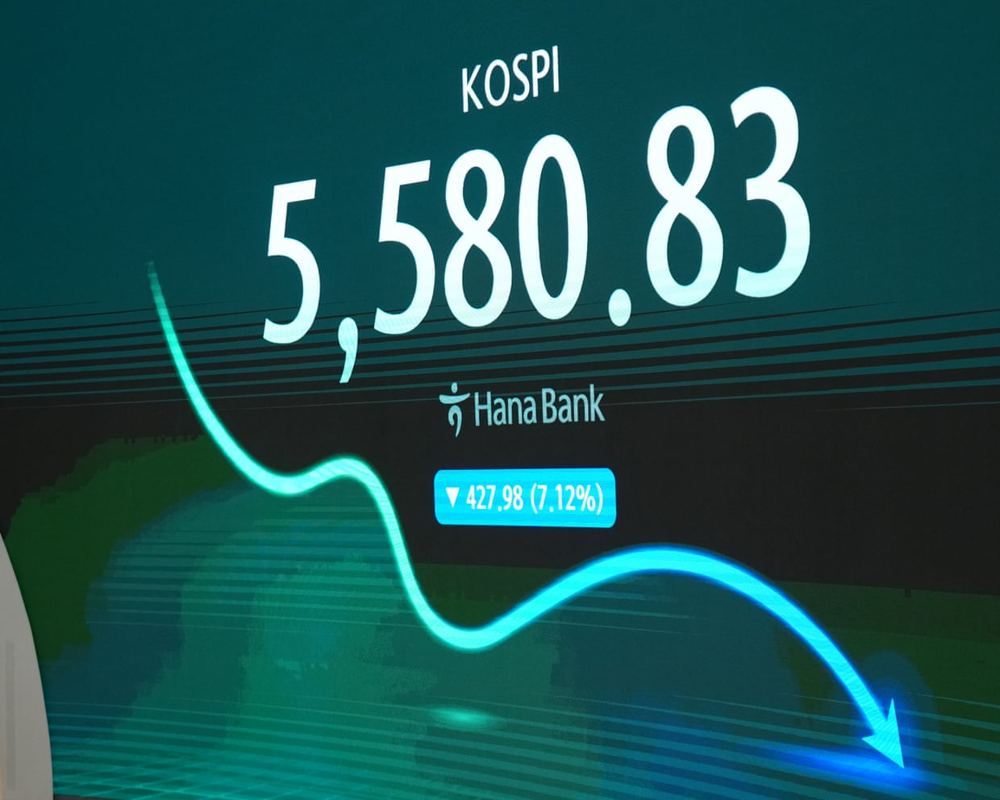
Equities reflected the stagflationary undertones. The Stoxx Europe 600 fell 0.5%, while the UK's FTSE 100 dropped 0.4% even as its heavyweight energy majors Shell and BP gained 1.7% and 2.4% respectively. Asian markets offered a mixed picture, with the Kospi and Nikkei 225 rising 0.7% and the Shanghai Composite adding 1.4% on a technology rebound.