Iran claims two supertankers disabled by mines in Hormuz
Iran's Revolutionary Guards claim to have disabled two supertankers in a mined corridor of the Strait of Hormuz, a scenario that, if confirmed, threatens the physical flow of a fifth of global oil supply and will sharply drive up war-risk premiums.
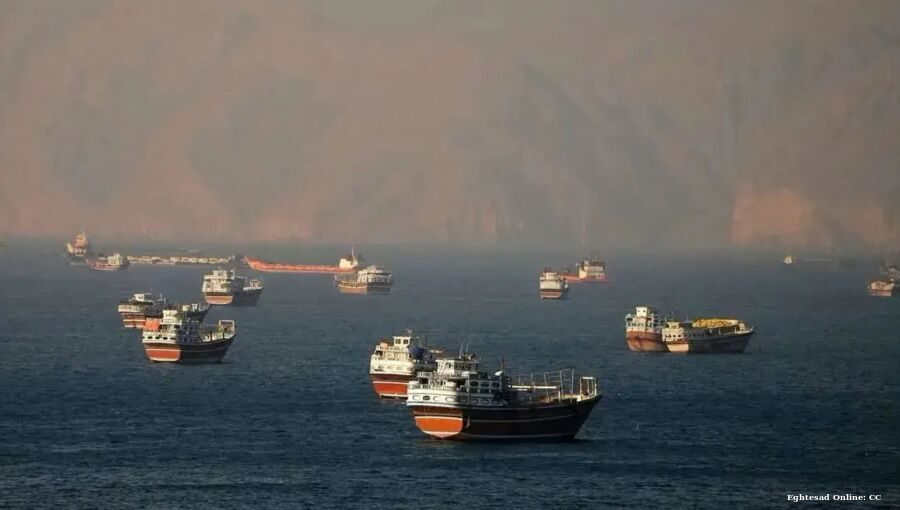
Iran’s Revolutionary Guards claimed on July 14 that two supertankers were struck and disabled after entering a mined corridor in the Strait of Hormuz. The statement, issued through the Mehr news agency, could not be independently verified and lacked basic details such as the vessels' names, flags, or owners. US Central Command and international shipping authorities have not yet commented on the incident.
The mere assertion of mining in the strategic waterway is enough to roil energy markets. The strait is the critical maritime conduit for roughly a fifth of global oil consumption and about a third of all seaborne liquefied natural gas trade. Any confirmed disruption to laden supertankers would sharply drive up war-risk insurance premiums and immediately threaten the physical flow of Gulf crude and LNG deliveries, principally to major Asian markets.
This reported strike marks the sharpest escalation in the US-Iran war since it began in late February. It follows a July 13 declaration by US President Donald Trump, who reinstated a blockade on Iranian shipping and imposed a 20% levy on all other transiting cargo. Trump stated the strait "is OPEN, and will remain OPEN, with or without Iran," and declared the US the "Guardian of the Hormuz Strait."
The IRGC framed the incident as a direct response to US provocations, alleging the vessels were deceived by Washington into using an illegal route. According to the IRGC, the tankers switched off their navigation systems and ignored warnings from a body it called the Hormuz Strait Security Control Centre. The military force warned that cooperation with the US and passage through mined routes would bring "nothing but regret, damage, delay in the reopening of the Strait of Hormuz and the creation of a global energy crisis."
This wording suggests Tehran officially views the critical chokepoint as closed and mined, directly contradicting Washington's stance. For shipping executives, traders, and cargo buyers, the immediate operational concern is the total absence of information regarding crew casualties or potential oil spills. Until the exact status of the disabled vessels is confirmed, charterers and marine insurers will be forced to price in severe risk for all future Gulf transits.