Romania inflation drops to 10.4% ahead of base effect plunge
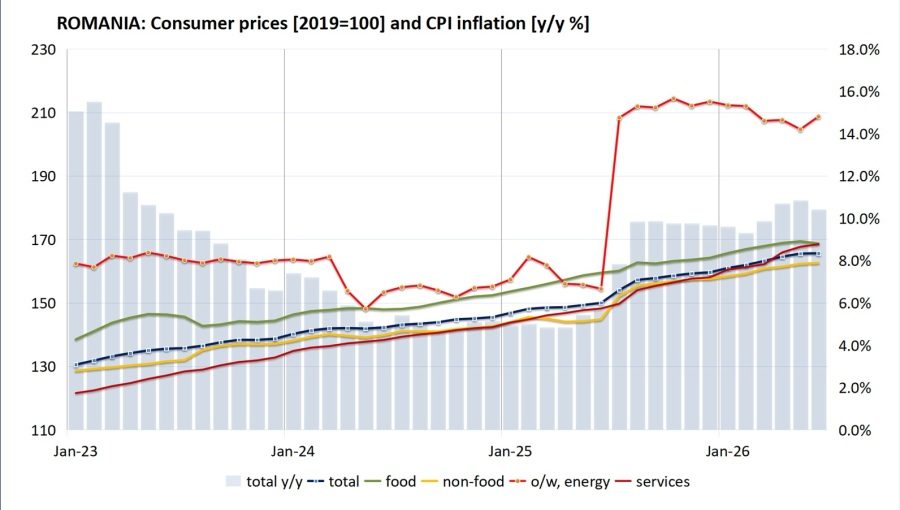
Romania's annual inflation fell slightly below forecasts to 10.42% in June, signalling the start of a sharp disinflationary phase as last year's energy price shocks drop out of the annual comparison.
Romania’s annual consumer price inflation cooled to 10.42% in June from 10.85% the previous month, narrowly beating the Bloomberg consensus median and Erste Group forecasts of 10.5%. Prices were effectively flat on a monthly basis, edging up just 0.06% as extreme volatility in specific categories offset each other.
The data marks a clear turning point for the Romanian economy. From July onwards, annual inflation is projected to fall rapidly because massive one-off price increases from mid-2025 will drop out of the year-on-year calculation. The National Bank of Romania expects headline inflation to plummet to 5.5% by the end of 2026 before reaching 2.9% at the close of 2027.
Beneath the flat headline figure lies a highly bifurcated consumer landscape. Food prices fell 0.44% month-on-month and are up 5.8% year-on-year, reflecting normal seasonal trends and the impact of austerity on lower-income households. Conversely, services inflation surged 13.7% year-on-year, driven by a 43.3% jump in regulated state-housing rents. This divergence points to robust spending among wealthier consumers, supported by a recent recovery in non-food sales.
Energy remains the dominant force behind the current inflation rate, contributing roughly 2.1 percentage points to the overall figure. Electricity prices rose 2.2% in June, ending seven consecutive months of declines, and remain nearly 60% higher than a year ago following the market liberalization that took effect in July 2025. Overall non-food goods prices climbed 12.3% year-on-year, largely driven by household energy costs which are up 35%, while fuel prices are 16% higher.
Erste Group expects this disinflation to accelerate throughout the summer as favorable base effects take hold. Independent forecasts largely align with the central bank, implying consumer prices will rise by just 1.7% to 2.1% in the second half of the year compared to 3.8% in the first six months. The primary upside risk to this trajectory is volatile global fuel prices, while persistent domestic momentum in services indicates underlying price pressures remain unresolved.