US Treasury considers $5-10bn yen intervention
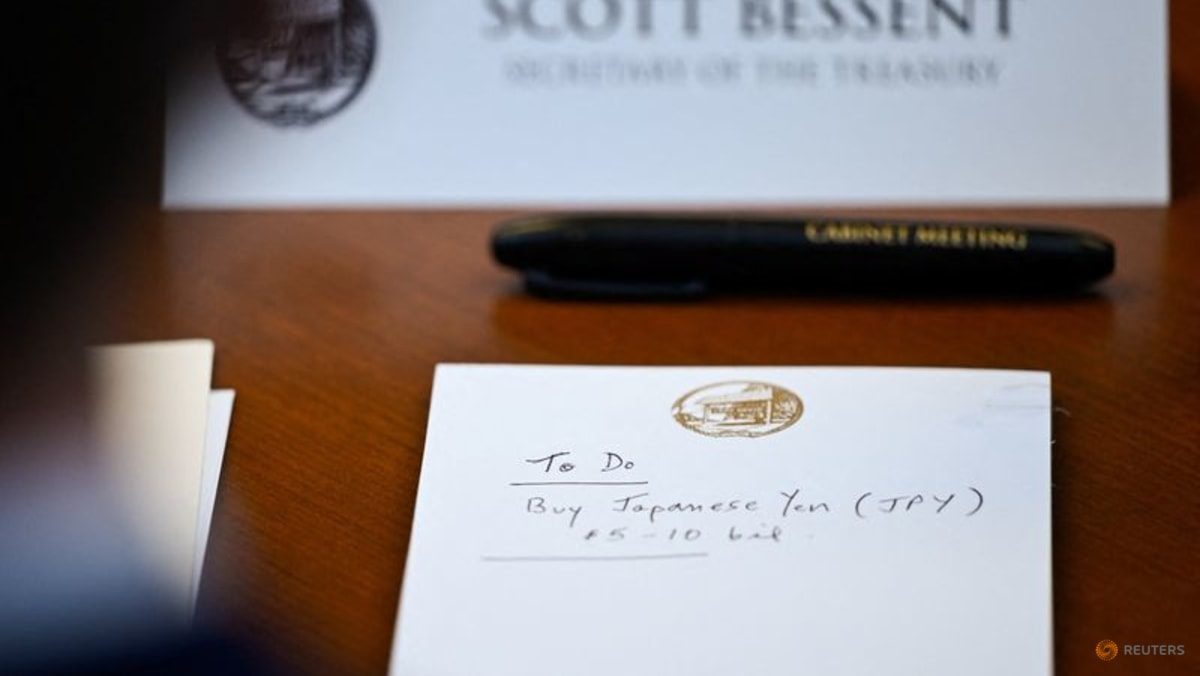
A photograph of Treasury Secretary Scott Bessent’s notepad indicates the US is preparing to buy $5 billion to $10 billion of yen, signaling a potential return to direct currency intervention for the first time since 2011.
U.S. Treasury Secretary Scott Bessent appeared to outline plans for a significant currency intervention during a cabinet meeting at Camp David on Friday. A photograph taken during the on-the-record session showed a notepad bearing his name card with the underscored heading "To Do" followed by the instruction: "Buy Japanese Yen (JPY) $5-10 bil." The Treasury Department did not immediately respond to requests for comment regarding the notepad or whether it had actively entered the market.
The apparent plan aligns with prior warnings to financial institutions and subsequent market movements. Roughly two hours before the photograph was taken at 11:33 ET, the Treasury notified several banks of a potential intervention in the yen market. Japanese authorities had already conducted their own morning intervention in Tokyo, while LSEG data later showed the dollar dropping 0.8% against the yen between 4:14 p.m. and 5:00 p.m. ET, moving from 158.9 to 157.6.
For investors, this visual confirmation carries substantial weight because direct United States intervention in foreign exchange markets is exceedingly rare. The Treasury has not stepped into the market to buy yen since 2011, when it joined other G7 nations in a coordinated effort following Japan's devastating earthquake and tsunami. A renewed US-Japan operation would represent a dramatic shift in bilateral currency dynamics, signaling that Washington is willing to deploy its own balance sheet.
An initial $5 billion to $10 billion deployment serves as a standard opening salvo in currency defense, designed to force rapid position adjustments by speculators. However, the explicit involvement of the US Treasury fundamentally alters the risk calculus for global macro funds, potentially accelerating the unwinding of leveraged carry trades that rely on sustained yen weakness. Export-heavy Japanese equities consequently face renewed pressure from a currency shift that threatens corporate profit margins.