Chile State Oil Firm ENAP Risks US$19M Fine
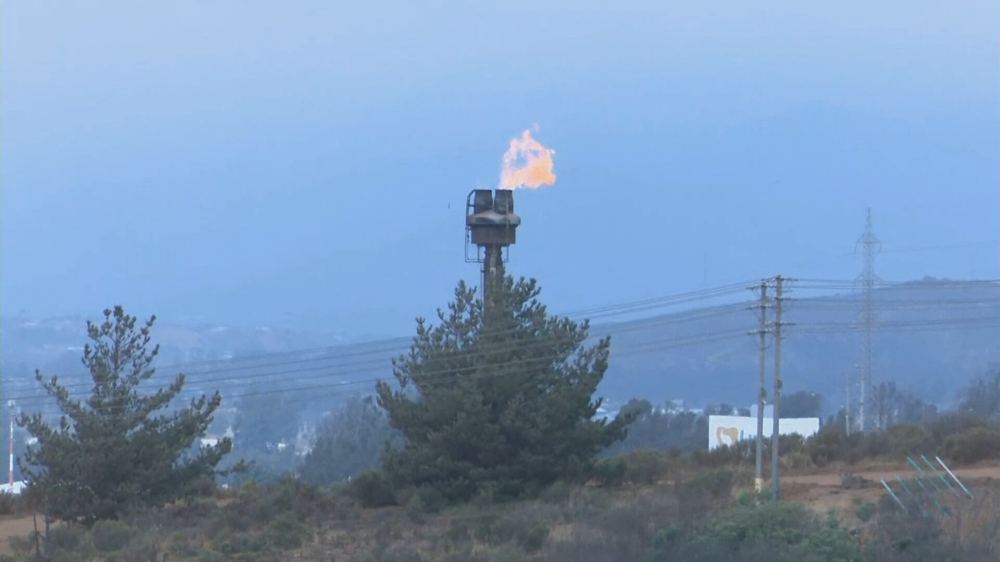
Chile's regulator accuses state oil firm ENAP of false and incomplete emissions data at its Aconcagua refinery, with fines near US$19 million possible. The post Chile State Oil Firm ENAP Risks US$19M Fine appeared first on The Rio Times .
ENAP, short for Empresa Nacional del Petróleo, is Chile’s state oil company, which runs refineries and oil operations in Chile and abroad. The SMA, short for Superintendencia del Medio Ambiente, is the national environmental regulator that can bring charges, impose fines and in the worst cases order a closure.
A UTA, short for Unidad Tributaria Anual, is a Chilean tax unit that adjusts with inflation and is used to set fines. A gravísima infraction is the most serious of the SMA’s categories, and a charge is an accusation that ENAP can contest, not a finding of guilt.
Chile’s environmental regulator charged the state oil firm ENAP on Monday 26 October 2026 with four infractions at its Aconcagua refinery in Concón, two of them classed as very serious, and alleges that ENAP gave false and incomplete information about its emissions. The fine ceiling is 22,000 UTA, or about US$19.2 million, and the regulator can also seek closure or revoke the refinery’s environmental approval.
ENAP says it is analyzing the charges, that it found the inconsistencies itself and that it has zero tolerance for the conduct, Diario Financiero reported. The charges reach a profitable company, since ENAP earned US$579 million in the first half of 2026, as its profit and diesel price coverage showed.
The SMA lists four charges against ENAP Refinerías, the unit that runs the Aconcagua refinery on the coast of the Valparaíso Region. Two are classed as very serious, known as gravísimas, and two as minor, known as leves, Diario Financiero reported.
The first very serious charge is that the refinery’s sulfur recovery system, which captures sulfur from process gas, fell short of the required annual efficiency of at least 98%. The SMA’s recalculation puts it at 94.1% in 2023, 90.5% in 2024 and 90.2% in 2025.
The second very serious charge is that sulfur dioxide emissions exceeded the annual limit of 1,145 tonnes, with 1,277 tonnes in 2023 and 1,168 tonnes in 2024. The SMA says the company left the flaring stream, the gas burned off at flares, out of its reports.
The two minor charges concern a continuous emissions monitoring system at the catalytic cracking unit that was not validated three years after the unit restarted with a wet gas scrubber, and night noise of 57 decibels against a 45 decibel limit in November and December 2025. Diario Financiero cites 16 citizen complaints about the noise.
The headline accusation is the delivery of false and incomplete information, which the SMA attributes to deliberate concealment, alteration and imprecision of technical records, according to Diario Financiero. Superintendent Emanuel Ibarra was quoted as speaking of cases where the information the regulator receives is not truthful or is incomplete.
ADN Radio, relayed by El Periscopio, adds that the SMA alleges ENAP modified its records to simulate compliance with the required parameters. The same report says the SMA’s recalculation shows the sulfur recovery system missing its 98% target in all three years.
The SMA opened its investigation in late April 2026 after a complaint about manipulated compliance data, Diario Financiero reported. The same report says Energy Minister Ximena Rincón had disclosed the conflict earlier, after a shareholders’ meeting.
ENAP says it is analyzing the charges and will decide its course within the legal deadlines, Diario Financiero reported. It says the process began after the company itself found inconsistencies in its reporting and that internal controls were activated in January 2026.
The company says air quality monitoring near the refinery has shown no exceedance of the primary sulfur dioxide or fine particle standards since 2019, with no evidence linking the facts to impacts on the population. It says it included flaring and other minor sources in its 2025 reports and has met the sulfur dioxide limit in 2025 and so far in 2026.
ENAP reports dismissals in January, June and August and a plan with an international consultancy to improve operations and sulfur recovery efficiency. It says it will cooperate with the regulators and has zero tolerance for the conduct under investigation.
Each very serious charge can carry a fine of up to 10,000 UTA and each minor charge up to 1,000 UTA, which gives a combined ceiling of 22,000 UTA, Diario Financiero reported. One UTA was worth 865,812 pesos in October according to the tax service SII, or about US$871 at the central bank’s observed rate of 994.29 pesos per US dollar on 27 October, which puts the ceiling at about US$19.2 million.
Each very serious charge alone could reach about US$8.7 million, and each minor charge about US$0.9 million. The SMA can also revoke the refinery’s environmental approval or order it closed if the very serious charges are proven, Diario Financiero reported.
ENAP has 15 business days to submit a compliance program and 22 business days to file its defense, both deadlines extended by the regulator, Diario Financiero reported. The SMA will also send the file to the public prosecutor’s office and the state comptroller to examine possible crimes and other irregularities.
For US readers the case tests how Chile’s regulator treats a state company that earned US$579 million in the first half of 2026 and agreed on 19 October to buy Ecuadorian oil assets for a base price of US$207 million, CNN Chile and ENAP reported. A large fine would cut into a profit on which the Finance Ministry counts, since it set a dividend withdrawal of US$593.5 million from ENAP for 2026, CNN Chile reported.
The charges are allegations, and ENAP can contest them, so no penalty has been set and a decision is not immediate. More Chile coverage follows the wider energy and mining picture.
The SMA’s own resolution was not available for direct reading, so the figures come from Diario Financiero and from ADN Radio as relayed by El Periscopio. The case number and the exact notification date of the charges are not given in the reports.
The final fine, if any, depends on factors the SMA weighs after ENAP responds, and the ceiling of 22,000 UTA is a legal maximum and not a forecast. It is also unknown whether prosecutors will open a criminal case after receiving the SMA file, and what ENAP will argue in its defense.
The SMA charges ENAP with four infractions at its Aconcagua refinery in Concón, two very serious and two minor. The very serious ones concern sulfur recovery efficiency and sulfur dioxide emissions, and the regulator alleges false and incomplete information.
The ceiling is 22,000 UTA, about US$19.2 million at the central bank’s rate of 994.29 pesos per US dollar on 27 October. That is a legal maximum, and no fine has been set.
ENAP says it is analyzing the charges and will respond within the legal deadlines. It says it found the inconsistencies itself, activated internal controls in January 2026 and has zero tolerance for the conduct.
The SMA can seek closure or revoke the refinery’s environmental approval if the very serious charges are proven. ENAP has 15 business days for a compliance program and 22 for its defense before any decision.
ENAP is Empresa Nacional del Petróleo, Chile’s state oil company, which runs refineries and oil operations in Chile and abroad. It earned US$579 million in the first half of 2026.
Sources: Diario Financiero, 26 October 2026 ; El Periscopio, citing ADN Radio, 26 October 2026 ; Servicio de Impuestos Internos, UTM and UTA table 2026, accessed 27 October 2026 ; Banco Central de Chile, observed dollar, 27 October 2026 ; CNN Chile on ENAP first-half 2026 results ; ENAP press release, 19 October 2026 .
Editorial responsibility: Matthias Camenzind , Editor-in-Chief · Editorial standards · Report an error