Mexican Cattle Imports Resume Oct 26
The USDA will restart Mexican cattle imports at Columbus, New Mexico, on 26 October and at Nogales, Arizona, on 30 November if safe-trade conditions hold. The post Mexican Cattle Imports Resume Oct 26 appeared first on The Rio Times .
The US Department of Agriculture said on Tuesday 20 October 2026 that Mexican cattle imports will resume at Columbus, New Mexico, on Monday 26 October. It also named Nogales, Arizona, for Monday 30 November, if conditions for safe trade are in place.
For US readers the decision bears on the price of ground beef, which reached record highs this year while Mexican calves were kept out. Forbes México tied the shortage to worries about food prices before the November midterm elections.
Columbus would be the third border crossing to reopen since a phased restart began on Monday 24 August 2026, after Douglas, Arizona, and Santa Teresa, New Mexico. Our earlier report, Sonora Cattle Exports Resume After Calf Test , covers the Arizona crossing.
Washington first closed its southern ports to Mexican cattle in November 2024 to keep out the New World screwworm, a parasite whose larvae feed on the living flesh of warm-blooded animals. The Las Cruces New Mexican reported that the closure covered every port from Douglas, Arizona, to Santa Teresa, New Mexico.
Rollins said about 1.5 million head of cattle normally cross the border each year, so the closure was a significant challenge for the American beef supply. She told the Columbus event that the department had added strengthened surveillance and four levels of inspection at the border.
Douglas reopened on 24 August, and the Santa Teresa crossing followed on 24 September, according to AgDaily. The department has restarted the trade port by port rather than all at once.
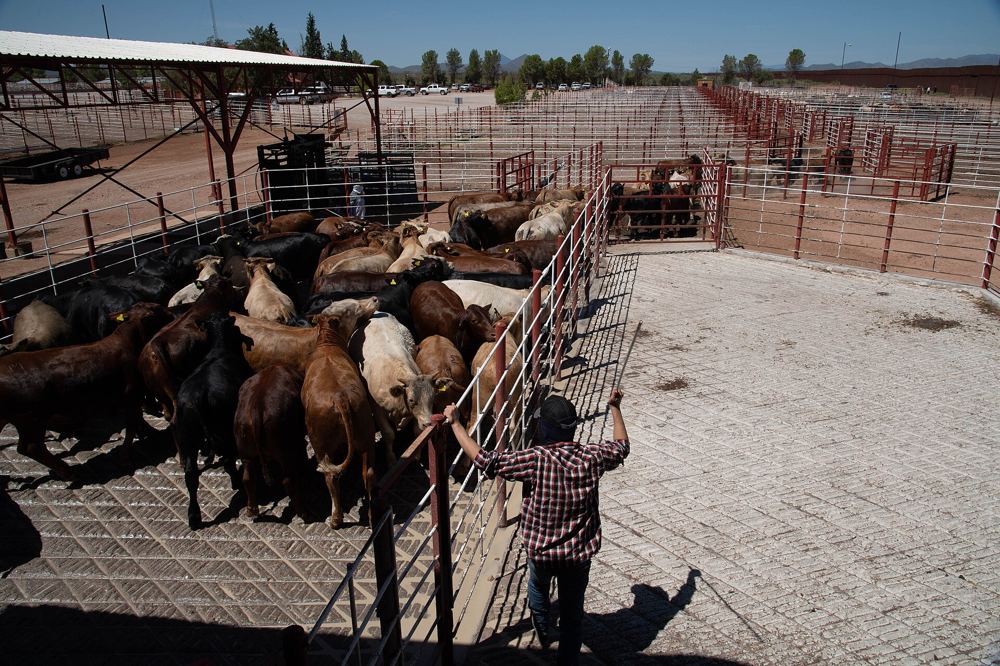
Rollins announced at the Columbus Stockyard that its newly repainted pens will hold cattle from Monday 26 October, The Las Cruces New Mexican reported. The stockyard processes Mexican cattle as they arrive before trucks carry them to feedlots across the country.
A Chihuahua rancher whose family supplies most of the cattle imported through Columbus said prices for his animals fell by about half while the port was shut. He added that the port once handled about 1,800 cattle a day and should handle about 1,000 a day at first because of the extra inspections.
Horse imports are also due to resume on Monday 26 October at Santa Teresa, with a seven-day quarantine required on the US side at a USDA-approved facility, according to the department’s animal health agency, APHIS. Excelsior reported that the horse quarantine facilities on the Mexican side remain closed.
The Mexican counterpart of Columbus is the Puerto Palomas quarantine station in Chihuahua, which Excelsior said Rollins visited. The paper said she confirmed the next two crossings and a phased restart under strict health measures.
The department says it has confirmed 56 screwworm cases in the United States since June, and five remain active, Forbes México reported from the agency’s post on X. The Las Cruces New Mexican said two of the five active cases are in Grant County, New Mexico, and were identified on Thursday 15 October.
State officials set up two infested zones in Grant County, where animals must be inspected and, if necessary, treated before they move, according to AgDaily. AgDaily noted on 19 October that the cases raised doubts about the Columbus date, which the department had not yet announced.
Rollins called five active cases a remarkable achievement and compared them with about 90,000 active cases in Texas in 1972, the New Mexican reported. New Mexico’s state veterinarian, Dr Samantha Holeck, said she does not expect these to be the last cases but that there is no reason to panic.
Rollins listed more than 1.5 billion sterile flies released from a facility in south Texas and more dispersal sites due to open in the spring. Sterile males mate with wild females, which then lay unfertilised eggs, according to the department’s animal health agency, APHIS.
Excelsior reported that Mexican live cattle exports now run at about 2,500 head a day, roughly 1,300 through Sonora and 1,200 through Chihuahua. It said Mexican authorities hope to pass 6,000 calves a day by the end of the year, an estimate we could not confirm.
Gerardo Fierro, executive director of the New Mexico Border Authority, estimated that the closure of the Columbus port cost about US$2 billion in cattle and other trade value. He put the lost New Mexico fuel-tax revenue at about US$2 million.
The department also said it will start a regional cash cattle price report on Monday covering five states, including New Mexico. It cited concern that negotiated cash trade has fallen below 18% of sales.
Shoppers should not expect an immediate fall in beef prices, because the sources reviewed give no estimate of the price effect. The restart adds supply gradually, with about 1,000 cattle a day expected at Columbus.
US feedlots in the Southwest rely on Mexican feeder cattle, so two more crossings widen their supply routes, according to AgDaily. Some ranchers have urged caution to stop the flies spreading, while the head of the New Mexico Cattle Growers’ Association said he was not too concerned about the latest cases.
Anyone who keeps horses, pets or livestock near the border should inspect animals for wounds and report suspected screwworm immediately, as APHIS advises. Our guides Who Dominates Mexico, Elites and Regions Explained and Mexico Natural Resources Explained 2026 give wider background.
For readers planning trips south of the border, our Mexico City guide for expats and visitors covers daily costs and practical advice. Cattle crossings in the north do not affect visitors, but the trade matters to border towns such as Columbus and Deming.
APHIS confirms the Columbus date of 26 October and the conditional Nogales date of 30 November in its own notice, and Forbes México and The Las Cruces New Mexican agree. Excelsior gave the Columbus date as Tuesday 26 October, but 26 October 2026 is a Monday, as the New Mexican said.
The Nogales date depends on conditions for safe trade, and the sources do not say what those conditions are. They also do not say whether the active cases in Grant County could still delay the Columbus restart.
No source gives a forecast of how much beef prices will fall or how many cattle will cross at Nogales each day. The Mexican target of 6,000 calves a day is an official hope, not a confirmed figure.
The US Department of Agriculture plans to restart them on Monday 26 October 2026 at Columbus, New Mexico. Nogales, Arizona, is planned for Monday 30 November if conditions for safe trade are met.
The United States closed its southern ports to Mexican cattle in November 2024 to keep out the New World screwworm. The parasite’s larvae burrow into living flesh and can cause serious, often deadly damage to animals.
Douglas, Arizona, reopened on 24 August 2026, and Santa Teresa, New Mexico, followed in September. Columbus and Nogales would be the next two.
Ground beef prices reached record highs this year while the ban was in place, according to Forbes México. The sources reviewed give no forecast of how much the restart will lower them.
The department says it has confirmed 56 cases in US animals since June, and five remain active. Two of the active cases are in Grant County, New Mexico.
Sources: Excelsior, 20 October 2026 ; The Las Cruces New Mexican, 20 October 2026 ; Forbes México, 21 October 2026 ; AgDaily, 19 October 2026 ; USDA APHIS, Phased Reopening of Southern Border Ports ; USDA APHIS, New World screwworm .
Editorial responsibility: Matthias Camenzind , Editor-in-Chief · Editorial standards · Report an error