Morocco Bond Yields Rise as Treasury Returns
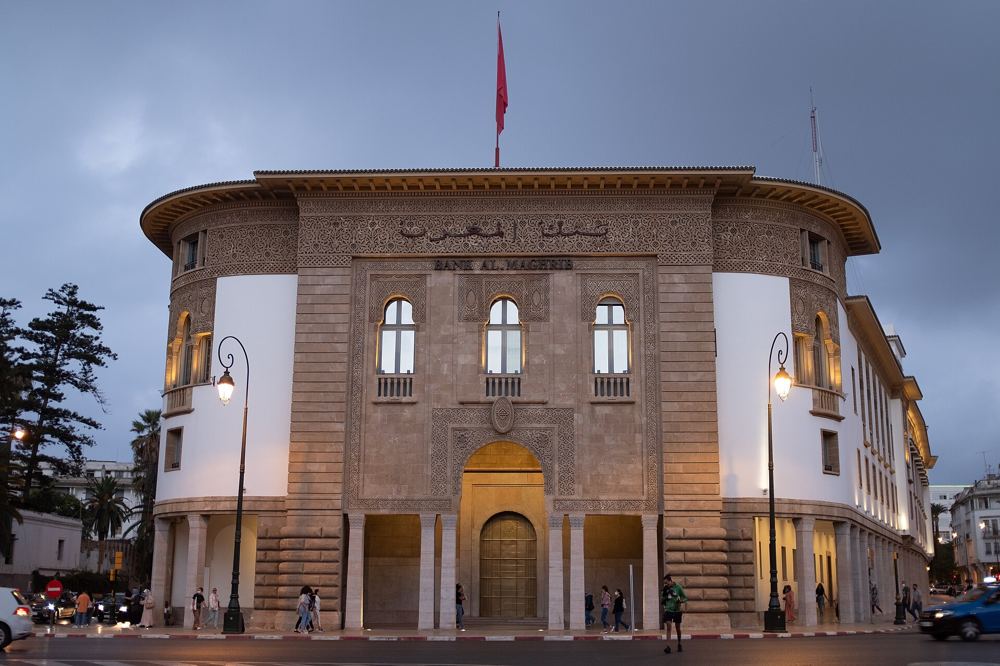
Morocco's Treasury raised MAD 6.9 billion (US$704 million) on 13 October after a week with no bids accepted, and long-term yields rose. The post Morocco Bond Yields Rise as Treasury Returns appeared first on The Rio Times .
, Who Morocco’s Treasury, which borrows from banks and investors through weekly Tuesday auctions., What The Treasury accepted MAD 6.9 billion (about US$704 million) of MAD 12.5 billion in bids on 13 October 2026, a 55% share., Yields The 10-year secondary yield rose 14.96 basis points to 3.60% and the five-year yield rose 7.97 basis points to 3.07%., Pressure BMCE Capital Markets counts MAD 14.61 billion (about US$1.49 billion) of debt maturing in October, the highest of 2026., Rate used Dollar figures use the 19 October close of 9.80 dirhams per US dollar (RT).
Morocco’s Treasury raised MAD 6.9 billion (about US$704 million) at its Tuesday 13 October auction, and yields on longer bonds rose. It was the Treasury’s first sizeable sale after two weeks in which it took almost nothing.
For US investors in emerging-market debt, the move shows how a US free-trade partner in North Africa funds a heavy month of repayments. It also shows what the Treasury must now pay to draw bids from local banks.
Banks and investors offered MAD 12.5 billion (about US$1.28 billion), and the Treasury accepted 55% of it, according to Boursenews and BMCE Capital Global Research. Most of the money, MAD 5.05 billion (about US$515 million), went into five-year bonds.
The Treasury also accepted MAD 1.3 billion (about US$133 million) of 52-week bills and MAD 550 million (about US$56 million) of 26-week bills. It took nothing in the 15-year line.
BMCE Capital reports that the 26-week bill cleared at up to 2.28% and that the five-year bond’s maximum accepted rate was 3.2296%. Boursenews says the Treasury accepted higher rates to raise larger sums.
Because of that, yields on bonds that already trade rose too. A basis point is one hundredth of a percentage point.
The rise carried into the secondary market, where existing bonds trade between investors. BMCE Capital’s weekly report shows the 10-year yield at 3.60%, up 14.96 basis points, the 15-year at 3.95% and the 20-year at 4.08%.
The five-year yield stood at 3.07%, up 7.97 basis points, while the 26-week yield slipped 1.36 basis points to 2.23%. The gap between the 26-week and 20-year yields is now about 1.85 percentage points.
The Treasury raised only MAD 100 million (about US$10 million) in the auction before 6 October. On 6 October it accepted nothing, even though banks bid MAD 4.88 billion (about US$498 million) for 13-week, 52-week and two-year paper.
BMCE Capital linked that restraint to comfortable Treasury cash. Daily placements of surplus funds peaked at MAD 19.3 billion (about US$1.97 billion), probably after September corporate tax payments.
BMCE Capital Markets estimates that MAD 14.61 billion (about US$1.49 billion) of Treasury debt falls due in October, plus MAD 1.94 billion (about US$198 million) in coupons. Boursenews put the Treasury’s forecast financing need for the month at MAD 9 billion to MAD 9.5 billion (about US$918 million to US$969 million).
Banks still borrow from the central bank because the system is short of cash. The average liquidity deficit was nearly unchanged at MAD 155.7 billion (about US$15.9 billion) and the interbank rate stayed at 2.25%, BMCE Capital says.
Moroccan government debt is bought mostly at home and priced in dirhams, so a foreign investor takes currency risk as well as rate risk. A rising curve at five to 20 years signals that the market wants more pay for lending to the state for longer.
Readers following Morocco as a trade and investment partner should watch the next Tuesday auctions. A return to large acceptances at higher rates would confirm that the October repayments are being financed at a cost.
No Moroccan official has explained the move, and the Treasury has not said how much more it intends to raise this month. The Treasury’s official 13 October results notice was not available to us, so the figures come from Boursenews and BMCE Capital.
Sources give different five-year rates for the same auction, 3.1827% weighted in BMCE Capital’s weekly and 3.027% in Boursenews, and we could not reconcile them. It is also unclear how long the central bank will keep supplying cash to banks.
Boursenews, 14 October · Boursenews, 8 October · Boursenews, October financing need · Le Nouvelliste, BMCE Capital weekly · Ministry of Finance, Treasury communiqués
Africa: The New Scramble, why the world’s powers are competing for the continent
Editorial responsibility: Matthias Camenzind , Editor-in-Chief · Editorial standards · Report an error
LatAm Markets: Live Signals →, real-time movers, turnover leaders and FX across Latin America.
It accepted MAD 6.9 billion (about US$704 million) of MAD 12.5 billion in bids, a 55% share. Five-year bonds took MAD 5.05 billion of the total.
Analysts point to the Treasury’s return to borrowing, on higher accepted rates, and to MAD 14.61 billion (about US$1.49 billion) of October repayments. Banks also still rely on central bank cash.
It raised only MAD 100 million (about US$10 million) in the auction before 6 October. On 6 October it accepted no bids despite MAD 4.88 billion (about US$498 million) offered.
They use 9.80 dirhams per US dollar, the 19 October close from RT. Moroccan sources quote only dirhams.