Mexico Air Arrivals Fall 6.5% in August
INEGI says non-border tourists arriving by air fell 6.5% in August, as spending rose 7.0% to US$2.41 billion. A higher visitor fee awaits the Senate. The post Mexico Air Arrivals Fall 6.5% in August appeared first on The Rio Times .
Mexico’s statistics institute says overnight tourists arriving by air fell 6.5% in August, even as visitor spending rose 7.0%. Americans make up two in three of Mexico’s non-border tourists, and a higher entry fee for foreigners awaits a Senate vote.
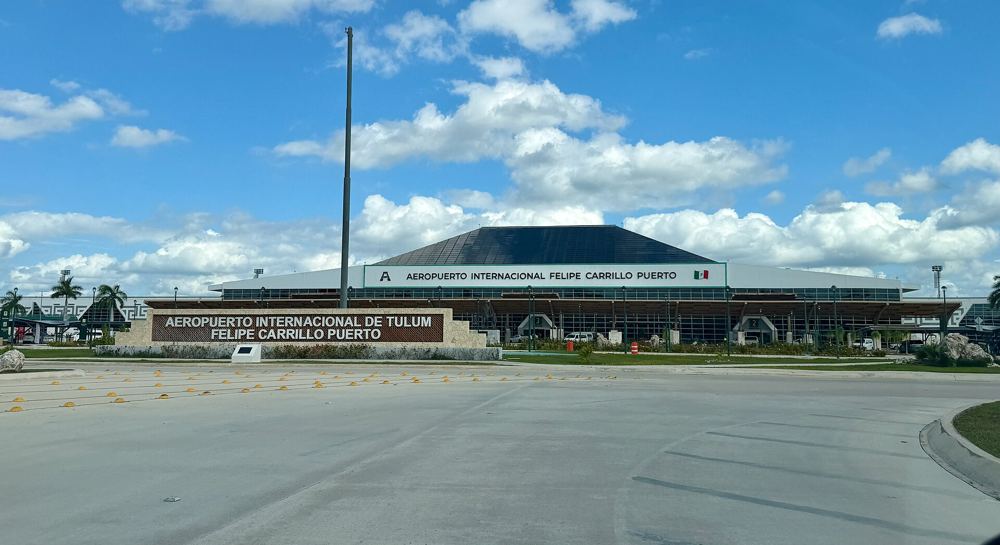
Mexico air arrivals fell 6.5% in August to 1,396,364 overnight tourists, INEGI said on Wednesday, 14 October. INEGI is Mexico’s national statistics institute, and it separates non-border tourists from those who stay overnight in border towns.
Americans are the largest group, with 1,160,145 of the 1,728,382 non-border tourists, or 67.1%. A higher entry fee for foreigners, which the Senate must still approve, adds a price question for those travellers.
INEGI’s international travellers survey puts all overnight tourists at 3,768,784 in August. That is 0.5% fewer than a year earlier, after rises of 1.1% in June and 3.8% in July.
The weakness is in non-border tourists: 1,728,382 arrivals, down 6.6%, of which 1,396,364 came by air. Air arrivals have fallen year on year in each month from April to August.
INEGI’s earlier bulletins show air declines of 8.2% in April, 7.5% in May, 5.3% in June and 5.7% in July. August’s 6.5% fall is steeper than the declines in June and July.
Border tourists, who stay overnight in border towns, rose 5.4% to 2,040,402, which held the national total close to flat. Cruise-ship day visitors rose 12.3% to 785,558.
The June decline is covered in Mexico Hits Record World Cup Tourism Windfall in 2026 . INEGI marks its 2025 and 2026 figures as preliminary.
South America and the Caribbean supplied 13.8% of August’s non-border tourists, Canada 6.8% and Europe 5.2%. The US share was 61.9% in April, 65.6% in May, 69.2% in June and 72.0% in July.
The August bulletin gives no year-on-year change for US tourists alone, so the fall cannot be pinned on one nationality. Vanguardia and Riviera Maya News cite security worries, US travel alerts and costlier jet fuel for weaker US demand this year.
Total visitor spending reached US$2.41 billion in August, up 7.0%, and tourists alone spent US$2.16 billion, up 8.1%. The average air tourist spent US$1,270, up 15.2%.
Non-border tourists spent US$1.90 billion, up 7.0%, of which air tourists accounted for US$1.77 billion, up 7.8%. Land arrivals fell 6.9% to 332,018.
Tourism Secretary Josefina Rodríguez Zamora said on Thursday, 15 October, that January to August brought 32.7 million overnight tourists, up 3.9%. La Jornada, El Financiero and Ovaciones report the same totals, with tourism income of US$24.15 billion, up 0.9%.
Mexico’s lower house approved the 2027 Federal Rights Law on Tuesday, 13 October, by 329 votes to 117 in the general vote. The Chamber’s vote record confirms the count and the bill’s referral to the Senate.
The non-resident fee, known as DNR, applies to foreigners who enter as visitors without permission to work, including tourists. It would rise from MXN 983 (about US$53) to MXN 1,158 (about US$63), an increase of 17.8%.
President Claudia Sheinbaum’s government proposed MXN 1,334.80 (about US$72), a 35.8% rise, before an amendment from the ruling Morena party cut it. Expansión and AMEXI name Carol Antonio Altamirano, who chairs the Finance Committee, as its author.
ViveUSA says the fee is usually charged inside the airline ticket, or else paid through channels the National Migration Institute authorises. Residents, children under two and air or sea crews can be exempt, it adds.
The Mexican Caribbean Hotel Council still opposes any rise and asked Congress to reconsider it, Crónica reported on 13 October. Senator Mayuli Latifa Martínez of the conservative National Action Party called it Morena’s petty cash on 11 October, Diario de Yucatán says.
Sheinbaum and Rodríguez Zamora defended the rise at the same Thursday press conference, El Financiero reports. Rodríguez Zamora said the proceeds will be concentrated in the migration institute, and Sheinbaum promised more automated entry checks.
US travellers are Mexico’s largest non-border tourist group, and most of those tourists arrive by air. If the Senate approves the bill, the entry fee rises by about US$9 a person from 2027.
Air arrivals have now fallen for five months running while spending per tourist keeps rising. US investors in Mexican airports, airlines and hotels should watch the 12 November release to see whether the decline continues.
Timing and weather advice for a trip is in Best Time to Visit Mexico in 2026, Region by Region . The fee applies to all foreign tourists, not only Americans.
INEGI’s August bulletin does not split the 6.5% air fall by nationality, so the change in US visitors is unknown. It gives no cause, and its figures are preliminary.
The January to August totals come from the tourism ministry, not from INEGI’s August bulletin. No transcript of the press conference was available, and only El Financiero reported the fee remarks.
The Chamber’s record gives only the general vote, so the count on the articles voted separately is unconfirmed. No Senate vote date has been reported, and the final text was not available to check the fee figures.
Expansión says the Senate has until 31 October to vote, and El CEO says the law could apply from 1 January 2027. INEGI publishes September’s travel figures on Thursday, 12 November.
It counted 3,768,784 overnight tourists, down 0.5%, and 1,396,364 non-border tourists arriving by air, down 6.5%. Total visitor spending rose 7.0% to US$2.41 billion.
INEGI counted 1,160,145 US tourists among 1,728,382 non-border tourists, a 67.1% share. It gives no year-on-year change for US visitors alone.
The lower house approved MXN 1,158 (about US$63), up from MXN 983 (about US$53). The Senate must still approve the law by 31 October.
Foreigners entering as visitors without permission to work pay it, including tourists. ViveUSA says it is usually built into airline tickets, with exemptions for residents, children under two and crews.
Not by spending, which rose 7.0% in August, and border tourists and cruise day visitors also rose. Air arrivals of non-border tourists have fallen every month from April to August.
Sources: INEGI: Encuesta de Viajeros Internacionales, August 2026 (Boletín 625/26) , 14 October 2026; INEGI: Encuesta de Viajeros Internacionales, July 2026 , 14 September 2026; INEGI: Encuesta de Viajeros Internacionales, June 2026 , 13 August 2026; INEGI: Encuesta de Viajeros Internacionales, May 2026 , 10 July 2026; INEGI: Encuesta de Viajeros Internacionales, April 2026 , 11 June 2026; Expansión: Diputados, alzas a derechos de extranjeros y vía ferroviaria , 12 October 2026; Crónica: Proponen cuota de mil 158 pesos para el DNR en 2027 , 13 October 2026; AMEXI: Diputados aprueban Ley Federal de Derechos 2027, suben cuotas a turistas y visas , 13 October 2026; MVS Noticias: Diputados avalan Ley Federal de Derechos 2027 , 13 October 2026; Cámara de Diputados: Gaceta Parlamentaria, votes on the Ley Federal de Derechos , 13 October 2026; Expansión: Ley de Derechos 2027, alzas de cuotas , 13 October 2026; TaxToday México: Ley Federal de Derechos 2027 , 9 September 2026; El CEO: Visas, licencias sanitarias, espacio aéreo y la Ley Federal de Derechos 2027 , 13 October 2026; Crónica: Hoteleros piden frenar alza del DNR , 13 October 2026; La Jornada: México recibió 67.7 millones de viajeros internacionales en enero-agosto , 15 October 2026; Ovaciones: Turismo en México, récord de visitantes y caída de llegadas aéreas , 15 October 2026; El Financiero: Mañanera de Claudia Sheinbaum, 15 de octubre de 2026, en vivo , 15 October 2026; Diario de Yucatán: Pago de DNR es la caja chica de Morena , 11 October 2026; ViveUSA: Viajas a México por turismo, qué es el DNR y quién debe pagarlo , 14 October 2026; Vanguardia: Cae 6.5% turismo aéreo de EU a México , 10 July 2026; Riviera Maya News: Foreign Tourism to Mexico Drops Amid Security Crisis , 13 June 2026 (all accessed 15 October 2026).
Editorial responsibility: Matthias Camenzind , Editor-in-Chief · Editorial standards · Report an error