How Kospi Circuit Breakers Halt Trading
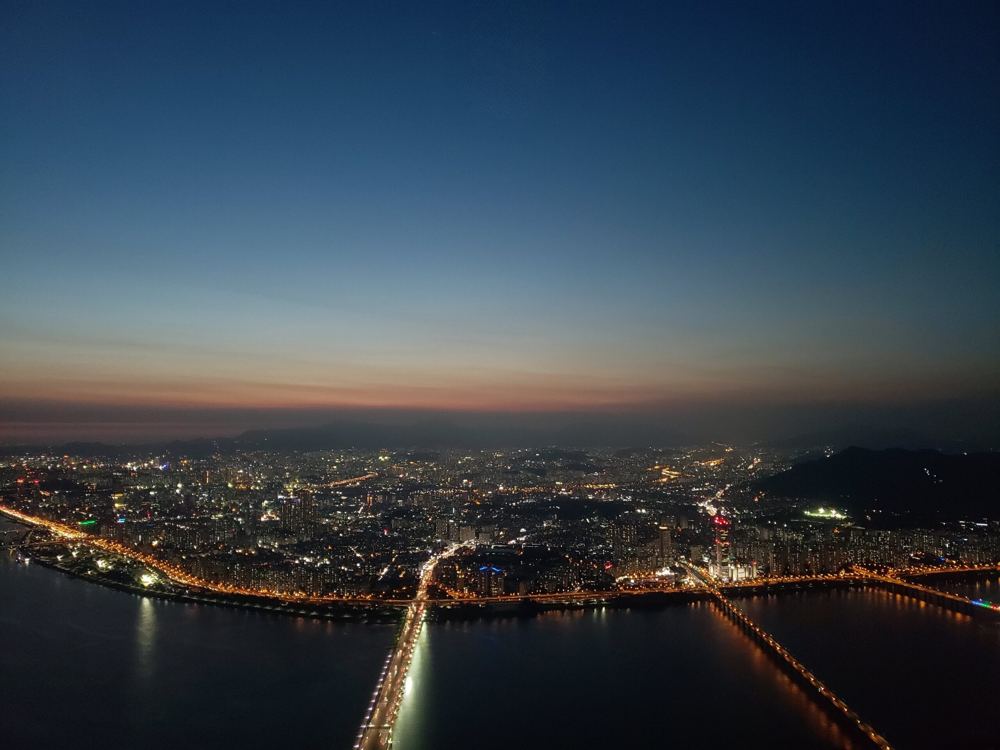
How Korea's Kospi circuit breakers work, what set off the 20-minute halt on 15 October 2026 and what it means for US-listed Korean ETFs. The post How Kospi Circuit Breakers Halt Trading appeared first on The Rio Times .
For US investors in Korean ETFs and semiconductor-linked products, the key point is that a Seoul halt does not stop the US-listed security from trading, but it can widen spreads and create temporary premiums or discounts.
South Korea runs one of Asia’s most liquid and technology-heavy equity markets, dominated by semiconductor exporters such as Samsung Electronics and SK Hynix. This analysis explains the mechanics behind the 15 October 2026 trading halt, drawn from the Asia Intelligence Brief , and what the rules mean for investors outside Korea.
The Korea Exchange, known as KRX, operates two separate safeguards for its main stock markets. Circuit breakers halt trading across an entire market segment, while sidecars temporarily suspend program trading linked to index futures.
The circuit breaker framework applies separately to the KOSPI market, which lists large-cap shares, and the KOSDAQ market, which hosts smaller and technology-focused companies. Each market has its own trigger calculation based on the previous trading day’s close.
KRX publishes three cumulative thresholds. Level 1 triggers when the index falls 8% or more from the previous close and remains at that level for one minute.
Level 2 triggers at a 15% fall and Level 3 at 20%, each at least 1% beyond the previous trigger. Each level can be used only once a day, and Levels 1 and 2 do not apply in the last 40 minutes of the session.
A higher level can only be reached after the relevant lower-level protection has already been used. The system is designed to escalate as a sell-off deepens rather than repeatedly restart the same halt.
During a Level 1 or Level 2 halt, continuous trading stops and new orders are not accepted. Order cancellations remain permitted, which gives investors a limited ability to adjust positions while the market is paused.
Shortly after noon on 15 October 2026, both indices had fallen more than 8% from the previous close, and trading on both markets halted for 20 minutes. A 10-minute auction followed before continuous trading resumed.
By the close, KOSPI had recovered part of the fall and ended at 5,554.22, down 454.59 points or 7.57%. KOSDAQ ended at 760.82, down 7.65%.
A sidecar is different from a circuit breaker. It temporarily stops program trading, rather than halting all trading in the market.
This sequence matters because sidecars respond to futures-market stress while circuit breakers respond to the cash index.
The practical distinction is simple. A sidecar is a short interruption aimed at automated or program orders linked to index futures, while ordinary stock trading otherwise continues.
A circuit breaker is a market-wide halt affecting trading in listed securities on the relevant exchange segment.
The Korea Exchange is the market operator responsible for KOSPI trading infrastructure and the circuit-breaker rules. Its priority is orderly price discovery during extreme volatility.
Shin Hyun Song is Governor of the Bank of Korea. The Monetary Policy Board in August 2026 raised the base rate by 25 basis points from 2.75% to 3.00%.
The Bank of Korea’s monetary stance shapes the interest-rate environment for Korean equities, but it does not operate the circuit-breaker system. That responsibility sits with the exchange itself.
Samsung Electronics and SK Hynix are the two semiconductor giants whose shares dominate Korean index weightings and US-listed Korean ETF exposure. Their price moves were central to the 15 October sell-off.
US market makers and authorised participants in Korean ETFs want continuous hedging ability. When Seoul halts, they must rely on futures, currency markets and semiconductor peers to estimate fair value.
The US market-wide system is based on declines in the S&P 500, measured against the prior trading day’s close.
KRX sidecars specifically target program trading linked to index futures. The US framework is supplemented by separate security-level mechanisms such as limit-up/limit-down rules.
For a US investor, the key practical point is that a Korean circuit breaker is not automatically a halt in the US-listed ETF. The ETF’s exchange can remain open while Korea is closed, creating a period in which the US price is an estimate of underlying value.
US investors do not trade the Korean cash market directly when they buy a Korean ETF or a US-listed product with Samsung Electronics or SK Hynix exposure. They trade the US-listed security under US market rules.
That creates several transmission effects. A Korea halt can leave the ETF’s underlying Korean holdings without fresh executable prices, while the US ETF can still trade based on futures, currency markets and global risk sentiment.
Bid-ask spreads can widen as market makers hedge with imperfect substitutes. The ETF may trade at a temporary premium or discount to its last calculated net asset value.
When Seoul reopens, the Korean holdings can gap toward the price implied by US trading, potentially reducing or reversing that deviation. Semiconductor exposure may be especially sensitive because chip shares were central to the October sell-off.
For Latin American investors, the episode is a reminder that emerging-market circuit breakers vary by exchange. Brazilian, Mexican and Chilean equity markets have their own halt rules, and cross-listed or ETF exposure can behave differently from the local cash market during a suspension.
The 15 October sell-off was not a technical glitch. It reflected repricing pressure in semiconductor shares, which carry outsized weight in Korean indices and in global technology supply chains.
A circuit breaker interrupts forced or automated selling and provides a reopening auction, but it does not reverse the underlying repricing. On 15 October 2026, KOSPI fell more than 8% before the halt.
For companies, a sharp equity decline can raise the cost of capital and complicate equity-linked financing. For policymakers, persistent volatility can signal stress in the financial system that requires monitoring beyond the exchange’s own safeguards.
The Bank of Korea’s August 2026 rate increase to 3.00% shows that monetary conditions were already tightening before the October equity shock. Higher rates can pressure equity valuations, particularly for growth-sensitive technology shares.
For US-listed products, the stakes are about execution quality. Investors who place market orders during a Seoul halt may receive prices that diverge significantly from the last published net asset value.
One stabilising scenario is a sustained recovery in semiconductor demand that supports Samsung Electronics and SK Hynix earnings. That would reduce the repricing pressure that drove the October sell-off.
Another stabilising factor would be clear communication from the Bank of Korea about its policy path. If investors conclude that the August rate increase was a one-off response to specific conditions, equity volatility could ease.
A tipping scenario would be another sharp decline that triggers Level 2 or Level 3 circuit breakers in quick succession. That would signal that the first halt did not restore orderly price discovery.
A further risk is a divergence between US-listed ETF prices and Korean cash prices that persists for several sessions. That could erode confidence in the ETF’s ability to track its benchmark.
The most important scenario to monitor is whether prices hold after the reopening. If KOSPI stabilises above its level at the halt, the episode may be remembered as a sharp but contained correction.
If it fails, the circuit-breaker framework will face a more severe test.
If you hold a US-listed Korean ETF, understand that its price during a Seoul halt is an estimate of underlying value, not a price confirmed by the Korean cash market. The ETF can keep trading while Korea is closed.
Check the product documentation for any Korean exposure you own. US exchange-traded products may obtain exposure through Korean-listed shares, swaps, futures, or other instruments, and the liquidity and valuation methodology depend on the prospectus.