Dominican Republic Says Renewables Drew US$900 Million
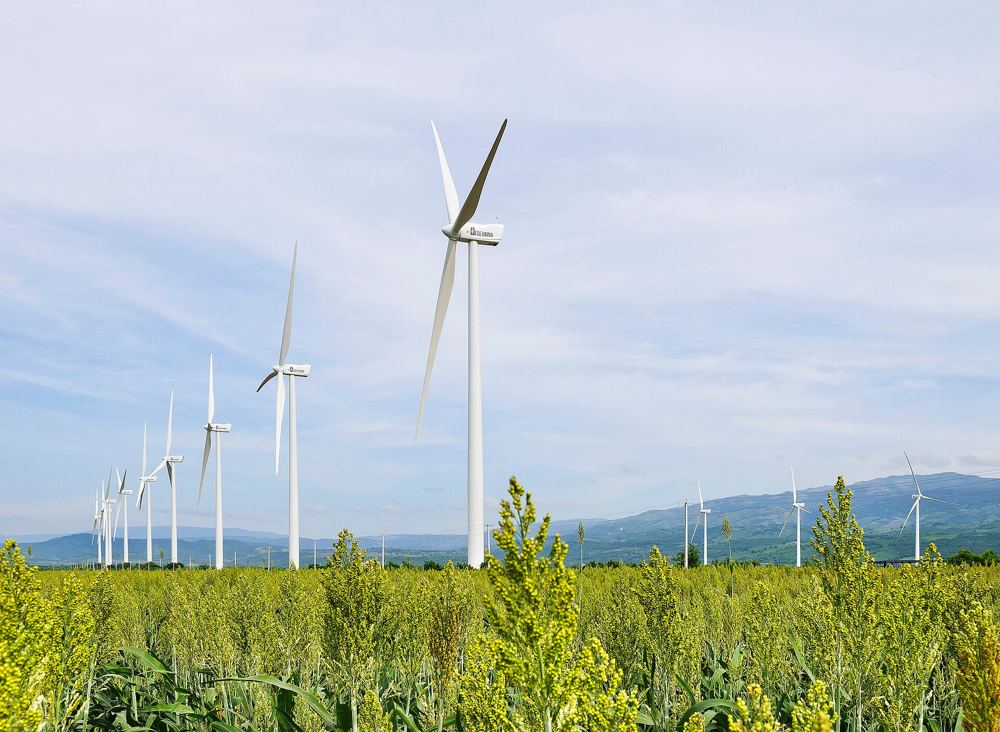
Dominican renewable energy drew about US$900 million in foreign investment in early 2026, the energy minister said, as the country targets storage. The post Dominican Republic Says Renewables Drew US$900 Million appeared first on The Rio Times .
Clean power now draws much of the Dominican Republic’s foreign investment, and the government wants storage next.
Dominican renewable energy projects drew about US$900 million in foreign investment from January to June, the energy minister said on Tuesday. That is roughly 30% of the more than US$3 billion in foreign investment the country received in that period.
Joel Santos Echavarría, minister of energy and mines, gave the figures in Santo Domingo, the capital, at a regional energy summit. For US investors and holidaymakers, the message is a fast-growing grid that is now turning to storage.
Santos serves under President Luis Abinader, of the centrist Modern Revolutionary Party (PRM), who won a second term in 2024. He opened the XI Energy Week of OLADE, the Latin American Energy Organization, on Tuesday, 6 October.
OLADE is an intergovernmental body based in Quito, Ecuador, and delegations from its 27 member countries are attending. The World Bank, the Inter-American Development Bank (IDB) and CAF, the Development Bank of Latin America and the Caribbean, are co-organisers.
The ministry said Santos set two targets for 2028: about 2,800 MW of renewables and at least 800 MW of storage. According to Hoy, he said new renewable projects will be tendered in 2027, for plants ready around 2031 and 2032.
Hoy, a Santo Domingo daily, reported the investment figures from his opening remarks. He said Dominican renewable energy has drawn more than US$1 billion a year in foreign investment for four years.
The ministry said installed capacity rose from 4,921 MW in 2020 to 7,120 MW in 2025, an increase of about 45%. Over the same period, solar and wind capacity quadrupled to more than 2,000 MW.
That is roughly the capacity of the Hoover Dam on the Colorado River. Reaching 2,800 MW by 2028 would mean adding about 800 MW more in three years.
Renewables now supply about 26% of the energy fed into the national grid, according to the business daily elDinero. Most of the rest still comes from imported fossil fuels such as natural gas, coal and oil.
elDinero reported that he also cited a gas-fired project of more than 1,200 MW at Manzanillo, near the Haitian border. “We need more integration, more investment, more innovation and more regional energy cooperation,” he said, as quoted by the ministry.
Solar plants produce most power at midday, while demand on many Caribbean grids peaks in the evening. Storage, mostly large batteries, holds midday power and releases it when demand is highest.
Without storage, a grid with a growing share of solar must keep fuel-burning plants on standby. The minister argued that new capacity has to come before economic growth, not after it.
He linked that to the sectors driving the economy: free-trade zones, tourism, industry, mining and digital services. All of them depend on reliable electricity.
According to elDinero, Santos described storage as the start of a new phase for the Dominican power system. The ministry did not say how many hours of supply the planned 800 MW should provide.
For investors, the 2027 tenders and the storage goal point to openings for developers, battery makers and lenders, including US firms. The World Bank and the IDB, where the United States is the largest shareholder, are backing the regional agenda.
For travellers, steadier power matters in resort areas such as Punta Cana. About 39% of September’s tourists came from the United States, according to Ministry of Tourism figures reported by Diario Libre.
Nothing announced on Tuesday changes electricity prices, visas or travel rules. The figures describe investment flows and government targets, not new contracts.
The investment figures come from the minister’s remarks as reported by Hoy, not from the ministry’s statement. A central-bank breakdown of first-half foreign investment by sector could not be checked.
It is not known which investors or countries supplied the money. The size, dates and rules of the 2027 tenders, and how storage will be paid for, have not been published.
Energy Week runs until Friday, 9 October, and its agenda includes a meeting of OLADE energy ministers. Topics listed by the ministry include regional power and gas links, financing, storage and energy poverty.
OLADE, the Latin American Energy Organization, is an intergovernmental body based in Quito, Ecuador. It brings together energy ministries from 27 member countries in Latin America and the Caribbean.
About 26% of the energy fed into the national grid comes from renewable sources, according to figures cited at the summit. Solar and wind capacity passed 2,000 MW in 2025.
Solar power peaks at midday, but demand peaks in the evening. Storage lets the grid shift clean power to those hours instead of relying on standby fuel plants.
Most of it comes from plants that burn imported natural gas, coal or oil. The country has no oil or gas production of its own.
Not directly, because no prices or travel rules changed. Over time, more capacity and storage are meant to make supply steadier for hotels and resorts.
Sources: Ministry of Energy and Mines (MEM), Dominican Republic, statement of 6 October 2026 ; Hoy ; elDinero, 2,800 MW and 800 MW targets ; elDinero, regional integration ; Diario Libre, tourism figures (all accessed 7 October 2026).
Editorial responsibility: Matthias Camenzind , Editor-in-Chief · Editorial standards · Report an error