Shettima signals historic market surge as NNPC prepares for stock market listing
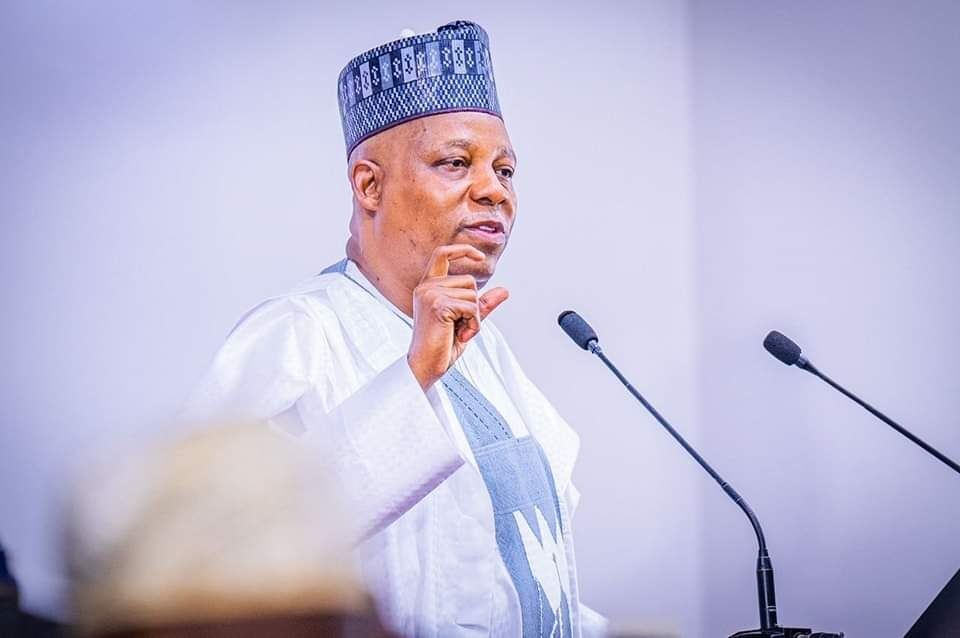
Kashim Shettima, Nigeria's vice president, has signalled that the anticipated public listing of the Nigerian National Petroleum Company Ltd... read more Shettima signals historic market surge as NNPC prepares for stock market listing
Kashim Shettima, Nigeria’s vice president, has signalled that the anticipated public listing of the Nigerian National Petroleum Company Limited (NNPC) will trigger an unprecedented trading frenzy on the Nigerian Exchange. Speaking at the fifth anniversary of the Nigerian Upstream Petroleum Regulatory Commission (NUPRC) in Abuja on Tuesday on behalf of President Bola Tinubu, Shettima said that the state oil firm’s stock market debut could “overwhelm” the local bourse, comparing the expected surge in capital demand to the high-profile listing activity surrounding the Dangote Refinery. Shettima, who commended Bayo Ojulari for his leadership in steering the operation of the NNPC, said, “I celebrate my very good friend Bayo Ojulari, the group chief executive officer of NNPC. I learnt that you are going to the stock market very soon. So you will overwhelm us the way Dangote is doing currently.” Ojulari in a recent engagement had explained that the company has no fixed date for the proposed Initial Public Offering, emphasising that the ultimate decision rests with its shareholders. According to Ojulari, the company was focused on achieving readiness for the proposed IPO, while consultants and other relevant parties were assessing its preparedness and outstanding actions. Shettima affirmed that Ojulari’s leadership of the general industry have rendered it free from scandals and controversies. “You have provided leadership to the general industry and it is free from scandals and controversies since you have been the mantle of leadership, “he said. Speaking further, the vice president said that Nigeria’s upstream oil sector reforms have eliminated political patronage in acreage allocations, with oil blocks now awarded strictly through open and competitive bidding processes. Shettima emphasised that the administration remains resolute in positioning Nigeria as Africa’s premier destination for long-term hydrocarbon capital. Highlighting the integrity of the current regulatory framework, Shettima cited a personal example of the ongoing shift in administrative standards. “Acreages are now awarded through open and competitive bidding processes, and I can bear witness to this part,” Shettima noted. “A friend of mine with no connection whatsoever got awarded an upstream location through a fair and just process.” He also declared that the Federal Government remain determined to make Nigeria a destination of choice for long-term hydrocarbon investment, assuring investors that the terms were clear and that the government would continue to enforce compliance and accountability. The Vice President’s comments came as the Federal Government highlighted reforms aimed at attracting fresh investment into the oil and gas industry, improving crude oil production and reducing the barriers that have discouraged investors from developing Nigeria’s petroleum resources. The NUPRC was established following the enactment of the Petroleum Industry Act in 2021 to regulate the upstream petroleum sector and oversee the administration of petroleum resources, including licensing, leases and field development. The Commission has since conducted licensing and bidding processes, including the 2024/2025 oil licensing round, which attracted bids from local and international companies for available oil blocks. Shettima said the PIA had ended years of uncertainty in the industry by establishing clearer rules for investors while giving host communities a greater stake in petroleum-producing areas. He stated that these reforms have consolidated Nigeria’s position as Africa’s leading destination for investment in the oil and gas sector for two consecutive years. “Five years ago, the PIA brought to an end two decades of waiting. I would like to give credit to Senator Ahmed Lawan for shepherding the passage of the PIA Bill. “It gave investors clear rules, gave investors a predictable framework, and gave our host communities, for the first time, ownership of resources beneath their land,” he said. The Vice President said the NUPRC was created to give effect to the new petroleum law, adding that the Commission had helped improve oil production and restore investor confidence in Nigeria’s upstream sector. According to him, Nigeria has moved from a period when a significant portion of crude production was lost to theft and vandalism to a situation where output is becoming more stable. “Only a few years ago, our oil and gas fields were losing a large share of their output to theft and vandalism. Today, through the joint effort of our security agencies, operations, host communities and the Commission, production is steady and stronger. “Investors who once looked elsewhere are returning, and for two years now, Nigeria has been ranked Africa’s leading destination for investment in the sector,” Shettima said. He also highlighted the role of host communities in maintaining stability in oil-producing areas, saying more than 170 communities had benefited from projects covering education, healthcare and other areas selected by the communities. Shettima said the Federal Government was also working to address the high cost and lengthy contracting processes that had discouraged investment in the sector. He noted that several presidential directives and executive orders had been introduced to improve the fiscal and regulatory environment, including incentives for upstream operators and deep offshore projects. He said the Deep Offshore Oil and Gas Project Incentive Tax Remission Order 2026 was designed to unlock up to $50bn in new investment, beginning with the Bonga South-West project. “Some of Nigeria’s largest discoveries are in our deep offshore. And many of them were immediately dismissed because every project had to be negotiated on its own terms. The order replaces that unsettled process with clear criteria. “It is designed to unlock up to $50bn in new investment, beginning with the Bonga-South West project. Our message to the world is simple: Nigeria is open for long-term investment and terms are clear,” he said. The Vice President charged the NUPRC to maintain transparency, ensure predictable timelines and work with other government agencies to eliminate regulatory conflicts. He also warned that companies benefiting from government incentives would be expected to meet their commitments on work programmes, local content, environmental protection and host communities. “The PIA is a strong foundation, but the foundation is only the beginning. Laws set the rules. Investors sign commercial agreements. Policy, however sound on paper, is only useful when implemented. And that responsibility weighs heavily on the Commission,” Shettima said. He said the government would continue to pursue reforms aimed at making Nigeria a preferred destination for long-term hydrocarbon investment while using oil and gas revenues to support broader economic diversification. Shettima added that the government would also prioritise gas development, saying Nigeria’s large gas reserves could support electricity generation, industrial growth and a cleaner energy transition. “This is the decade of gas. With the largest gas reserve in Africa, and one of the largest in the world, we will expand gas supply to power industry and economic growth, reduce methane emissions and grow renewable energy alongside it,” he said. He urged the NUPRC to approach its next five years with the same commitment and integrity, saying the Commission had an important role in translating government policy into actual investment and production. Related News Wike meets Fubara’s loyalists, deepens reconciliation ahead of 2027 poll UACN, Unilever lead analyst October stock picks NGX loses ground as First HoldCo leads banking selloff Share
Speaking at the fifth anniversary of the Nigerian Upstream Petroleum Regulatory Commission (NUPRC) in Abuja on Tuesday on behalf of President Bola Tinubu, Shettima said that the state oil firm’s stock market debut could “overwhelm” the local bourse, comparing the expected surge in capital demand to the high-profile listing activity surrounding the Dangote Refinery. Shettima, who commended Bayo Ojulari for his leadership in steering the operation of the NNPC, said, “I celebrate my very good friend Bayo Ojulari, the group chief executive officer of NNPC. I learnt that you are going to the stock market very soon. So you will overwhelm us the way Dangote is doing currently.” Ojulari in a recent engagement had explained that the company has no fixed date for the proposed Initial Public Offering, emphasising that the ultimate decision rests with its shareholders. According to Ojulari, the company was focused on achieving readiness for the proposed IPO, while consultants and other relevant parties were assessing its preparedness and outstanding actions. Shettima affirmed that Ojulari’s leadership of the general industry have rendered it free from scandals and controversies. “You have provided leadership to the general industry and it is free from scandals and controversies since you have been the mantle of leadership, “he said. Speaking further, the vice president said that Nigeria’s upstream oil sector reforms have eliminated political patronage in acreage allocations, with oil blocks now awarded strictly through open and competitive bidding processes. Shettima emphasised that the administration remains resolute in positioning Nigeria as Africa’s premier destination for long-term hydrocarbon capital. Highlighting the integrity of the current regulatory framework, Shettima cited a personal example of the ongoing shift in administrative standards. “Acreages are now awarded through open and competitive bidding processes, and I can bear witness to this part,” Shettima noted. “A friend of mine with no connection whatsoever got awarded an upstream location through a fair and just process.” He also declared that the Federal Government remain determined to make Nigeria a destination of choice for long-term hydrocarbon investment, assuring investors that the terms were clear and that the government would continue to enforce compliance and accountability. The Vice President’s comments came as the Federal Government highlighted reforms aimed at attracting fresh investment into the oil and gas industry, improving crude oil production and reducing the barriers that have discouraged investors from developing Nigeria’s petroleum resources. The NUPRC was established following the enactment of the Petroleum Industry Act in 2021 to regulate the upstream petroleum sector and oversee the administration of petroleum resources, including licensing, leases and field development. The Commission has since conducted licensing and bidding processes, including the 2024/2025 oil licensing round, which attracted bids from local and international companies for available oil blocks. Shettima said the PIA had ended years of uncertainty in the industry by establishing clearer rules for investors while giving host communities a greater stake in petroleum-producing areas. He stated that these reforms have consolidated Nigeria’s position as Africa’s leading destination for investment in the oil and gas sector for two consecutive years. “Five years ago, the PIA brought to an end two decades of waiting. I would like to give credit to Senator Ahmed Lawan for shepherding the passage of the PIA Bill. “It gave investors clear rules, gave investors a predictable framework, and gave our host communities, for the first time, ownership of resources beneath their land,” he said. The Vice President said the NUPRC was created to give effect to the new petroleum law, adding that the Commission had helped improve oil production and restore investor confidence in Nigeria’s upstream sector. According to him, Nigeria has moved from a period when a significant portion of crude production was lost to theft and vandalism to a situation where output is becoming more stable. “Only a few years ago, our oil and gas fields were losing a large share of their output to theft and vandalism. Today, through the joint effort of our security agencies, operations, host communities and the Commission, production is steady and stronger. “Investors who once looked elsewhere are returning, and for two years now, Nigeria has been ranked Africa’s leading destination for investment in the sector,” Shettima said. He also highlighted the role of host communities in maintaining stability in oil-producing areas, saying more than 170 communities had benefited from projects covering education, healthcare and other areas selected by the communities. Shettima said the Federal Government was also working to address the high cost and lengthy contracting processes that had discouraged investment in the sector. He noted that several presidential directives and executive orders had been introduced to improve the fiscal and regulatory environment, including incentives for upstream operators and deep offshore projects. He said the Deep Offshore Oil and Gas Project Incentive Tax Remission Order 2026 was designed to unlock up to $50bn in new investment, beginning with the Bonga South-West project. “Some of Nigeria’s largest discoveries are in our deep offshore. And many of them were immediately dismissed because every project had to be negotiated on its own terms. The order replaces that unsettled process with clear criteria. “It is designed to unlock up to $50bn in new investment, beginning with the Bonga-South West project. Our message to the world is simple: Nigeria is open for long-term investment and terms are clear,” he said. The Vice President charged the NUPRC to maintain transparency, ensure predictable timelines and work with other government agencies to eliminate regulatory conflicts. He also warned that companies benefiting from government incentives would be expected to meet their commitments on work programmes, local content, environmental protection and host communities. “The PIA is a strong foundation, but the foundation is only the beginning. Laws set the rules. Investors sign commercial agreements. Policy, however sound on paper, is only useful when implemented. And that responsibility weighs heavily on the Commission,” Shettima said. He said the government would continue to pursue reforms aimed at making Nigeria a preferred destination for long-term hydrocarbon investment while using oil and gas revenues to support broader economic diversification. Shettima added that the government would also prioritise gas development, saying Nigeria’s large gas reserves could support electricity generation, industrial growth and a cleaner energy transition. “This is the decade of gas. With the largest gas reserve in Africa, and one of the largest in the world, we will expand gas supply to power industry and economic growth, reduce methane emissions and grow renewable energy alongside it,” he said. He urged the NUPRC to approach its next five years with the same commitment and integrity, saying the Commission had an important role in translating government policy into actual investment and production. Related News Wike meets Fubara’s loyalists, deepens reconciliation ahead of 2027 poll UACN, Unilever lead analyst October stock picks NGX loses ground as First HoldCo leads banking selloff Share
Shettima, who commended Bayo Ojulari for his leadership in steering the operation of the NNPC, said, “I celebrate my very good friend Bayo Ojulari, the group chief executive officer of NNPC. I learnt that you are going to the stock market very soon. So you will overwhelm us the way Dangote is doing currently.” Ojulari in a recent engagement had explained that the company has no fixed date for the proposed Initial Public Offering, emphasising that the ultimate decision rests with its shareholders. According to Ojulari, the company was focused on achieving readiness for the proposed IPO, while consultants and other relevant parties were assessing its preparedness and outstanding actions. Shettima affirmed that Ojulari’s leadership of the general industry have rendered it free from scandals and controversies. “You have provided leadership to the general industry and it is free from scandals and controversies since you have been the mantle of leadership, “he said. Speaking further, the vice president said that Nigeria’s upstream oil sector reforms have eliminated political patronage in acreage allocations, with oil blocks now awarded strictly through open and competitive bidding processes. Shettima emphasised that the administration remains resolute in positioning Nigeria as Africa’s premier destination for long-term hydrocarbon capital. Highlighting the integrity of the current regulatory framework, Shettima cited a personal example of the ongoing shift in administrative standards. “Acreages are now awarded through open and competitive bidding processes, and I can bear witness to this part,” Shettima noted. “A friend of mine with no connection whatsoever got awarded an upstream location through a fair and just process.” He also declared that the Federal Government remain determined to make Nigeria a destination of choice for long-term hydrocarbon investment, assuring investors that the terms were clear and that the government would continue to enforce compliance and accountability. The Vice President’s comments came as the Federal Government highlighted reforms aimed at attracting fresh investment into the oil and gas industry, improving crude oil production and reducing the barriers that have discouraged investors from developing Nigeria’s petroleum resources. The NUPRC was established following the enactment of the Petroleum Industry Act in 2021 to regulate the upstream petroleum sector and oversee the administration of petroleum resources, including licensing, leases and field development. The Commission has since conducted licensing and bidding processes, including the 2024/2025 oil licensing round, which attracted bids from local and international companies for available oil blocks. Shettima said the PIA had ended years of uncertainty in the industry by establishing clearer rules for investors while giving host communities a greater stake in petroleum-producing areas. He stated that these reforms have consolidated Nigeria’s position as Africa’s leading destination for investment in the oil and gas sector for two consecutive years. “Five years ago, the PIA brought to an end two decades of waiting. I would like to give credit to Senator Ahmed Lawan for shepherding the passage of the PIA Bill. “It gave investors clear rules, gave investors a predictable framework, and gave our host communities, for the first time, ownership of resources beneath their land,” he said. The Vice President said the NUPRC was created to give effect to the new petroleum law, adding that the Commission had helped improve oil production and restore investor confidence in Nigeria’s upstream sector. According to him, Nigeria has moved from a period when a significant portion of crude production was lost to theft and vandalism to a situation where output is becoming more stable. “Only a few years ago, our oil and gas fields were losing a large share of their output to theft and vandalism. Today, through the joint effort of our security agencies, operations, host communities and the Commission, production is steady and stronger. “Investors who once looked elsewhere are returning, and for two years now, Nigeria has been ranked Africa’s leading destination for investment in the sector,” Shettima said. He also highlighted the role of host communities in maintaining stability in oil-producing areas, saying more than 170 communities had benefited from projects covering education, healthcare and other areas selected by the communities. Shettima said the Federal Government was also working to address the high cost and lengthy contracting processes that had discouraged investment in the sector. He noted that several presidential directives and executive orders had been introduced to improve the fiscal and regulatory environment, including incentives for upstream operators and deep offshore projects. He said the Deep Offshore Oil and Gas Project Incentive Tax Remission Order 2026 was designed to unlock up to $50bn in new investment, beginning with the Bonga South-West project. “Some of Nigeria’s largest discoveries are in our deep offshore. And many of them were immediately dismissed because every project had to be negotiated on its own terms. The order replaces that unsettled process with clear criteria. “It is designed to unlock up to $50bn in new investment, beginning with the Bonga-South West project. Our message to the world is simple: Nigeria is open for long-term investment and terms are clear,” he said. The Vice President charged the NUPRC to maintain transparency, ensure predictable timelines and work with other government agencies to eliminate regulatory conflicts. He also warned that companies benefiting from government incentives would be expected to meet their commitments on work programmes, local content, environmental protection and host communities. “The PIA is a strong foundation, but the foundation is only the beginning. Laws set the rules. Investors sign commercial agreements. Policy, however sound on paper, is only useful when implemented. And that responsibility weighs heavily on the Commission,” Shettima said. He said the government would continue to pursue reforms aimed at making Nigeria a preferred destination for long-term hydrocarbon investment while using oil and gas revenues to support broader economic diversification. Shettima added that the government would also prioritise gas development, saying Nigeria’s large gas reserves could support electricity generation, industrial growth and a cleaner energy transition. “This is the decade of gas. With the largest gas reserve in Africa, and one of the largest in the world, we will expand gas supply to power industry and economic growth, reduce methane emissions and grow renewable energy alongside it,” he said. He urged the NUPRC to approach its next five years with the same commitment and integrity, saying the Commission had an important role in translating government policy into actual investment and production. Related News Wike meets Fubara’s loyalists, deepens reconciliation ahead of 2027 poll UACN, Unilever lead analyst October stock picks NGX loses ground as First HoldCo leads banking selloff Share
Ojulari in a recent engagement had explained that the company has no fixed date for the proposed Initial Public Offering, emphasising that the ultimate decision rests with its shareholders. According to Ojulari, the company was focused on achieving readiness for the proposed IPO, while consultants and other relevant parties were assessing its preparedness and outstanding actions. Shettima affirmed that Ojulari’s leadership of the general industry have rendered it free from scandals and controversies. “You have provided leadership to the general industry and it is free from scandals and controversies since you have been the mantle of leadership, “he said. Speaking further, the vice president said that Nigeria’s upstream oil sector reforms have eliminated political patronage in acreage allocations, with oil blocks now awarded strictly through open and competitive bidding processes. Shettima emphasised that the administration remains resolute in positioning Nigeria as Africa’s premier destination for long-term hydrocarbon capital. Highlighting the integrity of the current regulatory framework, Shettima cited a personal example of the ongoing shift in administrative standards. “Acreages are now awarded through open and competitive bidding processes, and I can bear witness to this part,” Shettima noted. “A friend of mine with no connection whatsoever got awarded an upstream location through a fair and just process.” He also declared that the Federal Government remain determined to make Nigeria a destination of choice for long-term hydrocarbon investment, assuring investors that the terms were clear and that the government would continue to enforce compliance and accountability. The Vice President’s comments came as the Federal Government highlighted reforms aimed at attracting fresh investment into the oil and gas industry, improving crude oil production and reducing the barriers that have discouraged investors from developing Nigeria’s petroleum resources. The NUPRC was established following the enactment of the Petroleum Industry Act in 2021 to regulate the upstream petroleum sector and oversee the administration of petroleum resources, including licensing, leases and field development. The Commission has since conducted licensing and bidding processes, including the 2024/2025 oil licensing round, which attracted bids from local and international companies for available oil blocks. Shettima said the PIA had ended years of uncertainty in the industry by establishing clearer rules for investors while giving host communities a greater stake in petroleum-producing areas. He stated that these reforms have consolidated Nigeria’s position as Africa’s leading destination for investment in the oil and gas sector for two consecutive years. “Five years ago, the PIA brought to an end two decades of waiting. I would like to give credit to Senator Ahmed Lawan for shepherding the passage of the PIA Bill. “It gave investors clear rules, gave investors a predictable framework, and gave our host communities, for the first time, ownership of resources beneath their land,” he said. The Vice President said the NUPRC was created to give effect to the new petroleum law, adding that the Commission had helped improve oil production and restore investor confidence in Nigeria’s upstream sector. According to him, Nigeria has moved from a period when a significant portion of crude production was lost to theft and vandalism to a situation where output is becoming more stable. “Only a few years ago, our oil and gas fields were losing a large share of their output to theft and vandalism. Today, through the joint effort of our security agencies, operations, host communities and the Commission, production is steady and stronger. “Investors who once looked elsewhere are returning, and for two years now, Nigeria has been ranked Africa’s leading destination for investment in the sector,” Shettima said. He also highlighted the role of host communities in maintaining stability in oil-producing areas, saying more than 170 communities had benefited from projects covering education, healthcare and other areas selected by the communities. Shettima said the Federal Government was also working to address the high cost and lengthy contracting processes that had discouraged investment in the sector. He noted that several presidential directives and executive orders had been introduced to improve the fiscal and regulatory environment, including incentives for upstream operators and deep offshore projects. He said the Deep Offshore Oil and Gas Project Incentive Tax Remission Order 2026 was designed to unlock up to $50bn in new investment, beginning with the Bonga South-West project. “Some of Nigeria’s largest discoveries are in our deep offshore. And many of them were immediately dismissed because every project had to be negotiated on its own terms. The order replaces that unsettled process with clear criteria. “It is designed to unlock up to $50bn in new investment, beginning with the Bonga-South West project. Our message to the world is simple: Nigeria is open for long-term investment and terms are clear,” he said. The Vice President charged the NUPRC to maintain transparency, ensure predictable timelines and work with other government agencies to eliminate regulatory conflicts. He also warned that companies benefiting from government incentives would be expected to meet their commitments on work programmes, local content, environmental protection and host communities. “The PIA is a strong foundation, but the foundation is only the beginning. Laws set the rules. Investors sign commercial agreements. Policy, however sound on paper, is only useful when implemented. And that responsibility weighs heavily on the Commission,” Shettima said. He said the government would continue to pursue reforms aimed at making Nigeria a preferred destination for long-term hydrocarbon investment while using oil and gas revenues to support broader economic diversification. Shettima added that the government would also prioritise gas development, saying Nigeria’s large gas reserves could support electricity generation, industrial growth and a cleaner energy transition. “This is the decade of gas. With the largest gas reserve in Africa, and one of the largest in the world, we will expand gas supply to power industry and economic growth, reduce methane emissions and grow renewable energy alongside it,” he said. He urged the NUPRC to approach its next five years with the same commitment and integrity, saying the Commission had an important role in translating government policy into actual investment and production. Related News Wike meets Fubara’s loyalists, deepens reconciliation ahead of 2027 poll UACN, Unilever lead analyst October stock picks NGX loses ground as First HoldCo leads banking selloff Share
According to Ojulari, the company was focused on achieving readiness for the proposed IPO, while consultants and other relevant parties were assessing its preparedness and outstanding actions. Shettima affirmed that Ojulari’s leadership of the general industry have rendered it free from scandals and controversies. “You have provided leadership to the general industry and it is free from scandals and controversies since you have been the mantle of leadership, “he said. Speaking further, the vice president said that Nigeria’s upstream oil sector reforms have eliminated political patronage in acreage allocations, with oil blocks now awarded strictly through open and competitive bidding processes. Shettima emphasised that the administration remains resolute in positioning Nigeria as Africa’s premier destination for long-term hydrocarbon capital. Highlighting the integrity of the current regulatory framework, Shettima cited a personal example of the ongoing shift in administrative standards. “Acreages are now awarded through open and competitive bidding processes, and I can bear witness to this part,” Shettima noted. “A friend of mine with no connection whatsoever got awarded an upstream location through a fair and just process.” He also declared that the Federal Government remain determined to make Nigeria a destination of choice for long-term hydrocarbon investment, assuring investors that the terms were clear and that the government would continue to enforce compliance and accountability. The Vice President’s comments came as the Federal Government highlighted reforms aimed at attracting fresh investment into the oil and gas industry, improving crude oil production and reducing the barriers that have discouraged investors from developing Nigeria’s petroleum resources. The NUPRC was established following the enactment of the Petroleum Industry Act in 2021 to regulate the upstream petroleum sector and oversee the administration of petroleum resources, including licensing, leases and field development. The Commission has since conducted licensing and bidding processes, including the 2024/2025 oil licensing round, which attracted bids from local and international companies for available oil blocks. Shettima said the PIA had ended years of uncertainty in the industry by establishing clearer rules for investors while giving host communities a greater stake in petroleum-producing areas. He stated that these reforms have consolidated Nigeria’s position as Africa’s leading destination for investment in the oil and gas sector for two consecutive years. “Five years ago, the PIA brought to an end two decades of waiting. I would like to give credit to Senator Ahmed Lawan for shepherding the passage of the PIA Bill. “It gave investors clear rules, gave investors a predictable framework, and gave our host communities, for the first time, ownership of resources beneath their land,” he said. The Vice President said the NUPRC was created to give effect to the new petroleum law, adding that the Commission had helped improve oil production and restore investor confidence in Nigeria’s upstream sector. According to him, Nigeria has moved from a period when a significant portion of crude production was lost to theft and vandalism to a situation where output is becoming more stable. “Only a few years ago, our oil and gas fields were losing a large share of their output to theft and vandalism. Today, through the joint effort of our security agencies, operations, host communities and the Commission, production is steady and stronger. “Investors who once looked elsewhere are returning, and for two years now, Nigeria has been ranked Africa’s leading destination for investment in the sector,” Shettima said. He also highlighted the role of host communities in maintaining stability in oil-producing areas, saying more than 170 communities had benefited from projects covering education, healthcare and other areas selected by the communities. Shettima said the Federal Government was also working to address the high cost and lengthy contracting processes that had discouraged investment in the sector. He noted that several presidential directives and executive orders had been introduced to improve the fiscal and regulatory environment, including incentives for upstream operators and deep offshore projects. He said the Deep Offshore Oil and Gas Project Incentive Tax Remission Order 2026 was designed to unlock up to $50bn in new investment, beginning with the Bonga South-West project. “Some of Nigeria’s largest discoveries are in our deep offshore. And many of them were immediately dismissed because every project had to be negotiated on its own terms. The order replaces that unsettled process with clear criteria. “It is designed to unlock up to $50bn in new investment, beginning with the Bonga-South West project. Our message to the world is simple: Nigeria is open for long-term investment and terms are clear,” he said. The Vice President charged the NUPRC to maintain transparency, ensure predictable timelines and work with other government agencies to eliminate regulatory conflicts. He also warned that companies benefiting from government incentives would be expected to meet their commitments on work programmes, local content, environmental protection and host communities. “The PIA is a strong foundation, but the foundation is only the beginning. Laws set the rules. Investors sign commercial agreements. Policy, however sound on paper, is only useful when implemented. And that responsibility weighs heavily on the Commission,” Shettima said. He said the government would continue to pursue reforms aimed at making Nigeria a preferred destination for long-term hydrocarbon investment while using oil and gas revenues to support broader economic diversification. Shettima added that the government would also prioritise gas development, saying Nigeria’s large gas reserves could support electricity generation, industrial growth and a cleaner energy transition. “This is the decade of gas. With the largest gas reserve in Africa, and one of the largest in the world, we will expand gas supply to power industry and economic growth, reduce methane emissions and grow renewable energy alongside it,” he said. He urged the NUPRC to approach its next five years with the same commitment and integrity, saying the Commission had an important role in translating government policy into actual investment and production. Related News Wike meets Fubara’s loyalists, deepens reconciliation ahead of 2027 poll UACN, Unilever lead analyst October stock picks NGX loses ground as First HoldCo leads banking selloff Share
Shettima affirmed that Ojulari’s leadership of the general industry have rendered it free from scandals and controversies. “You have provided leadership to the general industry and it is free from scandals and controversies since you have been the mantle of leadership, “he said. Speaking further, the vice president said that Nigeria’s upstream oil sector reforms have eliminated political patronage in acreage allocations, with oil blocks now awarded strictly through open and competitive bidding processes. Shettima emphasised that the administration remains resolute in positioning Nigeria as Africa’s premier destination for long-term hydrocarbon capital. Highlighting the integrity of the current regulatory framework, Shettima cited a personal example of the ongoing shift in administrative standards. “Acreages are now awarded through open and competitive bidding processes, and I can bear witness to this part,” Shettima noted. “A friend of mine with no connection whatsoever got awarded an upstream location through a fair and just process.” He also declared that the Federal Government remain determined to make Nigeria a destination of choice for long-term hydrocarbon investment, assuring investors that the terms were clear and that the government would continue to enforce compliance and accountability. The Vice President’s comments came as the Federal Government highlighted reforms aimed at attracting fresh investment into the oil and gas industry, improving crude oil production and reducing the barriers that have discouraged investors from developing Nigeria’s petroleum resources. The NUPRC was established following the enactment of the Petroleum Industry Act in 2021 to regulate the upstream petroleum sector and oversee the administration of petroleum resources, including licensing, leases and field development. The Commission has since conducted licensing and bidding processes, including the 2024/2025 oil licensing round, which attracted bids from local and international companies for available oil blocks. Shettima said the PIA had ended years of uncertainty in the industry by establishing clearer rules for investors while giving host communities a greater stake in petroleum-producing areas. He stated that these reforms have consolidated Nigeria’s position as Africa’s leading destination for investment in the oil and gas sector for two consecutive years. “Five years ago, the PIA brought to an end two decades of waiting. I would like to give credit to Senator Ahmed Lawan for shepherding the passage of the PIA Bill. “It gave investors clear rules, gave investors a predictable framework, and gave our host communities, for the first time, ownership of resources beneath their land,” he said. The Vice President said the NUPRC was created to give effect to the new petroleum law, adding that the Commission had helped improve oil production and restore investor confidence in Nigeria’s upstream sector. According to him, Nigeria has moved from a period when a significant portion of crude production was lost to theft and vandalism to a situation where output is becoming more stable. “Only a few years ago, our oil and gas fields were losing a large share of their output to theft and vandalism. Today, through the joint effort of our security agencies, operations, host communities and the Commission, production is steady and stronger. “Investors who once looked elsewhere are returning, and for two years now, Nigeria has been ranked Africa’s leading destination for investment in the sector,” Shettima said. He also highlighted the role of host communities in maintaining stability in oil-producing areas, saying more than 170 communities had benefited from projects covering education, healthcare and other areas selected by the communities. Shettima said the Federal Government was also working to address the high cost and lengthy contracting processes that had discouraged investment in the sector. He noted that several presidential directives and executive orders had been introduced to improve the fiscal and regulatory environment, including incentives for upstream operators and deep offshore projects. He said the Deep Offshore Oil and Gas Project Incentive Tax Remission Order 2026 was designed to unlock up to $50bn in new investment, beginning with the Bonga South-West project. “Some of Nigeria’s largest discoveries are in our deep offshore. And many of them were immediately dismissed because every project had to be negotiated on its own terms. The order replaces that unsettled process with clear criteria. “It is designed to unlock up to $50bn in new investment, beginning with the Bonga-South West project. Our message to the world is simple: Nigeria is open for long-term investment and terms are clear,” he said. The Vice President charged the NUPRC to maintain transparency, ensure predictable timelines and work with other government agencies to eliminate regulatory conflicts. He also warned that companies benefiting from government incentives would be expected to meet their commitments on work programmes, local content, environmental protection and host communities. “The PIA is a strong foundation, but the foundation is only the beginning. Laws set the rules. Investors sign commercial agreements. Policy, however sound on paper, is only useful when implemented. And that responsibility weighs heavily on the Commission,” Shettima said. He said the government would continue to pursue reforms aimed at making Nigeria a preferred destination for long-term hydrocarbon investment while using oil and gas revenues to support broader economic diversification. Shettima added that the government would also prioritise gas development, saying Nigeria’s large gas reserves could support electricity generation, industrial growth and a cleaner energy transition. “This is the decade of gas. With the largest gas reserve in Africa, and one of the largest in the world, we will expand gas supply to power industry and economic growth, reduce methane emissions and grow renewable energy alongside it,” he said. He urged the NUPRC to approach its next five years with the same commitment and integrity, saying the Commission had an important role in translating government policy into actual investment and production. Related News Wike meets Fubara’s loyalists, deepens reconciliation ahead of 2027 poll UACN, Unilever lead analyst October stock picks NGX loses ground as First HoldCo leads banking selloff Share
“You have provided leadership to the general industry and it is free from scandals and controversies since you have been the mantle of leadership, “he said. Speaking further, the vice president said that Nigeria’s upstream oil sector reforms have eliminated political patronage in acreage allocations, with oil blocks now awarded strictly through open and competitive bidding processes. Shettima emphasised that the administration remains resolute in positioning Nigeria as Africa’s premier destination for long-term hydrocarbon capital. Highlighting the integrity of the current regulatory framework, Shettima cited a personal example of the ongoing shift in administrative standards. “Acreages are now awarded through open and competitive bidding processes, and I can bear witness to this part,” Shettima noted. “A friend of mine with no connection whatsoever got awarded an upstream location through a fair and just process.” He also declared that the Federal Government remain determined to make Nigeria a destination of choice for long-term hydrocarbon investment, assuring investors that the terms were clear and that the government would continue to enforce compliance and accountability. The Vice President’s comments came as the Federal Government highlighted reforms aimed at attracting fresh investment into the oil and gas industry, improving crude oil production and reducing the barriers that have discouraged investors from developing Nigeria’s petroleum resources. The NUPRC was established following the enactment of the Petroleum Industry Act in 2021 to regulate the upstream petroleum sector and oversee the administration of petroleum resources, including licensing, leases and field development. The Commission has since conducted licensing and bidding processes, including the 2024/2025 oil licensing round, which attracted bids from local and international companies for available oil blocks. Shettima said the PIA had ended years of uncertainty in the industry by establishing clearer rules for investors while giving host communities a greater stake in petroleum-producing areas. He stated that these reforms have consolidated Nigeria’s position as Africa’s leading destination for investment in the oil and gas sector for two consecutive years. “Five years ago, the PIA brought to an end two decades of waiting. I would like to give credit to Senator Ahmed Lawan for shepherding the passage of the PIA Bill. “It gave investors clear rules, gave investors a predictable framework, and gave our host communities, for the first time, ownership of resources beneath their land,” he said. The Vice President said the NUPRC was created to give effect to the new petroleum law, adding that the Commission had helped improve oil production and restore investor confidence in Nigeria’s upstream sector. According to him, Nigeria has moved from a period when a significant portion of crude production was lost to theft and vandalism to a situation where output is becoming more stable. “Only a few years ago, our oil and gas fields were losing a large share of their output to theft and vandalism. Today, through the joint effort of our security agencies, operations, host communities and the Commission, production is steady and stronger. “Investors who once looked elsewhere are returning, and for two years now, Nigeria has been ranked Africa’s leading destination for investment in the sector,” Shettima said. He also highlighted the role of host communities in maintaining stability in oil-producing areas, saying more than 170 communities had benefited from projects covering education, healthcare and other areas selected by the communities. Shettima said the Federal Government was also working to address the high cost and lengthy contracting processes that had discouraged investment in the sector. He noted that several presidential directives and executive orders had been introduced to improve the fiscal and regulatory environment, including incentives for upstream operators and deep offshore projects. He said the Deep Offshore Oil and Gas Project Incentive Tax Remission Order 2026 was designed to unlock up to $50bn in new investment, beginning with the Bonga South-West project. “Some of Nigeria’s largest discoveries are in our deep offshore. And many of them were immediately dismissed because every project had to be negotiated on its own terms. The order replaces that unsettled process with clear criteria. “It is designed to unlock up to $50bn in new investment, beginning with the Bonga-South West project. Our message to the world is simple: Nigeria is open for long-term investment and terms are clear,” he said. The Vice President charged the NUPRC to maintain transparency, ensure predictable timelines and work with other government agencies to eliminate regulatory conflicts. He also warned that companies benefiting from government incentives would be expected to meet their commitments on work programmes, local content, environmental protection and host communities. “The PIA is a strong foundation, but the foundation is only the beginning. Laws set the rules. Investors sign commercial agreements. Policy, however sound on paper, is only useful when implemented. And that responsibility weighs heavily on the Commission,” Shettima said. He said the government would continue to pursue reforms aimed at making Nigeria a preferred destination for long-term hydrocarbon investment while using oil and gas revenues to support broader economic diversification. Shettima added that the government would also prioritise gas development, saying Nigeria’s large gas reserves could support electricity generation, industrial growth and a cleaner energy transition. “This is the decade of gas. With the largest gas reserve in Africa, and one of the largest in the world, we will expand gas supply to power industry and economic growth, reduce methane emissions and grow renewable energy alongside it,” he said. He urged the NUPRC to approach its next five years with the same commitment and integrity, saying the Commission had an important role in translating government policy into actual investment and production. Related News Wike meets Fubara’s loyalists, deepens reconciliation ahead of 2027 poll UACN, Unilever lead analyst October stock picks NGX loses ground as First HoldCo leads banking selloff Share
Speaking further, the vice president said that Nigeria’s upstream oil sector reforms have eliminated political patronage in acreage allocations, with oil blocks now awarded strictly through open and competitive bidding processes. Shettima emphasised that the administration remains resolute in positioning Nigeria as Africa’s premier destination for long-term hydrocarbon capital. Highlighting the integrity of the current regulatory framework, Shettima cited a personal example of the ongoing shift in administrative standards. “Acreages are now awarded through open and competitive bidding processes, and I can bear witness to this part,” Shettima noted. “A friend of mine with no connection whatsoever got awarded an upstream location through a fair and just process.” He also declared that the Federal Government remain determined to make Nigeria a destination of choice for long-term hydrocarbon investment, assuring investors that the terms were clear and that the government would continue to enforce compliance and accountability. The Vice President’s comments came as the Federal Government highlighted reforms aimed at attracting fresh investment into the oil and gas industry, improving crude oil production and reducing the barriers that have discouraged investors from developing Nigeria’s petroleum resources. The NUPRC was established following the enactment of the Petroleum Industry Act in 2021 to regulate the upstream petroleum sector and oversee the administration of petroleum resources, including licensing, leases and field development. The Commission has since conducted licensing and bidding processes, including the 2024/2025 oil licensing round, which attracted bids from local and international companies for available oil blocks. Shettima said the PIA had ended years of uncertainty in the industry by establishing clearer rules for investors while giving host communities a greater stake in petroleum-producing areas. He stated that these reforms have consolidated Nigeria’s position as Africa’s leading destination for investment in the oil and gas sector for two consecutive years. “Five years ago, the PIA brought to an end two decades of waiting. I would like to give credit to Senator Ahmed Lawan for shepherding the passage of the PIA Bill. “It gave investors clear rules, gave investors a predictable framework, and gave our host communities, for the first time, ownership of resources beneath their land,” he said. The Vice President said the NUPRC was created to give effect to the new petroleum law, adding that the Commission had helped improve oil production and restore investor confidence in Nigeria’s upstream sector. According to him, Nigeria has moved from a period when a significant portion of crude production was lost to theft and vandalism to a situation where output is becoming more stable. “Only a few years ago, our oil and gas fields were losing a large share of their output to theft and vandalism. Today, through the joint effort of our security agencies, operations, host communities and the Commission, production is steady and stronger. “Investors who once looked elsewhere are returning, and for two years now, Nigeria has been ranked Africa’s leading destination for investment in the sector,” Shettima said. He also highlighted the role of host communities in maintaining stability in oil-producing areas, saying more than 170 communities had benefited from projects covering education, healthcare and other areas selected by the communities. Shettima said the Federal Government was also working to address the high cost and lengthy contracting processes that had discouraged investment in the sector. He noted that several presidential directives and executive orders had been introduced to improve the fiscal and regulatory environment, including incentives for upstream operators and deep offshore projects. He said the Deep Offshore Oil and Gas Project Incentive Tax Remission Order 2026 was designed to unlock up to $50bn in new investment, beginning with the Bonga South-West project. “Some of Nigeria’s largest discoveries are in our deep offshore. And many of them were immediately dismissed because every project had to be negotiated on its own terms. The order replaces that unsettled process with clear criteria. “It is designed to unlock up to $50bn in new investment, beginning with the Bonga-South West project. Our message to the world is simple: Nigeria is open for long-term investment and terms are clear,” he said. The Vice President charged the NUPRC to maintain transparency, ensure predictable timelines and work with other government agencies to eliminate regulatory conflicts. He also warned that companies benefiting from government incentives would be expected to meet their commitments on work programmes, local content, environmental protection and host communities. “The PIA is a strong foundation, but the foundation is only the beginning. Laws set the rules. Investors sign commercial agreements. Policy, however sound on paper, is only useful when implemented. And that responsibility weighs heavily on the Commission,” Shettima said. He said the government would continue to pursue reforms aimed at making Nigeria a preferred destination for long-term hydrocarbon investment while using oil and gas revenues to support broader economic diversification. Shettima added that the government would also prioritise gas development, saying Nigeria’s large gas reserves could support electricity generation, industrial growth and a cleaner energy transition. “This is the decade of gas. With the largest gas reserve in Africa, and one of the largest in the world, we will expand gas supply to power industry and economic growth, reduce methane emissions and grow renewable energy alongside it,” he said. He urged the NUPRC to approach its next five years with the same commitment and integrity, saying the Commission had an important role in translating government policy into actual investment and production. Related News Wike meets Fubara’s loyalists, deepens reconciliation ahead of 2027 poll UACN, Unilever lead analyst October stock picks NGX loses ground as First HoldCo leads banking selloff Share
Shettima emphasised that the administration remains resolute in positioning Nigeria as Africa’s premier destination for long-term hydrocarbon capital. Highlighting the integrity of the current regulatory framework, Shettima cited a personal example of the ongoing shift in administrative standards. “Acreages are now awarded through open and competitive bidding processes, and I can bear witness to this part,” Shettima noted. “A friend of mine with no connection whatsoever got awarded an upstream location through a fair and just process.” He also declared that the Federal Government remain determined to make Nigeria a destination of choice for long-term hydrocarbon investment, assuring investors that the terms were clear and that the government would continue to enforce compliance and accountability. The Vice President’s comments came as the Federal Government highlighted reforms aimed at attracting fresh investment into the oil and gas industry, improving crude oil production and reducing the barriers that have discouraged investors from developing Nigeria’s petroleum resources. The NUPRC was established following the enactment of the Petroleum Industry Act in 2021 to regulate the upstream petroleum sector and oversee the administration of petroleum resources, including licensing, leases and field development. The Commission has since conducted licensing and bidding processes, including the 2024/2025 oil licensing round, which attracted bids from local and international companies for available oil blocks. Shettima said the PIA had ended years of uncertainty in the industry by establishing clearer rules for investors while giving host communities a greater stake in petroleum-producing areas. He stated that these reforms have consolidated Nigeria’s position as Africa’s leading destination for investment in the oil and gas sector for two consecutive years. “Five years ago, the PIA brought to an end two decades of waiting. I would like to give credit to Senator Ahmed Lawan for shepherding the passage of the PIA Bill. “It gave investors clear rules, gave investors a predictable framework, and gave our host communities, for the first time, ownership of resources beneath their land,” he said. The Vice President said the NUPRC was created to give effect to the new petroleum law, adding that the Commission had helped improve oil production and restore investor confidence in Nigeria’s upstream sector. According to him, Nigeria has moved from a period when a significant portion of crude production was lost to theft and vandalism to a situation where output is becoming more stable. “Only a few years ago, our oil and gas fields were losing a large share of their output to theft and vandalism. Today, through the joint effort of our security agencies, operations, host communities and the Commission, production is steady and stronger. “Investors who once looked elsewhere are returning, and for two years now, Nigeria has been ranked Africa’s leading destination for investment in the sector,” Shettima said. He also highlighted the role of host communities in maintaining stability in oil-producing areas, saying more than 170 communities had benefited from projects covering education, healthcare and other areas selected by the communities. Shettima said the Federal Government was also working to address the high cost and lengthy contracting processes that had discouraged investment in the sector. He noted that several presidential directives and executive orders had been introduced to improve the fiscal and regulatory environment, including incentives for upstream operators and deep offshore projects. He said the Deep Offshore Oil and Gas Project Incentive Tax Remission Order 2026 was designed to unlock up to $50bn in new investment, beginning with the Bonga South-West project. “Some of Nigeria’s largest discoveries are in our deep offshore. And many of them were immediately dismissed because every project had to be negotiated on its own terms. The order replaces that unsettled process with clear criteria. “It is designed to unlock up to $50bn in new investment, beginning with the Bonga-South West project. Our message to the world is simple: Nigeria is open for long-term investment and terms are clear,” he said. The Vice President charged the NUPRC to maintain transparency, ensure predictable timelines and work with other government agencies to eliminate regulatory conflicts. He also warned that companies benefiting from government incentives would be expected to meet their commitments on work programmes, local content, environmental protection and host communities. “The PIA is a strong foundation, but the foundation is only the beginning. Laws set the rules. Investors sign commercial agreements. Policy, however sound on paper, is only useful when implemented. And that responsibility weighs heavily on the Commission,” Shettima said. He said the government would continue to pursue reforms aimed at making Nigeria a preferred destination for long-term hydrocarbon investment while using oil and gas revenues to support broader economic diversification. Shettima added that the government would also prioritise gas development, saying Nigeria’s large gas reserves could support electricity generation, industrial growth and a cleaner energy transition. “This is the decade of gas. With the largest gas reserve in Africa, and one of the largest in the world, we will expand gas supply to power industry and economic growth, reduce methane emissions and grow renewable energy alongside it,” he said. He urged the NUPRC to approach its next five years with the same commitment and integrity, saying the Commission had an important role in translating government policy into actual investment and production. Related News Wike meets Fubara’s loyalists, deepens reconciliation ahead of 2027 poll UACN, Unilever lead analyst October stock picks NGX loses ground as First HoldCo leads banking selloff Share
Highlighting the integrity of the current regulatory framework, Shettima cited a personal example of the ongoing shift in administrative standards. “Acreages are now awarded through open and competitive bidding processes, and I can bear witness to this part,” Shettima noted. “A friend of mine with no connection whatsoever got awarded an upstream location through a fair and just process.” He also declared that the Federal Government remain determined to make Nigeria a destination of choice for long-term hydrocarbon investment, assuring investors that the terms were clear and that the government would continue to enforce compliance and accountability. The Vice President’s comments came as the Federal Government highlighted reforms aimed at attracting fresh investment into the oil and gas industry, improving crude oil production and reducing the barriers that have discouraged investors from developing Nigeria’s petroleum resources. The NUPRC was established following the enactment of the Petroleum Industry Act in 2021 to regulate the upstream petroleum sector and oversee the administration of petroleum resources, including licensing, leases and field development. The Commission has since conducted licensing and bidding processes, including the 2024/2025 oil licensing round, which attracted bids from local and international companies for available oil blocks. Shettima said the PIA had ended years of uncertainty in the industry by establishing clearer rules for investors while giving host communities a greater stake in petroleum-producing areas. He stated that these reforms have consolidated Nigeria’s position as Africa’s leading destination for investment in the oil and gas sector for two consecutive years. “Five years ago, the PIA brought to an end two decades of waiting. I would like to give credit to Senator Ahmed Lawan for shepherding the passage of the PIA Bill. “It gave investors clear rules, gave investors a predictable framework, and gave our host communities, for the first time, ownership of resources beneath their land,” he said. The Vice President said the NUPRC was created to give effect to the new petroleum law, adding that the Commission had helped improve oil production and restore investor confidence in Nigeria’s upstream sector. According to him, Nigeria has moved from a period when a significant portion of crude production was lost to theft and vandalism to a situation where output is becoming more stable. “Only a few years ago, our oil and gas fields were losing a large share of their output to theft and vandalism. Today, through the joint effort of our security agencies, operations, host communities and the Commission, production is steady and stronger. “Investors who once looked elsewhere are returning, and for two years now, Nigeria has been ranked Africa’s leading destination for investment in the sector,” Shettima said. He also highlighted the role of host communities in maintaining stability in oil-producing areas, saying more than 170 communities had benefited from projects covering education, healthcare and other areas selected by the communities. Shettima said the Federal Government was also working to address the high cost and lengthy contracting processes that had discouraged investment in the sector. He noted that several presidential directives and executive orders had been introduced to improve the fiscal and regulatory environment, including incentives for upstream operators and deep offshore projects. He said the Deep Offshore Oil and Gas Project Incentive Tax Remission Order 2026 was designed to unlock up to $50bn in new investment, beginning with the Bonga South-West project. “Some of Nigeria’s largest discoveries are in our deep offshore. And many of them were immediately dismissed because every project had to be negotiated on its own terms. The order replaces that unsettled process with clear criteria. “It is designed to unlock up to $50bn in new investment, beginning with the Bonga-South West project. Our message to the world is simple: Nigeria is open for long-term investment and terms are clear,” he said. The Vice President charged the NUPRC to maintain transparency, ensure predictable timelines and work with other government agencies to eliminate regulatory conflicts. He also warned that companies benefiting from government incentives would be expected to meet their commitments on work programmes, local content, environmental protection and host communities. “The PIA is a strong foundation, but the foundation is only the beginning. Laws set the rules. Investors sign commercial agreements. Policy, however sound on paper, is only useful when implemented. And that responsibility weighs heavily on the Commission,” Shettima said. He said the government would continue to pursue reforms aimed at making Nigeria a preferred destination for long-term hydrocarbon investment while using oil and gas revenues to support broader economic diversification. Shettima added that the government would also prioritise gas development, saying Nigeria’s large gas reserves could support electricity generation, industrial growth and a cleaner energy transition. “This is the decade of gas. With the largest gas reserve in Africa, and one of the largest in the world, we will expand gas supply to power industry and economic growth, reduce methane emissions and grow renewable energy alongside it,” he said. He urged the NUPRC to approach its next five years with the same commitment and integrity, saying the Commission had an important role in translating government policy into actual investment and production. Related News Wike meets Fubara’s loyalists, deepens reconciliation ahead of 2027 poll UACN, Unilever lead analyst October stock picks NGX loses ground as First HoldCo leads banking selloff Share
He also declared that the Federal Government remain determined to make Nigeria a destination of choice for long-term hydrocarbon investment, assuring investors that the terms were clear and that the government would continue to enforce compliance and accountability. The Vice President’s comments came as the Federal Government highlighted reforms aimed at attracting fresh investment into the oil and gas industry, improving crude oil production and reducing the barriers that have discouraged investors from developing Nigeria’s petroleum resources. The NUPRC was established following the enactment of the Petroleum Industry Act in 2021 to regulate the upstream petroleum sector and oversee the administration of petroleum resources, including licensing, leases and field development. The Commission has since conducted licensing and bidding processes, including the 2024/2025 oil licensing round, which attracted bids from local and international companies for available oil blocks. Shettima said the PIA had ended years of uncertainty in the industry by establishing clearer rules for investors while giving host communities a greater stake in petroleum-producing areas. He stated that these reforms have consolidated Nigeria’s position as Africa’s leading destination for investment in the oil and gas sector for two consecutive years. “Five years ago, the PIA brought to an end two decades of waiting. I would like to give credit to Senator Ahmed Lawan for shepherding the passage of the PIA Bill. “It gave investors clear rules, gave investors a predictable framework, and gave our host communities, for the first time, ownership of resources beneath their land,” he said. The Vice President said the NUPRC was created to give effect to the new petroleum law, adding that the Commission had helped improve oil production and restore investor confidence in Nigeria’s upstream sector. According to him, Nigeria has moved from a period when a significant portion of crude production was lost to theft and vandalism to a situation where output is becoming more stable. “Only a few years ago, our oil and gas fields were losing a large share of their output to theft and vandalism. Today, through the joint effort of our security agencies, operations, host communities and the Commission, production is steady and stronger. “Investors who once looked elsewhere are returning, and for two years now, Nigeria has been ranked Africa’s leading destination for investment in the sector,” Shettima said. He also highlighted the role of host communities in maintaining stability in oil-producing areas, saying more than 170 communities had benefited from projects covering education, healthcare and other areas selected by the communities. Shettima said the Federal Government was also working to address the high cost and lengthy contracting processes that had discouraged investment in the sector. He noted that several presidential directives and executive orders had been introduced to improve the fiscal and regulatory environment, including incentives for upstream operators and deep offshore projects. He said the Deep Offshore Oil and Gas Project Incentive Tax Remission Order 2026 was designed to unlock up to $50bn in new investment, beginning with the Bonga South-West project. “Some of Nigeria’s largest discoveries are in our deep offshore. And many of them were immediately dismissed because every project had to be negotiated on its own terms. The order replaces that unsettled process with clear criteria. “It is designed to unlock up to $50bn in new investment, beginning with the Bonga-South West project. Our message to the world is simple: Nigeria is open for long-term investment and terms are clear,” he said. The Vice President charged the NUPRC to maintain transparency, ensure predictable timelines and work with other government agencies to eliminate regulatory conflicts. He also warned that companies benefiting from government incentives would be expected to meet their commitments on work programmes, local content, environmental protection and host communities. “The PIA is a strong foundation, but the foundation is only the beginning. Laws set the rules. Investors sign commercial agreements. Policy, however sound on paper, is only useful when implemented. And that responsibility weighs heavily on the Commission,” Shettima said. He said the government would continue to pursue reforms aimed at making Nigeria a preferred destination for long-term hydrocarbon investment while using oil and gas revenues to support broader economic diversification. Shettima added that the government would also prioritise gas development, saying Nigeria’s large gas reserves could support electricity generation, industrial growth and a cleaner energy transition. “This is the decade of gas. With the largest gas reserve in Africa, and one of the largest in the world, we will expand gas supply to power industry and economic growth, reduce methane emissions and grow renewable energy alongside it,” he said. He urged the NUPRC to approach its next five years with the same commitment and integrity, saying the Commission had an important role in translating government policy into actual investment and production. Related News Wike meets Fubara’s loyalists, deepens reconciliation ahead of 2027 poll UACN, Unilever lead analyst October stock picks NGX loses ground as First HoldCo leads banking selloff Share
The Vice President’s comments came as the Federal Government highlighted reforms aimed at attracting fresh investment into the oil and gas industry, improving crude oil production and reducing the barriers that have discouraged investors from developing Nigeria’s petroleum resources. The NUPRC was established following the enactment of the Petroleum Industry Act in 2021 to regulate the upstream petroleum sector and oversee the administration of petroleum resources, including licensing, leases and field development. The Commission has since conducted licensing and bidding processes, including the 2024/2025 oil licensing round, which attracted bids from local and international companies for available oil blocks. Shettima said the PIA had ended years of uncertainty in the industry by establishing clearer rules for investors while giving host communities a greater stake in petroleum-producing areas. He stated that these reforms have consolidated Nigeria’s position as Africa’s leading destination for investment in the oil and gas sector for two consecutive years. “Five years ago, the PIA brought to an end two decades of waiting. I would like to give credit to Senator Ahmed Lawan for shepherding the passage of the PIA Bill. “It gave investors clear rules, gave investors a predictable framework, and gave our host communities, for the first time, ownership of resources beneath their land,” he said. The Vice President said the NUPRC was created to give effect to the new petroleum law, adding that the Commission had helped improve oil production and restore investor confidence in Nigeria’s upstream sector. According to him, Nigeria has moved from a period when a significant portion of crude production was lost to theft and vandalism to a situation where output is becoming more stable. “Only a few years ago, our oil and gas fields were losing a large share of their output to theft and vandalism. Today, through the joint effort of our security agencies, operations, host communities and the Commission, production is steady and stronger. “Investors who once looked elsewhere are returning, and for two years now, Nigeria has been ranked Africa’s leading destination for investment in the sector,” Shettima said. He also highlighted the role of host communities in maintaining stability in oil-producing areas, saying more than 170 communities had benefited from projects covering education, healthcare and other areas selected by the communities. Shettima said the Federal Government was also working to address the high cost and lengthy contracting processes that had discouraged investment in the sector. He noted that several presidential directives and executive orders had been introduced to improve the fiscal and regulatory environment, including incentives for upstream operators and deep offshore projects. He said the Deep Offshore Oil and Gas Project Incentive Tax Remission Order 2026 was designed to unlock up to $50bn in new investment, beginning with the Bonga South-West project. “Some of Nigeria’s largest discoveries are in our deep offshore. And many of them were immediately dismissed because every project had to be negotiated on its own terms. The order replaces that unsettled process with clear criteria. “It is designed to unlock up to $50bn in new investment, beginning with the Bonga-South West project. Our message to the world is simple: Nigeria is open for long-term investment and terms are clear,” he said. The Vice President charged the NUPRC to maintain transparency, ensure predictable timelines and work with other government agencies to eliminate regulatory conflicts. He also warned that companies benefiting from government incentives would be expected to meet their commitments on work programmes, local content, environmental protection and host communities. “The PIA is a strong foundation, but the foundation is only the beginning. Laws set the rules. Investors sign commercial agreements. Policy, however sound on paper, is only useful when implemented. And that responsibility weighs heavily on the Commission,” Shettima said. He said the government would continue to pursue reforms aimed at making Nigeria a preferred destination for long-term hydrocarbon investment while using oil and gas revenues to support broader economic diversification. Shettima added that the government would also prioritise gas development, saying Nigeria’s large gas reserves could support electricity generation, industrial growth and a cleaner energy transition. “This is the decade of gas. With the largest gas reserve in Africa, and one of the largest in the world, we will expand gas supply to power industry and economic growth, reduce methane emissions and grow renewable energy alongside it,” he said. He urged the NUPRC to approach its next five years with the same commitment and integrity, saying the Commission had an important role in translating government policy into actual investment and production. Related News Wike meets Fubara’s loyalists, deepens reconciliation ahead of 2027 poll UACN, Unilever lead analyst October stock picks NGX loses ground as First HoldCo leads banking selloff Share
The NUPRC was established following the enactment of the Petroleum Industry Act in 2021 to regulate the upstream petroleum sector and oversee the administration of petroleum resources, including licensing, leases and field development. The Commission has since conducted licensing and bidding processes, including the 2024/2025 oil licensing round, which attracted bids from local and international companies for available oil blocks. Shettima said the PIA had ended years of uncertainty in the industry by establishing clearer rules for investors while giving host communities a greater stake in petroleum-producing areas. He stated that these reforms have consolidated Nigeria’s position as Africa’s leading destination for investment in the oil and gas sector for two consecutive years. “Five years ago, the PIA brought to an end two decades of waiting. I would like to give credit to Senator Ahmed Lawan for shepherding the passage of the PIA Bill. “It gave investors clear rules, gave investors a predictable framework, and gave our host communities, for the first time, ownership of resources beneath their land,” he said. The Vice President said the NUPRC was created to give effect to the new petroleum law, adding that the Commission had helped improve oil production and restore investor confidence in Nigeria’s upstream sector. According to him, Nigeria has moved from a period when a significant portion of crude production was lost to theft and vandalism to a situation where output is becoming more stable. “Only a few years ago, our oil and gas fields were losing a large share of their output to theft and vandalism. Today, through the joint effort of our security agencies, operations, host communities and the Commission, production is steady and stronger. “Investors who once looked elsewhere are returning, and for two years now, Nigeria has been ranked Africa’s leading destination for investment in the sector,” Shettima said. He also highlighted the role of host communities in maintaining stability in oil-producing areas, saying more than 170 communities had benefited from projects covering education, healthcare and other areas selected by the communities. Shettima said the Federal Government was also working to address the high cost and lengthy contracting processes that had discouraged investment in the sector. He noted that several presidential directives and executive orders had been introduced to improve the fiscal and regulatory environment, including incentives for upstream operators and deep offshore projects. He said the Deep Offshore Oil and Gas Project Incentive Tax Remission Order 2026 was designed to unlock up to $50bn in new investment, beginning with the Bonga South-West project. “Some of Nigeria’s largest discoveries are in our deep offshore. And many of them were immediately dismissed because every project had to be negotiated on its own terms. The order replaces that unsettled process with clear criteria. “It is designed to unlock up to $50bn in new investment, beginning with the Bonga-South West project. Our message to the world is simple: Nigeria is open for long-term investment and terms are clear,” he said. The Vice President charged the NUPRC to maintain transparency, ensure predictable timelines and work with other government agencies to eliminate regulatory conflicts. He also warned that companies benefiting from government incentives would be expected to meet their commitments on work programmes, local content, environmental protection and host communities. “The PIA is a strong foundation, but the foundation is only the beginning. Laws set the rules. Investors sign commercial agreements. Policy, however sound on paper, is only useful when implemented. And that responsibility weighs heavily on the Commission,” Shettima said. He said the government would continue to pursue reforms aimed at making Nigeria a preferred destination for long-term hydrocarbon investment while using oil and gas revenues to support broader economic diversification. Shettima added that the government would also prioritise gas development, saying Nigeria’s large gas reserves could support electricity generation, industrial growth and a cleaner energy transition. “This is the decade of gas. With the largest gas reserve in Africa, and one of the largest in the world, we will expand gas supply to power industry and economic growth, reduce methane emissions and grow renewable energy alongside it,” he said. He urged the NUPRC to approach its next five years with the same commitment and integrity, saying the Commission had an important role in translating government policy into actual investment and production. Related News Wike meets Fubara’s loyalists, deepens reconciliation ahead of 2027 poll UACN, Unilever lead analyst October stock picks NGX loses ground as First HoldCo leads banking selloff Share
The Commission has since conducted licensing and bidding processes, including the 2024/2025 oil licensing round, which attracted bids from local and international companies for available oil blocks. Shettima said the PIA had ended years of uncertainty in the industry by establishing clearer rules for investors while giving host communities a greater stake in petroleum-producing areas. He stated that these reforms have consolidated Nigeria’s position as Africa’s leading destination for investment in the oil and gas sector for two consecutive years. “Five years ago, the PIA brought to an end two decades of waiting. I would like to give credit to Senator Ahmed Lawan for shepherding the passage of the PIA Bill. “It gave investors clear rules, gave investors a predictable framework, and gave our host communities, for the first time, ownership of resources beneath their land,” he said. The Vice President said the NUPRC was created to give effect to the new petroleum law, adding that the Commission had helped improve oil production and restore investor confidence in Nigeria’s upstream sector. According to him, Nigeria has moved from a period when a significant portion of crude production was lost to theft and vandalism to a situation where output is becoming more stable. “Only a few years ago, our oil and gas fields were losing a large share of their output to theft and vandalism. Today, through the joint effort of our security agencies, operations, host communities and the Commission, production is steady and stronger. “Investors who once looked elsewhere are returning, and for two years now, Nigeria has been ranked Africa’s leading destination for investment in the sector,” Shettima said. He also highlighted the role of host communities in maintaining stability in oil-producing areas, saying more than 170 communities had benefited from projects covering education, healthcare and other areas selected by the communities. Shettima said the Federal Government was also working to address the high cost and lengthy contracting processes that had discouraged investment in the sector. He noted that several presidential directives and executive orders had been introduced to improve the fiscal and regulatory environment, including incentives for upstream operators and deep offshore projects. He said the Deep Offshore Oil and Gas Project Incentive Tax Remission Order 2026 was designed to unlock up to $50bn in new investment, beginning with the Bonga South-West project. “Some of Nigeria’s largest discoveries are in our deep offshore. And many of them were immediately dismissed because every project had to be negotiated on its own terms. The order replaces that unsettled process with clear criteria. “It is designed to unlock up to $50bn in new investment, beginning with the Bonga-South West project. Our message to the world is simple: Nigeria is open for long-term investment and terms are clear,” he said. The Vice President charged the NUPRC to maintain transparency, ensure predictable timelines and work with other government agencies to eliminate regulatory conflicts. He also warned that companies benefiting from government incentives would be expected to meet their commitments on work programmes, local content, environmental protection and host communities. “The PIA is a strong foundation, but the foundation is only the beginning. Laws set the rules. Investors sign commercial agreements. Policy, however sound on paper, is only useful when implemented. And that responsibility weighs heavily on the Commission,” Shettima said. He said the government would continue to pursue reforms aimed at making Nigeria a preferred destination for long-term hydrocarbon investment while using oil and gas revenues to support broader economic diversification. Shettima added that the government would also prioritise gas development, saying Nigeria’s large gas reserves could support electricity generation, industrial growth and a cleaner energy transition. “This is the decade of gas. With the largest gas reserve in Africa, and one of the largest in the world, we will expand gas supply to power industry and economic growth, reduce methane emissions and grow renewable energy alongside it,” he said. He urged the NUPRC to approach its next five years with the same commitment and integrity, saying the Commission had an important role in translating government policy into actual investment and production. Related News Wike meets Fubara’s loyalists, deepens reconciliation ahead of 2027 poll UACN, Unilever lead analyst October stock picks NGX loses ground as First HoldCo leads banking selloff Share
Shettima said the PIA had ended years of uncertainty in the industry by establishing clearer rules for investors while giving host communities a greater stake in petroleum-producing areas. He stated that these reforms have consolidated Nigeria’s position as Africa’s leading destination for investment in the oil and gas sector for two consecutive years. “Five years ago, the PIA brought to an end two decades of waiting. I would like to give credit to Senator Ahmed Lawan for shepherding the passage of the PIA Bill. “It gave investors clear rules, gave investors a predictable framework, and gave our host communities, for the first time, ownership of resources beneath their land,” he said. The Vice President said the NUPRC was created to give effect to the new petroleum law, adding that the Commission had helped improve oil production and restore investor confidence in Nigeria’s upstream sector. According to him, Nigeria has moved from a period when a significant portion of crude production was lost to theft and vandalism to a situation where output is becoming more stable. “Only a few years ago, our oil and gas fields were losing a large share of their output to theft and vandalism. Today, through the joint effort of our security agencies, operations, host communities and the Commission, production is steady and stronger. “Investors who once looked elsewhere are returning, and for two years now, Nigeria has been ranked Africa’s leading destination for investment in the sector,” Shettima said. He also highlighted the role of host communities in maintaining stability in oil-producing areas, saying more than 170 communities had benefited from projects covering education, healthcare and other areas selected by the communities. Shettima said the Federal Government was also working to address the high cost and lengthy contracting processes that had discouraged investment in the sector. He noted that several presidential directives and executive orders had been introduced to improve the fiscal and regulatory environment, including incentives for upstream operators and deep offshore projects. He said the Deep Offshore Oil and Gas Project Incentive Tax Remission Order 2026 was designed to unlock up to $50bn in new investment, beginning with the Bonga South-West project. “Some of Nigeria’s largest discoveries are in our deep offshore. And many of them were immediately dismissed because every project had to be negotiated on its own terms. The order replaces that unsettled process with clear criteria. “It is designed to unlock up to $50bn in new investment, beginning with the Bonga-South West project. Our message to the world is simple: Nigeria is open for long-term investment and terms are clear,” he said. The Vice President charged the NUPRC to maintain transparency, ensure predictable timelines and work with other government agencies to eliminate regulatory conflicts. He also warned that companies benefiting from government incentives would be expected to meet their commitments on work programmes, local content, environmental protection and host communities. “The PIA is a strong foundation, but the foundation is only the beginning. Laws set the rules. Investors sign commercial agreements. Policy, however sound on paper, is only useful when implemented. And that responsibility weighs heavily on the Commission,” Shettima said. He said the government would continue to pursue reforms aimed at making Nigeria a preferred destination for long-term hydrocarbon investment while using oil and gas revenues to support broader economic diversification. Shettima added that the government would also prioritise gas development, saying Nigeria’s large gas reserves could support electricity generation, industrial growth and a cleaner energy transition. “This is the decade of gas. With the largest gas reserve in Africa, and one of the largest in the world, we will expand gas supply to power industry and economic growth, reduce methane emissions and grow renewable energy alongside it,” he said. He urged the NUPRC to approach its next five years with the same commitment and integrity, saying the Commission had an important role in translating government policy into actual investment and production. Related News Wike meets Fubara’s loyalists, deepens reconciliation ahead of 2027 poll UACN, Unilever lead analyst October stock picks NGX loses ground as First HoldCo leads banking selloff Share
He stated that these reforms have consolidated Nigeria’s position as Africa’s leading destination for investment in the oil and gas sector for two consecutive years. “Five years ago, the PIA brought to an end two decades of waiting. I would like to give credit to Senator Ahmed Lawan for shepherding the passage of the PIA Bill. “It gave investors clear rules, gave investors a predictable framework, and gave our host communities, for the first time, ownership of resources beneath their land,” he said. The Vice President said the NUPRC was created to give effect to the new petroleum law, adding that the Commission had helped improve oil production and restore investor confidence in Nigeria’s upstream sector. According to him, Nigeria has moved from a period when a significant portion of crude production was lost to theft and vandalism to a situation where output is becoming more stable. “Only a few years ago, our oil and gas fields were losing a large share of their output to theft and vandalism. Today, through the joint effort of our security agencies, operations, host communities and the Commission, production is steady and stronger. “Investors who once looked elsewhere are returning, and for two years now, Nigeria has been ranked Africa’s leading destination for investment in the sector,” Shettima said. He also highlighted the role of host communities in maintaining stability in oil-producing areas, saying more than 170 communities had benefited from projects covering education, healthcare and other areas selected by the communities. Shettima said the Federal Government was also working to address the high cost and lengthy contracting processes that had discouraged investment in the sector. He noted that several presidential directives and executive orders had been introduced to improve the fiscal and regulatory environment, including incentives for upstream operators and deep offshore projects. He said the Deep Offshore Oil and Gas Project Incentive Tax Remission Order 2026 was designed to unlock up to $50bn in new investment, beginning with the Bonga South-West project. “Some of Nigeria’s largest discoveries are in our deep offshore. And many of them were immediately dismissed because every project had to be negotiated on its own terms. The order replaces that unsettled process with clear criteria. “It is designed to unlock up to $50bn in new investment, beginning with the Bonga-South West project. Our message to the world is simple: Nigeria is open for long-term investment and terms are clear,” he said. The Vice President charged the NUPRC to maintain transparency, ensure predictable timelines and work with other government agencies to eliminate regulatory conflicts. He also warned that companies benefiting from government incentives would be expected to meet their commitments on work programmes, local content, environmental protection and host communities. “The PIA is a strong foundation, but the foundation is only the beginning. Laws set the rules. Investors sign commercial agreements. Policy, however sound on paper, is only useful when implemented. And that responsibility weighs heavily on the Commission,” Shettima said. He said the government would continue to pursue reforms aimed at making Nigeria a preferred destination for long-term hydrocarbon investment while using oil and gas revenues to support broader economic diversification. Shettima added that the government would also prioritise gas development, saying Nigeria’s large gas reserves could support electricity generation, industrial growth and a cleaner energy transition. “This is the decade of gas. With the largest gas reserve in Africa, and one of the largest in the world, we will expand gas supply to power industry and economic growth, reduce methane emissions and grow renewable energy alongside it,” he said. He urged the NUPRC to approach its next five years with the same commitment and integrity, saying the Commission had an important role in translating government policy into actual investment and production. Related News Wike meets Fubara’s loyalists, deepens reconciliation ahead of 2027 poll UACN, Unilever lead analyst October stock picks NGX loses ground as First HoldCo leads banking selloff Share
“Five years ago, the PIA brought to an end two decades of waiting. I would like to give credit to Senator Ahmed Lawan for shepherding the passage of the PIA Bill. “It gave investors clear rules, gave investors a predictable framework, and gave our host communities, for the first time, ownership of resources beneath their land,” he said. The Vice President said the NUPRC was created to give effect to the new petroleum law, adding that the Commission had helped improve oil production and restore investor confidence in Nigeria’s upstream sector. According to him, Nigeria has moved from a period when a significant portion of crude production was lost to theft and vandalism to a situation where output is becoming more stable. “Only a few years ago, our oil and gas fields were losing a large share of their output to theft and vandalism. Today, through the joint effort of our security agencies, operations, host communities and the Commission, production is steady and stronger. “Investors who once looked elsewhere are returning, and for two years now, Nigeria has been ranked Africa’s leading destination for investment in the sector,” Shettima said. He also highlighted the role of host communities in maintaining stability in oil-producing areas, saying more than 170 communities had benefited from projects covering education, healthcare and other areas selected by the communities. Shettima said the Federal Government was also working to address the high cost and lengthy contracting processes that had discouraged investment in the sector. He noted that several presidential directives and executive orders had been introduced to improve the fiscal and regulatory environment, including incentives for upstream operators and deep offshore projects. He said the Deep Offshore Oil and Gas Project Incentive Tax Remission Order 2026 was designed to unlock up to $50bn in new investment, beginning with the Bonga South-West project. “Some of Nigeria’s largest discoveries are in our deep offshore. And many of them were immediately dismissed because every project had to be negotiated on its own terms. The order replaces that unsettled process with clear criteria. “It is designed to unlock up to $50bn in new investment, beginning with the Bonga-South West project. Our message to the world is simple: Nigeria is open for long-term investment and terms are clear,” he said. The Vice President charged the NUPRC to maintain transparency, ensure predictable timelines and work with other government agencies to eliminate regulatory conflicts. He also warned that companies benefiting from government incentives would be expected to meet their commitments on work programmes, local content, environmental protection and host communities. “The PIA is a strong foundation, but the foundation is only the beginning. Laws set the rules. Investors sign commercial agreements. Policy, however sound on paper, is only useful when implemented. And that responsibility weighs heavily on the Commission,” Shettima said. He said the government would continue to pursue reforms aimed at making Nigeria a preferred destination for long-term hydrocarbon investment while using oil and gas revenues to support broader economic diversification. Shettima added that the government would also prioritise gas development, saying Nigeria’s large gas reserves could support electricity generation, industrial growth and a cleaner energy transition. “This is the decade of gas. With the largest gas reserve in Africa, and one of the largest in the world, we will expand gas supply to power industry and economic growth, reduce methane emissions and grow renewable energy alongside it,” he said. He urged the NUPRC to approach its next five years with the same commitment and integrity, saying the Commission had an important role in translating government policy into actual investment and production. Related News Wike meets Fubara’s loyalists, deepens reconciliation ahead of 2027 poll UACN, Unilever lead analyst October stock picks NGX loses ground as First HoldCo leads banking selloff Share
“It gave investors clear rules, gave investors a predictable framework, and gave our host communities, for the first time, ownership of resources beneath their land,” he said. The Vice President said the NUPRC was created to give effect to the new petroleum law, adding that the Commission had helped improve oil production and restore investor confidence in Nigeria’s upstream sector. According to him, Nigeria has moved from a period when a significant portion of crude production was lost to theft and vandalism to a situation where output is becoming more stable. “Only a few years ago, our oil and gas fields were losing a large share of their output to theft and vandalism. Today, through the joint effort of our security agencies, operations, host communities and the Commission, production is steady and stronger. “Investors who once looked elsewhere are returning, and for two years now, Nigeria has been ranked Africa’s leading destination for investment in the sector,” Shettima said. He also highlighted the role of host communities in maintaining stability in oil-producing areas, saying more than 170 communities had benefited from projects covering education, healthcare and other areas selected by the communities. Shettima said the Federal Government was also working to address the high cost and lengthy contracting processes that had discouraged investment in the sector. He noted that several presidential directives and executive orders had been introduced to improve the fiscal and regulatory environment, including incentives for upstream operators and deep offshore projects. He said the Deep Offshore Oil and Gas Project Incentive Tax Remission Order 2026 was designed to unlock up to $50bn in new investment, beginning with the Bonga South-West project. “Some of Nigeria’s largest discoveries are in our deep offshore. And many of them were immediately dismissed because every project had to be negotiated on its own terms. The order replaces that unsettled process with clear criteria. “It is designed to unlock up to $50bn in new investment, beginning with the Bonga-South West project. Our message to the world is simple: Nigeria is open for long-term investment and terms are clear,” he said. The Vice President charged the NUPRC to maintain transparency, ensure predictable timelines and work with other government agencies to eliminate regulatory conflicts. He also warned that companies benefiting from government incentives would be expected to meet their commitments on work programmes, local content, environmental protection and host communities. “The PIA is a strong foundation, but the foundation is only the beginning. Laws set the rules. Investors sign commercial agreements. Policy, however sound on paper, is only useful when implemented. And that responsibility weighs heavily on the Commission,” Shettima said. He said the government would continue to pursue reforms aimed at making Nigeria a preferred destination for long-term hydrocarbon investment while using oil and gas revenues to support broader economic diversification. Shettima added that the government would also prioritise gas development, saying Nigeria’s large gas reserves could support electricity generation, industrial growth and a cleaner energy transition. “This is the decade of gas. With the largest gas reserve in Africa, and one of the largest in the world, we will expand gas supply to power industry and economic growth, reduce methane emissions and grow renewable energy alongside it,” he said. He urged the NUPRC to approach its next five years with the same commitment and integrity, saying the Commission had an important role in translating government policy into actual investment and production. Related News Wike meets Fubara’s loyalists, deepens reconciliation ahead of 2027 poll UACN, Unilever lead analyst October stock picks NGX loses ground as First HoldCo leads banking selloff Share
The Vice President said the NUPRC was created to give effect to the new petroleum law, adding that the Commission had helped improve oil production and restore investor confidence in Nigeria’s upstream sector. According to him, Nigeria has moved from a period when a significant portion of crude production was lost to theft and vandalism to a situation where output is becoming more stable. “Only a few years ago, our oil and gas fields were losing a large share of their output to theft and vandalism. Today, through the joint effort of our security agencies, operations, host communities and the Commission, production is steady and stronger. “Investors who once looked elsewhere are returning, and for two years now, Nigeria has been ranked Africa’s leading destination for investment in the sector,” Shettima said. He also highlighted the role of host communities in maintaining stability in oil-producing areas, saying more than 170 communities had benefited from projects covering education, healthcare and other areas selected by the communities. Shettima said the Federal Government was also working to address the high cost and lengthy contracting processes that had discouraged investment in the sector. He noted that several presidential directives and executive orders had been introduced to improve the fiscal and regulatory environment, including incentives for upstream operators and deep offshore projects. He said the Deep Offshore Oil and Gas Project Incentive Tax Remission Order 2026 was designed to unlock up to $50bn in new investment, beginning with the Bonga South-West project. “Some of Nigeria’s largest discoveries are in our deep offshore. And many of them were immediately dismissed because every project had to be negotiated on its own terms. The order replaces that unsettled process with clear criteria. “It is designed to unlock up to $50bn in new investment, beginning with the Bonga-South West project. Our message to the world is simple: Nigeria is open for long-term investment and terms are clear,” he said. The Vice President charged the NUPRC to maintain transparency, ensure predictable timelines and work with other government agencies to eliminate regulatory conflicts. He also warned that companies benefiting from government incentives would be expected to meet their commitments on work programmes, local content, environmental protection and host communities. “The PIA is a strong foundation, but the foundation is only the beginning. Laws set the rules. Investors sign commercial agreements. Policy, however sound on paper, is only useful when implemented. And that responsibility weighs heavily on the Commission,” Shettima said. He said the government would continue to pursue reforms aimed at making Nigeria a preferred destination for long-term hydrocarbon investment while using oil and gas revenues to support broader economic diversification. Shettima added that the government would also prioritise gas development, saying Nigeria’s large gas reserves could support electricity generation, industrial growth and a cleaner energy transition. “This is the decade of gas. With the largest gas reserve in Africa, and one of the largest in the world, we will expand gas supply to power industry and economic growth, reduce methane emissions and grow renewable energy alongside it,” he said. He urged the NUPRC to approach its next five years with the same commitment and integrity, saying the Commission had an important role in translating government policy into actual investment and production. Related News Wike meets Fubara’s loyalists, deepens reconciliation ahead of 2027 poll UACN, Unilever lead analyst October stock picks NGX loses ground as First HoldCo leads banking selloff Share
According to him, Nigeria has moved from a period when a significant portion of crude production was lost to theft and vandalism to a situation where output is becoming more stable. “Only a few years ago, our oil and gas fields were losing a large share of their output to theft and vandalism. Today, through the joint effort of our security agencies, operations, host communities and the Commission, production is steady and stronger. “Investors who once looked elsewhere are returning, and for two years now, Nigeria has been ranked Africa’s leading destination for investment in the sector,” Shettima said. He also highlighted the role of host communities in maintaining stability in oil-producing areas, saying more than 170 communities had benefited from projects covering education, healthcare and other areas selected by the communities. Shettima said the Federal Government was also working to address the high cost and lengthy contracting processes that had discouraged investment in the sector. He noted that several presidential directives and executive orders had been introduced to improve the fiscal and regulatory environment, including incentives for upstream operators and deep offshore projects. He said the Deep Offshore Oil and Gas Project Incentive Tax Remission Order 2026 was designed to unlock up to $50bn in new investment, beginning with the Bonga South-West project. “Some of Nigeria’s largest discoveries are in our deep offshore. And many of them were immediately dismissed because every project had to be negotiated on its own terms. The order replaces that unsettled process with clear criteria. “It is designed to unlock up to $50bn in new investment, beginning with the Bonga-South West project. Our message to the world is simple: Nigeria is open for long-term investment and terms are clear,” he said. The Vice President charged the NUPRC to maintain transparency, ensure predictable timelines and work with other government agencies to eliminate regulatory conflicts. He also warned that companies benefiting from government incentives would be expected to meet their commitments on work programmes, local content, environmental protection and host communities. “The PIA is a strong foundation, but the foundation is only the beginning. Laws set the rules. Investors sign commercial agreements. Policy, however sound on paper, is only useful when implemented. And that responsibility weighs heavily on the Commission,” Shettima said. He said the government would continue to pursue reforms aimed at making Nigeria a preferred destination for long-term hydrocarbon investment while using oil and gas revenues to support broader economic diversification. Shettima added that the government would also prioritise gas development, saying Nigeria’s large gas reserves could support electricity generation, industrial growth and a cleaner energy transition. “This is the decade of gas. With the largest gas reserve in Africa, and one of the largest in the world, we will expand gas supply to power industry and economic growth, reduce methane emissions and grow renewable energy alongside it,” he said. He urged the NUPRC to approach its next five years with the same commitment and integrity, saying the Commission had an important role in translating government policy into actual investment and production. Related News Wike meets Fubara’s loyalists, deepens reconciliation ahead of 2027 poll UACN, Unilever lead analyst October stock picks NGX loses ground as First HoldCo leads banking selloff Share
“Only a few years ago, our oil and gas fields were losing a large share of their output to theft and vandalism. Today, through the joint effort of our security agencies, operations, host communities and the Commission, production is steady and stronger. “Investors who once looked elsewhere are returning, and for two years now, Nigeria has been ranked Africa’s leading destination for investment in the sector,” Shettima said. He also highlighted the role of host communities in maintaining stability in oil-producing areas, saying more than 170 communities had benefited from projects covering education, healthcare and other areas selected by the communities. Shettima said the Federal Government was also working to address the high cost and lengthy contracting processes that had discouraged investment in the sector. He noted that several presidential directives and executive orders had been introduced to improve the fiscal and regulatory environment, including incentives for upstream operators and deep offshore projects. He said the Deep Offshore Oil and Gas Project Incentive Tax Remission Order 2026 was designed to unlock up to $50bn in new investment, beginning with the Bonga South-West project. “Some of Nigeria’s largest discoveries are in our deep offshore. And many of them were immediately dismissed because every project had to be negotiated on its own terms. The order replaces that unsettled process with clear criteria. “It is designed to unlock up to $50bn in new investment, beginning with the Bonga-South West project. Our message to the world is simple: Nigeria is open for long-term investment and terms are clear,” he said. The Vice President charged the NUPRC to maintain transparency, ensure predictable timelines and work with other government agencies to eliminate regulatory conflicts. He also warned that companies benefiting from government incentives would be expected to meet their commitments on work programmes, local content, environmental protection and host communities. “The PIA is a strong foundation, but the foundation is only the beginning. Laws set the rules. Investors sign commercial agreements. Policy, however sound on paper, is only useful when implemented. And that responsibility weighs heavily on the Commission,” Shettima said. He said the government would continue to pursue reforms aimed at making Nigeria a preferred destination for long-term hydrocarbon investment while using oil and gas revenues to support broader economic diversification. Shettima added that the government would also prioritise gas development, saying Nigeria’s large gas reserves could support electricity generation, industrial growth and a cleaner energy transition. “This is the decade of gas. With the largest gas reserve in Africa, and one of the largest in the world, we will expand gas supply to power industry and economic growth, reduce methane emissions and grow renewable energy alongside it,” he said. He urged the NUPRC to approach its next five years with the same commitment and integrity, saying the Commission had an important role in translating government policy into actual investment and production. Related News Wike meets Fubara’s loyalists, deepens reconciliation ahead of 2027 poll UACN, Unilever lead analyst October stock picks NGX loses ground as First HoldCo leads banking selloff Share
“Investors who once looked elsewhere are returning, and for two years now, Nigeria has been ranked Africa’s leading destination for investment in the sector,” Shettima said. He also highlighted the role of host communities in maintaining stability in oil-producing areas, saying more than 170 communities had benefited from projects covering education, healthcare and other areas selected by the communities. Shettima said the Federal Government was also working to address the high cost and lengthy contracting processes that had discouraged investment in the sector. He noted that several presidential directives and executive orders had been introduced to improve the fiscal and regulatory environment, including incentives for upstream operators and deep offshore projects. He said the Deep Offshore Oil and Gas Project Incentive Tax Remission Order 2026 was designed to unlock up to $50bn in new investment, beginning with the Bonga South-West project. “Some of Nigeria’s largest discoveries are in our deep offshore. And many of them were immediately dismissed because every project had to be negotiated on its own terms. The order replaces that unsettled process with clear criteria. “It is designed to unlock up to $50bn in new investment, beginning with the Bonga-South West project. Our message to the world is simple: Nigeria is open for long-term investment and terms are clear,” he said. The Vice President charged the NUPRC to maintain transparency, ensure predictable timelines and work with other government agencies to eliminate regulatory conflicts. He also warned that companies benefiting from government incentives would be expected to meet their commitments on work programmes, local content, environmental protection and host communities. “The PIA is a strong foundation, but the foundation is only the beginning. Laws set the rules. Investors sign commercial agreements. Policy, however sound on paper, is only useful when implemented. And that responsibility weighs heavily on the Commission,” Shettima said. He said the government would continue to pursue reforms aimed at making Nigeria a preferred destination for long-term hydrocarbon investment while using oil and gas revenues to support broader economic diversification. Shettima added that the government would also prioritise gas development, saying Nigeria’s large gas reserves could support electricity generation, industrial growth and a cleaner energy transition. “This is the decade of gas. With the largest gas reserve in Africa, and one of the largest in the world, we will expand gas supply to power industry and economic growth, reduce methane emissions and grow renewable energy alongside it,” he said. He urged the NUPRC to approach its next five years with the same commitment and integrity, saying the Commission had an important role in translating government policy into actual investment and production. Related News Wike meets Fubara’s loyalists, deepens reconciliation ahead of 2027 poll UACN, Unilever lead analyst October stock picks NGX loses ground as First HoldCo leads banking selloff Share
He also highlighted the role of host communities in maintaining stability in oil-producing areas, saying more than 170 communities had benefited from projects covering education, healthcare and other areas selected by the communities. Shettima said the Federal Government was also working to address the high cost and lengthy contracting processes that had discouraged investment in the sector. He noted that several presidential directives and executive orders had been introduced to improve the fiscal and regulatory environment, including incentives for upstream operators and deep offshore projects. He said the Deep Offshore Oil and Gas Project Incentive Tax Remission Order 2026 was designed to unlock up to $50bn in new investment, beginning with the Bonga South-West project. “Some of Nigeria’s largest discoveries are in our deep offshore. And many of them were immediately dismissed because every project had to be negotiated on its own terms. The order replaces that unsettled process with clear criteria. “It is designed to unlock up to $50bn in new investment, beginning with the Bonga-South West project. Our message to the world is simple: Nigeria is open for long-term investment and terms are clear,” he said. The Vice President charged the NUPRC to maintain transparency, ensure predictable timelines and work with other government agencies to eliminate regulatory conflicts. He also warned that companies benefiting from government incentives would be expected to meet their commitments on work programmes, local content, environmental protection and host communities. “The PIA is a strong foundation, but the foundation is only the beginning. Laws set the rules. Investors sign commercial agreements. Policy, however sound on paper, is only useful when implemented. And that responsibility weighs heavily on the Commission,” Shettima said. He said the government would continue to pursue reforms aimed at making Nigeria a preferred destination for long-term hydrocarbon investment while using oil and gas revenues to support broader economic diversification. Shettima added that the government would also prioritise gas development, saying Nigeria’s large gas reserves could support electricity generation, industrial growth and a cleaner energy transition. “This is the decade of gas. With the largest gas reserve in Africa, and one of the largest in the world, we will expand gas supply to power industry and economic growth, reduce methane emissions and grow renewable energy alongside it,” he said. He urged the NUPRC to approach its next five years with the same commitment and integrity, saying the Commission had an important role in translating government policy into actual investment and production. Related News Wike meets Fubara’s loyalists, deepens reconciliation ahead of 2027 poll UACN, Unilever lead analyst October stock picks NGX loses ground as First HoldCo leads banking selloff Share
Shettima said the Federal Government was also working to address the high cost and lengthy contracting processes that had discouraged investment in the sector. He noted that several presidential directives and executive orders had been introduced to improve the fiscal and regulatory environment, including incentives for upstream operators and deep offshore projects. He said the Deep Offshore Oil and Gas Project Incentive Tax Remission Order 2026 was designed to unlock up to $50bn in new investment, beginning with the Bonga South-West project. “Some of Nigeria’s largest discoveries are in our deep offshore. And many of them were immediately dismissed because every project had to be negotiated on its own terms. The order replaces that unsettled process with clear criteria. “It is designed to unlock up to $50bn in new investment, beginning with the Bonga-South West project. Our message to the world is simple: Nigeria is open for long-term investment and terms are clear,” he said. The Vice President charged the NUPRC to maintain transparency, ensure predictable timelines and work with other government agencies to eliminate regulatory conflicts. He also warned that companies benefiting from government incentives would be expected to meet their commitments on work programmes, local content, environmental protection and host communities. “The PIA is a strong foundation, but the foundation is only the beginning. Laws set the rules. Investors sign commercial agreements. Policy, however sound on paper, is only useful when implemented. And that responsibility weighs heavily on the Commission,” Shettima said. He said the government would continue to pursue reforms aimed at making Nigeria a preferred destination for long-term hydrocarbon investment while using oil and gas revenues to support broader economic diversification. Shettima added that the government would also prioritise gas development, saying Nigeria’s large gas reserves could support electricity generation, industrial growth and a cleaner energy transition. “This is the decade of gas. With the largest gas reserve in Africa, and one of the largest in the world, we will expand gas supply to power industry and economic growth, reduce methane emissions and grow renewable energy alongside it,” he said. He urged the NUPRC to approach its next five years with the same commitment and integrity, saying the Commission had an important role in translating government policy into actual investment and production. Related News Wike meets Fubara’s loyalists, deepens reconciliation ahead of 2027 poll UACN, Unilever lead analyst October stock picks NGX loses ground as First HoldCo leads banking selloff Share
He noted that several presidential directives and executive orders had been introduced to improve the fiscal and regulatory environment, including incentives for upstream operators and deep offshore projects. He said the Deep Offshore Oil and Gas Project Incentive Tax Remission Order 2026 was designed to unlock up to $50bn in new investment, beginning with the Bonga South-West project. “Some of Nigeria’s largest discoveries are in our deep offshore. And many of them were immediately dismissed because every project had to be negotiated on its own terms. The order replaces that unsettled process with clear criteria. “It is designed to unlock up to $50bn in new investment, beginning with the Bonga-South West project. Our message to the world is simple: Nigeria is open for long-term investment and terms are clear,” he said. The Vice President charged the NUPRC to maintain transparency, ensure predictable timelines and work with other government agencies to eliminate regulatory conflicts. He also warned that companies benefiting from government incentives would be expected to meet their commitments on work programmes, local content, environmental protection and host communities. “The PIA is a strong foundation, but the foundation is only the beginning. Laws set the rules. Investors sign commercial agreements. Policy, however sound on paper, is only useful when implemented. And that responsibility weighs heavily on the Commission,” Shettima said. He said the government would continue to pursue reforms aimed at making Nigeria a preferred destination for long-term hydrocarbon investment while using oil and gas revenues to support broader economic diversification. Shettima added that the government would also prioritise gas development, saying Nigeria’s large gas reserves could support electricity generation, industrial growth and a cleaner energy transition. “This is the decade of gas. With the largest gas reserve in Africa, and one of the largest in the world, we will expand gas supply to power industry and economic growth, reduce methane emissions and grow renewable energy alongside it,” he said. He urged the NUPRC to approach its next five years with the same commitment and integrity, saying the Commission had an important role in translating government policy into actual investment and production. Related News Wike meets Fubara’s loyalists, deepens reconciliation ahead of 2027 poll UACN, Unilever lead analyst October stock picks NGX loses ground as First HoldCo leads banking selloff Share
He said the Deep Offshore Oil and Gas Project Incentive Tax Remission Order 2026 was designed to unlock up to $50bn in new investment, beginning with the Bonga South-West project. “Some of Nigeria’s largest discoveries are in our deep offshore. And many of them were immediately dismissed because every project had to be negotiated on its own terms. The order replaces that unsettled process with clear criteria. “It is designed to unlock up to $50bn in new investment, beginning with the Bonga-South West project. Our message to the world is simple: Nigeria is open for long-term investment and terms are clear,” he said. The Vice President charged the NUPRC to maintain transparency, ensure predictable timelines and work with other government agencies to eliminate regulatory conflicts. He also warned that companies benefiting from government incentives would be expected to meet their commitments on work programmes, local content, environmental protection and host communities. “The PIA is a strong foundation, but the foundation is only the beginning. Laws set the rules. Investors sign commercial agreements. Policy, however sound on paper, is only useful when implemented. And that responsibility weighs heavily on the Commission,” Shettima said. He said the government would continue to pursue reforms aimed at making Nigeria a preferred destination for long-term hydrocarbon investment while using oil and gas revenues to support broader economic diversification. Shettima added that the government would also prioritise gas development, saying Nigeria’s large gas reserves could support electricity generation, industrial growth and a cleaner energy transition. “This is the decade of gas. With the largest gas reserve in Africa, and one of the largest in the world, we will expand gas supply to power industry and economic growth, reduce methane emissions and grow renewable energy alongside it,” he said. He urged the NUPRC to approach its next five years with the same commitment and integrity, saying the Commission had an important role in translating government policy into actual investment and production. Related News Wike meets Fubara’s loyalists, deepens reconciliation ahead of 2027 poll UACN, Unilever lead analyst October stock picks NGX loses ground as First HoldCo leads banking selloff Share
“Some of Nigeria’s largest discoveries are in our deep offshore. And many of them were immediately dismissed because every project had to be negotiated on its own terms. The order replaces that unsettled process with clear criteria. “It is designed to unlock up to $50bn in new investment, beginning with the Bonga-South West project. Our message to the world is simple: Nigeria is open for long-term investment and terms are clear,” he said. The Vice President charged the NUPRC to maintain transparency, ensure predictable timelines and work with other government agencies to eliminate regulatory conflicts. He also warned that companies benefiting from government incentives would be expected to meet their commitments on work programmes, local content, environmental protection and host communities. “The PIA is a strong foundation, but the foundation is only the beginning. Laws set the rules. Investors sign commercial agreements. Policy, however sound on paper, is only useful when implemented. And that responsibility weighs heavily on the Commission,” Shettima said. He said the government would continue to pursue reforms aimed at making Nigeria a preferred destination for long-term hydrocarbon investment while using oil and gas revenues to support broader economic diversification. Shettima added that the government would also prioritise gas development, saying Nigeria’s large gas reserves could support electricity generation, industrial growth and a cleaner energy transition. “This is the decade of gas. With the largest gas reserve in Africa, and one of the largest in the world, we will expand gas supply to power industry and economic growth, reduce methane emissions and grow renewable energy alongside it,” he said. He urged the NUPRC to approach its next five years with the same commitment and integrity, saying the Commission had an important role in translating government policy into actual investment and production. Related News Wike meets Fubara’s loyalists, deepens reconciliation ahead of 2027 poll UACN, Unilever lead analyst October stock picks NGX loses ground as First HoldCo leads banking selloff Share
“It is designed to unlock up to $50bn in new investment, beginning with the Bonga-South West project. Our message to the world is simple: Nigeria is open for long-term investment and terms are clear,” he said. The Vice President charged the NUPRC to maintain transparency, ensure predictable timelines and work with other government agencies to eliminate regulatory conflicts. He also warned that companies benefiting from government incentives would be expected to meet their commitments on work programmes, local content, environmental protection and host communities. “The PIA is a strong foundation, but the foundation is only the beginning. Laws set the rules. Investors sign commercial agreements. Policy, however sound on paper, is only useful when implemented. And that responsibility weighs heavily on the Commission,” Shettima said. He said the government would continue to pursue reforms aimed at making Nigeria a preferred destination for long-term hydrocarbon investment while using oil and gas revenues to support broader economic diversification. Shettima added that the government would also prioritise gas development, saying Nigeria’s large gas reserves could support electricity generation, industrial growth and a cleaner energy transition. “This is the decade of gas. With the largest gas reserve in Africa, and one of the largest in the world, we will expand gas supply to power industry and economic growth, reduce methane emissions and grow renewable energy alongside it,” he said. He urged the NUPRC to approach its next five years with the same commitment and integrity, saying the Commission had an important role in translating government policy into actual investment and production. Related News Wike meets Fubara’s loyalists, deepens reconciliation ahead of 2027 poll UACN, Unilever lead analyst October stock picks NGX loses ground as First HoldCo leads banking selloff Share
The Vice President charged the NUPRC to maintain transparency, ensure predictable timelines and work with other government agencies to eliminate regulatory conflicts. He also warned that companies benefiting from government incentives would be expected to meet their commitments on work programmes, local content, environmental protection and host communities. “The PIA is a strong foundation, but the foundation is only the beginning. Laws set the rules. Investors sign commercial agreements. Policy, however sound on paper, is only useful when implemented. And that responsibility weighs heavily on the Commission,” Shettima said. He said the government would continue to pursue reforms aimed at making Nigeria a preferred destination for long-term hydrocarbon investment while using oil and gas revenues to support broader economic diversification. Shettima added that the government would also prioritise gas development, saying Nigeria’s large gas reserves could support electricity generation, industrial growth and a cleaner energy transition. “This is the decade of gas. With the largest gas reserve in Africa, and one of the largest in the world, we will expand gas supply to power industry and economic growth, reduce methane emissions and grow renewable energy alongside it,” he said. He urged the NUPRC to approach its next five years with the same commitment and integrity, saying the Commission had an important role in translating government policy into actual investment and production. Related News Wike meets Fubara’s loyalists, deepens reconciliation ahead of 2027 poll UACN, Unilever lead analyst October stock picks NGX loses ground as First HoldCo leads banking selloff Share
He also warned that companies benefiting from government incentives would be expected to meet their commitments on work programmes, local content, environmental protection and host communities. “The PIA is a strong foundation, but the foundation is only the beginning. Laws set the rules. Investors sign commercial agreements. Policy, however sound on paper, is only useful when implemented. And that responsibility weighs heavily on the Commission,” Shettima said. He said the government would continue to pursue reforms aimed at making Nigeria a preferred destination for long-term hydrocarbon investment while using oil and gas revenues to support broader economic diversification. Shettima added that the government would also prioritise gas development, saying Nigeria’s large gas reserves could support electricity generation, industrial growth and a cleaner energy transition. “This is the decade of gas. With the largest gas reserve in Africa, and one of the largest in the world, we will expand gas supply to power industry and economic growth, reduce methane emissions and grow renewable energy alongside it,” he said. He urged the NUPRC to approach its next five years with the same commitment and integrity, saying the Commission had an important role in translating government policy into actual investment and production. Related News Wike meets Fubara’s loyalists, deepens reconciliation ahead of 2027 poll UACN, Unilever lead analyst October stock picks NGX loses ground as First HoldCo leads banking selloff Share
“The PIA is a strong foundation, but the foundation is only the beginning. Laws set the rules. Investors sign commercial agreements. Policy, however sound on paper, is only useful when implemented. And that responsibility weighs heavily on the Commission,” Shettima said. He said the government would continue to pursue reforms aimed at making Nigeria a preferred destination for long-term hydrocarbon investment while using oil and gas revenues to support broader economic diversification. Shettima added that the government would also prioritise gas development, saying Nigeria’s large gas reserves could support electricity generation, industrial growth and a cleaner energy transition. “This is the decade of gas. With the largest gas reserve in Africa, and one of the largest in the world, we will expand gas supply to power industry and economic growth, reduce methane emissions and grow renewable energy alongside it,” he said. He urged the NUPRC to approach its next five years with the same commitment and integrity, saying the Commission had an important role in translating government policy into actual investment and production. Related News Wike meets Fubara’s loyalists, deepens reconciliation ahead of 2027 poll UACN, Unilever lead analyst October stock picks NGX loses ground as First HoldCo leads banking selloff Share
He said the government would continue to pursue reforms aimed at making Nigeria a preferred destination for long-term hydrocarbon investment while using oil and gas revenues to support broader economic diversification. Shettima added that the government would also prioritise gas development, saying Nigeria’s large gas reserves could support electricity generation, industrial growth and a cleaner energy transition. “This is the decade of gas. With the largest gas reserve in Africa, and one of the largest in the world, we will expand gas supply to power industry and economic growth, reduce methane emissions and grow renewable energy alongside it,” he said. He urged the NUPRC to approach its next five years with the same commitment and integrity, saying the Commission had an important role in translating government policy into actual investment and production. Related News Wike meets Fubara’s loyalists, deepens reconciliation ahead of 2027 poll UACN, Unilever lead analyst October stock picks NGX loses ground as First HoldCo leads banking selloff Share
Shettima added that the government would also prioritise gas development, saying Nigeria’s large gas reserves could support electricity generation, industrial growth and a cleaner energy transition. “This is the decade of gas. With the largest gas reserve in Africa, and one of the largest in the world, we will expand gas supply to power industry and economic growth, reduce methane emissions and grow renewable energy alongside it,” he said. He urged the NUPRC to approach its next five years with the same commitment and integrity, saying the Commission had an important role in translating government policy into actual investment and production. Related News Wike meets Fubara’s loyalists, deepens reconciliation ahead of 2027 poll UACN, Unilever lead analyst October stock picks NGX loses ground as First HoldCo leads banking selloff Share
“This is the decade of gas. With the largest gas reserve in Africa, and one of the largest in the world, we will expand gas supply to power industry and economic growth, reduce methane emissions and grow renewable energy alongside it,” he said. He urged the NUPRC to approach its next five years with the same commitment and integrity, saying the Commission had an important role in translating government policy into actual investment and production. Related News Wike meets Fubara’s loyalists, deepens reconciliation ahead of 2027 poll UACN, Unilever lead analyst October stock picks NGX loses ground as First HoldCo leads banking selloff Share
He urged the NUPRC to approach its next five years with the same commitment and integrity, saying the Commission had an important role in translating government policy into actual investment and production. Related News Wike meets Fubara’s loyalists, deepens reconciliation ahead of 2027 poll UACN, Unilever lead analyst October stock picks NGX loses ground as First HoldCo leads banking selloff Share