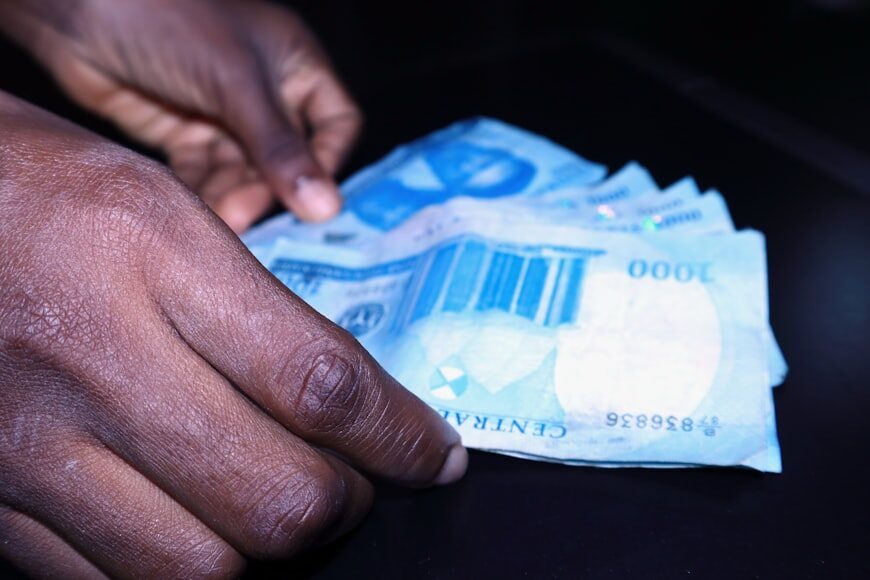
Banking system faces N13.25trn inflow as OMO maturities fall
Nigeria’s banking system is expected to receive an estimated N13.25 trillion in liquidity inflows in October, 14.82 percent lower than read more Banking system faces N13.25trn inflow as OMO maturities fall
Nigeria’s banking system is expected to receive an estimated N13.25 trillion in liquidity inflows in October, 14.82 percent lower than the N15.56 trillion estimated for September, according to the Financial Markets Dealers Association (FMDA). Open Market Operations (OMO) maturities will account for the largest portion of the expected October inflows at N9.05 trillion, down from N11.60 trillion in September. Treasury bill maturities are projected at N1.22 trillion, while Federal Government of Nigeria bond coupons are expected to provide N434.16 billion. The banking system is also expected to receive N23.32 billion from corporate bond coupons and N18.84 billion from commercial paper maturities. Read also: GTBank only Nigerian firm among Forbes’ top 10 African employers Federation Account Allocation Committee (FAAC) distributions to the federal, state and local governments are estimated at N2.5 trillion in October, compared with N2.34 trillion actually distributed in September. The expected liquidity inflows come amid continued aggressive liquidity management by the Central Bank of Nigeria. System liquidity rose marginally by 1.14 percent in September to N4.703 trillion from N4.65 trillion in August. However, liquidity conditions remained volatile during the month, reaching about N8.84 trillion following FAAC inflows before moderating due to cash reserve requirement (CRR) debits, OMO sterilisation and primary-market issuances. The CBN sterilised N17.51 trillion through OMO operations during September, helping to offset a significant portion of the liquidity entering the financial system. The FMDA said October’s projected N13.25 trillion inflow was about 14.82 percent lower than the N15.56 trillion estimated for September, with OMO maturities expected to account for a significant share. Read also: Recapitalised banks lift lending but high rates dampen demand “System liquidity conditions” are therefore expected to remain sensitive to the CBN’s sterilisation stance, the association said. The liquidity outlook follows the CBN’s decision in September to cut the Monetary Policy Rate by 350 basis points to 23 percent from 26.5 percent. Following the rate cut, the Overnight Funding Rate declined 9.09 percent to 20 percent, while the overnight rate fell 7.86 percent to 20.39 percent. The easing in monetary conditions was also reflected in the fixed-income market, where the average Treasury bill yield fell by 147 basis points to 17.74 percent in September. Related News Jannik Sinner’s 2026 season ends in heartbreak after knee injury NGX Group: Anchored in 1960, built for tomorrow Joshua vs Fury: Inside the no-rematch clause Hope Moses-Ashike Hope Moses-Ashike is an Associate Editor, Banking and Finance, with more than a decade of experience reporting on Nigeria’s financial system and broader economy. She closely tracks market movements, monetary policy decisions, company disclosures, regulatory actions, economic indicators, and global developments, and interprets what they mean for businesses, investors, policymakers, and households. Her reporting helps readers understand complex issues such as inflation trends, foreign exchange market dynamics, interest rate decisions, bank performance, and investment risks. She also covers major international events and periodically travels to Washington, D.C., to report on the World Bank/IMF Spring and Annual Meetings. Her dedication to financial journalism has earned her multiple recognitions and invitations to high-level professional development programmes. She is an alumna of the International Visitors Leadership Programme (IVLP) in the United States and holds an Advanced Financial Journalism Certificate from the Press Association Training in London, UK. Her other notable achievements include completing the Lagos Business School CMC Programme, the Bloomberg Media Africa Initiative Programme, and a Master Class in Journalism at Rhodes University in South Africa. Share
Open Market Operations (OMO) maturities will account for the largest portion of the expected October inflows at N9.05 trillion, down from N11.60 trillion in September. Treasury bill maturities are projected at N1.22 trillion, while Federal Government of Nigeria bond coupons are expected to provide N434.16 billion. The banking system is also expected to receive N23.32 billion from corporate bond coupons and N18.84 billion from commercial paper maturities. Read also: GTBank only Nigerian firm among Forbes’ top 10 African employers Federation Account Allocation Committee (FAAC) distributions to the federal, state and local governments are estimated at N2.5 trillion in October, compared with N2.34 trillion actually distributed in September. The expected liquidity inflows come amid continued aggressive liquidity management by the Central Bank of Nigeria. System liquidity rose marginally by 1.14 percent in September to N4.703 trillion from N4.65 trillion in August. However, liquidity conditions remained volatile during the month, reaching about N8.84 trillion following FAAC inflows before moderating due to cash reserve requirement (CRR) debits, OMO sterilisation and primary-market issuances. The CBN sterilised N17.51 trillion through OMO operations during September, helping to offset a significant portion of the liquidity entering the financial system. The FMDA said October’s projected N13.25 trillion inflow was about 14.82 percent lower than the N15.56 trillion estimated for September, with OMO maturities expected to account for a significant share. Read also: Recapitalised banks lift lending but high rates dampen demand “System liquidity conditions” are therefore expected to remain sensitive to the CBN’s sterilisation stance, the association said. The liquidity outlook follows the CBN’s decision in September to cut the Monetary Policy Rate by 350 basis points to 23 percent from 26.5 percent. Following the rate cut, the Overnight Funding Rate declined 9.09 percent to 20 percent, while the overnight rate fell 7.86 percent to 20.39 percent. The easing in monetary conditions was also reflected in the fixed-income market, where the average Treasury bill yield fell by 147 basis points to 17.74 percent in September. Related News Jannik Sinner’s 2026 season ends in heartbreak after knee injury NGX Group: Anchored in 1960, built for tomorrow Joshua vs Fury: Inside the no-rematch clause Hope Moses-Ashike Hope Moses-Ashike is an Associate Editor, Banking and Finance, with more than a decade of experience reporting on Nigeria’s financial system and broader economy. She closely tracks market movements, monetary policy decisions, company disclosures, regulatory actions, economic indicators, and global developments, and interprets what they mean for businesses, investors, policymakers, and households. Her reporting helps readers understand complex issues such as inflation trends, foreign exchange market dynamics, interest rate decisions, bank performance, and investment risks. She also covers major international events and periodically travels to Washington, D.C., to report on the World Bank/IMF Spring and Annual Meetings. Her dedication to financial journalism has earned her multiple recognitions and invitations to high-level professional development programmes. She is an alumna of the International Visitors Leadership Programme (IVLP) in the United States and holds an Advanced Financial Journalism Certificate from the Press Association Training in London, UK. Her other notable achievements include completing the Lagos Business School CMC Programme, the Bloomberg Media Africa Initiative Programme, and a Master Class in Journalism at Rhodes University in South Africa. Share
Treasury bill maturities are projected at N1.22 trillion, while Federal Government of Nigeria bond coupons are expected to provide N434.16 billion. The banking system is also expected to receive N23.32 billion from corporate bond coupons and N18.84 billion from commercial paper maturities. Read also: GTBank only Nigerian firm among Forbes’ top 10 African employers Federation Account Allocation Committee (FAAC) distributions to the federal, state and local governments are estimated at N2.5 trillion in October, compared with N2.34 trillion actually distributed in September. The expected liquidity inflows come amid continued aggressive liquidity management by the Central Bank of Nigeria. System liquidity rose marginally by 1.14 percent in September to N4.703 trillion from N4.65 trillion in August. However, liquidity conditions remained volatile during the month, reaching about N8.84 trillion following FAAC inflows before moderating due to cash reserve requirement (CRR) debits, OMO sterilisation and primary-market issuances. The CBN sterilised N17.51 trillion through OMO operations during September, helping to offset a significant portion of the liquidity entering the financial system. The FMDA said October’s projected N13.25 trillion inflow was about 14.82 percent lower than the N15.56 trillion estimated for September, with OMO maturities expected to account for a significant share. Read also: Recapitalised banks lift lending but high rates dampen demand “System liquidity conditions” are therefore expected to remain sensitive to the CBN’s sterilisation stance, the association said. The liquidity outlook follows the CBN’s decision in September to cut the Monetary Policy Rate by 350 basis points to 23 percent from 26.5 percent. Following the rate cut, the Overnight Funding Rate declined 9.09 percent to 20 percent, while the overnight rate fell 7.86 percent to 20.39 percent. The easing in monetary conditions was also reflected in the fixed-income market, where the average Treasury bill yield fell by 147 basis points to 17.74 percent in September. Related News Jannik Sinner’s 2026 season ends in heartbreak after knee injury NGX Group: Anchored in 1960, built for tomorrow Joshua vs Fury: Inside the no-rematch clause Hope Moses-Ashike Hope Moses-Ashike is an Associate Editor, Banking and Finance, with more than a decade of experience reporting on Nigeria’s financial system and broader economy. She closely tracks market movements, monetary policy decisions, company disclosures, regulatory actions, economic indicators, and global developments, and interprets what they mean for businesses, investors, policymakers, and households. Her reporting helps readers understand complex issues such as inflation trends, foreign exchange market dynamics, interest rate decisions, bank performance, and investment risks. She also covers major international events and periodically travels to Washington, D.C., to report on the World Bank/IMF Spring and Annual Meetings. Her dedication to financial journalism has earned her multiple recognitions and invitations to high-level professional development programmes. She is an alumna of the International Visitors Leadership Programme (IVLP) in the United States and holds an Advanced Financial Journalism Certificate from the Press Association Training in London, UK. Her other notable achievements include completing the Lagos Business School CMC Programme, the Bloomberg Media Africa Initiative Programme, and a Master Class in Journalism at Rhodes University in South Africa. Share
The banking system is also expected to receive N23.32 billion from corporate bond coupons and N18.84 billion from commercial paper maturities. Read also: GTBank only Nigerian firm among Forbes’ top 10 African employers Federation Account Allocation Committee (FAAC) distributions to the federal, state and local governments are estimated at N2.5 trillion in October, compared with N2.34 trillion actually distributed in September. The expected liquidity inflows come amid continued aggressive liquidity management by the Central Bank of Nigeria. System liquidity rose marginally by 1.14 percent in September to N4.703 trillion from N4.65 trillion in August. However, liquidity conditions remained volatile during the month, reaching about N8.84 trillion following FAAC inflows before moderating due to cash reserve requirement (CRR) debits, OMO sterilisation and primary-market issuances. The CBN sterilised N17.51 trillion through OMO operations during September, helping to offset a significant portion of the liquidity entering the financial system. The FMDA said October’s projected N13.25 trillion inflow was about 14.82 percent lower than the N15.56 trillion estimated for September, with OMO maturities expected to account for a significant share. Read also: Recapitalised banks lift lending but high rates dampen demand “System liquidity conditions” are therefore expected to remain sensitive to the CBN’s sterilisation stance, the association said. The liquidity outlook follows the CBN’s decision in September to cut the Monetary Policy Rate by 350 basis points to 23 percent from 26.5 percent. Following the rate cut, the Overnight Funding Rate declined 9.09 percent to 20 percent, while the overnight rate fell 7.86 percent to 20.39 percent. The easing in monetary conditions was also reflected in the fixed-income market, where the average Treasury bill yield fell by 147 basis points to 17.74 percent in September. Related News Jannik Sinner’s 2026 season ends in heartbreak after knee injury NGX Group: Anchored in 1960, built for tomorrow Joshua vs Fury: Inside the no-rematch clause Hope Moses-Ashike Hope Moses-Ashike is an Associate Editor, Banking and Finance, with more than a decade of experience reporting on Nigeria’s financial system and broader economy. She closely tracks market movements, monetary policy decisions, company disclosures, regulatory actions, economic indicators, and global developments, and interprets what they mean for businesses, investors, policymakers, and households. Her reporting helps readers understand complex issues such as inflation trends, foreign exchange market dynamics, interest rate decisions, bank performance, and investment risks. She also covers major international events and periodically travels to Washington, D.C., to report on the World Bank/IMF Spring and Annual Meetings. Her dedication to financial journalism has earned her multiple recognitions and invitations to high-level professional development programmes. She is an alumna of the International Visitors Leadership Programme (IVLP) in the United States and holds an Advanced Financial Journalism Certificate from the Press Association Training in London, UK. Her other notable achievements include completing the Lagos Business School CMC Programme, the Bloomberg Media Africa Initiative Programme, and a Master Class in Journalism at Rhodes University in South Africa. Share
Read also: GTBank only Nigerian firm among Forbes’ top 10 African employers Federation Account Allocation Committee (FAAC) distributions to the federal, state and local governments are estimated at N2.5 trillion in October, compared with N2.34 trillion actually distributed in September. The expected liquidity inflows come amid continued aggressive liquidity management by the Central Bank of Nigeria. System liquidity rose marginally by 1.14 percent in September to N4.703 trillion from N4.65 trillion in August. However, liquidity conditions remained volatile during the month, reaching about N8.84 trillion following FAAC inflows before moderating due to cash reserve requirement (CRR) debits, OMO sterilisation and primary-market issuances. The CBN sterilised N17.51 trillion through OMO operations during September, helping to offset a significant portion of the liquidity entering the financial system. The FMDA said October’s projected N13.25 trillion inflow was about 14.82 percent lower than the N15.56 trillion estimated for September, with OMO maturities expected to account for a significant share. Read also: Recapitalised banks lift lending but high rates dampen demand “System liquidity conditions” are therefore expected to remain sensitive to the CBN’s sterilisation stance, the association said. The liquidity outlook follows the CBN’s decision in September to cut the Monetary Policy Rate by 350 basis points to 23 percent from 26.5 percent. Following the rate cut, the Overnight Funding Rate declined 9.09 percent to 20 percent, while the overnight rate fell 7.86 percent to 20.39 percent. The easing in monetary conditions was also reflected in the fixed-income market, where the average Treasury bill yield fell by 147 basis points to 17.74 percent in September. Related News Jannik Sinner’s 2026 season ends in heartbreak after knee injury NGX Group: Anchored in 1960, built for tomorrow Joshua vs Fury: Inside the no-rematch clause Hope Moses-Ashike Hope Moses-Ashike is an Associate Editor, Banking and Finance, with more than a decade of experience reporting on Nigeria’s financial system and broader economy. She closely tracks market movements, monetary policy decisions, company disclosures, regulatory actions, economic indicators, and global developments, and interprets what they mean for businesses, investors, policymakers, and households. Her reporting helps readers understand complex issues such as inflation trends, foreign exchange market dynamics, interest rate decisions, bank performance, and investment risks. She also covers major international events and periodically travels to Washington, D.C., to report on the World Bank/IMF Spring and Annual Meetings. Her dedication to financial journalism has earned her multiple recognitions and invitations to high-level professional development programmes. She is an alumna of the International Visitors Leadership Programme (IVLP) in the United States and holds an Advanced Financial Journalism Certificate from the Press Association Training in London, UK. Her other notable achievements include completing the Lagos Business School CMC Programme, the Bloomberg Media Africa Initiative Programme, and a Master Class in Journalism at Rhodes University in South Africa. Share
Federation Account Allocation Committee (FAAC) distributions to the federal, state and local governments are estimated at N2.5 trillion in October, compared with N2.34 trillion actually distributed in September. The expected liquidity inflows come amid continued aggressive liquidity management by the Central Bank of Nigeria. System liquidity rose marginally by 1.14 percent in September to N4.703 trillion from N4.65 trillion in August. However, liquidity conditions remained volatile during the month, reaching about N8.84 trillion following FAAC inflows before moderating due to cash reserve requirement (CRR) debits, OMO sterilisation and primary-market issuances. The CBN sterilised N17.51 trillion through OMO operations during September, helping to offset a significant portion of the liquidity entering the financial system. The FMDA said October’s projected N13.25 trillion inflow was about 14.82 percent lower than the N15.56 trillion estimated for September, with OMO maturities expected to account for a significant share. Read also: Recapitalised banks lift lending but high rates dampen demand “System liquidity conditions” are therefore expected to remain sensitive to the CBN’s sterilisation stance, the association said. The liquidity outlook follows the CBN’s decision in September to cut the Monetary Policy Rate by 350 basis points to 23 percent from 26.5 percent. Following the rate cut, the Overnight Funding Rate declined 9.09 percent to 20 percent, while the overnight rate fell 7.86 percent to 20.39 percent. The easing in monetary conditions was also reflected in the fixed-income market, where the average Treasury bill yield fell by 147 basis points to 17.74 percent in September. Related News Jannik Sinner’s 2026 season ends in heartbreak after knee injury NGX Group: Anchored in 1960, built for tomorrow Joshua vs Fury: Inside the no-rematch clause Hope Moses-Ashike Hope Moses-Ashike is an Associate Editor, Banking and Finance, with more than a decade of experience reporting on Nigeria’s financial system and broader economy. She closely tracks market movements, monetary policy decisions, company disclosures, regulatory actions, economic indicators, and global developments, and interprets what they mean for businesses, investors, policymakers, and households. Her reporting helps readers understand complex issues such as inflation trends, foreign exchange market dynamics, interest rate decisions, bank performance, and investment risks. She also covers major international events and periodically travels to Washington, D.C., to report on the World Bank/IMF Spring and Annual Meetings. Her dedication to financial journalism has earned her multiple recognitions and invitations to high-level professional development programmes. She is an alumna of the International Visitors Leadership Programme (IVLP) in the United States and holds an Advanced Financial Journalism Certificate from the Press Association Training in London, UK. Her other notable achievements include completing the Lagos Business School CMC Programme, the Bloomberg Media Africa Initiative Programme, and a Master Class in Journalism at Rhodes University in South Africa. Share
The expected liquidity inflows come amid continued aggressive liquidity management by the Central Bank of Nigeria. System liquidity rose marginally by 1.14 percent in September to N4.703 trillion from N4.65 trillion in August. However, liquidity conditions remained volatile during the month, reaching about N8.84 trillion following FAAC inflows before moderating due to cash reserve requirement (CRR) debits, OMO sterilisation and primary-market issuances. The CBN sterilised N17.51 trillion through OMO operations during September, helping to offset a significant portion of the liquidity entering the financial system. The FMDA said October’s projected N13.25 trillion inflow was about 14.82 percent lower than the N15.56 trillion estimated for September, with OMO maturities expected to account for a significant share. Read also: Recapitalised banks lift lending but high rates dampen demand “System liquidity conditions” are therefore expected to remain sensitive to the CBN’s sterilisation stance, the association said. The liquidity outlook follows the CBN’s decision in September to cut the Monetary Policy Rate by 350 basis points to 23 percent from 26.5 percent. Following the rate cut, the Overnight Funding Rate declined 9.09 percent to 20 percent, while the overnight rate fell 7.86 percent to 20.39 percent. The easing in monetary conditions was also reflected in the fixed-income market, where the average Treasury bill yield fell by 147 basis points to 17.74 percent in September. Related News Jannik Sinner’s 2026 season ends in heartbreak after knee injury NGX Group: Anchored in 1960, built for tomorrow Joshua vs Fury: Inside the no-rematch clause Hope Moses-Ashike Hope Moses-Ashike is an Associate Editor, Banking and Finance, with more than a decade of experience reporting on Nigeria’s financial system and broader economy. She closely tracks market movements, monetary policy decisions, company disclosures, regulatory actions, economic indicators, and global developments, and interprets what they mean for businesses, investors, policymakers, and households. Her reporting helps readers understand complex issues such as inflation trends, foreign exchange market dynamics, interest rate decisions, bank performance, and investment risks. She also covers major international events and periodically travels to Washington, D.C., to report on the World Bank/IMF Spring and Annual Meetings. Her dedication to financial journalism has earned her multiple recognitions and invitations to high-level professional development programmes. She is an alumna of the International Visitors Leadership Programme (IVLP) in the United States and holds an Advanced Financial Journalism Certificate from the Press Association Training in London, UK. Her other notable achievements include completing the Lagos Business School CMC Programme, the Bloomberg Media Africa Initiative Programme, and a Master Class in Journalism at Rhodes University in South Africa. Share
System liquidity rose marginally by 1.14 percent in September to N4.703 trillion from N4.65 trillion in August. However, liquidity conditions remained volatile during the month, reaching about N8.84 trillion following FAAC inflows before moderating due to cash reserve requirement (CRR) debits, OMO sterilisation and primary-market issuances. The CBN sterilised N17.51 trillion through OMO operations during September, helping to offset a significant portion of the liquidity entering the financial system. The FMDA said October’s projected N13.25 trillion inflow was about 14.82 percent lower than the N15.56 trillion estimated for September, with OMO maturities expected to account for a significant share. Read also: Recapitalised banks lift lending but high rates dampen demand “System liquidity conditions” are therefore expected to remain sensitive to the CBN’s sterilisation stance, the association said. The liquidity outlook follows the CBN’s decision in September to cut the Monetary Policy Rate by 350 basis points to 23 percent from 26.5 percent. Following the rate cut, the Overnight Funding Rate declined 9.09 percent to 20 percent, while the overnight rate fell 7.86 percent to 20.39 percent. The easing in monetary conditions was also reflected in the fixed-income market, where the average Treasury bill yield fell by 147 basis points to 17.74 percent in September. Related News Jannik Sinner’s 2026 season ends in heartbreak after knee injury NGX Group: Anchored in 1960, built for tomorrow Joshua vs Fury: Inside the no-rematch clause Hope Moses-Ashike Hope Moses-Ashike is an Associate Editor, Banking and Finance, with more than a decade of experience reporting on Nigeria’s financial system and broader economy. She closely tracks market movements, monetary policy decisions, company disclosures, regulatory actions, economic indicators, and global developments, and interprets what they mean for businesses, investors, policymakers, and households. Her reporting helps readers understand complex issues such as inflation trends, foreign exchange market dynamics, interest rate decisions, bank performance, and investment risks. She also covers major international events and periodically travels to Washington, D.C., to report on the World Bank/IMF Spring and Annual Meetings. Her dedication to financial journalism has earned her multiple recognitions and invitations to high-level professional development programmes. She is an alumna of the International Visitors Leadership Programme (IVLP) in the United States and holds an Advanced Financial Journalism Certificate from the Press Association Training in London, UK. Her other notable achievements include completing the Lagos Business School CMC Programme, the Bloomberg Media Africa Initiative Programme, and a Master Class in Journalism at Rhodes University in South Africa. Share
The CBN sterilised N17.51 trillion through OMO operations during September, helping to offset a significant portion of the liquidity entering the financial system. The FMDA said October’s projected N13.25 trillion inflow was about 14.82 percent lower than the N15.56 trillion estimated for September, with OMO maturities expected to account for a significant share. Read also: Recapitalised banks lift lending but high rates dampen demand “System liquidity conditions” are therefore expected to remain sensitive to the CBN’s sterilisation stance, the association said. The liquidity outlook follows the CBN’s decision in September to cut the Monetary Policy Rate by 350 basis points to 23 percent from 26.5 percent. Following the rate cut, the Overnight Funding Rate declined 9.09 percent to 20 percent, while the overnight rate fell 7.86 percent to 20.39 percent. The easing in monetary conditions was also reflected in the fixed-income market, where the average Treasury bill yield fell by 147 basis points to 17.74 percent in September. Related News Jannik Sinner’s 2026 season ends in heartbreak after knee injury NGX Group: Anchored in 1960, built for tomorrow Joshua vs Fury: Inside the no-rematch clause Hope Moses-Ashike Hope Moses-Ashike is an Associate Editor, Banking and Finance, with more than a decade of experience reporting on Nigeria’s financial system and broader economy. She closely tracks market movements, monetary policy decisions, company disclosures, regulatory actions, economic indicators, and global developments, and interprets what they mean for businesses, investors, policymakers, and households. Her reporting helps readers understand complex issues such as inflation trends, foreign exchange market dynamics, interest rate decisions, bank performance, and investment risks. She also covers major international events and periodically travels to Washington, D.C., to report on the World Bank/IMF Spring and Annual Meetings. Her dedication to financial journalism has earned her multiple recognitions and invitations to high-level professional development programmes. She is an alumna of the International Visitors Leadership Programme (IVLP) in the United States and holds an Advanced Financial Journalism Certificate from the Press Association Training in London, UK. Her other notable achievements include completing the Lagos Business School CMC Programme, the Bloomberg Media Africa Initiative Programme, and a Master Class in Journalism at Rhodes University in South Africa. Share
The FMDA said October’s projected N13.25 trillion inflow was about 14.82 percent lower than the N15.56 trillion estimated for September, with OMO maturities expected to account for a significant share. Read also: Recapitalised banks lift lending but high rates dampen demand “System liquidity conditions” are therefore expected to remain sensitive to the CBN’s sterilisation stance, the association said. The liquidity outlook follows the CBN’s decision in September to cut the Monetary Policy Rate by 350 basis points to 23 percent from 26.5 percent. Following the rate cut, the Overnight Funding Rate declined 9.09 percent to 20 percent, while the overnight rate fell 7.86 percent to 20.39 percent. The easing in monetary conditions was also reflected in the fixed-income market, where the average Treasury bill yield fell by 147 basis points to 17.74 percent in September. Related News Jannik Sinner’s 2026 season ends in heartbreak after knee injury NGX Group: Anchored in 1960, built for tomorrow Joshua vs Fury: Inside the no-rematch clause Hope Moses-Ashike Hope Moses-Ashike is an Associate Editor, Banking and Finance, with more than a decade of experience reporting on Nigeria’s financial system and broader economy. She closely tracks market movements, monetary policy decisions, company disclosures, regulatory actions, economic indicators, and global developments, and interprets what they mean for businesses, investors, policymakers, and households. Her reporting helps readers understand complex issues such as inflation trends, foreign exchange market dynamics, interest rate decisions, bank performance, and investment risks. She also covers major international events and periodically travels to Washington, D.C., to report on the World Bank/IMF Spring and Annual Meetings. Her dedication to financial journalism has earned her multiple recognitions and invitations to high-level professional development programmes. She is an alumna of the International Visitors Leadership Programme (IVLP) in the United States and holds an Advanced Financial Journalism Certificate from the Press Association Training in London, UK. Her other notable achievements include completing the Lagos Business School CMC Programme, the Bloomberg Media Africa Initiative Programme, and a Master Class in Journalism at Rhodes University in South Africa. Share
Read also: Recapitalised banks lift lending but high rates dampen demand “System liquidity conditions” are therefore expected to remain sensitive to the CBN’s sterilisation stance, the association said. The liquidity outlook follows the CBN’s decision in September to cut the Monetary Policy Rate by 350 basis points to 23 percent from 26.5 percent. Following the rate cut, the Overnight Funding Rate declined 9.09 percent to 20 percent, while the overnight rate fell 7.86 percent to 20.39 percent. The easing in monetary conditions was also reflected in the fixed-income market, where the average Treasury bill yield fell by 147 basis points to 17.74 percent in September. Related News Jannik Sinner’s 2026 season ends in heartbreak after knee injury NGX Group: Anchored in 1960, built for tomorrow Joshua vs Fury: Inside the no-rematch clause Hope Moses-Ashike Hope Moses-Ashike is an Associate Editor, Banking and Finance, with more than a decade of experience reporting on Nigeria’s financial system and broader economy. She closely tracks market movements, monetary policy decisions, company disclosures, regulatory actions, economic indicators, and global developments, and interprets what they mean for businesses, investors, policymakers, and households. Her reporting helps readers understand complex issues such as inflation trends, foreign exchange market dynamics, interest rate decisions, bank performance, and investment risks. She also covers major international events and periodically travels to Washington, D.C., to report on the World Bank/IMF Spring and Annual Meetings. Her dedication to financial journalism has earned her multiple recognitions and invitations to high-level professional development programmes. She is an alumna of the International Visitors Leadership Programme (IVLP) in the United States and holds an Advanced Financial Journalism Certificate from the Press Association Training in London, UK. Her other notable achievements include completing the Lagos Business School CMC Programme, the Bloomberg Media Africa Initiative Programme, and a Master Class in Journalism at Rhodes University in South Africa. Share
“System liquidity conditions” are therefore expected to remain sensitive to the CBN’s sterilisation stance, the association said. The liquidity outlook follows the CBN’s decision in September to cut the Monetary Policy Rate by 350 basis points to 23 percent from 26.5 percent. Following the rate cut, the Overnight Funding Rate declined 9.09 percent to 20 percent, while the overnight rate fell 7.86 percent to 20.39 percent. The easing in monetary conditions was also reflected in the fixed-income market, where the average Treasury bill yield fell by 147 basis points to 17.74 percent in September. Related News Jannik Sinner’s 2026 season ends in heartbreak after knee injury NGX Group: Anchored in 1960, built for tomorrow Joshua vs Fury: Inside the no-rematch clause Hope Moses-Ashike Hope Moses-Ashike is an Associate Editor, Banking and Finance, with more than a decade of experience reporting on Nigeria’s financial system and broader economy. She closely tracks market movements, monetary policy decisions, company disclosures, regulatory actions, economic indicators, and global developments, and interprets what they mean for businesses, investors, policymakers, and households. Her reporting helps readers understand complex issues such as inflation trends, foreign exchange market dynamics, interest rate decisions, bank performance, and investment risks. She also covers major international events and periodically travels to Washington, D.C., to report on the World Bank/IMF Spring and Annual Meetings. Her dedication to financial journalism has earned her multiple recognitions and invitations to high-level professional development programmes. She is an alumna of the International Visitors Leadership Programme (IVLP) in the United States and holds an Advanced Financial Journalism Certificate from the Press Association Training in London, UK. Her other notable achievements include completing the Lagos Business School CMC Programme, the Bloomberg Media Africa Initiative Programme, and a Master Class in Journalism at Rhodes University in South Africa. Share
The liquidity outlook follows the CBN’s decision in September to cut the Monetary Policy Rate by 350 basis points to 23 percent from 26.5 percent. Following the rate cut, the Overnight Funding Rate declined 9.09 percent to 20 percent, while the overnight rate fell 7.86 percent to 20.39 percent. The easing in monetary conditions was also reflected in the fixed-income market, where the average Treasury bill yield fell by 147 basis points to 17.74 percent in September. Related News Jannik Sinner’s 2026 season ends in heartbreak after knee injury NGX Group: Anchored in 1960, built for tomorrow Joshua vs Fury: Inside the no-rematch clause Hope Moses-Ashike Hope Moses-Ashike is an Associate Editor, Banking and Finance, with more than a decade of experience reporting on Nigeria’s financial system and broader economy. She closely tracks market movements, monetary policy decisions, company disclosures, regulatory actions, economic indicators, and global developments, and interprets what they mean for businesses, investors, policymakers, and households. Her reporting helps readers understand complex issues such as inflation trends, foreign exchange market dynamics, interest rate decisions, bank performance, and investment risks. She also covers major international events and periodically travels to Washington, D.C., to report on the World Bank/IMF Spring and Annual Meetings. Her dedication to financial journalism has earned her multiple recognitions and invitations to high-level professional development programmes. She is an alumna of the International Visitors Leadership Programme (IVLP) in the United States and holds an Advanced Financial Journalism Certificate from the Press Association Training in London, UK. Her other notable achievements include completing the Lagos Business School CMC Programme, the Bloomberg Media Africa Initiative Programme, and a Master Class in Journalism at Rhodes University in South Africa. Share
Following the rate cut, the Overnight Funding Rate declined 9.09 percent to 20 percent, while the overnight rate fell 7.86 percent to 20.39 percent. The easing in monetary conditions was also reflected in the fixed-income market, where the average Treasury bill yield fell by 147 basis points to 17.74 percent in September. Related News Jannik Sinner’s 2026 season ends in heartbreak after knee injury NGX Group: Anchored in 1960, built for tomorrow Joshua vs Fury: Inside the no-rematch clause Hope Moses-Ashike Hope Moses-Ashike is an Associate Editor, Banking and Finance, with more than a decade of experience reporting on Nigeria’s financial system and broader economy. She closely tracks market movements, monetary policy decisions, company disclosures, regulatory actions, economic indicators, and global developments, and interprets what they mean for businesses, investors, policymakers, and households. Her reporting helps readers understand complex issues such as inflation trends, foreign exchange market dynamics, interest rate decisions, bank performance, and investment risks. She also covers major international events and periodically travels to Washington, D.C., to report on the World Bank/IMF Spring and Annual Meetings. Her dedication to financial journalism has earned her multiple recognitions and invitations to high-level professional development programmes. She is an alumna of the International Visitors Leadership Programme (IVLP) in the United States and holds an Advanced Financial Journalism Certificate from the Press Association Training in London, UK. Her other notable achievements include completing the Lagos Business School CMC Programme, the Bloomberg Media Africa Initiative Programme, and a Master Class in Journalism at Rhodes University in South Africa. Share
The easing in monetary conditions was also reflected in the fixed-income market, where the average Treasury bill yield fell by 147 basis points to 17.74 percent in September. Related News Jannik Sinner’s 2026 season ends in heartbreak after knee injury NGX Group: Anchored in 1960, built for tomorrow Joshua vs Fury: Inside the no-rematch clause Hope Moses-Ashike Hope Moses-Ashike is an Associate Editor, Banking and Finance, with more than a decade of experience reporting on Nigeria’s financial system and broader economy. She closely tracks market movements, monetary policy decisions, company disclosures, regulatory actions, economic indicators, and global developments, and interprets what they mean for businesses, investors, policymakers, and households. Her reporting helps readers understand complex issues such as inflation trends, foreign exchange market dynamics, interest rate decisions, bank performance, and investment risks. She also covers major international events and periodically travels to Washington, D.C., to report on the World Bank/IMF Spring and Annual Meetings. Her dedication to financial journalism has earned her multiple recognitions and invitations to high-level professional development programmes. She is an alumna of the International Visitors Leadership Programme (IVLP) in the United States and holds an Advanced Financial Journalism Certificate from the Press Association Training in London, UK. Her other notable achievements include completing the Lagos Business School CMC Programme, the Bloomberg Media Africa Initiative Programme, and a Master Class in Journalism at Rhodes University in South Africa. Share
Related News Jannik Sinner’s 2026 season ends in heartbreak after knee injury NGX Group: Anchored in 1960, built for tomorrow Joshua vs Fury: Inside the no-rematch clause Hope Moses-Ashike Hope Moses-Ashike is an Associate Editor, Banking and Finance, with more than a decade of experience reporting on Nigeria’s financial system and broader economy. She closely tracks market movements, monetary policy decisions, company disclosures, regulatory actions, economic indicators, and global developments, and interprets what they mean for businesses, investors, policymakers, and households. Her reporting helps readers understand complex issues such as inflation trends, foreign exchange market dynamics, interest rate decisions, bank performance, and investment risks. She also covers major international events and periodically travels to Washington, D.C., to report on the World Bank/IMF Spring and Annual Meetings. Her dedication to financial journalism has earned her multiple recognitions and invitations to high-level professional development programmes. She is an alumna of the International Visitors Leadership Programme (IVLP) in the United States and holds an Advanced Financial Journalism Certificate from the Press Association Training in London, UK. Her other notable achievements include completing the Lagos Business School CMC Programme, the Bloomberg Media Africa Initiative Programme, and a Master Class in Journalism at Rhodes University in South Africa. Share
Hope Moses-Ashike is an Associate Editor, Banking and Finance, with more than a decade of experience reporting on Nigeria’s financial system and broader economy. She closely tracks market movements, monetary policy decisions, company disclosures, regulatory actions, economic indicators, and global developments, and interprets what they mean for businesses, investors, policymakers, and households. Her reporting helps readers understand complex issues such as inflation trends, foreign exchange market dynamics, interest rate decisions, bank performance, and investment risks. She also covers major international events and periodically travels to Washington, D.C., to report on the World Bank/IMF Spring and Annual Meetings. Her dedication to financial journalism has earned her multiple recognitions and invitations to high-level professional development programmes. She is an alumna of the International Visitors Leadership Programme (IVLP) in the United States and holds an Advanced Financial Journalism Certificate from the Press Association Training in London, UK. Her other notable achievements include completing the Lagos Business School CMC Programme, the Bloomberg Media Africa Initiative Programme, and a Master Class in Journalism at Rhodes University in South Africa.