Colombia Illegal Gold Mining: Security Chiefs Meet in Southern Bolívar
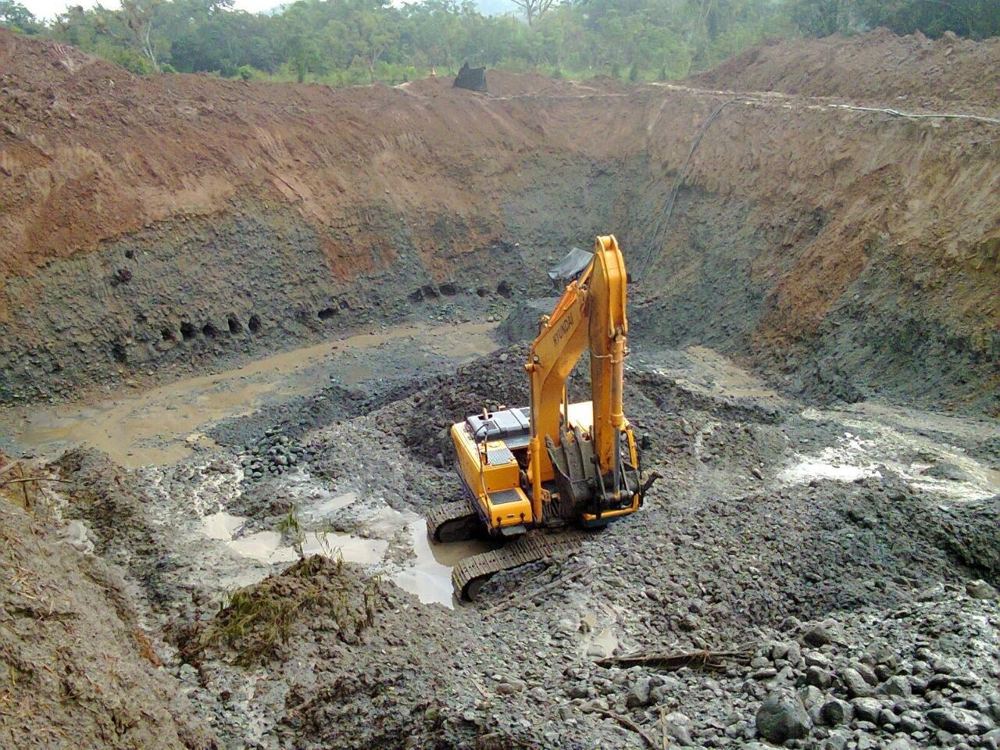
Colombia illegal gold mining is the target as ministers and military and police chiefs meet in southern Bolívar, where armed groups control most gold output. The post Colombia Illegal Gold Mining: Security Chiefs Meet in Southern Bolívar appeared first on The Rio Times .
Colombia illegal gold mining has become the main source of money for armed groups in southern Bolívar. The state has sent its top commanders there.
Colombia’s top military and police commanders met in Santa Rosa del Sur, in southern Bolívar, on Saturday 26 September 2026. Their target is illegal gold mining, which finances the armed groups that fight over the region.
The interior and defence ministers attended with General Erik Rodríguez, commander of the armed forces. The heads of the army, navy, air force and national police joined them, El Tiempo reported.
“The purpose is clear: strengthen territorial control, protect the population and weaken the criminal structures,” Rodríguez said. He added that the aim was to hit their illegal income, especially from illegal mining and drug trafficking.
The measures reviewed include a special security-force unit to reinforce operations in the extraction zones. The plan also calls for more state institutions in areas where armed groups have settled.
Southern Bolívar lies in the Serranía de San Lucas, a mountain range in northern Colombia. It forms a corridor with Antioquia’s Bajo Cauca and Nordeste subregions, which are also mining areas.
About 2.7 tonnes of gold a year can come from at least 12 municipalities there, says Colombia’s official mining information system. Governor Yamil Arana told El Tiempo in August that only 5 percent of it is legal.
Arana said about 70 percent of the illegal gold mining is controlled by three armed groups. These are the ELN guerrilla, the Clan del Golfo drug-trafficking organisation and dissident factions of the former FARC rebels.
The remaining 20 to 25 percent belongs to small groups of artisanal miners. Many of them say the state has long been absent from the region.
Once gold is melted, its origin is very hard to trace, Arana said. That makes it easy to move, sell and use to pay workers.
According to the governor, armed groups pay poor hand miners 100,000 to 150,000 pesos, about US$30 to US$45. In return, the miners register large gold loads in their own names with the National Mining Agency.
The law allows these hand miners, known as barequeros, to declare up to 35 grams a month or 420 grams a year. Each month, 100 billion to 120 billion pesos in gold move through the area, the governor’s office estimates.
That is about US$30 million to US$36 million a month at the 29 September 2026 rate of 3,369 pesos per US dollar.
Defence Ministry figures published by El Tiempo on 28 September show 792 pieces of heavy machinery seized from January to August 2026. That compares with 519 in the same period of 2025, a rise of 53 percent.
Seizures of other equipment, such as dredges, more than doubled from 689 to 1,494 units. Arrests stayed almost flat, at 1,063 against 1,059 a year earlier.
Gold seizures fell 46 percent and mercury seizures fell 49 percent over the same months. The ministry says all the figures are preliminary.
On 19 August, ELN fighters attacked the police station in Norosí with drones and rifles, wounding nine officers and one civilian. Children at a nearby public school were caught in the fire, El Tiempo reported.
About 20 social leaders who spoke out have been killed by armed groups in the past five years, El Tiempo reported. They include Narciso Beleño, killed on 21 April 2024.
Two days after the meeting, President Abelardo de la Espriella announced a raid on an illegal mine in El Bagre, Antioquia. Police, army and navy disabled dredges, excavators and 13 industrial engines on the Nechí river.
The president said the mine produced about 26.5 kilograms of gold a month. That gold was worth 11.13 billion pesos (about US$3.3 million) on the informal market.
He said a Clan del Golfo unit charged 15 percent of the output in extortion. That came to about 1.67 billion pesos a month, or about US$495,000.
Gold has financed armed groups in this region for decades, El Tiempo noted, once second only to coca. Military pressure now meets an economy that about 70 percent of local people depend on.
The governor calls for broad programmes to formalise small-scale mining alongside the security campaign. Whether seizures turn into lasting state control will show in the months after the commanders leave.
Bolívar governor Yamil Arana says about 70 percent is controlled by the ELN guerrilla, the Clan del Golfo and FARC dissident factions. Small artisanal miners account for most of the rest, and only about 5 percent of output is legal.
Machinery seizures rose 53 percent from January to August 2026, according to preliminary Defence Ministry data. Arrests stayed flat and gold seizures fell 46 percent, so the results are mixed.
Once gold is melted, its origin is very difficult to identify, the governor says. Armed groups also use registered hand miners to declare illegal gold as legal production.



