Opening a Bank Account in Barbados as a Foreigner: Banks, Documents and FX Rules
Six licensed banks, a passport, a bank reference and proof of address: opening a bank account in Barbados is realistic for foreigners, but exchange control and a 2% foreign exchange fee shape how money moves. The post Opening a Bank Account in Barbados as a Foreigner: Banks, Documents and FX Rules appeared first on The Rio Times .
A bank account in Barbados is within reach for most foreigners. The paperwork is heavier than at home, and the currency rules are stricter than newcomers expect.
Opening a bank account in Barbados usually takes a passport, a second ID, proof of address and a bank reference. The harder part is exchange control, a set of currency rules that still governs how money enters and leaves the island.
This guide explains which banks operate, what they ask for, what accounts cost and how the rules on foreign money work. All figures are as of September 2026 unless a different date is given.
The Central Bank of Barbados, the island’s banking regulator, lists six licensed retail banks as of June 2026. All six are also “authorised dealers”, the only institutions allowed to buy and sell foreign currency.
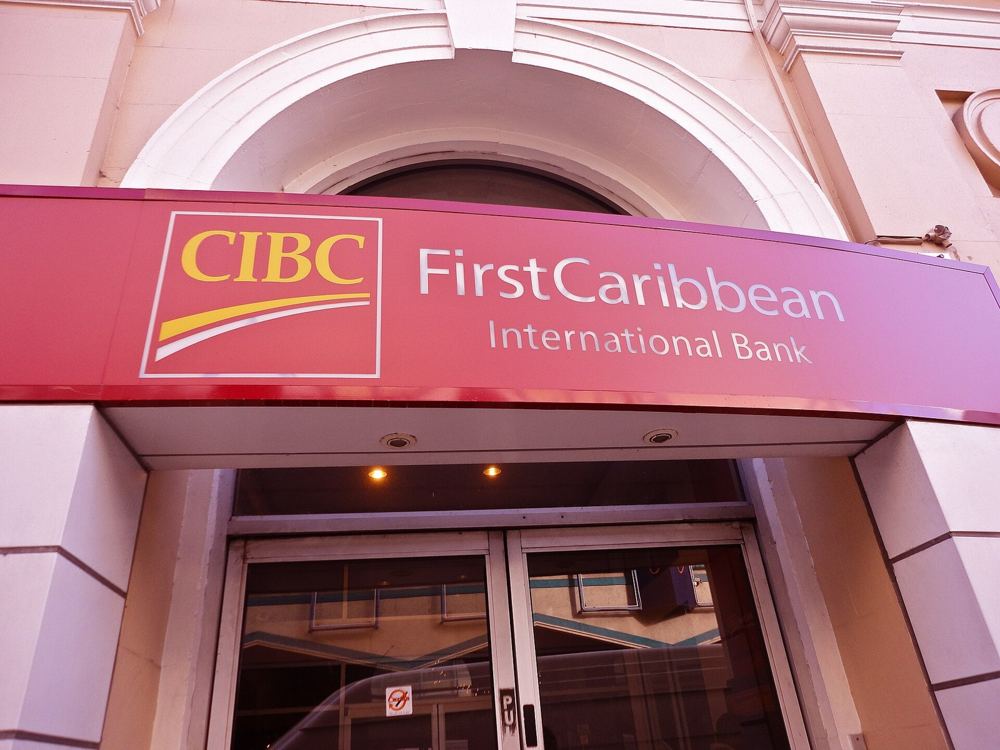
One ownership change is under way. Bermuda’s Butterfield agreed on 28 May 2026 to buy CIBC’s 91.7% stake in CIBC Caribbean for about US$1.8 billion in cash and shares. It will then bid for the remaining 8.3% held by other shareholders. Closing is expected in the first half of 2027.
Butterfield says CIBC Caribbean’s regional headquarters will stay in Barbados. For a new customer, this does not change account opening today, but the brand and some terms may change later.
Credit unions are the other option. They are member-owned savings co-operatives, supervised by the Financial Services Commission (FSC), the regulator for non-bank finance. They are covered further below.
Every bank runs “know your customer” checks, known as KYC. These are anti-money-laundering rules that require proof of who you are, where you live and where your money comes from.
Expect to bring a valid passport and usually a second photo ID. Add a utility bill or bank statement no older than three months, and a job letter or recent payslip.
Non-residents face extra steps. The table below summarises what each bank publishes on its own website.
A CSME certificate is a skills certificate under the CARICOM Single Market and Economy, the Caribbean free-movement scheme. The Welcome Stamp is Barbados’s remote-work visa.
If you apply from abroad, copies must usually be certified. CIBC Caribbean accepts certification by a notary, lawyer, senior banker, certified accountant or embassy consular officer.
Every bank reserves the right to ask for more. Request the current list from the branch before you travel, including from Scotiabank, which is not in the table.
Barbados still runs exchange control under the Exchange Control Act, Cap. 71. The finance minister holds the power and delegates daily work to the central bank and the licensed banks.
Under these rules, a foreign national counts as resident only after three continuous years on the island. Work-permit holders never qualify. Almost every newcomer is therefore a non-resident at first.
That status is not about tax. It only decides which account type you get and how freely money can move. Tax residence follows separate rules, explained in our guide to taxes in Barbados .
A non-resident’s Barbados-dollar account is called an “external account”. The central bank treats money in it on the same basis as foreign currency. Foreign workers here under three years may have their net salary paid into it.
A foreign currency account, usually in US dollars, is the other option. Anyone can keep the full amount they bring in, and payments out of it need no central bank approval.
The central bank’s rule is simple in principle. Money you bring in through a bank can usually leave again, as long as you can prove it came from abroad.
For investments, non-residents register the incoming funds with the central bank on a form called FI, through its Forex Online portal. Keep that approval, because you must show it when you apply to send the money back.
Property is a special case. The central bank must approve a foreign purchase, and usually does when the full price is paid with money sent from abroad. Non-residents are not normally allowed to borrow locally for it, as our property guide explains.
Non-residents may use a locally issued credit card only if the balance is covered from an external or foreign currency account. Residents face annual travel allowances, such as BBD 20,000 (US$10,000) per person for holidays.
Barbados fixed its dollar at BBD 2.00 to US$1 on 5 July 1975, according to the central bank. The rate has not been changed since and still held in September 2026.
All US$ figures in this guide use that rate. A price of BBD 100 is therefore US$50, and the fixed rate removes currency risk between the two dollars.
The peg does not mean conversion is free. Since 2017, a 2% government Foreign Exchange Fee (FXF) applies when you buy foreign currency or pay abroad from a Barbados-dollar account.
The fee covers foreign cash, wires, bank drafts and card payments in foreign currency. It does not apply when you receive a wire, convert foreign money into Barbados dollars, or pay from a foreign currency account.
That is the strongest practical reason to hold a US-dollar account. Sending US$1,000 abroad from a Barbados-dollar account costs an extra US$20 in fee alone, before bank charges.
The central bank publishes a comparison of basic bank fees. Its latest edition, dated 31 December 2024, shows that every bank has offered a “no fee account” since September 2024.
That account carries no monthly or transaction charge. It is the cheapest starting point for a newcomer who only needs local payments.
Using another bank’s cash machine costs BBD 3 (US$1.50) at every bank, while online banking is free. Central bank guidance caps local transfers through the RTGS interbank system at BBD 15 (US$7.50).
International wires cost more. Republic Bank’s January 2025 schedule lists BBD 70 (US$35) plus a BBD 20 (US$10) commission per international transfer, before the 2% fee.
Foreign currency accounts carry their own charges. At Republic, a US-dollar account costs US$2.50 a month, plus US$5 when the balance falls below US$100.
Every applicant fills in a tax self-certification form. It serves two international reporting systems that share account data between tax authorities.
FATCA, the US Foreign Account Tax Compliance Act, covers US citizens and US tax residents. Barbados signed a reciprocal agreement with the United States on 17 November 2014. Banks report US accounts through the Barbados Revenue Authority.
CRS, the Common Reporting Standard, is the OECD equivalent for most other countries. Barbados’s first CRS reporting year was 2017. Banks record your tax residence and the tax number from that country.
This does not create a new tax. It means your home tax office sees your balance and income each year, so declare them there.
Barbados residents need not give a local tax number for CRS, the revenue authority says. False statements on the form can bring fines of up to BBD 50,000 (US$25,000) or prison.
Credit unions are member-owned. Membership depends on a “common bond”, such as an employer, profession or association, so check eligibility first.
Bank deposits are insured by the Barbados Deposit Insurance Corporation (BDIC). Cover is BBD 25,000 (US$12,500) per depositor, per bank. That is a twentieth of the US$250,000 limit in the United States.
Credit union savings have never been insured. A Protection of Depositors Bill, passed by the House of Assembly on 23 June 2026 and debated in the Senate on 8 July, would extend BDIC cover to them at the same BBD 25,000 limit.