Africa’s biggest central banks diverge as Nigeria cuts, South Africa hikes

Africa’s biggest central banks are taking increasingly divergent paths on interest rates, with Nigeria delivering a sharp cut, South Africa read more Africa’s biggest central banks diverge as Nigeria cuts, South Africa hikes
Africa’s biggest central banks are taking increasingly divergent paths on interest rates, with Nigeria delivering a sharp cut, South Africa tightening policy, and Egypt, Ghana, and Morocco keeping borrowing costs unchanged as policymakers respond to different inflation and growth pressures.
The Central Bank of Nigeria cut its benchmark interest rate by 350 basis points to 23 percent at its September meeting, its largest reduction since 2007. The move followed the bank’s decision to keep the rate unchanged at 26.5 percent at its May and July meetings.
Read also: CBN’s 350-basis-point rate reset: Lower yields, but no cheap credit yet
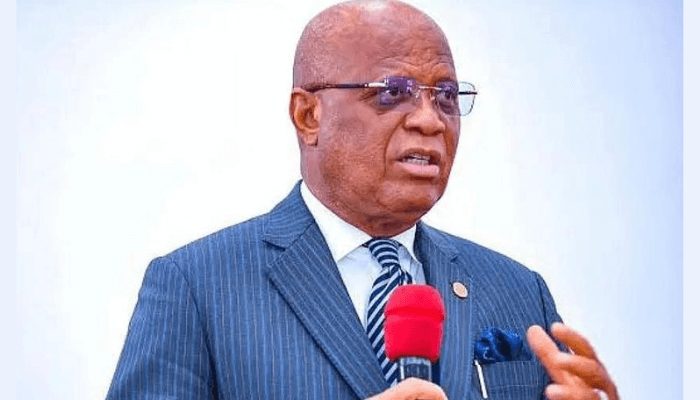
Olayemi Cardoso, governor of the CBN, said the decision was aimed at improving the transmission of monetary policy, after market interest rates increasingly diverged from the benchmark rate. He said the adjustment was an operational reset rather than a change in the overall policy stance.
“The committee decided to reset the MPR and recalibrate the policy corridor as an important operational realignment aimed at strengthening monetary policy transmission and reinforcing the primacy of the monetary policy rate,” Cardoso said.
Nigeria’s decision came as inflation continued to ease, with annual inflation slowing marginally to 15.39 percent in August from 15.43 percent in July. Cardoso said inflation was expected to moderate further in the short to medium term, supported by previous monetary tightening, exchange rate stability and improved inflation expectations.
South Africa moved in the opposite direction, raising its policy rate by 25 basis points to 7.25 percent in its second increase of the year. The South African Reserve Bank’s Monetary Policy Committee voted unanimously for the increase as the conflict in Iran added to fuel and other price pressures.
“South Africa’s growth recovery has slowed, while inflation has increased well above our target,” Lesetja Kganyago, governor of the SARB, said.
The central bank raised its near-term inflation forecasts and lowered its economic growth forecast for the year to 1.2 percent from 1.4 percent. It expects headline inflation to rise above five percent later this year before returning to around its three percent target towards the end of 2027.
Read also: South Africa joins global rate-hike cycle, raises repo to 7.25%
“Global shocks are clearly hurting our economy,” Kganyago said, while pointing to services inflation as a concern. He added that the rand had remained resilient and food price pressures were relatively contained.
In Egypt, the central bank kept its deposit rate at 19 percent and lending rate at 20 percent for a sixth consecutive meeting. Annual urban inflation slowed to 14.5 percent in August from 14.9 percent in July, although core inflation edged up to 14.9 percent from 14.7 percent.
The Central Bank of Egypt said the decision reflected recent and expected inflation trends and the changing balance of risks, including renewed regional tensions, tighter global financial conditions and supply chain disruptions. Economic growth slowed to 4.7 percent in the second quarter from five percent in the previous quarter.
Ghana also kept its policy rate unchanged at 14 percent for a third straight meeting. The Bank of Ghana said inflation and growth risks were broadly balanced, even as higher food and energy prices linked to conflicts in Ukraine and the Middle East created new risks.
“Global tensions have constricted global supply chains,” Johnson Asiama, governor of the Bank of Ghana, said.
Ghana’s headline inflation rose to five percent in August from 4.6 percent in July but remained below the lower end of the central bank’s target band. Asiama said exchange rate stability had helped contain imported inflation, while inflation expectations had eased.
Read also: Ghana keeps policy rate at 14% as global tensions threaten inflation outlook
Morocco’s Bank Al Maghrib also held its benchmark rate at 2.25 percent, extending its run of consecutive holds. Inflation averaged just 0.3 percent in the first eight months of 2026, with the central bank saying the impact of higher energy prices had remained limited because of transport subsidies and stable gas and electricity prices.
The bank expects inflation to average 0.7 percent this year before rising to 1.5 percent in 2027. Economic growth is projected to slow to 4.4 percent in 2026 from 4.9 percent in 2025, before weakening further to 2.9 percent in 2027.
The different decisions show how monetary policy across Africa is increasingly being shaped by domestic inflation, exchange rate conditions and growth prospects, alongside common external pressures from geopolitical tensions, energy prices and disruptions to global trade.
While Nigeria is using easing to improve policy transmission as inflation moderates, South Africa is tightening to prevent temporary price shocks from becoming entrenched. Egypt, Ghana and Morocco are maintaining their current settings while assessing whether falling or relatively contained inflation can withstand renewed external pressures.
Faith Omoboye is a foreign affairs correspondent with background in History and International relations. Her work focuses on African politics, diplomacy, and global governance.