“The UN has more reason to exist every day”, Uruguay's president said two days after Milei
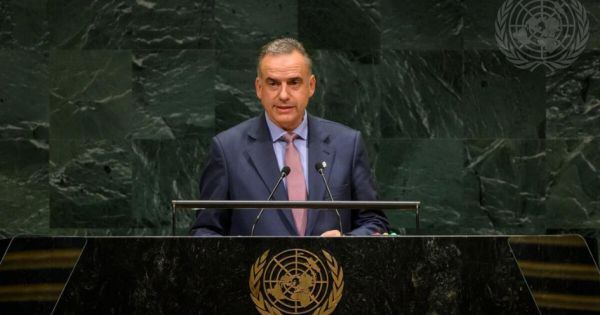
Uruguayan President Yamandú Orsi defended the United Nations' relevance and condemned the economic embargo on Cuba before the General Assembly on Thursday, in an address of just under twenty minutes that contrasted with that of his Argentine counterpart, Javier Milei, two days earlier from the same podium.
Uruguayan President Yamandú Orsi defended the United Nations' relevance and condemned the economic embargo on Cuba before the General Assembly on Thursday, in an address of just under twenty minutes that contrasted with that of his Argentine counterpart, Javier Milei, two days earlier from the same podium.
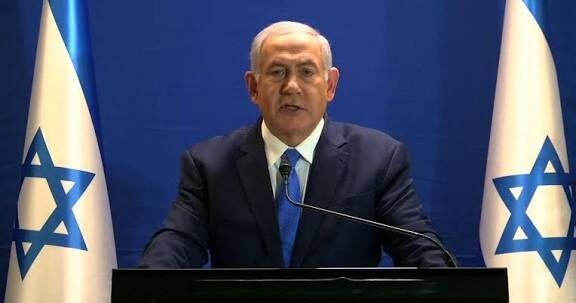
“The UN has more reason to exist every day,” Orsi said, while calling for multilateral institutions that are “more effective, more representative” and closer to people's needs. “We cannot go on being hostages to the will of a handful of countries that can be counted on the fingers of one hand,” he said, referring to the workings of the Security Council. Milei, on Tuesday, had described the organisation as a fossilised institution and questioned the point of resolutions that go unenforced.
Orsi speaks from a dual regional position: he holds the pro tempore presidency of Mercosur since July 1 and that of the Community of Latin American and Caribbean States since March 21. It was his second address to the assembly since taking office on March 1, 2025.
The passage with the greatest domestic political impact concerned Cuba. “We cannot be indifferent to the pain of an endless state of war, the fear and pain generated by organised crime, the permanent threat of terrorism, the repression that arises from tyranny, or the suffering caused by a tight economic blockade such as the one the Cuban people endure,” he said. Brazilian President Luiz Inácio Lula da Silva had already denounced the embargo on Tuesday.
The speech opened with a greeting to the American people on the 250th anniversary of their independence, marked in July, and a reference to that country's founding values: that people hold rights, that life, liberty and happiness should guide every government, and that the governed decide who governs them, principles he said were inherited in South America half a century later.
AHORA | HABLA EL PRESIDENTE ORSI EN LA ONU “Ninguna nación tiene el monopolio de las soluciones; ningún pueblo debería ser condenado a elegir entre modelos impuestos desde afuera” “Hoy vivimos un tiempo particularmente difícil” con “desigualdad extrema”, “pobreza” y ”las… pic.twitter.com/MZ7Z5cEK0Z
Orsi described Uruguay as a country “of great convictions” rather than “great stridency”, championed humility in international relations, “nobody is more than anybody”, “no country owns the absolute truth”, and said no people should be forced to choose between models imposed from outside. He reaffirmed Uruguay's participation in UN peacekeeping missions and argued that peace is not “simply the absence of war”. He closed with the phrase “we are and we transform ourselves together”.
The president avoided taking sides in ongoing conflicts and did not mention Gaza or the Middle East. “We do not believe that taking one side or the other in a war, a confrontation or a dispute necessarily helps resolve it. Often, on the contrary, it deepens those divisions,” he said. In another passage, without naming any country, he said: “We know well that this is not about good guys and bad guys. Often the good become bad very quickly, or those we condemned harshly yesterday magically become reference points in our alliance for good.” Executive sources cited by the Uruguayan daily El País read that passage as distancing from US policy towards Venezuela; the president made no reference to that country.
Figures from the National Party, unnamed in that same coverage, called the speech “vague” and said the president had acted as “a spokesman for the Cuban regime”. Reception within the governing coalition was favourable, including among sectors that have voiced differences with the government's foreign policy: Socialist senator Gustavo González highlighted the reference to the embargo as “a humanitarian situation that must be addressed”.