Cost of Living in Brasilia 2026, Monthly Budgets, Rent by Sector and Car Costs
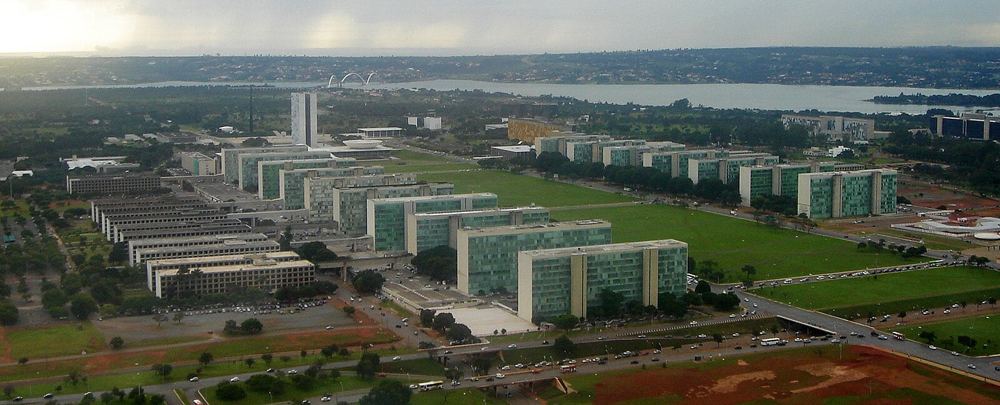
The cost of living in Brasilia in 2026 for expats: real monthly budgets, rent by sector, transport, utilities, healthcare and school costs. The post Cost of Living in Brasilia 2026 — Monthly Budgets, Rent by Sector and Car Costs appeared first on The Rio Times .
The cost of living in Brasilia in 2026 starts near US$870 a month for a single renter outside the centre, and climbs quickly from there.
The cost of living in Brasilia in 2026 is mid-table for a Brazilian capital, not cheap, and shaped above all by housing. Brazil’s currency traded near 5.14 reais to the dollar in September, so every local price converts at a rate you do not control.
The clearest public benchmark for the cost of living in Brasilia is the crowdsourced Numbeo dataset. Its Brasilia page was last updated on 6 September 2026.
That page puts non-rent costs for one person at R$3,128 (about US$610) a month. A one-bedroom flat outside the centre adds R$1,342 (about US$260).
Added together, a single renter outside the centre needs roughly R$4,470 (about US$870) a month. The same life in the centre costs about R$5,600 (US$1,090).
A family of four pays R$11,382 (about US$2,215) before rent on the same dataset. Add a three-bedroom flat outside the centre and the total nears R$14,270 (US$2,780).
Treat these as a floor for the cost of living in Brasilia, not a budget. The sample is small, 901 entries from 53 contributors, and it excludes private health cover and a car.
Brasilia is a working capital, not a tourism city. Its economy runs on federal ministries, embassies, courts, regulators and the consultants who serve them.
That concentration shows up in incomes. Brazil’s statistics agency put Federal District income per person at R$4,538 (about US$885) in 2025, the highest of any federal unit.
The national figure was R$2,316 (about US$450), in results released on 27 February 2026. Local prices are set for that richer market, and foreigners pay them too.
For a reader, this is the frame for the cost of living in Brasilia. You get a smaller, more professional rental market than Rio de Janeiro or São Paulo, at capital-city service prices.
At 21 September 2026 exchange rates, the real traded near 5.14 reais to the dollar. Every conversion in this guide uses that basis.
A weaker real lowers the cost of living in Brasilia for a dollar earner, and a stronger one raises it. Nothing about your flat changes when that happens, only the rate does.
Inflation sets the local direction. The statistics agency recorded a 4.22% rise in consumer prices over the twelve months to August 2026.
Moving money costs extra. Brazil charges 3.5% IOF, a financial-operations tax, on most outbound foreign-exchange deals, and 1.1% on some investment transfers.
Those rates sit in Decree 12,499, signed on 11 June 2025, and a later decree can change them. Rates for money coming into Brazil differ, so check the current table before you transfer.
Brasilia’s core follows the pilot plan’s two wings. Asa Sul and Asa Norte hold the superquadra apartment blocks, while Lago Sul and Lago Norte hold the houses.
Rent is the largest single item in the cost of living in Brasilia. The FipeZAP index put the city’s average asking rent at R$54.13 per square metre (about US$10.50) in August 2026.
That is tenth among 22 capitals, below São Paulo and Rio de Janeiro. Within the city, the spread between sectors is much wider than that ranking suggests.
Setor Sudoeste averaged R$86.80 per square metre (about US$17) in the same month. Asa Norte came in at R$68 (US$13) and Lago Norte at R$61.60 (US$12).
Asa Sul looks cheaper at R$41.20 per square metre (about US$8), but much of that is a size effect. Nationally, one-bedroom flats ask R$72.41 (US$14) per square metre against R$46.86 (US$9) for three-bedrooms.
In practice, a 70-square-metre flat in Asa Norte asks about R$4,760 (US$925) a month. Those are asking prices from 993 apartment listings, not signed rents, and houses sit outside the sample.
Águas Claras is the classic value choice, with newer towers and its own metro stations. It averaged R$55.20 per square metre (about US$10.70) in August 2026, close to the city average.
Rents fall sharply further out. Taguatinga Sul averaged R$33.20 (about US$6.50), Ceilândia Sul R$25.50 (US$5) and Sobradinho R$21.10 (US$4) per square metre.
A 70-square-metre flat in Sobradinho therefore asks around R$1,477 (about US$290) a month. The saving against Asa Norte is real, and so is the daily drive.
The direction of travel matters as much as the level. Over twelve months, Águas Claras asking rents rose 20.4%, while Sudoeste fell 3.9% and Asa Sul fell 2.4%.
No official citywide average for those fees is published. Ask for the current figure in writing before signing, because in staffed blocks it can rival a small rent.
The second is IPTU, the annual urban property tax. The Federal District charges 0.3% of assessed value on strictly residential property holding an occupancy certificate.
Other property pays 1% or the standard 3%, under the district’s published rules. The bill can be paid in up to six instalments, or in one with a 10% discount.
Who pays IPTU is a matter of contract. Brazilian leases often pass it to the tenant, so read that clause before you sign.
Lunch here runs on the per-kilo restaurant, where you pay by the weight of your plate. Numbeo’s September 2026 sample puts an inexpensive meal at R$45 (about US$9).
Groceries sit inside that R$3,128 (about US$610) non-rent figure for one person. Imported goods, wine and cheese move the number faster than anything local.
No official basket tracks restaurant prices sector by sector in this city. Menu prices are the only reliable check, and they move with the seasons.
The Federal District metro is one corridor, not a network. Its branches meet at Central station and end in Ceilândia and Samambaia, across about 42 kilometres of track.
The line passes Asa Sul, Guará, Águas Claras and Taguatinga on the way. Most of the district’s administrative regions have no station at all.
Fares are low by any standard. The transport secretariat lists R$2.70 (about US$0.50) for internal circular routes and R$5.50 (US$1.05) for the metro and longer links.
A monthly transport pass costs around R$181 (about US$35). For most foreign residents it supplements a car rather than replacing one.
Driving has its own price. On the Ticket Log fuel index, gasoline in the district averaged R$6.89 a litre (about US$1.35) in early September 2026.
The national average in the same fortnight was R$6.72 (about US$1.30). Transport is the item that most often breaks a first estimate of the cost of living in Brasilia.
The dry season runs through the middle of the year, and it is felt on two bills. Electricity rises with air conditioning, and water rises with everything else.