Guinea-Bissau Grew 5.8% on Cashews. Its Banks Hold 22% Bad Loans
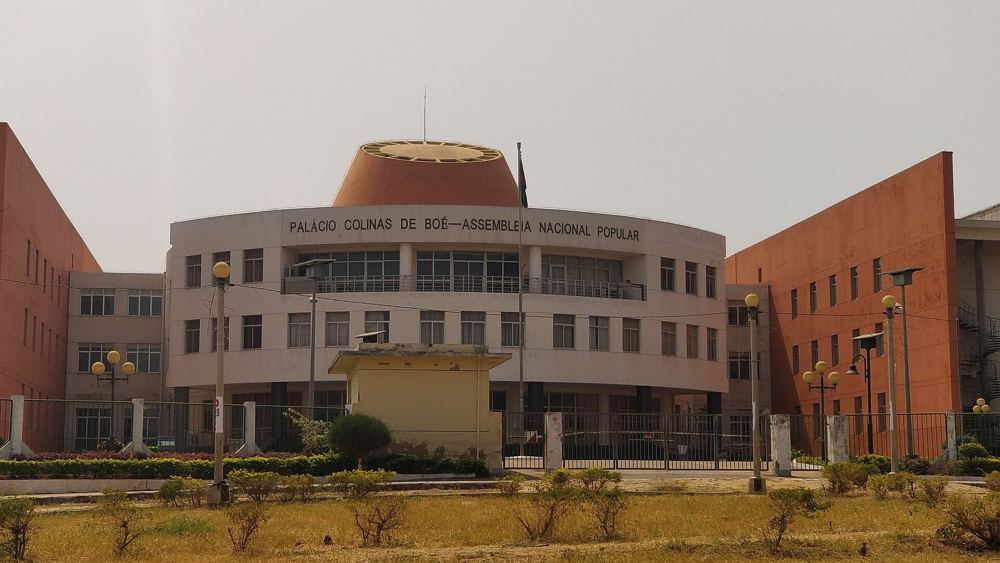
Guinea-Bissau grew 5.8% in 2025 on a strong cashew harvest, but over 22% of bank loans are non-performing and public debt stands at 75.6% of GDP, the World Bank says. The post Guinea-Bissau Grew 5.8% on Cashews. Its Banks Hold 22% Bad Loans appeared first on The Rio Times .
One crop, one harvest, one price set once a year. Guinea-Bissau’s growth rate says very little about whether anything in the country is getting more productive, and the World Bank says it is not.
Guinea-Bissau’s economy grew 5.8% in 2025. The World Bank published the figure in its 2026 Economic Update on 24 June 2026, and attributes it directly to a strong cashew campaign.
That is the whole mechanism. About 250,000 tonnes of raw cashew nuts were exported, and the farmgate price rose from 300 CFA francs a kilogram in 2024 to 410 in 2025. Higher volume met a higher price, and the national accounts recorded growth.
The African Development Bank, publishing eight days earlier, put 2025 growth at 5.0%. It also gives inflation at 2.2% where the World Bank gives 0.9%, and the fiscal deficit at 3.6% of GDP where the World Bank gives 6.5%. Those are not rounding differences.
On export concentration the picture needs care. The IMF’s staff report uses over 90% of exports for cashews. Its own Selected Issues paper estimates the share falls to roughly 65% once unrecorded fish exports are included, based on what trading partners report receiving.
Both are defensible. Over 90% describes recorded exports. About 65% is closer to actual exports. Quoting either without the other overstates or understates the dependence.
For 2026 the reference farmgate price was set again at 410 CFA francs a kilogram, about 72 US cents, with an intermediary purchase price of 478 francs, about 84 cents. The campaign launched on 11 March 2026.
Non-performing loans reached 22.2% of bank loans by June 2025. In 2023 the figure was 13.9%.
A near-doubling in two years is more newsworthy than the level itself. It means the deterioration is recent and fast, not a legacy stock being slowly worked through.
The consequence shows up on the other side of the counter. Only about 10% of firms report access to a bank loan. Credit to the economy grew about 5% in 2025, which the African Development Bank describes as a gradual recovery in a system that remains fragile.
Tax revenue is 8.5% of GDP. That leaves almost no fiscal room to recapitalise anything, and it is why public debt at 75.6% of GDP matters more here than the same ratio would elsewhere.
The regional ceiling for members of the West African monetary union is 70%. Guinea-Bissau is above it on the World Bank’s figure and further above it on the African Development Bank’s.
One structural point that is easy to miss. Guinea-Bissau has no national foreign exchange reserves and no import cover figure of its own. Reserves are pooled at the regional central bank across all eight members of the union, which held roughly six months of import cover at end-October 2025.
The World Bank’s own headline finding is sharper than the growth number, and it is the part worth reading twice.
Labour productivity growth fell from 6.2% in 2006 to minus 6.8% in 2025. Over the same period the share of firms investing in fixed assets rose from 45.1% to 61.2%.
Read those two together. Firms are investing more and hiring more, and getting less output per worker for it. That is the opposite of what capital investment is supposed to do.
It means a headline GDP print tells an investor very little about returns. Growth is arriving through volume and price in one crop, not through anything getting more efficient.
The World Bank names the binding constraints as taxation, access to finance and institutional unpredictability, with gender gaps in firm ownership and credit access on top. Some 83% of firms employ fewer than 20 workers.
Extreme poverty is projected at 37.8% by 2028, on the World Bank’s own forecast.
There is a sequencing warning buried in this. An economy can raise both its investment rate and its employment and still get poorer per hour worked. That happens when the investment goes into activities that do not compound. Trading and distribution absorb capital without building capability, and that is where much of Guinea-Bissau’s private investment has gone.
The cashew trade illustrates it. Buying raw nuts and shipping them adds a margin, but it does not add processing capacity, skills or equipment that raise output per worker next year. Vietnam and India built the shelling industry that Guinea-Bissau supplies.
A military coup took place on 26 November 2025. The African Union Commission condemned it the following day and the country was suspended from the organisation.
A transitional roadmap was adopted providing for a one-year transition. Presidential and legislative elections are scheduled for 6 December 2026, a date the IMF confirmed in its June 2026 country report.
The African Union’s Peace and Security Council met on 5 March 2026 and urged full, timely and transparent implementation of the roadmap. It called for the immediate release of detained opposition figures and directed technical support to the election commission.
Documented concerns include political repression, arbitrary detention of opposition members, media restrictions and the killing of a civil society activist on 31 March 2026.
The signal that matters most for investors is what the IMF did next. It completed the eleventh review under the Extended Credit Facility on 12 June 2026, disbursing about US$1.6 million, having reached staff-level agreement on 5 May.
In other words, multilateral engagement did not rupture after the coup. Programme reviews have continued through the transition, and the IMF described the political and social situation as relatively calm in June 2026.
The currency is the clearest advantage and it is worth stating plainly. Guinea-Bissau uses the West African CFA franc, fixed at 655.957 to the euro.
That is a hard peg, not a managed float. There is no devaluation risk against the euro, and dollar exposure moves only with the euro-dollar cross. On 19 September 2026 that worked out at about 571 francs to the dollar.
Guinea-Bissau has no independent monetary policy. The currency is issued by the regional central bank for the West African monetary union, which sets rates for all eight members.
Repatriation rights are documented in law. The Investment Code is Law number 3 of 2011. It guarantees the right to convert foreign currency into CFA francs and back. It also guarantees the remittance abroad of amounts due as profits, dividends or repatriated capital.
The same code guarantees transfer of dividends and profits net of amortisation and taxes through the banking system. Foreign employees may transfer all or part of their pay abroad. Foreign and domestic investors receive equal treatment before the state.
Article 4 bars nationalisation, expropriation or requisition except on public interest grounds, with immediate payment of fair compensation at market value and not below book value. Disputes go to conciliation or arbitration, with reference to international arbitration and bilateral treaties.
The incentive threshold is low, at roughly US$34,000, with enhanced incentives available by decision of the council of ministers at around US$80 million.
One caveat on all of this. Those are statutory rights from 2011. The monetary union has since adopted a revised foreign exchange regulation increasing central bank control and administrative requirements. Statutory rights and administrative practice are not the same thing, particularly under a transitional government.
Whether the African Union suspension imposed in November 2025 is still in force. We found the suspension and subsequent engagement, but no source within the last three months confirming either continuation or lifting.
How the non-performing loan ratio has moved since June 2025. The 22.2% figure is now roughly fifteen months old, and given it nearly doubled in the preceding two years, the current level is genuinely unknown.
Why the World Bank and the African Development Bank diverge so widely on the 2025 fiscal deficit, at 6.5% against 3.6% of GDP, and on growth, at 5.8% against 5.0%. Neither reconciles the other.
Whether the strong 2025 cashew campaign repeated in 2026 at the 410 franc reference price. No institutional post-campaign result has been published.
Whether the December 2026 elections proceed on schedule, and whether detained opposition figures will be permitted to contest them.