Egypt Says Investor Risk Lowest in 12 Years
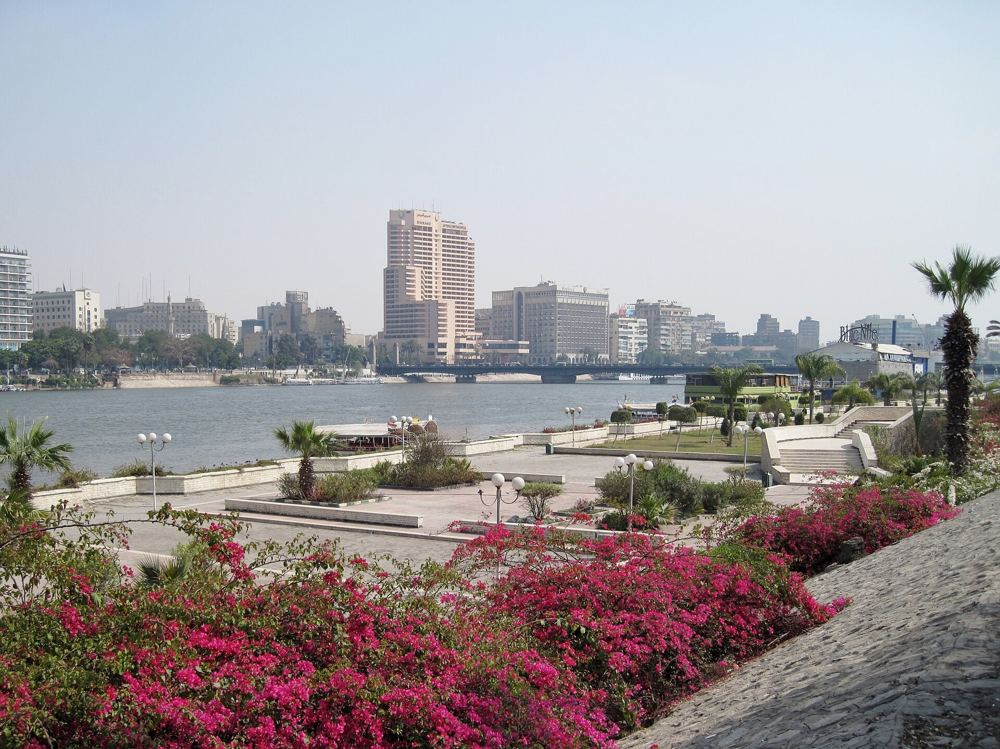
Finance Minister Ahmed Kouchouk says foreign investors rate Egypt's investor risk at its lowest since 2014, but he did not name the survey behind the claim. The post Egypt Says Investor Risk Lowest in 12 Years appeared first on The Rio Times .
Egypt says foreign investors now rate its investor risk at the lowest level since 2014, Finance Minister Ahmed Kouchouk told funds in Bangkok. Egyptian outlets published the remarks on Wednesday 14 October, as Cairo works to keep foreign money flowing into its debt.
For US readers, Egypt matters as a large issuer of dollar bonds and as a close security partner of Washington. Its borrowing costs, its currency and its stability all depend on how risky outside investors judge the country to be.
The claim is upbeat, but it comes from the government itself rather than from a published index. The World Bank’s latest estimates for Egypt’s public finances are also more cautious than the minister’s figures.
Kouchouk spoke at three back-to-back sessions with international investors, organised by HSBC, Standard Chartered and Goldman Sachs. They ran alongside the IMF and World Bank Annual Meetings, which Bangkok hosts from Monday 12 to Sunday 18 October.
He said international investors had responded to reforms by cutting their assessment of Egypt’s investment risk to its lowest since 2014. Al-Masry Al-Youm , a leading Cairo daily, and the news site Sada El Balad carried the same wording in Arabic.
Kouchouk has run the Finance Ministry since July 2024 and is the government’s main voice to bond investors. He promised more tax and customs relief, delivered in new packages meant to build trust with investors.
He also pointed to the stable outlook that credit rating agencies give Egypt as evidence that the reforms are working. He said the economy is growing and can respond flexibly to regional and international shocks.
Kouchouk said Egypt ran a primary surplus of 4.9% of gross domestic product (GDP) in the fiscal year to June 2026. A primary surplus means revenue exceeded spending before interest payments on debt.
He put the overall budget deficit for that year at 5.8% of GDP. He added that the private sector now accounts for 65% of investment and drove economic growth to 5.1%.
The government aims to cut debt to about 70% of GDP within three years. It also wants to lengthen the average maturity of its debt and lower the cost of servicing it.
At a separate panel in Bangkok, Kouchouk said Egypt has prepared and approved 30 projects in partnership with private companies. He also urged lenders to fund more African projects in local currencies, to limit the currency risk in financing costs.
The World Bank’s October Macro Poverty Outlook for Egypt paints a more cautious picture of the same year. It estimates the 2025/26 fiscal deficit at 6.8% of GDP and the primary surplus at 3.9%.
The bank puts government debt at 79.2% of GDP in 2025/26, down from 82.5% a year earlier. It projects debt of 74.5% by 2027/28, still above the minister’s 70% goal.
The bank also notes that a one-off asset deal, the Alam Al Roum transaction, added 0.8% of GDP to non-tax revenue. The two sets of figures may cover different parts of the public sector, and neither side has explained the gap.
There is a stabiliser in the same report, which shows Egypt’s external buffers rebuilt over the past year. Net foreign assets reached US$28 billion in June 2026, and official reserves and other foreign currency assets reached US$67.4 billion.
Readers can find earlier coverage of those estimates in Egypt Trims Budget Deficit as Growth Hits 5.1% . The wider cast of decision makers is set out in Who Runs Egypt’s Economy, the Key Players in 2026 .
Foreign funds, including US asset managers, buy Egyptian dollar bonds and local Treasury bills for their high yields. A lower perceived investor risk would usually mean smaller risk premiums and lower borrowing costs for Cairo.
The presence of Goldman Sachs among the hosts shows continued Wall Street interest in Egyptian assets. For investors, the next test is whether Egypt can borrow more cheaply at its next international bond sale.
Egypt also runs the Suez Canal and sits at the centre of US diplomacy on Gaza, Sudan and the Red Sea. Firmer public finances lower the risk of the kind of currency crisis that shook the country in 2023 and 2024.
The risks have not gone away, and the World Bank says they remain tilted to the downside. It cites regional conflict, volatile portfolio flows and external financing needs of about US$28 billion in the first half of fiscal 2026/27.
Egypt’s ties with Washington, the Gulf and the IMF are mapped in Egypt Foreign Powers 2026, Gulf, US, China and IMF . Visitors and residents can find practical information on the Cairo city page .
Kouchouk did not say which survey, index or market measure puts Egypt’s investment risk at a low since 2014. Without that, investors cannot check the comparison against their own data.
It is not known which funds attended the three sessions or whether a new bond sale is planned. The ministry has not yet published the contents of its next tax and customs relief package.
The ministry also has not explained why its deficit and primary surplus figures differ from the World Bank’s estimates. The final audited accounts for 2025/26 will settle which numbers hold.
Ahmed Kouchouk said international investors had cut their assessment of Egypt’s investment risk to the lowest level since 2014. He made the remarks at investor sessions during the IMF and World Bank Annual Meetings in Bangkok.
The minister did not name a survey, index or market measure. The claim should be read as a government assessment until the underlying data is published.
Kouchouk cited a primary surplus of 4.9% of GDP and an overall deficit of 5.8% for the year to June 2026. The World Bank estimates a 6.8% deficit and a 3.9% primary surplus for the same year.
The government aims to bring debt down to about 70% of GDP within three years. The World Bank projects 74.5% by 2027/28, from an estimated 79.2% in 2025/26.
Foreign funds, including US managers, hold Egyptian dollar bonds and Treasury bills, so lower risk can mean lower yields and steadier prices. A credible fiscal path also reduces the risk of another currency crisis.
Sources: Al-Masry Al-Youm (Arabic), 15 October 2026 ; Sada El Balad (Arabic), 14 October 2026 ; Daily News Egypt, 14 October 2026 ; World Bank, Macro Poverty Outlook: Egypt, October 2026 ; World Bank, 2026 Annual Meetings .
Editorial responsibility: Matthias Camenzind , Editor-in-Chief · Editorial standards · Report an error
Africa: The New Scramble, the great-power contest over the continent.