Chip Stocks Post Worst Week in Over a Year on AI Capex Fears
A global tech selloff accelerated as a new Chinese AI model intensified investor scrutiny over the massive capital expenditures planned by US hyperscalers.
Global semiconductor and technology stocks suffered their sharpest weekly decline in over a year, driven by mounting scepticism over the financial returns of artificial intelligence infrastructure. The Philadelphia SE Semiconductor Index fell nearly 2% on Friday to cap a roughly 10% weekly drop. The broad tech selloff pulled the S&P 500 and Nasdaq down more than 1% each on the day, leaving them 1.55% and 2.9% lower for the week, respectively.
The immediate catalyst for the sell-off was the release of a new model by Chinese AI startup Moonshot, which it claims is the world's largest open-weight AI system. While a technical milestone, the debut reinforced existing Wall Street anxieties that US tech giants may struggle to translate massive infrastructure spending into near-term revenue. Hyperscalers have committed hundreds of billions of dollars to AI data centres, a scale of spending that Warren Buffett recently highlighted as a critical risk. "The real question with Google and all of its competitors now, because they are all laying out hundreds of billions, and that is real money," Buffett told CNBC. "That is the game they are playing now. They weren't playing that game with computer software."
The pullback reflects a market attempting to price in that risk after a historic rally. "The pullback reflects profit-taking and rising scrutiny of AI capex sustainability," said Toni Meadows, head of investment at BRI Wealth Management. "Valuations in semiconductor stocks had priced near-perfect demand, for what has been a cyclical area in the past, so was always going to leave stocks vulnerable at some point in what has been a rapid rise."
Some market participants view the volatility as a natural correction rather than a fundamental breakdown. "I don't think it has really anything to do about fundamentals as much as just repositioning of portfolios and just taking profits in stocks that have gone crazy," said Chuck Carlson, chief executive officer at Horizon Investment Services. Despite the recent losses, the semiconductor index remains more than 60% higher for the year.
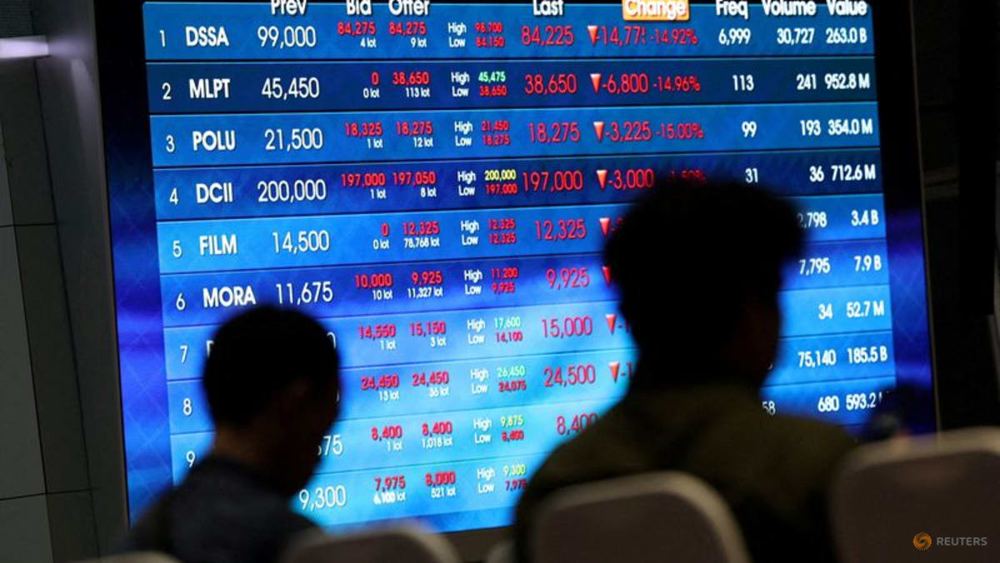
The weakness extended across global markets. South Korea’s Kospi, a barometer for the global AI hardware supply chain, stayed in a bear market even after a 62% year-to-date surge. Japan’s Nikkei entered correction territory on Friday, while European tech stocks posted some of the week's steepest losses following a blockbuster second quarter. For investors, the sudden repricing underscores a shift from unconditional AI optimism to a stricter focus on capital allocation and return on investment.