Argentina cuts education, science spending nearly in half
President Javier Milei’s aggressive fiscal consolidation has reduced Argentina's public spending on education and science by roughly half, raising long-term risks to the country's human capital and innovation capacity.
Argentina has slashed public investment in education and science by roughly half since President Javier Milei took office, according to two separate academic reports. The deep cuts, part of a broader austerity drive to correct the national deficit, have reduced both sectors to historic lows as a share of the federal budget and overall GDP. For investors, the aggressive reductions highlight the administration's prioritization of immediate fiscal balance over long-term economic productivity.
Research from the University of Buenos Aires found that education and culture spending fell 43.2% in real terms in 2024 compared to the previous year. This contraction outpaced overall government spending reductions, dropping the sector's share of GDP by roughly 0.6 percentage points. The university's report noted that investment in education fell by 47.7% in real terms between 2024 and 2025 overall, with spending falling a further 7.9% specifically into 2025.
The latest budget reductions targeted the largest components of federal education spending. University funding declined 5.4% in real terms year-on-year, while student grants and support programmes saw severe cuts of 42.5% and 49.5% respectively. The National Literacy Plan was the primary exception, increasing its execution level to become a principal initiative of the Education Secretariat.
Science and technology funding has suffered a parallel contraction. The EPC Group, a public spending monitor, projects national science funding will drop 8.8% in 2026 after a 2.7% year-on-year decline in June. This would bring the cumulative reduction since Milei assumed office to 46.5%.
The Centro Iberoamericano de Investigación en Ciencia, Tecnología e Innovación noted that public science investment has fallen to 0.151% of GDP. EPC Group director Nicolás Lavagnino argued that the government is in breach of existing legislation. “That figure is well below the 0.298 percent of GDP recorded in 2023 and even further below the target established under the now-suspended ‘Ley de Financiamiento de la Ciencia’ science financing law, which required the government to allocate 0.52 percent of GDP to science this year,” he said.
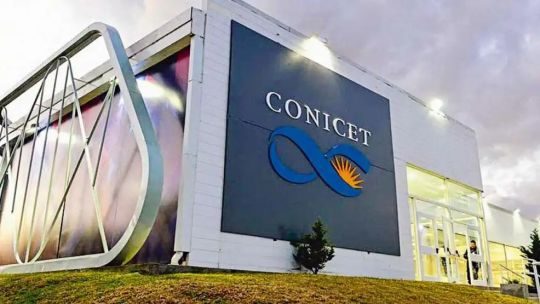
The budget for CONICET, the national scientific research institute, has been reduced by almost a further eight percent, putting it on track to lose 34.7% of its 2023 funding. Because 96% of CONICET’s budget goes directly to salaries and research scholarships, the cuts represent a direct hit to the country's active research workforce.