HDFC Bank retail investor base triples despite shallow capital conviction
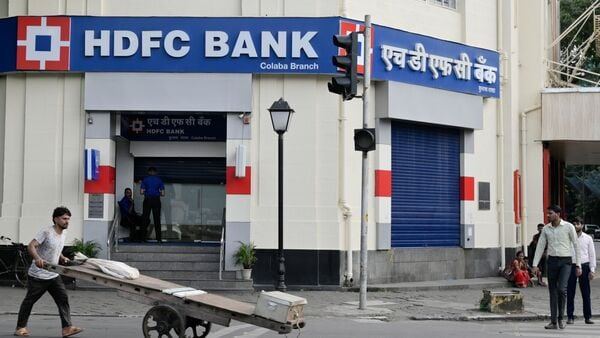
HDFC Bank’s retail shareholder count has more than tripled since late 2020, but stagnant ownership stakes and weakening profitability metrics suggest small-ticket speculation rather than deep institutional confidence.
HDFC Bank’s retail shareholder base has more than tripled since Sashidhar Jagdishan became chief executive in October 2020, reaching 4.41 million as of 30 June 2026. This surge in headcount masks a lack of deep financial commitment, with the combined retail ownership stake rising by only 1.13 percentage points to 10.32 percent as Jagdishan's term nears its October conclusion.
The addition of 3.14 million small shareholders, defined as those holding up to ₹1 lakh in nominal capital, was the highest among 34 listed Indian lenders. Yes Bank and IDFC First Bank followed with additions of 2.52 million and 1.73 million respectively, yet HDFC Bank’s stock gained just 18 percent through 4 September.
Market analysts warn that the expanding register reflects broad, small-ticket participation rather than sustained conviction. Santosh Meena, head of research at Swastika Investmart, noted that genuine capital conviction is better evidenced by domestic institutions than by the sheer volume of minor retail holders.
Merger Mechanics and Metric Shifts
The 2023 merger with HDFC Ltd significantly distorted these figures, as shareholders received 42 bank shares for every 25 held, automatically inflating the retail count without fresh investment decisions. This mechanical shift drove the largest quarterly increase of 1.1 million small shareholders in March 2024, pushing the total to 4.03 million.
Concurrently, the bank’s balance sheet expansion has coincided with deteriorating key profitability ratios. While advances grew from ₹11.3 trillion in FY21 to ₹29.4 trillion in FY26, the net interest margin compressed from 3.76 percent to 3.12 percent.
The low-cost current and savings account deposit ratio dropped from 44.4 percent to 34.1 percent, and return on equity slipped to 14.1 percent from 17 percent. Although net profit climbed to ₹74,671 crore in FY26 from ₹44,109 crore in FY23, bottom-line growth has decelerated to roughly 11 percent annually over the past two financial years.
A Bet on Normalization
Retail enthusiasm initially waned after the merger spike, with the shareholder base contracting to 3.54 million by December 2025. The trend reversed in 2026, adding 868,576 small shareholders across the March and June quarters.
Ravi Singh, chief research officer at Master Capital Services, characterizes this recent accumulation as a bet on normalization rather than proof that a recovery has begun. Sustained improvements in margins, deposit mix, and earnings growth remain necessary to validate the thesis, though Trackk chief executive Vedant Gupte observed that buyers may ultimately be right for reasons they never modelled.