Brazil: Gilmar Mendes Wants Police Staff Out of Court Chambers
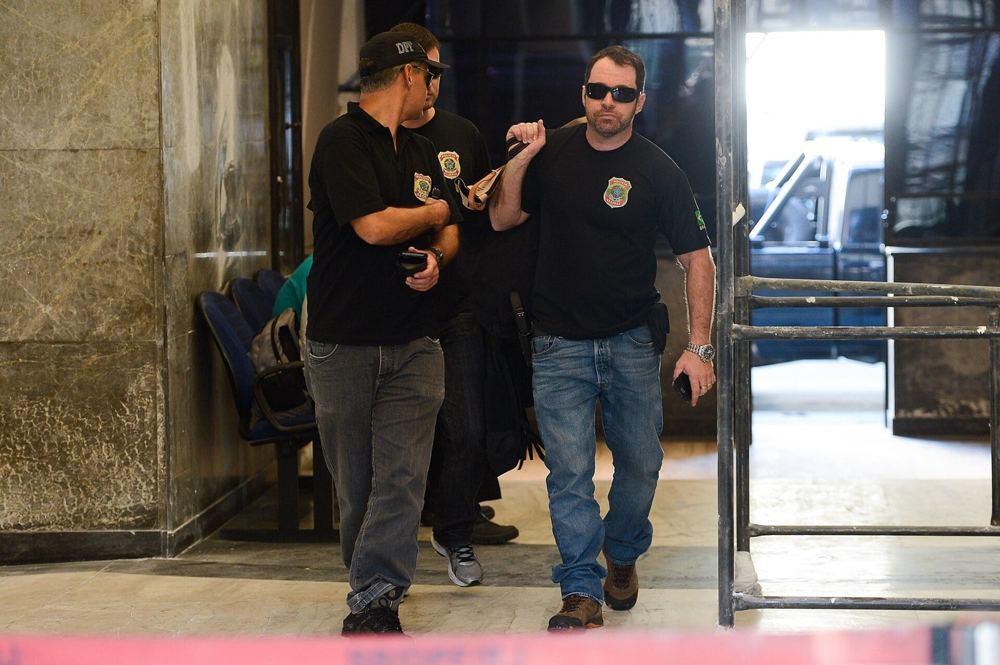
Justice Gilmar Mendes has formally proposed changing the Supreme Court's internal rules to stop police and armed forces personnel from working inside justices' chambers as loaned staff, with narrow exceptions for security. He has criticized chambers for becoming 'police stations.' The post Brazil: Gilmar Mendes Wants Police Staff Out of Court Chambers appeared first on The Rio Times .
, What happened: Justice Gilmar Mendes proposed a rule change to ban police and military staff from working in Supreme Court chambers., How big it is: The proposal would affect all police careers and armed forces personnel, not just Federal Police delegates., What it means: If approved, police officers could no longer serve as advisers to justices, ending a practice seen as problematic., The catch: The proposal is not yet approved; it still needs review by a committee and a full court vote., Who it hits: Federal Police delegates and other police and military personnel currently working in justices’ chambers., What comes next: The justices must debate and vote on the change, but no date has been set.
Gilmar Mendes wants police and armed-forces staff out of Brazilian Supreme Court chambers. He put the proposal to the court on 5 September.
Justice Gilmar Mendes, a senior member of Brazil’s Supreme Court, has formally proposed changing the court’s internal rules. The change would stop police and armed forces personnel from working inside justices’ chambers as loaned or commissioned staff.
He submitted the draft on September 5, 2026. It goes first to the rules committee, then to the full court once Chief Justice Fachin lists it.
The draft would bar the appointment of armed-forces personnel to chamber jobs. It also covers every police force named in Article 144 of the constitution, the article that lists Brazil’s police bodies.
Those are the Federal Police, Federal Highway Police, Federal Railway Police, state civil and military police, fire brigades, and prison police. Brazil’s military police are uniformed state police, not soldiers.
The ban applies even if the person is on leave, seconded, or retired. It covers any commissioned position or function inside the justices’ chambers.
For a foreign reader the point is narrow but real. Who staffs a judge’s office shapes who sees the papers on the desk.
Brazil’s court has been arguing about exactly that for weeks.
The only exception would be for security duties. Even then, those personnel would be barred from participating in investigation files, case instruction, or legal advisory work.
The draft also tells the Court’s presidency to send serving police and military staff back to their own agencies. That would close out the current placements, not merely review them.
For years, Federal Police delegates have worked as advisers to justices who handle investigations. These delegates are often assigned to chambers because of their technical expertise in complex cases.
The court has said that these delegates do not exercise police powers inside the building. It frames their work as advisory and technical.
Estado de Minas reported concerns inside the court. Some justices worry the change would weaken their own security arrangements.
No leak has been traced to any of the Federal Police delegates working in chambers. G1 reported Mendes’s complaint that chambers were turning into police stations.
Mendes has not repeated that phrase in his written proposal.
The National Association of Federal Police Delegates, known by its Portuguese initials ADPF, has publicly criticised Mendes’s position. It is a professional body, not the Federal Police itself.
Its president, Edvandir Paiva, called Mendes’s position lamentable on September 3, two days before Mendes filed the proposal. The association has not responded separately to the filed text.
The association argues that police delegates are not responsible for the court’s problems.
The proposal goes first to the court’s rules committee, chaired by Justice Luiz Fux. Justices Alexandre de Moraes and Nunes Marques also sit on it, with Justice Flavio Dino as substitute.
Moraes sits on the committee that will review a proposal aimed at chambers including his own, where two Federal Police delegates work. The full court then decides once Chief Justice Edson Fachin puts it on the agenda.
No date has been set for that session. As of now, the proposal remains under internal consideration, and no vote has taken place.
If the rule change is approved, police and military personnel would no longer serve as advisers in justices’ chambers. They could only be present for security duties, and even then, they could not touch case files or offer legal advice.
This would end a practice that has been common for years. Whether it eases the tension between the Court and the police is untested.
The Court has published no full count of police or military staff in chambers. But Agência Brasil reports that Justices Moraes and Mendonça each had two Federal Police delegates as advisers.
It is also not confirmed whether the proposal will pass. The Rules Committee and the full court could modify or reject it.
Brazil’s Supreme Court, known as the STF, has 11 justices. Each justice has a chamber, which is a team of advisers and assistants who help prepare decisions.
Chambers are essential because they handle thousands of cases every year. Advisers research the law, draft opinions, and manage case files.
The Federal Police investigate federal crimes. They answer to the Supreme Court only in the narrow set of cases that court hears itself.
Justices lean on police expertise in complex investigations. That is why some chambers have taken delegates on secondment from the Federal Police.
If approved, the ban would affect not only Federal Police delegates but also military police and other police careers. It would also cover Armed Forces personnel.
The draft tells the Court’s president to send those staff back to their own agencies.
The Supreme Court and the Federal Police have had a rocky relationship for years. Disagreements over investigations and leaks have fueled distrust.
Mendes’s proposal is the latest chapter in that story. He presents it as a matter of institutional separation.
The Supreme Court operates under its own internal rules, known as the Regimento Interno. These rules govern how justices organize their chambers and manage their staff.