Kast Approval in Chile Hits Lowest Yet at 34%
Six months into José Antonio Kast's presidency, approval has sunk to 34%. A shrinking economy is doing more damage than crime. The post Kast Approval in Chile Hits Lowest Yet at 34% appeared first on The Rio Times .
, What happened: Kast’s approval fell to 34%, his lowest since taking office in March., How big it is: Disapproval hit 61%, the highest of his term so far., What it means: Voters are unhappy with the economy and security, pollsters say., The catch: Official crime data show homicides falling, not rising, this year., Who it hits: Kast’s government, which promised a tough crackdown on crime., What comes next: Kast has no election to face until October 2028, giving him room but no deadline.
Six months in, Chile’s president has his lowest approval yet. Voters blame the economy more than crime.
José Antonio Kast took office on 11 March 2026, promising a hard line on crime and immigration. He is Chile’s most conservative president since Augusto Pinochet, a description that shapes expectations.
Six months later, the mood has soured. The Cadem tracking poll, a widely watched survey, shows approval at 34% and disapproval at 61%.
The 34% approval is a drop of four points from the previous Cadem reading. It is also the lowest level since Kast was inaugurated.
Disapproval was already at 60% in July, so the move is small. The direction is what matters.
Cadem’s own numbers show why. Some 82% rate household purchasing power badly, the worst since 2014, and 91% expect employment to worsen.
One clear factor is the economy. Chile’s monthly activity index, the Imacec, shrank 1.5% in July 2026 against a year earlier.
That was its worst fall in over three years, driven by mining and bad weather. The contraction is the only hard economic number directly linked to Kast’s falling approval in the sources.
Full GDP, unemployment, and inflation figures for his first six months are not confirmed. But the July Imacec alone is enough to worry voters.
Kast ran on a promise to crack down on organized crime. But the data is mixed.
In his first month, from 11 March to 6 April, the prosecutor’s office recorded 26 homicide or attempted homicide cases. That was up 36.8% from the same period in 2025, when there were 19.
The government says that short-term spike is misleading. Crime Prevention Subsecretary Ana Victoria Quintana noted that from 1 January to 5 April 2026, total homicides actually fell 14.2% versus 2025.
She also pointed to 2025 ending with an 11.5% drop in completed homicides. That continues a downward trend since a peak in 2022.
By early September 2026, official figures showed homicides down 17.2% year-to-date, or 117 fewer cases. Violent robberies fell 13.2%.
Kast’s June state-of-the-nation address cited 378 homicide victims through May 31, down from 444 in the same period of 2025. A July balance put the number at 442 through June 28, down 13% from 508.
Independent analysts note that Chile’s homicide rate had already fallen for three straight years before Kast arrived. That complicates his claim of a turnaround.
They argue that his security narrative is not always backed by the data. The criticism is that policy is driven by political messaging rather than evidence.
Six months is a short time to judge a president, especially one facing inherited problems. Chile’s economy was already slowing before Kast took office, and crime trends were improving.
The approval drop is real, but it reflects perceptions as much as results. Voters may be reacting to news of economic contraction and a security narrative that doesn’t match their daily fears.
Kast’s government will need to show progress on both fronts to rebuild support. The next municipal and regional elections are in October 2028.
That is a long runway, and a long time to stay unpopular. For now, the numbers are a warning, not a verdict.
Cadem is a Chilean polling firm that surveys public opinion weekly. Its tracking poll is widely cited by media and politicians as a barometer of presidential popularity.
The poll released on 3 September 2026 surveyed a national sample. Cadem’s published summary does not give a margin of error.
Poll results can shift quickly and are sensitive to recent news. A single bad month can drag approval down, even if longer-term trends are stable.
Cadem is a private polling firm, not an official measure. But it shapes political narratives in Chile.
Chile’s president serves a four-year term and cannot run for immediate re-election. The president holds significant power but needs Congress to pass laws.
Kast’s coalition does not control Congress on its own. That forces him to negotiate with opposition parties on key reforms.
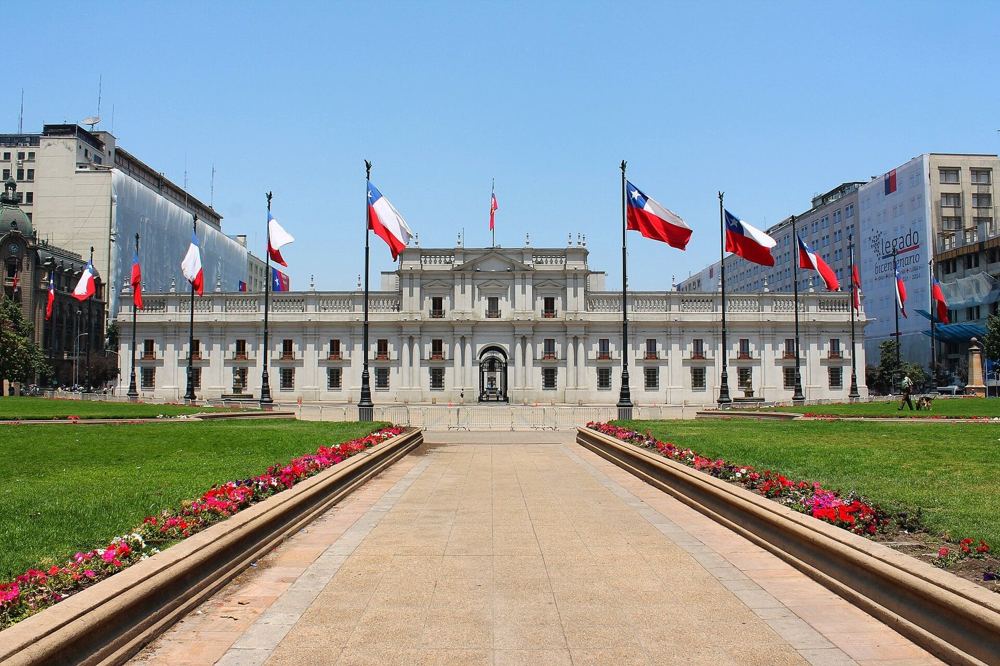
The presidency is based in La Moneda palace in Santiago. The next presidential election is set for 18 November 2029.
Understanding this balance of power helps explain why Kast’s agenda faces hurdles. He must build coalitions to deliver on his promises.
The low approval affects Kast’s ability to push his agenda. Lawmakers may be less willing to support unpopular measures.
Investors watch approval ratings as a sign of political stability. A weak president may struggle to implement economic reforms.
Ordinary Chileans feel the impact through public services and security policies. Their daily concerns drive the poll numbers.
The October 2028 municipal and regional elections are the next real test. Kast’s party could lose ground if approval stays low.
The 34% approval is a snapshot, not a trend. It shows current dissatisfaction but does not predict future performance.



