Bolivia Fuel Regulator Takeover and Closure Plan
Bolivia's government has taken over its fuel regulator, the ANH, and plans to close it. The agency is under temporary intervention while a new regulator is designed. The post Bolivia Fuel Regulator Takeover and Closure Plan appeared first on The Rio Times .
, What happened: Bolivia’s government took over its fuel regulator, the ANH, and plans to close it., How big it is: The ANH oversees fuel supply and distribution across the entire country., What it means: A new regulator will take over, but its name and structure are still unknown., The catch: The closure isn’t done yet; the agency is only under temporary intervention., Who it hits: Bolivians facing fuel shortages and anyone relying on stable fuel supplies., What comes next: A new regulator is expected, but no timeline has been given for its creation.
Bolivia is short of fuel, and the government wants its fuel watchdog gone. So far it has only taken the agency over.
The ANH is Bolivia’s hydrocarbons regulator. It oversees and controls the supply of fuels like gasoline and diesel.
It replaced the old Hydrocarbons Superintendency in May 2009. The agency monitors fuel distribution and logistics, and coordinates with the state oil company YPFB.
The ANH also conducts control operations against fuel diversion and smuggling. But the government says it doesn’t do enough of these operations.
In plain terms, the ANH is the watchdog for fuel in Bolivia. It tries to ensure that fuel gets to where it’s needed and isn’t stolen or smuggled.
On August 17, 2026, Hydrocarbons and Energy Minister Marcelo Blanco announced the decision to close the ANH. He said the agency ‘does not conduct operations’ and needs to be replaced with something more focused on field controls.
The government also points to broader problems in the fuel sector. There are allegations of corruption and fuel smuggling that the ANH has failed to stop.
Former hydrocarbons minister Álvaro Ríos supports the closure. He says institutions in the sector have had years of corruption problems and alleged diversion of fuels.
But there are no specific corruption cases named against the ANH itself. The criticism is more general, about the sector as a whole.
The government says it will create a new regulatory body to replace the ANH. But the exact name and legal form are not yet fixed.
Blanco said it could be “another agency, directorate, or another type of entity.” It would keep the same powers but do far more inspections.
The new regulator will also include formal participation by the Bolivian Police. This is part of the anti-corruption and anti-smuggling effort.
As of early September 2026, the closure has not been legally completed. The government has instead opted to intervene in the ANH and change its director while the new entity is designed.
On September 3, 2026, Jorge Luis Gumucio was appointed as interim executive director of the ANH. He replaced Freddy Zenteno Lara.
Gumucio previously served as vice minister of energy planning and development. That is part of the hydrocarbons and energy policy area.
His appointment is part of the government’s intervention in the ANH, ordered by President Rodrigo Paz. The intervention is set to last up to 180 days.
Gumucio’s background beyond that vice ministry is not detailed in current reports. His focus is on managing the agency during the transition.
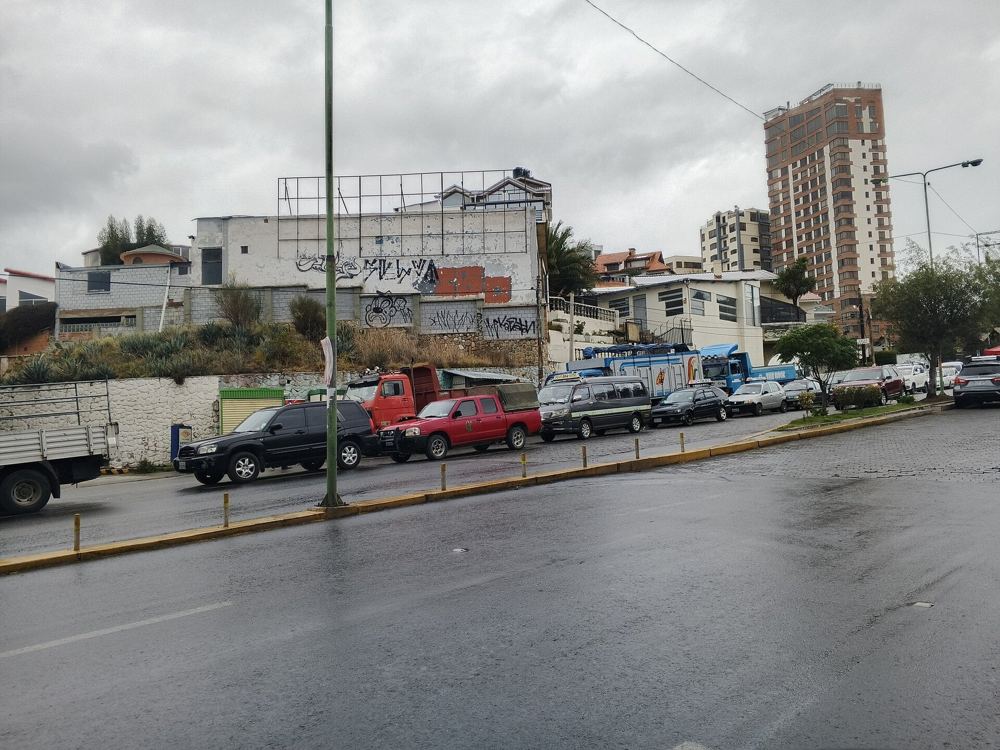
Bolivia is facing a severe shortage of gasoline and diesel. Long queues and irregular supply have hit several cities.
The government blames logistical problems, especially at the port of Arica in Chile. More than 40 million liters of diesel were reportedly stuck there for days.
President Paz has called YPFB’s problems an ‘endemic illness.’ He has ordered a deep restructuring of the state oil company.
Fuel smuggling is also a major issue. Subsidized diesel is being diverted across borders, which the government says worsens shortages.
In August 2026, the government introduced a new reference price for diesel. It applies only to large-scale buyers, not ordinary motorists.
Supreme Decree 5676, issued on August 16, 2026, set the price at 18 bolivianos per liter for these buyers. That is about US$1.47, using the official rate of 12.26 bolivianos per dollar on September 2, 2026.
The decree covers three categories. Direct users buy 120 to 5,000 liters a month at service stations.
It also covers direct clients buying 5,000 to 19,999 liters at storage plants. And it covers large consumers known as GRACOS, who buy 20,000 liters or more at storage plants.
For these buyers, the price rose from 9.80 bolivianos (about US$0.80) to 18 bolivianos. That is an increase of about 84%.
Ordinary drivers filling their tanks still pay 9.80 bolivianos per liter. The government says the decree does not change the pump price for vehicles.
This measure is meant to reduce smuggling by narrowing the gap between subsidized and international prices. Officials say it will not affect the basic food basket.
Bolivia abandoned its long-standing fixed exchange rate of 6.96 bolivianos per dollar in June 2026. The central bank now sets a flexible official rate.
On September 2, 2026, that rate stood at 12.26 bolivianos per dollar. This shift explains why prices are moving at all.
The weaker boliviano makes imported fuel more expensive in local currency. It also raises the cost of subsidies for the government.
For investors, the flexible rate adds another layer of uncertainty. Currency swings can affect any business that deals in dollars.
Supreme Decree 5699, issued in early September 2026, placed both YPFB and the ANH under government intervention for 180 days. The move aims to fix the fuel supply crisis.
Hydrocarbons Minister Marcelo Blanco has said YPFB will step back from selling fuel over time. The company will focus on its core roles of import, refining, and storage.