Buying property in South Africa still means finding 50% cash under the long-standing mortgage cap
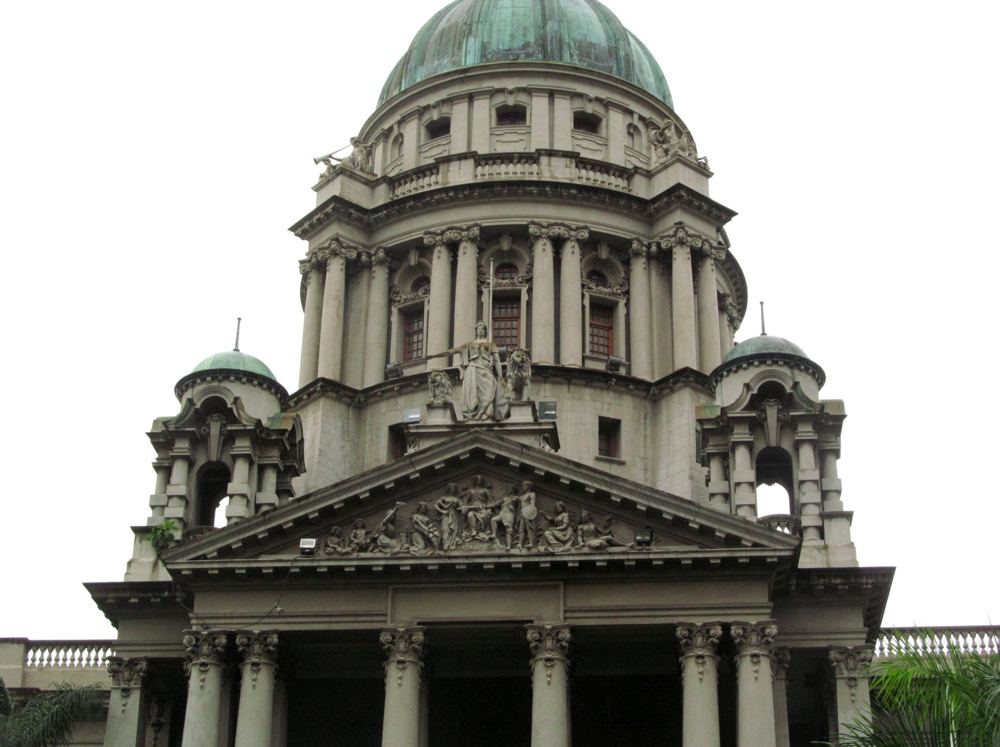
Buying property in South Africa as a foreigner in 2026: legal rights, SARS transfer duty bands, non-resident mortgages, exchange control and risks. The post Buying property in South Africa still means finding 50% cash under the long-standing mortgage cap appeared first on The Rio Times .
A foreign buyer can sign an offer on a Cape Town apartment with the same legal certainty as a South African citizen. The constraint arrives later, in the wiring instructions and the 50% mortgage ceiling.
Foreigners, including non-resident individuals, companies and trusts, may purchase and own immovable property in South Africa without general restrictions.
A September 2025 US State Department report said foreign buyers face the same laws as South Africans. An April 2026 guide from law firm MJK Inc confirms there is no ownership cap and no foreign-buyer surcharge on transfer duty.
This ownership right does not create an automatic right to reside in the country. Buyers must still follow the Immigration Act 23 of 2002, which requires a valid passport and a proper visa or residence permit.
Buying property is usually possible on a tourist visa, since it is a civil deal, not a work right. But a buyer without proper immigration documents may still be stopped at the final, conveyancing stage.
A foreign company or trust that owns property directly must be registered in South Africa as an external company.
The only proposed limitations on foreign buyers involve agricultural land.
As of June 2025, those proposed caps on foreign ownership of agricultural land had not been enacted.
A June 2026 legal guide likewise confirmed no nationality-based restriction or ownership quota for freehold residential property.
For now, foreign individuals may buy agricultural land on the same terms as citizens. But this remains the policy area most likely to change.
Any buyer considering farmland should treat land-reform politics as a live regulatory risk rather than a settled legal fact.
The standard sequence begins with choosing a property and performing initial compliance checks.
The buyer then signs an Offer to Purchase, or OTP, which may include financing or inspection conditions. Next comes FICA compliance, under the Financial Intelligence Centre Act, which checks identity and asks where the money came from.
Buyers give a certified passport copy, proof of address abroad, and evidence such as bank statements. If financing is needed, the buyer applies for a bond, the local term for a mortgage.
The seller’s conveyancer, a specialist property-transfer attorney, then handles the legal transfer. The buyer pays transfer duty, conveyancing fees and Deeds Office fees before registration.
Legal ownership passes only when the Deeds Office registers the title deed. It does not pass when the offer is signed or the price is paid.
A foreign buyer without a South African bank account must open a non-resident one. Money must move from the buyer’s own offshore account, be changed into rand, and land in the lawyer’s trust account.
The receiving bank must issue a deal receipt confirming the funds came from abroad. At registration, the bank also records the buyer’s non-resident status, which becomes a non-resident endorsement on the title deed.
Transfer duty is a tax paid by the buyer to SARS, South Africa ‘s tax agency.
It applies where the seller is not VAT-registered, meaning a private resale rather than a new development sale.
For VAT-registered developers, the purchase price includes VAT at 15% and no transfer duty is payable.
The SARS rates effective from 1 April 2025 carry into 2026 for properties acquired on or after that date.
No duty is paid on the first R1,210,000 of value. That is about US$75,600 at R16.0 per dollar, the rate Trading Economics quoted on 4 September 2026.
Between R1,210,001 and R1,663,800, duty is 3% of the value above R1,210,000.
The scale rises through 6%, 8% and 11% bands, reaching 13% on value above R13,310,000.
A buyer above R13,310,000 pays a fixed R1,241,456, about US$77,600. They also pay 13% of the value above that threshold.
Transfer duty is only one cost for a foreign buyer. Conveyancing fees, Deeds Office fees, and bank charges on the currency conversion into rand all add up on top.
The zero-duty band up to R1,210,000 makes entry-level apartments cheap to transfer. Above that threshold, the percentage bands mean a real tax cost arrives quickly on mid-market purchases.
Non-resident mortgage lending in South Africa is usually capped around 50% of the purchase price. This means a foreign buyer must fund at least half the purchase from cash transferred from offshore.
The cap comes from a specific rule, Exchange Control Regulation 3(1)(f), enforced by the South African Reserve Bank’s Financial Surveillance Department. It is not a bank policy choice, and not a ban on lending to foreigners.
One group is exempt: non-residents with a South African work visa can often borrow on normal local terms. For everyone else, the 50% figure is a firm rule, not just a common practice.
A buyer targeting a R2,000,000 property, about US$125,000, should expect to bring roughly R1,000,000 in cash.
This financing reality pushes many foreign investors toward lower-priced units or cash purchases.
The deal receipt matters most when buyers later sell and must prove the original capital came from abroad. Without it, and the non-resident endorsement on the title deed, sending money back out becomes far harder.
Popular foreign-buyer areas cluster in Cape Town and the Western Cape, including the Atlantic Seaboard, City Bowl and the Winelands urban edge.
Johannesburg’s northern suburbs and the KwaZulu-Natal north coast also draw non-resident interest, though at lower price points than prime Cape Town.
The zero-transfer-duty threshold of R1,210,000 sets a natural entry point for budget apartments, equivalent to about US$75,600.
A R2,500,000 purchase, roughly US$156,000, reaches the upper-middle band of the transfer duty scale.
The R13,310,000 threshold at which the top 13% band begins represents about US$832,000, a level associated with luxury apartments and coastal houses.
Published research does not provide current rand-per-square-metre figures across all cities, so buyers should verify local area prices directly.