Peru’s Economy Is Running Hotter Than Its Politics as Demand and Mining Surge
PERU · ECONOMY Key Facts —What happened: Peru’s internal demand grew 5.2 percent in the second quarter of 2026, the economy ministry reported. —How strong: Private investment jumped 17.6 percent in the quarter, Peru’s fastest rate since 2010. —Where the money goes: Mining investment reached US$2.63 billion in the first five months, up 43.6 percent […] The post Peru’s Economy Is Running Hotter Than Its Politics as Demand and Mining Surge appeared first on The Rio Times .
, What happened: Peru’s internal demand grew 5.2 percent in the second quarter of 2026, the economy ministry reported., How strong: Private investment jumped 17.6 percent in the quarter, Peru’s fastest rate since 2010., Where the money goes: Mining investment reached US$2.63 billion in the first five months, up 43.6 percent on 2025., The catch: The boom coexists with a crime wave and emergency rule in Lima, so politics remains the main risk., Who is backing it: The Inter-American Development Bank and CAF both reaffirmed financial support for Peru through 2031., What comes next: Official July growth data will show whether construction really expanded as fast as early estimates suggest.
Peru’s economy is growing faster than its politics would suggest. Internal demand rose 5.2 percent in the second quarter, and the big development banks just signed on through 2031.
The headline number comes from the Ministry of Economy and Finance, known in Peru as the MEF. Internal demand, meaning everything consumed and invested inside the country, grew 5.2 percent in the second quarter of 2026.
That follows a 6.6 percent expansion in the first quarter. It was the strongest first-quarter reading in almost five years.
The driver is investment, not just consumption. Private investment grew 17.6 percent in the second quarter, the fastest rate Peru has recorded since 2010.
For a foreign reader, the context matters. Peru’s economy is one of the most open in South America. It lives or dies by copper, gold and the confidence of outside capital.
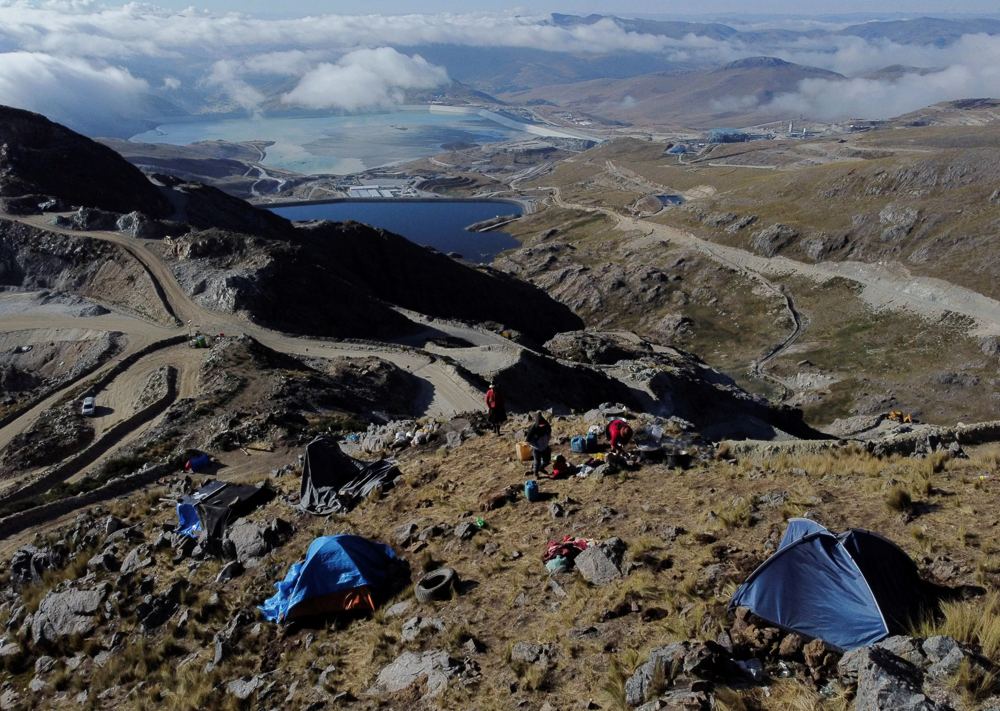
The clearest evidence sits in the mining statistics. Peru’s Ministry of Energy and Mines counts US$2.63 billion of mining investment in the first five months of 2026.
That is 43.6 percent more than in the same period of 2025. The ministry describes the dynamism as sustained, and the monthly data backs the word.
The spending is concentrated in four regions. Arequipa, Ica, Moquegua and Áncash together took 50.6 percent of the national total.
Inside the numbers, infrastructure works are the biggest component. That category grew 80.2 percent in the January to May window, to US$713 million.
Building sites are the third leg of the story. Early estimates cited in Lima put construction growth at around 8 percent in July.
A note of caution belongs here. The official statistics agency, known as INEI, has not yet published the July figure, so the 8 percent reading remains an estimate.
Even so, the direction is consistent. Mining infrastructure, private housing and tax-swap public works all feed the same order books.
Construction matters beyond its size. It is one of the few sectors that turns foreign-financed mining money into local wages within months.
This week brought a second kind of confirmation. The Inter-American Development Bank, or IDB, and CAF, the development bank of Latin America, both reaffirmed support for Peru through 2031.
The two institutions are the region’s principal public lenders. Their backing covers the government’s economic and development policies over the rest of the decade.
The timing is not accidental. Peru has just published a National Infrastructure Plan for 2026 to 2031, prepared with technical assistance from the IDB.
For investors, the signal is simple. The two banks that know Peru’s books best are willing to stay exposed for five more years.
None of this erases the other Peru story of the week. The same government reporting 17.6 percent investment growth is asking Congress for special powers to fight crime.
Lima and Callao remain under a state of emergency. Extortion and contract killings are the issues that dominate the news the investment figures compete with.
The economy has outrun weak politics before. Peru has changed presidents repeatedly in recent years without breaking its macroeconomic framework.
The open question is whether insecurity eventually taxes the boom. Extortion already hits the transport and commerce sectors that carry internal demand.
There is a habit among foreign investors of treating Peru’s economy and Peru’s politics as two separate countries. This week’s numbers explain why the habit survives.
The macroeconomic rules have held through every recent presidency. The central bank is independent, the sol is stable, and the finance ministry rarely surprises the markets.
That framework is why a 17.6 percent jump in private investment can happen at all. Businesses committing money for twenty years are betting on the rules, not on the politicians.
The export engine helps too. High copper and gold prices have filled Peru’s economy with hard currency, and mining taxes have repaired much of the public accounts.
The risk runs in the other direction as well. If crime starts to frighten consumers and small firms, the first casualty would be domestic demand.
That is exactly the indicator now shining. It is also the one most exposed to the daily headlines.
The first checkpoint is the official July output data from INEI. It will confirm or temper the construction estimate now circulating.
The second is execution of the mining pipeline. Investment announcements matter less than earth actually moved at the big copper projects.
The third is Congress. If the security powers stall, the political story could start to cost the economic one its audience.
For now the scoreboard is unambiguous. Demand, investment and the big lenders are all pointing the same way for Peru’s economy.
Internal demand grew 5.2 percent in the second quarter of 2026, after 6.6 percent in the first. Private investment rose 17.6 percent, the fastest since 2010.
The Ministry of Energy and Mines reports US$2.63 billion of mining investment from January to May 2026. That is 43.6 percent more than in the same period of 2025.
Both institutions publicly reaffirmed their support and cooperation with Peru’s economic policies through 2031 this week. The announcement coincides with Peru’s new National Infrastructure Plan.



