Panama Free Zone Investment Shifts to Tech, Services, Property
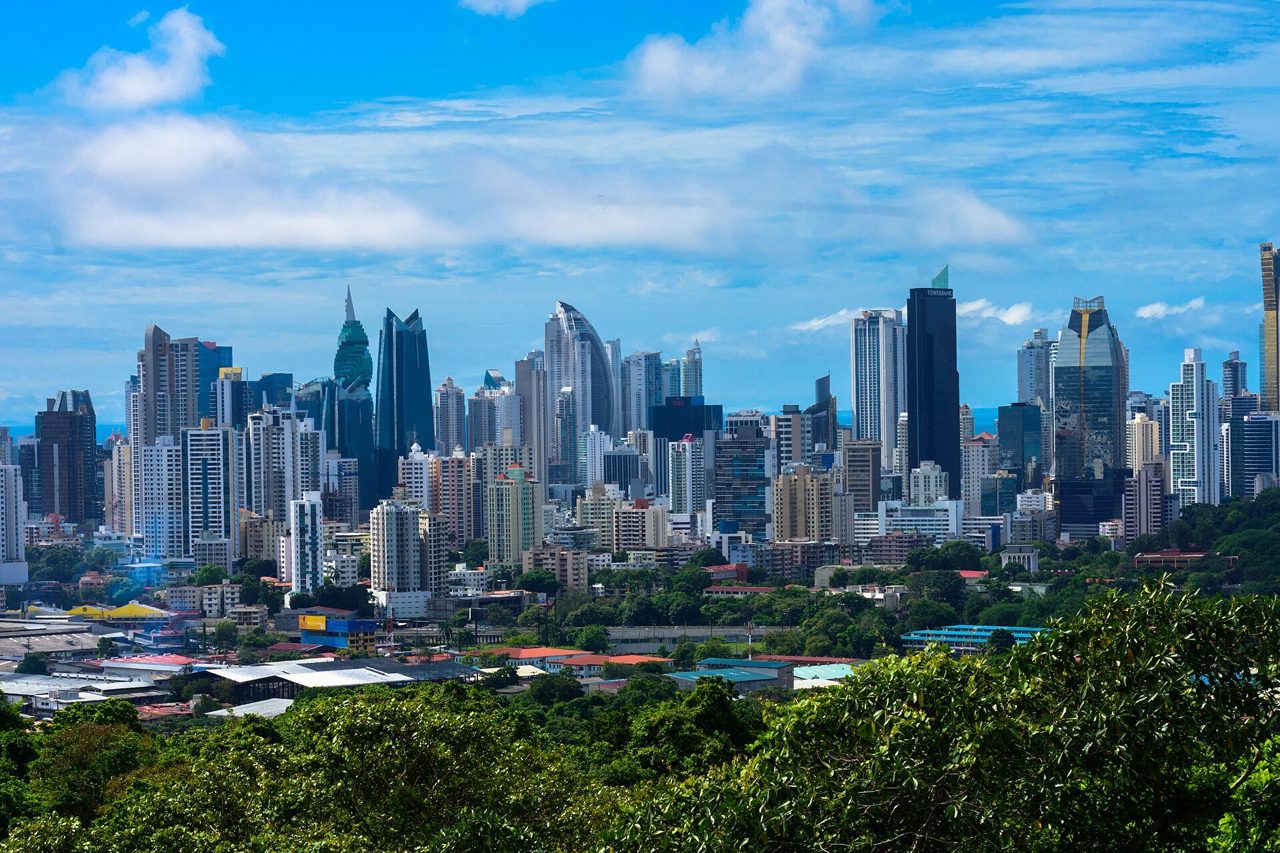
Panama free zone investment is tilting toward services and high technology. The latest approvals show what the Ley 32 regime is now attracting. The post Panama Free Zone Investment Shifts to Tech, Services, Property appeared first on The Rio Times .
Panama free zone investment now leans on technology, services and property, not plain warehousing.
Panama’s Ministry of Commerce and Industries says services and high technology now drive Panama free zone investment. Its national free zone committee approved six new licences and one expansion worth about US$5.9 million.
The Ministry of Commerce and Industries published the figures on 26 August 2026. It said services and technology facilities lead investment in the special free zone regime.
The national free zone committee approved six new licences plus the expansion of one existing licence. Together they represent an initial investment of close to US$5.9 million.
Roughly US$4.1 million of that total, more than half, comes from the six new licences. Firms in services and high technology accounted for 60% of the licences granted.
The ministry projects up to 100 jobs in the initial stage from these activities. A further 90 direct and indirect posts are expected later on.
Panama free zone investment figures need care, because several special regimes coexist. The numbers above belong only to the zonas francas created by Ley 32 de 2011.
Zona Libre de Colón is older and separate, set up by Decreto de Ley 18 de 1948. It was reformed by Ley 7 de 2016 and covers Colón province.
Panamá Pacífico is a distinct special economic area created by Ley 41 de 2004. Ciudad del Saber runs under Decreto Ley 6 de 1998 with its own state contract.
The ministry also lists Zona Franca de Barú under Ley 19 de 2001. Multinational headquarters use yet another regime under Ley 41 de 2007.
By the end of April 2026 the regime had approved 24 companies this year. Their accumulated investment passed US$58.5 million, the ministry said on 7 May.
The session held on 29 April alone accounted for approvals worth US$17,536,778.09. Capital came from the United States, Mexico, Costa Rica, Brazil, China, Germany and Panama.
Those companies planned 128 initial direct jobs and 83 indirect ones. Their operations sit in zones including Panapark Free Zone, Zona Franca del Istmo, Albrook, Herinzone and Panexport.
A further ten licences were approved on 18 June 2026, worth about US$27.4 million. The commission also backed creating a new free zone in La Chorrera, Panamá Oeste.
Panama granted 35 new free zone licences during 2025, La Estrella de Panamá reported in March. Those approvals were tied to more than US$203 million in investment.
The same report put projected direct jobs from that cohort above 1,400. Officials expect the regime to grow about 15% by the end of 2026.
Free zones director Rodrigo Jaén said applications now run at eight to ten per month. He said the earlier flow was two or three a month.
Panapark Free Zone alone hosts more than 60 companies, its chief executive told the paper. She said the site has generated over 1,000 direct jobs.
Zona Libre de Colón is the region’s largest re-export hub and reports its own numbers. Mixing them with Panama free zone investment data under Ley 32 gives a false picture.
Commercial movement there reached US$3.7 billion in January and February 2026. That was 0.3% below the same two months of 2025.
Imports fell 2.3% to US$1.87 billion while re-exports rose 1.9% to US$1.82 billion. Physical cargo climbed 9.6% to 437.2 thousand metric tons.
China supplied 38.3% of goods entering the zone, down from 41.9% a year earlier. Belgium and Japan gained share, while the United States slipped to 6.1%.
Companies under Ley 32 de 2011 are exempt from national direct and indirect taxes on operations. Import duties on materials, goods and services needed to operate are also waived.
Zone developers are exempt from income tax on leasing and subleasing inside the zone. Dividends are taxed at 5%, whatever the source of the income.
Tax advisers summarising the law put the annual operating licence tax at 1% of capital. The stated floor is US$100 and the ceiling US$150,000.
Investors in the regime can apply for permanent resident status. Trusted staff, executives, experts and technicians can obtain temporary residence for the length of their contract.
A short-stay merchant and investor visa valid for nine months is also available. The state export agency ProPanamá lists these categories on its free zone page.
The Council of the European Union updated its list of non-cooperative tax jurisdictions on 17 February 2026. Panama remained on Annex I, alongside nine other jurisdictions.
That list also includes American Samoa, Anguilla, Guam, Palau, Russia and Vanuatu. Turks and Caicos Islands and Viet Nam were added on the same date.
The Financial Action Task Force (FATF) is the global anti-money-laundering standard setter. Its statement of 19 June 2026 does not include Panama among monitored jurisdictions.
The FATF removed Panama from that monitoring list in October 2023. The European Commission then took Panama off its own high-risk list in 2024.
Panama launched its National Strategy for Modern Services Exports on 20 April 2026. The plan was built with the United Nations Development Programme and the Economic Commission for Latin America.
It targets software, digital services, cybersecurity, audiovisual production, design and advanced professional work. The ministry says the services sector grew 7.8% during 2025.
On 15 May 2026 the ministry met the International Free Zone Authority about licensing. Officials discussed a Dubai-style online process handled in English within three to five working days.
Such changes would widen Panama free zone investment beyond warehousing and light manufacturing. Software development, digital marketing, consulting and creative industries are the named targets.
Infobae reported in July 2026 that the number of firms in the regime fell after 2018. That figure is unconfirmed by the ministry and is cited in the modernisation debate.
Which free zone regime do the 2026 investment figures cover?
They cover the zonas francas created by Ley 32 de 2011 and overseen by the Ministry of Commerce. Zona Libre de Colón, Panamá Pacífico and Ciudad del Saber report separately.
How much Panama free zone investment was approved during 2026 so far?
The ministry reported more than US$58.5 million and 24 approved companies by the end of April 2026. A further US$27.4 million and ten licences followed on 18 June.



