US oil output hits records but fails to insulate economy
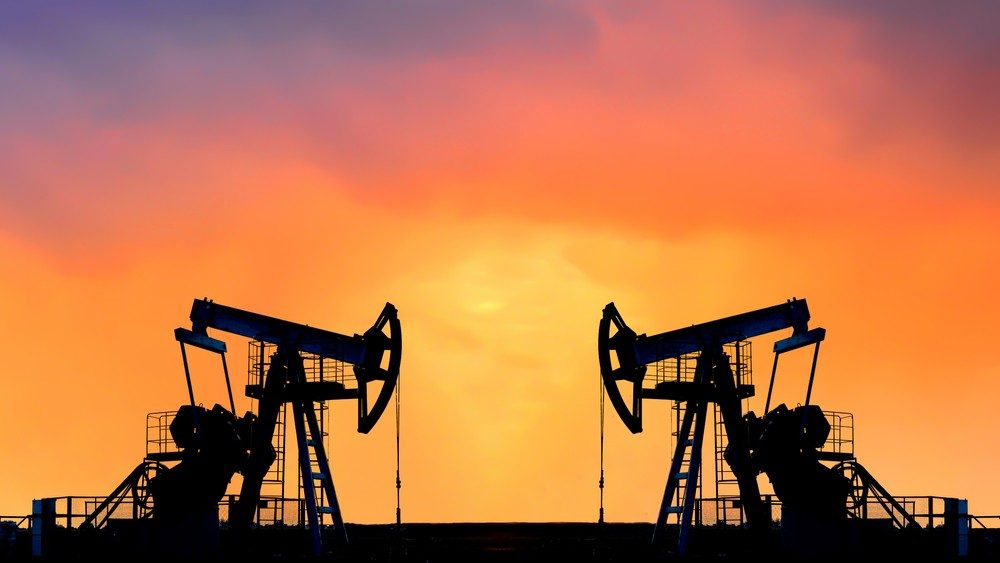
The 2026 Statistical Review of World Energy confirms the US as the undisputed top oil producer, yet its simultaneous status as the world's largest consumer leaves it fully exposed to global supply shocks.
The United States produced more oil than any other nation in 2025, but record output did not decouple the country from global market forces. According to the 2026 Statistical Review of World Energy, the US retained its position as the world’s top producer while simultaneously remaining its largest consumer.
Measured by crude plus condensate, US output averaged 13.6 million barrels per day, edging out Russia and Saudi Arabia. However, the American lead expands dramatically when counting total liquids, which include natural gas liquids. On this broader metric, US production reached 21.1 million barrels per day.
That 7.5 million barrel-per-day gap between the two metrics highlights a defining feature of the shale boom: a massive surge in NGLs like ethane and propane. While these liquids are valuable petrochemical feedstocks, they are not interchangeable with crude oil. For investors parsing supply tightness, this distinction is critical.
The sheer volume of US total liquids can overstate the country's contribution to the crude market that sets global benchmark prices. On the demand side, global consumption reached 103.0 million barrels per day. The US consumed 19.4 million barrels per day, followed by China at 17.4 million.
Together, the two nations accounted for 35.7% of global demand and over half of the year's consumption growth. Non-OECD countries, particularly in the Asia Pacific region, drove 88% of global oil consumption growth in 2025. Asian demand alone hit 39.7 million barrels per day, responsible for roughly half of the worldwide increase.
Demand shifts east
Conversely, European Union demand declined slightly, while Japan and South Korea also posted drops. This divergence underscores that future oil demand, and the pricing power associated with it, is increasingly anchored in emerging markets. For market participants, the central takeaway is that the US functions as both the primary supplier and the primary buyer in the oil market.
Domestic production records do not eliminate exposure to global supply disruptions. Nor does high consumption negate the scale of the shale revolution. The US is deeply embedded in the global petroleum trade, tethered to it by both its wells and its refineries.