Chile Copper Production Is Stuck at Its 2004 Level
Chile copper production has not grown since 2004, with output slightly lower in 2025. A separate court ruling left tax invariability standing. The post Chile Copper Production Is Stuck at Its 2004 Level appeared first on The Rio Times .
Chile’s copper output has barely moved in two decades, despite record-high prices. A separate legal ruling just preserved the tax stability miners rely on.
Chile copper production is stuck at its 2004 level, even as prices hit record highs. According to Diario Financiero, output in 2025 was 5.38 million tonnes, slightly below the 5.41 million tonnes produced in 2004.
In fact, Chile copper production has not grown for 21 years, a paradox highlighted by Diario Financiero on 21 August 2026. The business daily noted record prices alongside stagnant output.
The newspaper used US$4.84 a pound as its reference price level for the article. However, that price is not tied to a specific trading day or market settlement.
Copper is traded in US dollars per pound, with about 2,205 pounds in a tonne. Meanwhile, production is reported in tonnes but price in pounds.
However, the paradox is drawn from historical production series, not a single August data release. As a result, the story is a long-run comparison, not a one-day event.
Chile produced 5.41 million tonnes of copper in 2004, and 5.38 million tonnes in 2025. Therefore, output was slightly lower last year than two decades earlier.
Diario Financiero described this as ’21 years of productive stagnation. Moreover, the comparison is based on historical production series, not a single monthly data release.
The gap represents 21 years of productive stagnation, counted from 2004 to 2025. As a result, the comparison is historical, not a single August data release.
Meanwhile, the comparison is based on historical series, not a single monthly release. Therefore, output was slightly lower last year than two decades earlier.
Codelco, the state-owned copper company, is the worst case in the newspaper’s account. Its production fell 25% in the last decade.
In fact, Codelco is the world’s largest copper producer and belongs to the Chilean state. Its decline is separate from the national stagnation figure.
Codelco’s production fell 25 per cent in the last decade, the most complex case. However, this decline is separate from the national stagnation figure.
Codelco is the world’s largest copper producer and is owned by the Chilean state. Its decline is separate from the national stagnation figure.
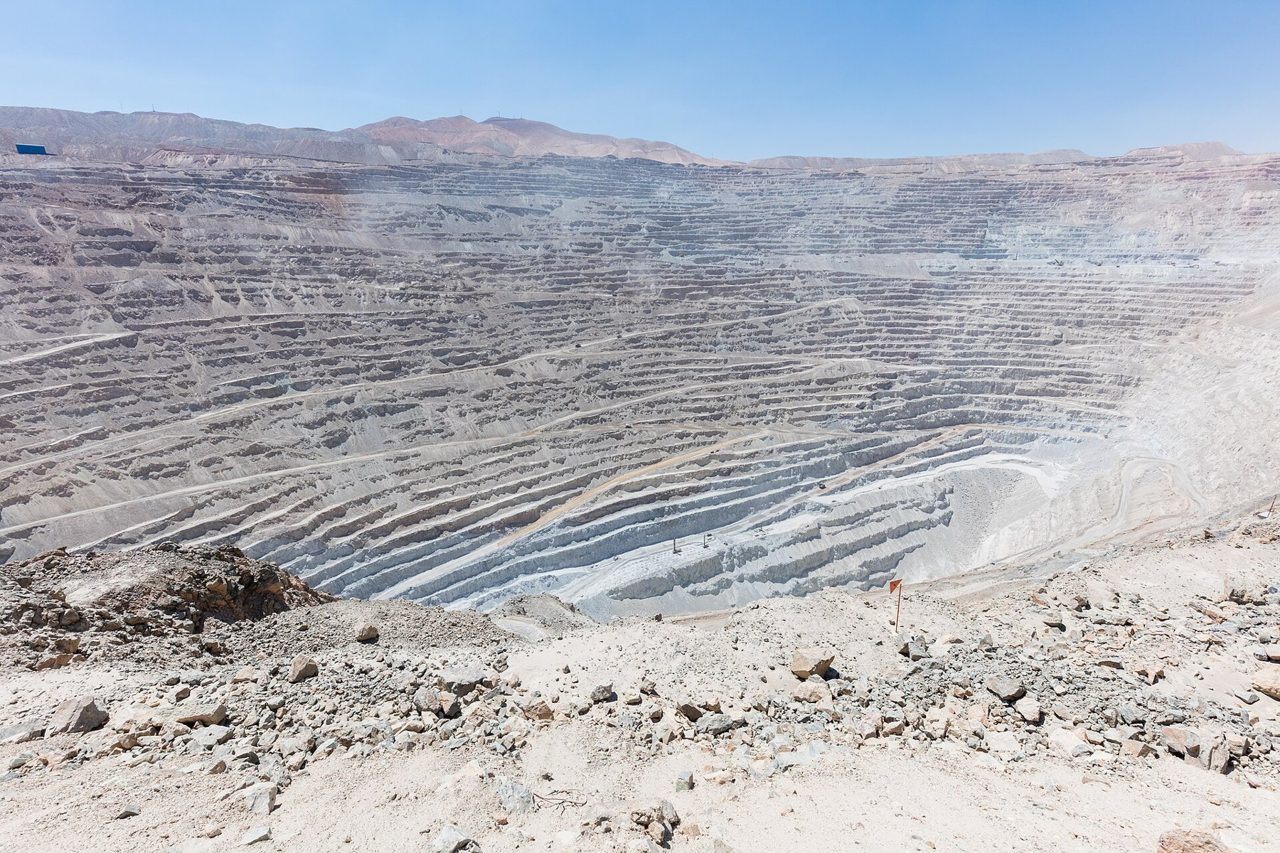
Diario Financiero attributes the stagnation to ore-body depletion, not to politics. The newspaper wrote that investment has not been enough to offset the depletion of mine workings.
As deposits are mined out, the remaining rock holds less copper per tonne. Therefore, the same mine yields less metal even when moving the same amount of rock.
The depletion of ore bodies means less copper per tonne of rock. Therefore, investment has not been enough to offset this geological decline.
Meanwhile, Chile’s Constitutional Court partially upheld challenges to the megarreforma, also known as the reconstruction law. The court did not strike down the law.
The Tribunal Constitucional accepted the three challenges and declared them admissible. However, it did not declare the tax-invariability regime unconstitutional.
The court partially upheld the challenges as regards tax invariability. However, it did not declare the tax-invariability regime unconstitutional.
However, the court partially upheld the challenges as regards tax invariability. In addition, it did not declare the tax-invariability regime unconstitutional.
Despite this, tax invariability survived at its core. In fact, it guarantees tax terms for large investments will not change for an agreed number of years.
The court partially upheld the challenges but left the regime standing. El Clarín summarized that the court left a good part of the megarreforma standing.
The law went forward with partial adjustments. Tax invariability guarantees tax terms for large investments will not change for agreed years.
Meanwhile, the court left the regime standing in substance. Meanwhile, the court left the regime standing in substance.
As a result, tax invariability guarantees tax terms for large investments will not change for agreed years.
The ruling is a separate strand from the production stagnation. No source in this research says the court ruling caused any change in production.
Instead, the court’s decision affects the legal framework for future investment. Mining investors treat tax invariability as the foundation of long-term project decisions.
The ruling is a separate strand from the production stagnation. No source says the court ruling caused any change in production.
However, the ruling is a separate strand from the production stagnation. No source says the court ruling caused any change in production.
No 2026 production figure for Chile or Codelco is available in this research. The Diario Financiero piece compares 2004 with 2025 and gives no closed 2026 number.
The story is a long-run comparison rather than a single month’s reading. It sets 2025 against 2004.
Any 2026 production figure is unavailable rather than estimated. The newspaper gives no closed 2026 number for Chile or Codelco.
The newspaper sets the 2025 figure against 2004 rather than against the current year. That is what makes the comparison a long-run one.
Chile copper production remains a central issue for the world’s largest copper producer. The paradox of record prices and stagnant output continues.
In short, the challenge is geological: investment has not offset ore depletion. The legal framework for future investment, meanwhile, remains largely intact.
The challenge is geological, with investment not offsetting ore depletion. Meanwhile, the legal framework for future investment remains largely intact.
In addition, the challenge is geological, with investment not offsetting ore depletion. Meanwhile, the legal framework for future investment remains largely intact.
According to Diario Financiero, the main reason is ore-body depletion that investment has not offset. As deposits are mined out, the remaining rock holds less copper per tonne.
No, the court partially upheld the challenges but left the tax-invariability regime standing in substance. The law went forward with partial adjustments.



