Philippines delays deficit cuts as investment slump threatens Fitch rating
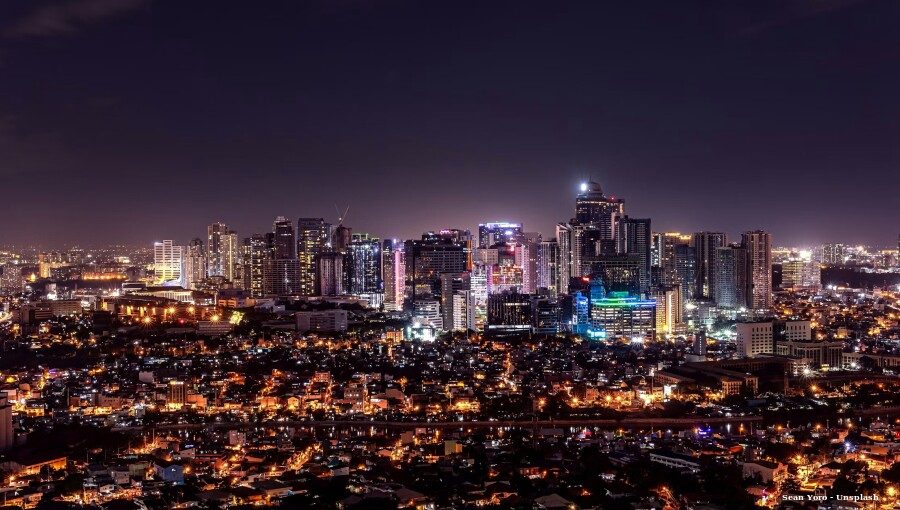
Manila has relaxed its medium-term fiscal consolidation targets amid a severe contraction in capital formation, prompting Fitch Ratings to warn that the sovereign's investment grade now hinges on an elusive economic recovery.
The Philippine government has officially relaxed its medium-term fiscal consolidation targets, proposing a 2027 budget deficit of 5.1% of gross domestic product. This marks a slower pace of repair than the 4.8% shortfall envisaged in last year's framework, with the 2030 deficit forecast now revised upward to 3.5% from a previous 3.1%.
Fitch Ratings indicated that the country's investment grade status now depends entirely on a recovery in capital expenditure that has yet to materialize. "Repeated upward revisions to medium-term deficit targets suggest the government continues to prioritise supporting growth over a faster pace of consolidation," the agency noted in an August 20 commentary.
While the headline deficit revisions appear modest, the underlying fiscal mechanics reveal growing structural pressure. Manila has reduced its medium-term revenue expectations to approximately 15.5% of GDP from 16.5%, choosing to absorb the resulting shortfall by trimming infrastructure disbursements. Capital spending is now projected at roughly 4% of GDP, sitting just over a percentage point below last year's assumptions.
This reduction in state investment arrives precisely as the broader economy stalls. Gross domestic product expanded by a mere 2.3% year-on-year in the second quarter, while gross fixed capital formation contracted sharply by 8% quarter-on-quarter.
The agency attributes this dual public and private sector weakness to a global energy-price shock and lingering caution following corruption investigations into flood-control projects. Elevated energy costs have simultaneously suppressed household consumption, creating a drag on both state revenues and private demand.
Cutting capital expenditure during an economic downturn leaves the sovereign in a precarious position, reducing the very investment required to stimulate a recovery. Fitch revised the outlook on the Philippines' 'BBB' sovereign rating to negative from stable in April, warning that debt stabilization relies heavily on how sharply investment rebounds.
"Medium-term debt stabilisation and the evolution of the 'BBB' sovereign rating will depend increasingly on how sharply growth and investment recover from subdued levels," Fitch stated. The agency expects growth of about 6% but notes that risks are firmly tilted toward weaker outcomes.
Manila has concurrently marked down its own macroeconomic ambitions, forecasting medium-term expansion of 5% to 6%. This is a significant retreat from the 6.5% to 8% growth projected just two years ago, marking a sharp reversal for an economy that was positioned just one step away from an 'A' rating in late 2024.