Brazil Justices Push to Revisit the Journalism Degree Requirement
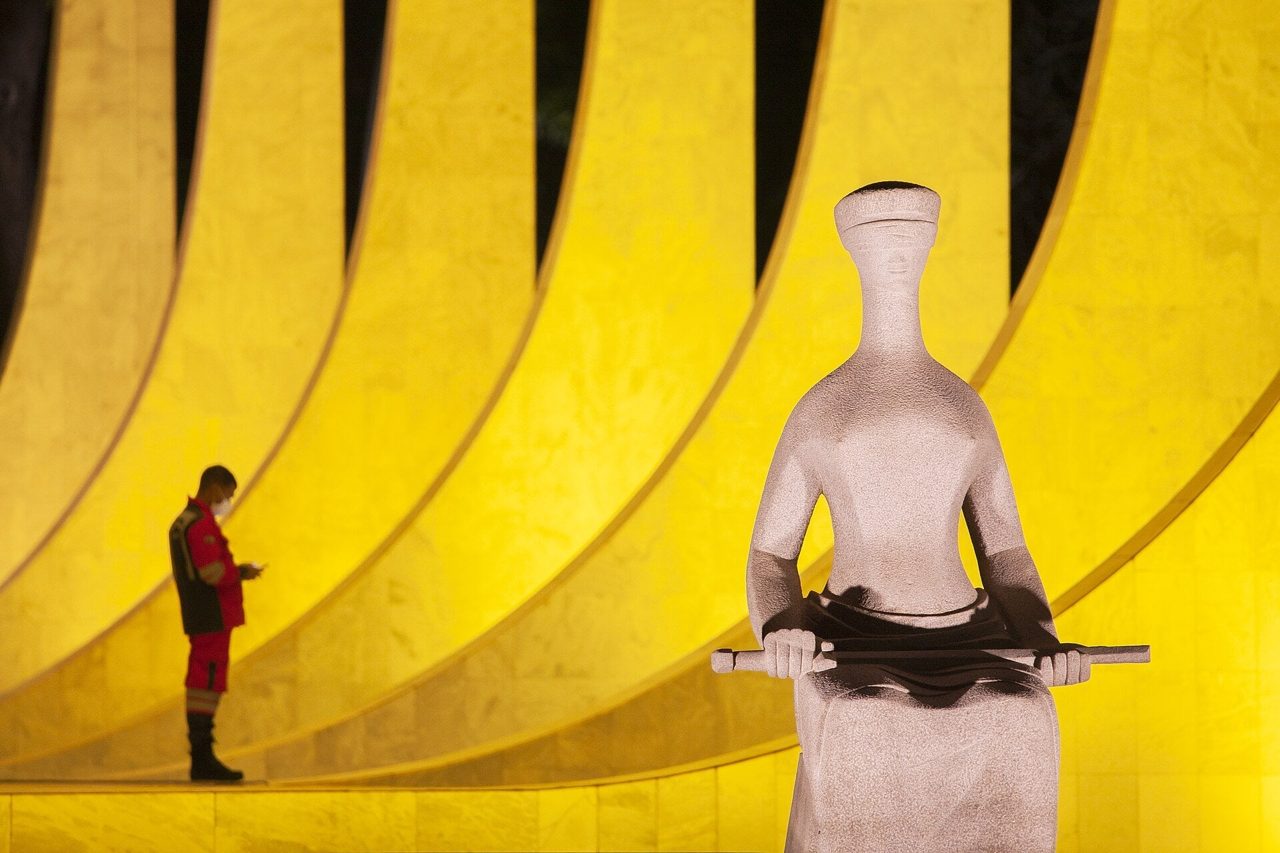
Two Brazilian Supreme Court justices called for a fresh debate on the journalism diploma rule struck down in 2009. Nothing has changed in law, and no case is pending. The post Brazil Justices Push to Revisit the Journalism Degree Requirement appeared first on The Rio Times .
No case has been filed and no vote has been cast, so the 2009 ruling that freed the profession still stands.
Brazil’s Supreme Court has not restored the journalism degree requirement, and nothing about the law changed this week. Two justices simply said out loud, in open session on August 18, 2026, that the country should argue about it again.
The First Panel of Brazil’s Supreme Federal Court met on August 18, 2026. It was hearing an appeal by TV Globo and G1 against a right-of-reply order won by a Rio de Janeiro clinic.
During the debate the conversation drifted to who counts as a journalist. Justices Alexandre de Moraes and Flavio Dino then said the court should look again at the diploma rule it scrapped in 2009.
Neither man cast a vote on diplomas, because no diploma case was before them. Their votes that day went to upholding the clinic’s right of reply.
The panel did not finish. Justice Carmen Lucia asked for more time to study the file, which suspends the judgment until she returns it.
The journalism degree requirement came from Decree-Law 972 of 1969, written under military rule. It obliged anyone practising journalism to hold a university degree in the field and register with the labour ministry.
On June 17, 2009, the full court ruled 8-1 in Recurso Extraordinario 511961 that the 1988 Constitution had not absorbed that rule. Gilmar Mendes was the rapporteur, and Marco Aurelio was the lone dissenter.
The reasoning was blunt. Journalism is an exercise of free expression.
So demanding a state-approved diploma to speak was treated as a restriction the Constitution does not allow. Judges also leaned on Article 13 of the American Convention on Human Rights.
Since then, anyone in Brazil may work as a journalist without a degree, and appeals against the ruling were rejected in 2019.
Moraes reached for a historical parallel. Early last century Brazil let unqualified advocates known as rabulas practise law.
And that was phased out with a transition rule for those already working. He argued that social media has created the same problem in reverse.
Anyone can wake up, declare themselves a journalist, and start attacking reputations from a blog, in his description. So, he said, perhaps it is time to reflect again, with protection for people who already do the job seriously.
He framed it as regulating a profession like any other in Brazil. He did not spell out whether that means a compulsory degree, a licence, or something looser.
No draft text exists, and no proposal has been filed at the court.
Dino was working through a narrower worry about legal protections. Because press guarantees are strong, he said, extending them automatically to any blogger creates an obvious loophole.
He put it vividly. Warning that criminal groups such as the PCC and Comando Vermelho could hold a contest to pick their own bloggers.
Shielding those people as journalists would then be absurd, in his view. He also said that the 2009 decision, which he respects, might one day be debated again.
That single sentence is what set off two days of headlines in Brazil. Dino has separately argued that a reporter’s duty to protect a source is not absolute.
That claim matters, because it runs alongside a live dispute over one of his own cases.
The most striking response came from inside the court. Gilmar Mendes wrote the 2009 opinion, and on August 19, 2026, he told reporters in Brasilia that the ruling could be reopened.
He said the decision waived the diploma but never waived training, since people could bring qualifications from many fields. Still, he added, the court can rediscuss it if information quality is genuinely suffering.
He also cautioned against drawing a firm conclusion from one episode. He was referring to a serious dispute in Maranhao state that has dominated the debate.
Even so, a rapporteur inviting a rethink of his own precedent is unusual. It is the clearest signal yet that the question is no longer settled inside the court.
None of this arrived out of nowhere. On August 11, 2026, federal police searched the home of Raimundo Cutrim.
A former Maranhao state secretary, on an order signed by Moraes. Investigators treat Cutrim as the source behind reporting by journalist Luis Pablo about official cars used by Dino’s family.
Press bodies read the operation as an attack on source confidentiality. Moraes defended the order, drawing a line between protecting a source and taking part in a crime.
Meanwhile, court president Edson Fachin publicly backed press freedom and source secrecy. Fachin signalled that Moraes’s decision should go to the full court.
Therefore the diploma comments landed in a week already loaded with press-freedom tension.
The journalists’ federation FENAJ welcomed the opening. Its president, Samira de Castro, said no decision has aged as badly as the one that abolished the diploma requirement.
FENAJ has campaigned for the rule’s return for seventeen years. It says either Congress or the court could fix what it sees as a mistake.
And it offered to help with the debate. Newspaper publishers were colder.
Marcelo Rech of the national newspaper association ANJ called it strange to reopen the topic while justices defend piercing a journalist’s confidentiality. As if the end justified the means.
Abraji, the investigative journalism association, kept its focus on source protection as a constitutional guarantee. In short, the industry is split, and the split does not follow the usual left-right lines.
There is a legislative path that has existed for years. The Senate approved a constitutional amendment restoring the diploma in two rounds, by 65-7 in November 2011 and 60-4 in August 2012.
It moved to the Chamber of Deputies as PEC 206/2012 and cleared the constitutional affairs committee in 2013. Since then it has sat ready for a floor vote that never gets scheduled.
A constitutional amendment needs 308 votes in the Chamber, twice. That is a high bar, and no party has spent political capital on it.
Congress could act tomorrow without any help from the court. Yet the practical reality is that the proposal has been parked for more than a decade.
Today the answer is simple: nothing has changed. Anyone may report, edit, film or publish in Brazil without a degree or a state register.



