South Korean retail investors shift billions to US stocks amid local margin decline
South Korean retail investors are redirecting billions into U.S. equities and leveraged funds to maintain artificial intelligence exposure following a domestic market correction, highlighting shifting global liquidity and potential speculative excess.
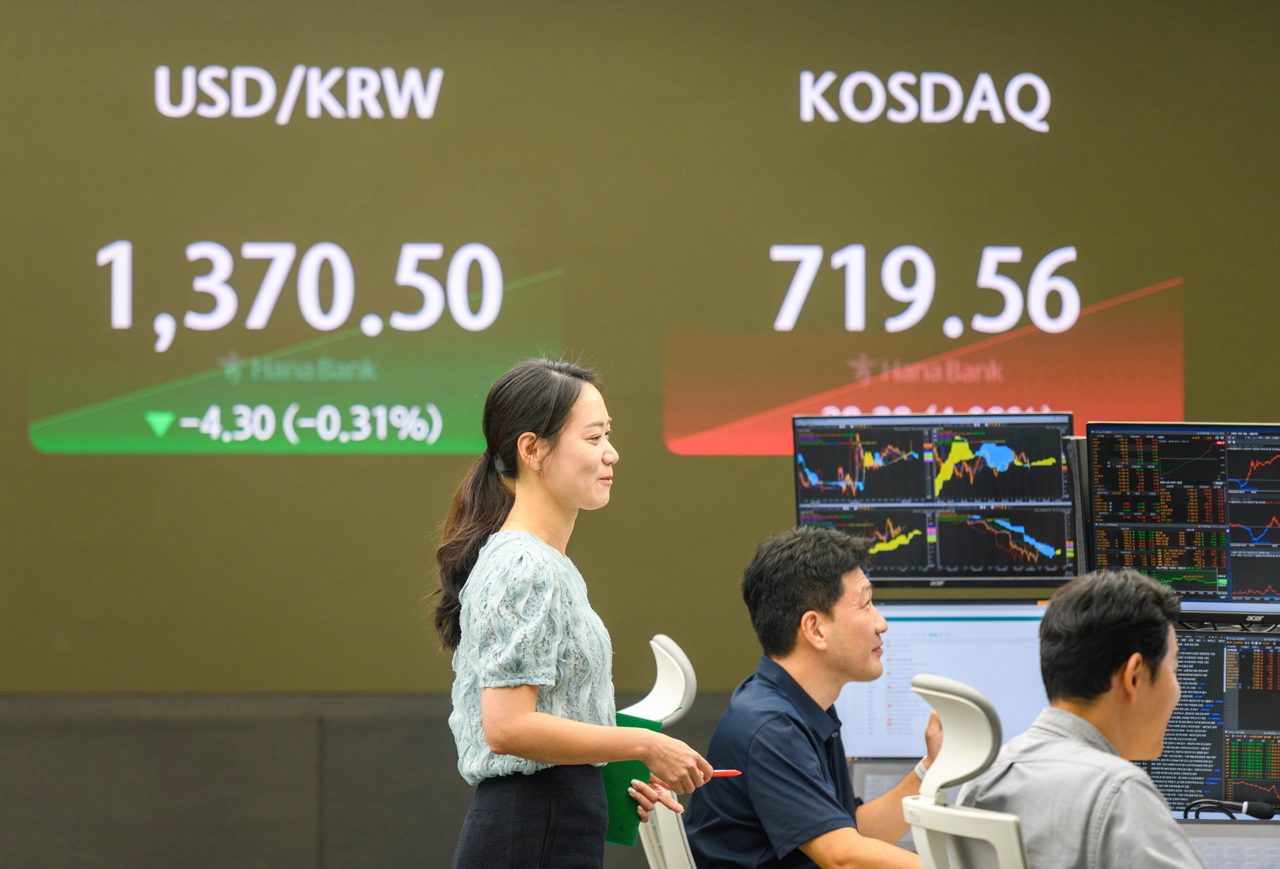
South Korean retail investors redirected roughly $4.5 billion into U.S. equities in July, sharply increasing their cross-border buying even as their domestic market experienced a severe correction. This capital shift coincided with a massive drop in local margin loan balances. According to the Korea Financial Investment Association, these balances fell to 27 trillion won earlier this month from 37 trillion won at the end of June, marking the lowest level this year.
Rather than abandoning their previous strategies, these traders are largely maintaining their aggressive exposure to the artificial intelligence hardware theme. Phillip Wool, head of research at Rayliant Global Advisors, highlighted the irony that U.S. purchases remain tied to the exact same sector that recently sold off domestically. Jung In Yun, founder of Fibonacci Asset Management, explained that investors hurt by local losses are simply changing the geographical vehicle for their trades.
A significant portion of this cross-border flow is concentrated in highly leveraged exchange-traded funds. Data from the Korea Securities Depository shows that four of the ten most net-purchased U.S. stocks in July were leveraged products. The Direxion Daily Semiconductor Bull 3X Shares ETF led the list, while the leveraged ProShares UltraPro QQQ and ProShares Ultra QQQ also ranked among the top ten most popular securities.
Investors are also exhibiting unusual behavior in how they access domestic technology giants through American exchanges. South Korean buyers purchased approximately $840 million in U.S.-listed depositary receipts for chipmaker SK Hynix in July, making it the second most net-purchased U.S. security. Owen Lamont, senior vice president of Acadian Asset Management, called the move crazy because the U.S. receipts trade at a 10% premium and exhibit greater volatility.
Lamont warned that such price discrepancies are a warning sign of speculative excess. He described the situation as a symptom of a bubble, pointing to similar dislocations involving Taiwanese and Indian companies around the dot-com boom. He also pointed to a late 2024 rush into U.S. quantum stocks and the broader proliferation of leveraged ETFs as factors possibly adding volatility and magnifying market fluctuations.
Despite the massive outflows from Seoul, the structural impact on American exchanges may remain muted. Wool sees little risk of these retail flows meaningfully increasing U.S. volatility, noting that American markets are dominated by institutional investors. Consequently, overall U.S. turnover dwarfs the Korean capital influx, limiting the ability of foreign retail traders to distort the broader market.