Global bond markets price aggressive rate hikes outside the US

Swap markets are pricing in steeper interest rate increases across Asia and Europe than in the US, threatening the traditional portfolio protection offered by government debt.
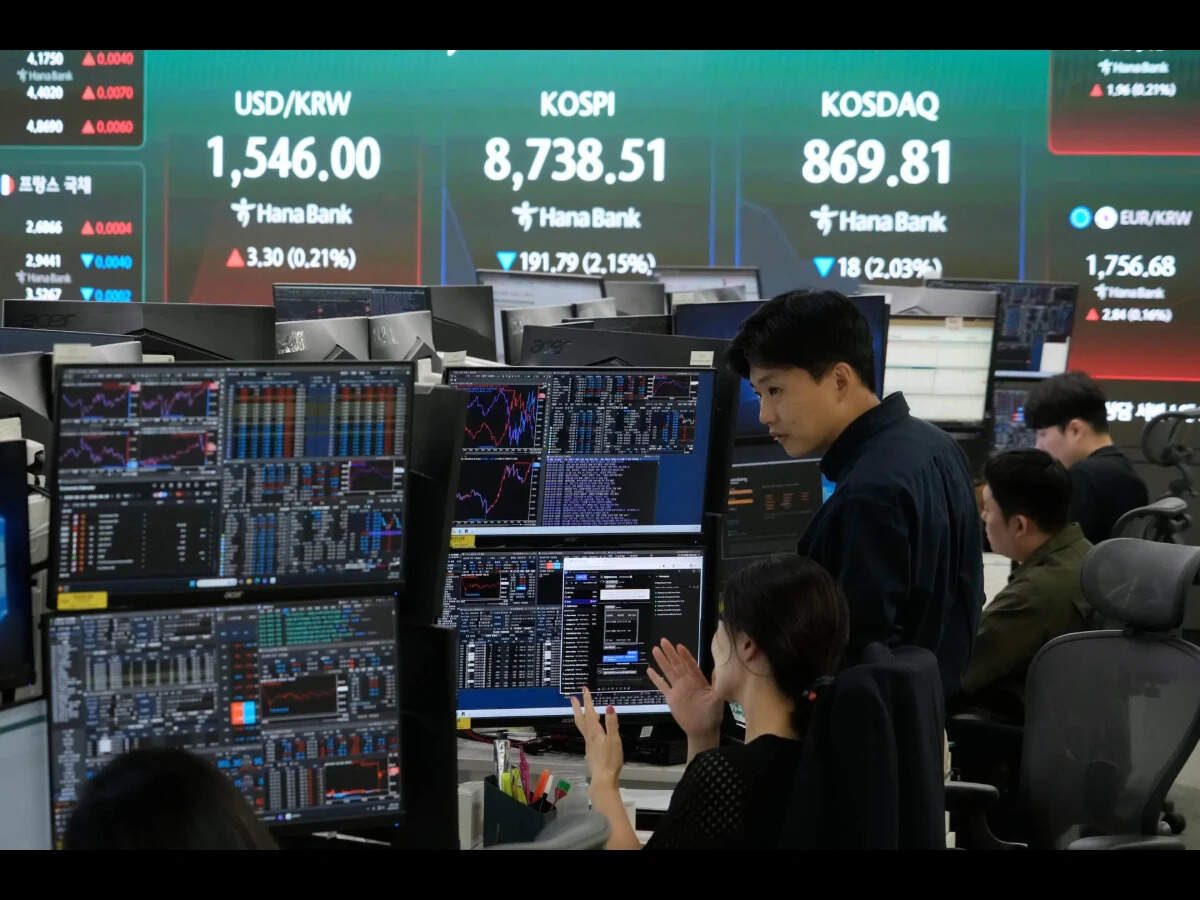
Market participants anticipate that interest rates will increase more rapidly in Japan, Canada, the UK and the euro zone compared to the US over the coming 12 months. Data compiled by Bloomberg shows that two-thirds of 32 monitored swap markets are pricing in tighter monetary policy, led by South Korea at over 100 basis points.
This dynamic represents a clear departure from the recent monetary cycle that was largely dictated by the US Federal Reserve. Policymakers are now contending with a complex mix of pressures, including elevated oil prices linked to the Iran war and expansive fiscal spending. An artificial intelligence investment boom is also accelerating economic expansion, pushing inflation across the Organisation for Economic Co-operation and Development to a two-year high.
The divergence threatens the traditional role of government debt as a reliable portfolio cushion during market downturns. If foreign central banks tighten aggressively, fixed-income assets could amplify losses instead of offsetting equity declines when the AI-driven stock rally reverses or global growth falters.
“From a diversification perspective, it doesn’t do the job,” said George Efstathopoulos, a portfolio manager at Fidelity International. The firm, which oversees more than $1.1 trillion, holds minimal exposure to government debt outside of Treasury inflation-protected securities and Brazil paper.
Market pricing reflects approximately 400 basis points of cumulative rate increases across seven major economies over the next 12 months. Such tightening could weigh on richly valued stocks by reducing the present value of future earnings while simultaneously disrupting currency trades. The strain is already visible in Asia, where South Korean government debt has lost nearly 9 percent this year in local currency terms, making it the worst performer among 44 markets.
Japanese government bonds have also suffered, declining about 4 percent amid the broader sell-off. In Europe, defense spending and energy costs have pushed France’s benchmark 10-year yield to its highest level since 2009. German and Italian yields have similarly risen more than 30 basis points this year.
Despite the broader weakness, some fund managers view the European fiscal and monetary outlook as more predictable than that of the US or Japan. The European Central Bank signaled a highly aggressive stance on inflation by raising rates early after the global energy shock. This relative stability is attracting capital back to the region's debt.
Higher interest rates increase the return on cash, giving investors more alternatives for their capital, according to Ed Al-Hussainy, a portfolio manager at Columbia Threadneedle. Consequently, governments and corporations must offer much higher yields to successfully compete for funding.
Iain Stealey, fixed-income international chief investment officer at JPMorgan Asset Management, favors European debt over US peers. “I am much more convinced around buying the front-end of the European curve, particularly the UK,” he said, noting, “I don’t think the Bank of England is in any hurry to hike rates.”
Meanwhile, US traders have stopped fully pricing in a Federal Reserve rate hike for this year as domestic inflation concerns cool. However, the 10-year Treasury yield remains up about 50 basis points this year, and a recent 30-year auction drew the highest borrowing costs in decades amid growing deficit concerns.