Dollar drops and rate hike bets fade after US retail sales slump
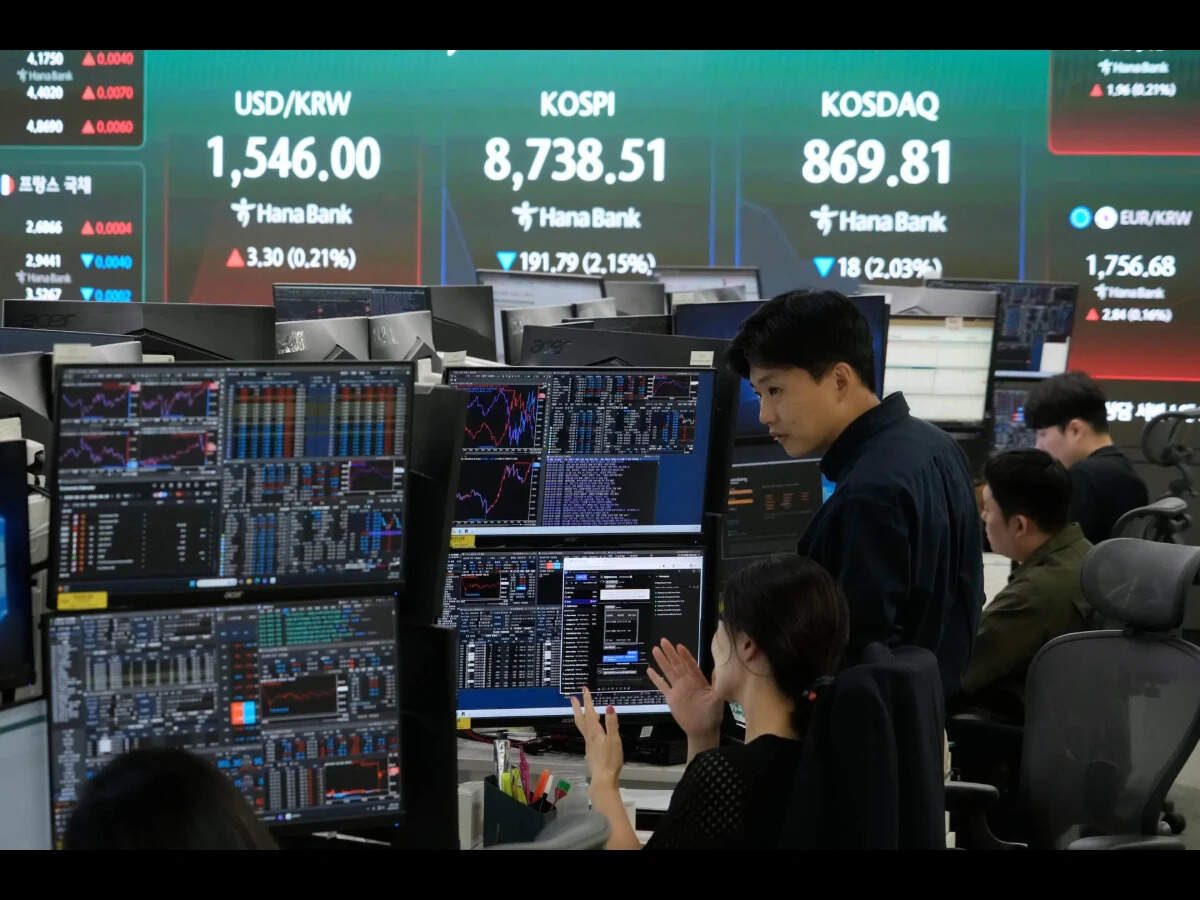
The US dollar weakened and interest rate hike expectations fell after a sharp decline in retail sales signaled cooling consumer demand, while investors weigh the impact of escalating Middle East tensions on energy prices.
The US dollar declined against all Group-of-10 currencies as a Bloomberg index tracking its strength eased 0.1 percent, returning to valuations observed in May. The currency retreat followed data showing American retail purchases posted their largest monthly contraction in over a year during July.
This consumer slowdown has rapidly altered interest rate expectations, with swaps traders now pricing a 25 percent probability of a Federal Reserve rate increase next month, down from half just seven days prior. Consequently, Treasury prices rallied, pushing the two-year yield down two basis points to 4.15 percent and the benchmark 10-year note one basis point lower to 4.68 percent.
Stock index futures for the S&P 500 and Nasdaq 100 climbed following the weak consumption data, attempting to recover from Friday's broader equity slide. Asian markets remained largely flat in thin trading, with South Korean exchanges closed for a public holiday.
Meanwhile, the Japanese yen strengthened despite unexpected economic growth deceleration in the second quarter driven by slumping capital expenditures. Energy markets faced crosscurrents as Brent crude erased intraday advances to trade near $88.55 a barrel.
The global benchmark initially approached $89 before retreating, as traders assessed renewed Israeli military strikes in southern Lebanon that killed 11 people and the prospect of stricter US sanctions targeting Iran. These regional clashes threaten to complicate deadlocked negotiations between Washington and Tehran as their current ceasefire agreement expires.
Kyle Rodda, a senior analyst at Capital.com, addressed the ongoing regional instability. He stated: "The most significant headwind for the market currently remains geopolitical uncertainty, which continues to weigh on market sentiment here and there – although the relative lack of military activity in the Middle East has lowered volatility at the margins."
Market focus now shifts to upcoming economic releases from China, where economists anticipate a slight uptick in July retail sales but a slowdown in industrial production. BNY strategist Wee Khoon Chong warned that China’s “macro momentum continues to deteriorate” amid weak inflation and slowing credit expansion.
He noted that “July activity data are likely to reinforce the slowdown, with retail sales and high-tech investment the key areas to watch for resilience.” Safe-haven assets also saw movement, with gold rising 0.4 percent to approximately $4,390 an ounce.
Investors are also preparing for a 20-year US government bond auction this week, which will test market appetite for long-term debt following recent record-breaking sales. The outcome will provide critical signals regarding institutional demand for duration assets.