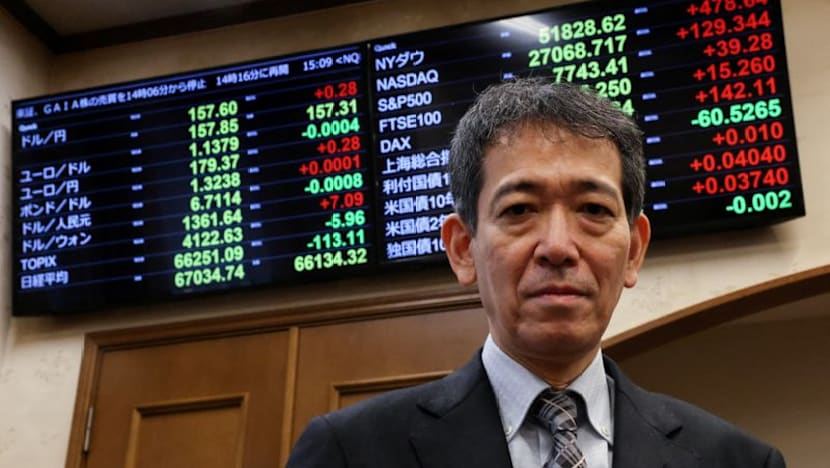
Yen drops toward 160 threshold as traders bet on Bank of Japan rate hike

The yen has surrendered half its recent gains to approach the 160-per-dollar threshold, shifting the burden onto the Bank of Japan to raise interest rates to prevent further speculative attacks.
The yen is on track for its largest weekly decline since May, falling about 1 percent against the dollar to 159.43. The currency has also dropped 0.8 percent against the euro to 183.91, marking its steepest weekly loss against the single currency since April.
This retreat erases roughly half of the appreciation triggered by official market interventions in late July and early August. Before those measures, the yen was trading near 164 per dollar, and traders now view the 160 mark as a critical trigger for fresh government action.
Market professionals argue that direct currency purchases cannot alter the underlying trajectory of the yen without accompanying monetary policy shifts. "Because for the intervention to change the yen trend, we need to see a more hawkish BOJ stance," said Sim Moh Siong, a strategist at OCBC.
Moh Siong noted that investors are attempting to price in tighter policy but require validation, adding that "the onus is on BOJ to step up." Former top currency diplomat Mitsuhiro Furusawa stated that Tokyo could conduct further joint intervention "at any time" to stem the decline.
The central bank faces additional pressure after U.S. Treasury Secretary Scott Bessent urged Tokyo to back its market operations with stronger economic fundamentals. Consequently, derivatives markets have drastically adjusted their expectations for Japanese monetary policy.
Data from Tokyo Tanshi indicates a 76 percent probability of a rate increase in September, a sharp rise from just 24 percent at the end of July. This elevated pricing creates a binary risk for currency investors.
If the central bank fails to deliver a rate hike, the resulting disappointment could trigger another sharp sell-off in the yen. Fixed income managers warn that relying on market operations alone is a flawed strategy for defending a currency.
"Interventions, to me, even if they're coordinated, even if they are quite powerful, are at best temporary," said Omar Slim, co-head of Asia public fixed income at MetLife Investment Management. Slim cautioned that unilateral or joint market operations can ultimately backfire.
He described such actions as "at worst an invitation for the market to challenge them." The yen's underlying weakness stems from years of near-zero borrowing costs and mounting concerns regarding Japanese government spending.
Meanwhile, broader Asian currencies have shown more resilience against the dollar this week. The South Korean won, which benefited from coordinated dollar sales alongside Japan last month, is poised for a modest 0.6 percent weekly loss.
China’s offshore yuan remained steady at 6.7452, sitting close to a three-and-a-half-year high reached last week. The wider foreign exchange environment remains relatively stable as conflicting macroeconomic forces balance out.
Support for the U.S. dollar from rising oil prices and Middle East geopolitical tensions has been offset by soft American employment and inflation data. This benign economic reporting has cooled expectations for further U.S. rate hikes.