Central Asia expands nuclear, energy, and rail ties with China
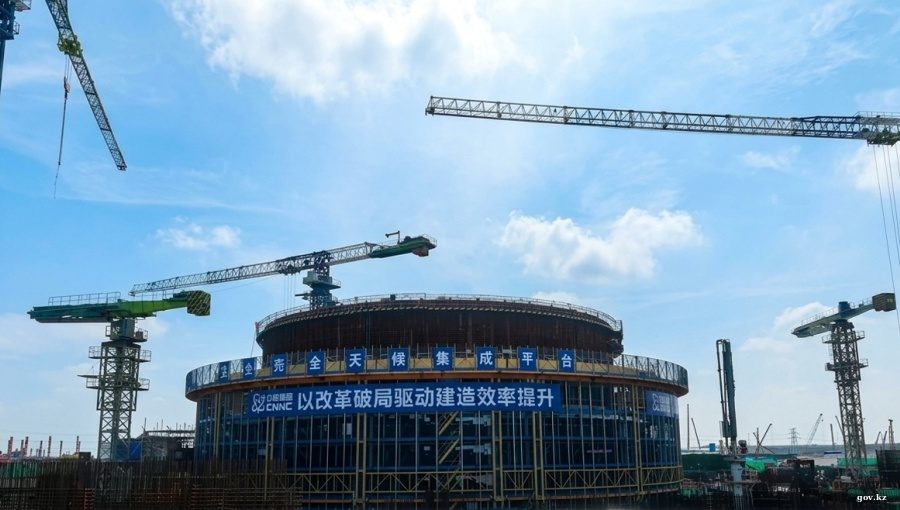
Kazakhstan's selection of China National Nuclear Corp to build two reactors underscores a broader regional shift where Central Asian states are redirecting energy dependence and supply chains toward Chinese enterprises.
Kazakhstan has selected China National Nuclear Corp to construct two large-scale reactors, marking the centrepiece of a sweeping expansion of Chinese infrastructure and energy investment across Central Asia. The deal follows a recent protocol signed by Kazakhstan’s atomic agency and China’s National Energy Administration head Wang Hongzhi to formalise future nuclear cooperation.
Almassadam Satkaliyev, chairman of Kazakhstan’s Atomic Energy Agency, is currently touring Chinese nuclear facilities to study PRC management techniques. His itinerary spans the operational Tianwan plant, the under-construction Xuwei facility, and uranium fuel production sites, offering a blueprint for the upcoming domestic build-out.
Energy supply pivot
The nuclear agreement reflects a wider regional shift away from Russian energy. Kyrgyzstan is diversifying its fuel imports due to Russian supply disruptions, securing 3,000 tonnes of Chinese jet fuel with deliveries starting by late July and negotiating for 5,000 tonnes of diesel.
Tajikistan is similarly reducing its reliance on Moscow, partnering with CNPC to complete geophysical and seismic surveys. Ilkhom Oymukhammadzoda, head of the Tajik government’s Main Geology Department, announced these tests will determine the most promising locations for exploratory drilling.
Supply chain realignment
Beyond energy, Beijing is securing alternative Eurasian freight routes. Construction on the China-Kyrgyzstan-Uzbekistan (CKU) railway is advancing, prompting Uzbekistan and Azerbaijan to establish a joint logistics centre near Baku and a shared Caspian fleet. Uzbek Deputy Minister Khurram Teshabayev noted the CKU will become a critical component of Eurasian supply chains.
Regional planners are already looking past the CKU’s completion. Uzbek President Shavkat Mirziyoyev proposed integrating the modernised Baku-Tbilisi-Kars railway with the CKU and exploring Uzbek participation in a deep-water Black Sea port at Anaklia.
Industrial and capital expansion
Chinese capital is targeting Central Asian manufacturing and green technology. Kazakh automotive company Allur will begin producing vehicles locally through a strategic partnership with Chinese electric vehicle manufacturer Li Auto.
Deputy Prime Minister Kanat Bozumbayev met with Hong Kong-based Towngas and Full Vision Capital to discuss investments in sustainable aviation fuel, energy storage, and smart energy systems in Kazakhstan’s Alatau City IT hub.
For logistics executives and investors, these coordinated moves signal a structural shift. Central Asian governments are actively facilitating market access for Chinese enterprises, replacing traditional Russian patronage with Chinese industrial capacity and export corridors.