Bangladesh Bets $12.65bn on Nuclear to Cut Indian Power Imports
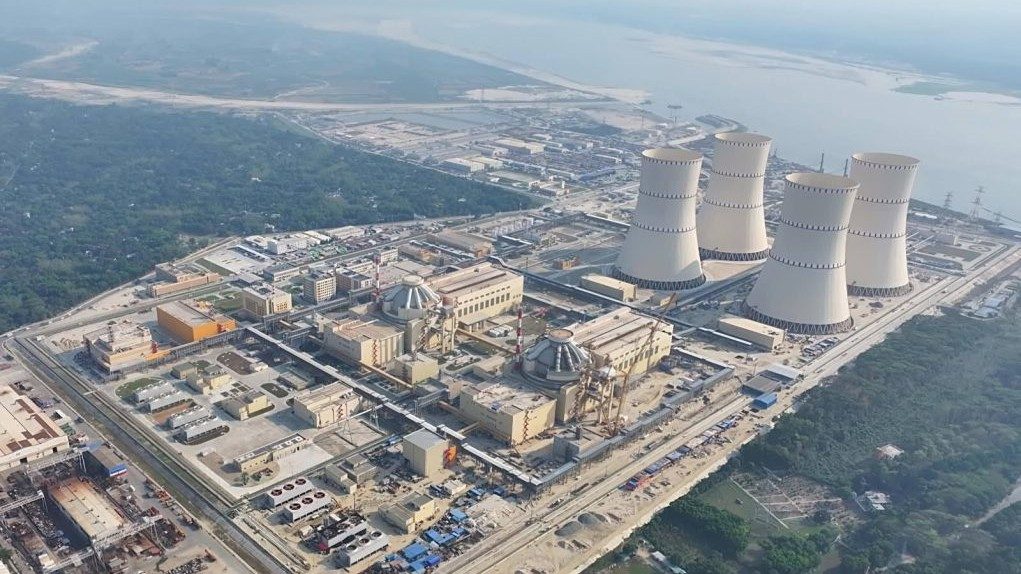
Bangladesh is powering up a Russian-built nuclear plant to end its reliance on Indian electricity imports, testing whether a fragile emerging market can absorb the costs of complex atomic infrastructure.
Bangladesh will begin feeding power from its Rooppur Nuclear Power Plant into the national grid in August, starting with 300 megawatts. The $12.65 billion, 2.4-gigawatt Russian-built facility represents a high-stakes effort to overhaul the country's energy security. Full capacity is expected by 2028.
The project is a direct response to recent global conflicts, which disrupted energy flows and triggered severe fuel shortages and blackouts in the import-dependent nation. More immediately, it is designed to break Dhaka's heavy reliance on electricity purchased from India.
India currently supplies between 2.5 GW and 2.8 GW of Bangladesh's daily power needs through firms including Adani Power, NTPC, and PTC. This dependence became a strategic vulnerability two years ago when Adani cut exports by over 60% from its 1,600 MW Godda plant after Bangladesh accumulated roughly $800 million in arrears amid a foreign exchange crisis.
Rooppur is intended to eliminate this vulnerability, eventually supplying 15% of Bangladesh's electricity and matching domestic gas as a primary baseload source. For international investors, the plant serves as a crucial litmus test for whether an emerging economy can integrate complex, high-capital atomic assets without suffering catastrophic financial strain.
The financial math remains daunting. The plant's cost equates to a heavy burden against Bangladesh's roughly $510 billion 2025 GDP. That financial weight has only grown due to pandemic-era supply chain delays, Western sanctions on Russian technology, and a roughly 25% cost increase driven by currency fluctuations and shipping disruptions.
Consequently, Rooppur is expected to be the last large-scale nuclear plant Bangladesh constructs. Dhaka is already shifting its focus to Small Modular Reactors, currently in talks with Western and Chinese firms in a quiet realignment away from total reliance on Russian energy partnerships.
Policymakers favor SMRs because their $500 million to $1 billion total price tags are significantly easier to finance than mega-projects. While SMRs cost between $8,000 and over $10,000 per kW, lacking the $6,600 to $8,000 per kW economies of scale of large plants, their smaller footprint allows faster deployment near industrial zones. This pivot signals a broader shift in emerging market infrastructure toward flexible capital deployment.