US and Iraq to unveil major oil partnership next week
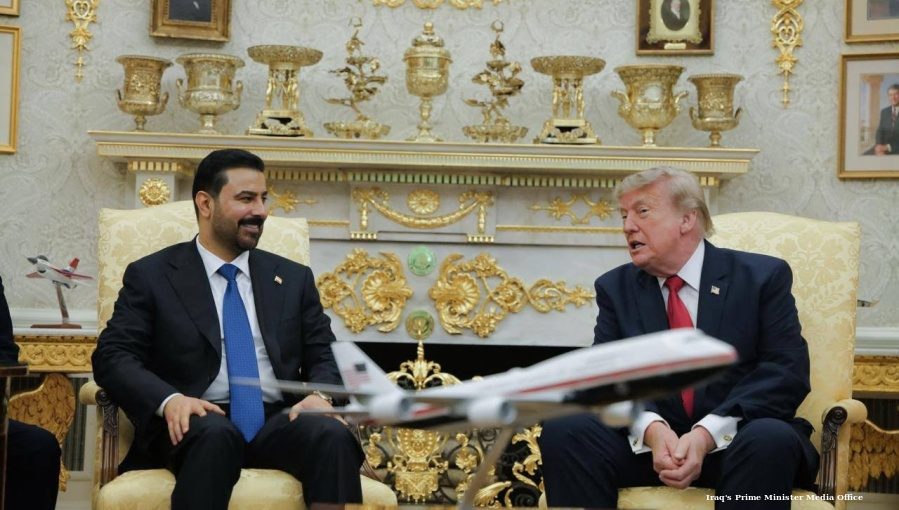
Washington and Baghdad are preparing a significant oil partnership and large commercial deals, a move that could disrupt OPEC production dynamics as US troops prepare to withdraw.
US President Donald Trump announced that a "major oil partnership" with Iraq will be unveiled next week, alongside a series of large commercial deals. The declaration came during a White House meeting on July 14 with Iraqi Prime Minister Ali Faleh al-Zaidi, who is leading a seven-day US visit with a delegation of ministers, investors and business leaders.
For energy markets, the immediate takeaway is Baghdad's explicit push to overhaul its output allocations within the producer group. A new US-backed oil partnership could embolden Iraq to aggressively negotiate its output ceiling. "We are one of the founding members of OPEC, but we want a fair share because we fought terrorism in a costly war that devastated our infrastructure," al-Zaidi said. "We need a fair oil production quota for Iraq." Any upward revision to Iraqi output limits would force other OPEC members to absorb deeper cuts to manage global supply.
The economic overtures extend well beyond crude extraction. Al-Zaidi framed the Washington visit as a definitive pivot toward Western capital, stating it aimed to announce "a strategic partnership and the entry of American companies into the Iraqi market." This drive for foreign direct investment is rooted in massive reconstruction needs. The Iraqi prime minister noted that the country's losses from terrorism have exceeded $400 billion, creating a vast addressable market for US engineering, construction and infrastructure firms.
However, these commercial ambitions are unfolding against a highly volatile regional backdrop. The high-level delegation arrived in Washington as the US and Iran continue to strike each other's military bases and sensitive sites across the Gulf. Trump characterized Iran as "a major burden on Iraq" and vowed to "get rid of it soon," a statement that introduces significant geopolitical risk into any long-term energy investment thesis.
Despite the tensions, Trump indicated a drawdown of American forces, stating the US "will not need our army in Iraq or a military presence." The transition aligns with Baghdad's internal security timeline. Al-Zaidi confirmed that Iraqi forces will assume full responsibility when the international coalition's mission ends in September 2026. He pledged that all weapons would remain under state control, while noting the government would cooperate with groups that choose to engage in the political process.
For investors, the feasibility of these large commercial deals hinges on domestic political stability. Al-Zaidi moved to reassure the market on this front, addressing historically fraught relations with the Kurdistan Region. "I cannot cut off a part of my body," he said, affirming the north as an essential part of Iraq and signaling a unified front to attract US capital.