Mataripe Buyback Talks Stall as Petrobras Presses On With Refining Plans
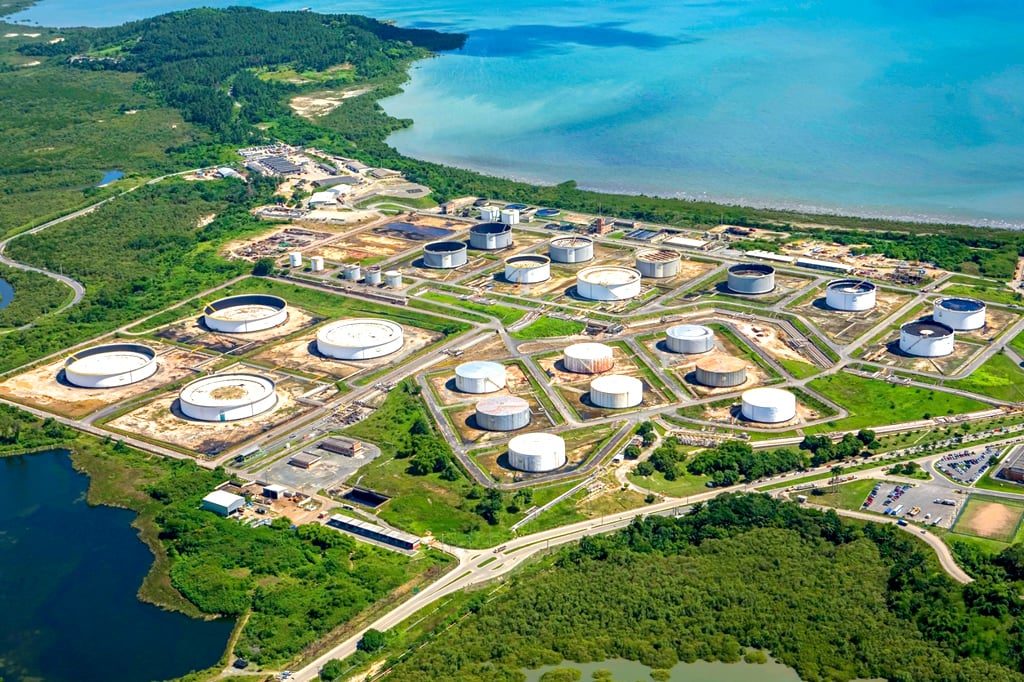
Petrobras’s message to Acelen is clear: we don’t need Mataripe. With talks stalled and the company’s refining expansion plans intact, the buyback now hinges on price, not strategy. The post Mataripe Buyback Talks Stall as Petrobras Presses On With Refining Plans appeared first on The Rio Times .
Talks with Acelen make no progress after due diligence, and Petrobras insists it will expand refining capacity with or without the Bahia refinery it sold in 2021.
Foreign investors watching the stalled Petrobras Mataripe buyback talks got a clear signal on Friday: the negotiations have not advanced, and the state oil giant says it will expand refining capacity with or without the asset. That stance, voiced by CEO Magda Chambriard on 7 August 2026, effectively pulls the leverage out of the negotiation, making any repurchase a matter of price, not necessity. For investors and expats in Brazil, the story matters because it shows Petrobras’s strategic priorities are shifting, and because a state company buying back a refinery it sold four years ago is never just a business deal; it’s a political football with implications for fuel prices, foreign capital, and Brazil’s energy policy.
Fernando Melgarejo, Petrobras’s chief financial officer, told reporters ahead of the 7 August results briefing that there had been no progress in the talks between the company and Acelen. Chief executive Magda Chambriard said afterwards that the buyback remains under negotiation.
Chambriard added that Petrobras continues negotiating, but she made clear the company is pursuing more refining with or without Mataripe. She also stressed that any deal would only happen at a price adequate to market value.
For a negotiation, that is a quiet but powerful shift. Petrobras is signalling it does not need the refinery back, so the onus is on Acelen to make the offer attractive, or walk away.
Acelen is a Brazilian energy company controlled by Mubadala Capital, the asset management arm of Abu Dhabi’s sovereign wealth fund, Mubadala Investment Company. Mubadala is a global player with stakes in everything from semiconductors to oil and gas, and its entrance into Brazil’s refining sector was a landmark for foreign investment.
Acelen bought Mataripe in 2021, when Petrobras, under a previous government, sold the refinery in Bahia as part of a broader divestment programme. Since then, Acelen has run the plant, and it says it has generated more than R$380 million (US$74.4 million) in gains from AI and digital transformation projects at the refinery. The refinery, which has a processing capacity of around 300,000 barrels per day, set a processing record in 2025, according to Acelen, a sign that the asset has thrived under private ownership.
That the refinery is now in foreign hands adds a layer of complexity. A buyback by Petrobras would reverse that foreign ownership and would be seen as a victory for state-centric energy policy, or as a costly reversal, depending on who you ask.
Since Acelen took over in 2021, it hasn’t just run Mataripe, it has modernised it, with AI and digital projects generating over R$380 million (US$74.4 million) in gains. That investment is now the crux of the standoff. Mubadala sees a thriving asset and wants a premium for it, while Petrobras, pointing to its own overflowing coffers, insists on market value. Every upgrade Acelen makes widens that gap, making a compromise ever harder to reach.
The 2021 sale was controversial at the time, with critics saying it stripped Brazil of a key asset and threatened fuel security. Now, with a new government and a more interventionist Petrobras under Chambriard, a repurchase could be framed as correcting a mistake, or as a waste of public money.
For foreign investors, the politics matter. A state company re-entering a sector it left can signal policy unpredictability, but it can also be seen as pragmatism if the price is right. Chambriard’s insistence on market value suggests Petrobras is not prepared to overpay just to make a political point. Reports suggest Mubadala is seeking a price far above what Petrobras considers market value, a gap that could be a major sticking point.
And the numbers back that resolve. Petrobras reported net income of R$52.4 billion (US$10.3 billion) in Q2 2026, up 97% year over year. Its refineries ran at 101.2% utilisation in the quarter, easing to 98% in August. In other words, Petrobras is flush and its existing plants are working hard, it does not need Mataripe out of desperation.
This is why the story is not about diesel self-sufficiency targets. It is about leverage, price, and what a state oil company is willing to pay for an asset it once gave up.
There is no deadline for the talks, and no indication that they will collapse entirely. But with Petrobras publicly downplaying the need for Mataripe, the ball is in Acelen’s court.
If Acelen wants to sell, it will have to convince Petrobras the price reflects the refinery’s value, and that value includes the investments Acelen has made. If not, Petrobras can simply move on, and Chambriard’s with or without becomes a self-fulfilling prophecy. The company could instead invest in expanding its own refineries, a path that would avoid the political fallout of a buyback while still meeting its capacity targets.
The October election adds another layer of unpredictability. Both sides are watching the political calendar: a change in government could alter Petrobras’s priorities, while a strong mandate for the current administration might embolden state-led initiatives. This uncertainty could delay any agreement until after the votes are counted.
For investors, the takeaway is clear: watch the price tag, not the headlines. If a deal happens, it will be on Petrobras’s terms, not Acelen’s.
Background: Braskem Bond Tender Rejected Amid $9.4B Debt Crisis .
Mataripe is a refinery in Bahia, Brazil, that Petrobras sold in 2021 to Acelen, a company controlled by Mubadala Capital. It has a capacity of around 300,000 barrels per day and produces fuels and other petroleum products. Talks about a possible buyback have stalled, with Petrobras saying it will expand refining capacity with or without the asset.
Acelen is controlled by Mubadala Capital, the asset management arm of Abu Dhabi’s sovereign wealth fund, Mubadala Investment Company. Mubadala has a global investment portfolio across various sectors, including energy.
The 2021 sale was contentious, and a buyback under a new government could be seen as a reversal of privatisation policy. It also involves foreign ownership, so any deal would be scrutinised for its political and economic implications. Petrobras insists it will only buy at a market price, not at a premium for political reasons.
Yes. CEO Magda Chambriard has said Petrobras is pursuing more refining capacity with or without Mataripe. The company’s existing refineries are running at near-full capacity, and strong profits give it the financial room to invest elsewhere, including in expanding its own plants.
Sources: Petrobras; Acelen; Valor Econômico; Poder360; Bloomberg Línea; A Tarde; Reuters.
This article was drafted with automated assistance and reviewed before publication. How we use AI · Report an error



